


Between the Straits of Hormuz and Bab el-Mandeb, Oil Prices Are Rising: The situation in the Strait of Hormuz, the Strait of Bab el-Mandeb, and Russia is affecting oil prices, which have risen dramatically since the resumption of hostilities between the US and Iran on July 7.
Current oil prices, as of 12:47 p.m. on Wednesday, are at $86.30, a rise of $1.96 a barrel since yesterday and about $11.00 a barrel since hostilities resumed, according to Oil Price.com.
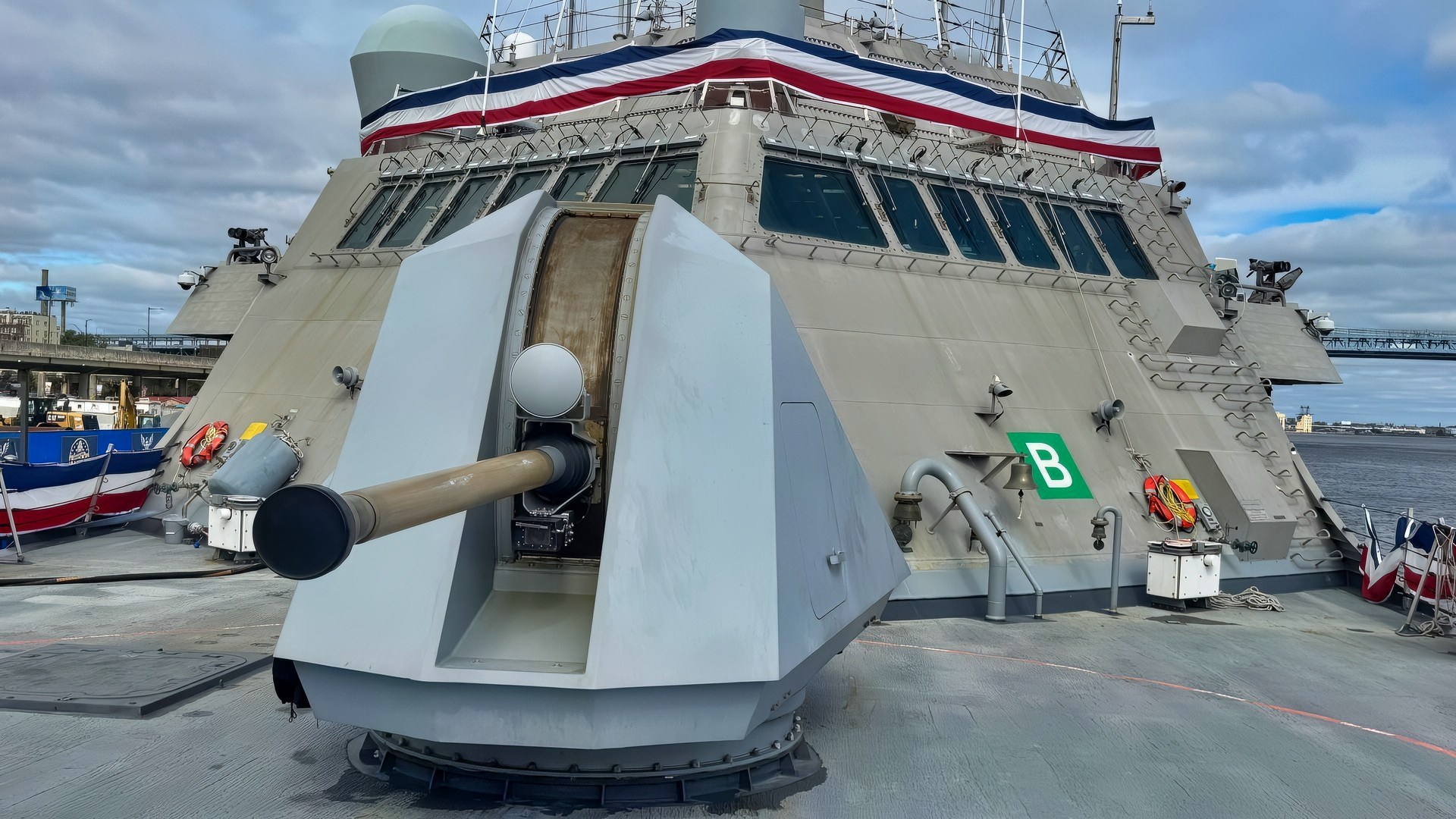
Littoral Combat Ship USS Cooperstown. Image Taken By National Security Journal October 14, 2025.

Littoral Combat Ship USS Cooperstown NSJ Photo Taken On October 14, 2025.
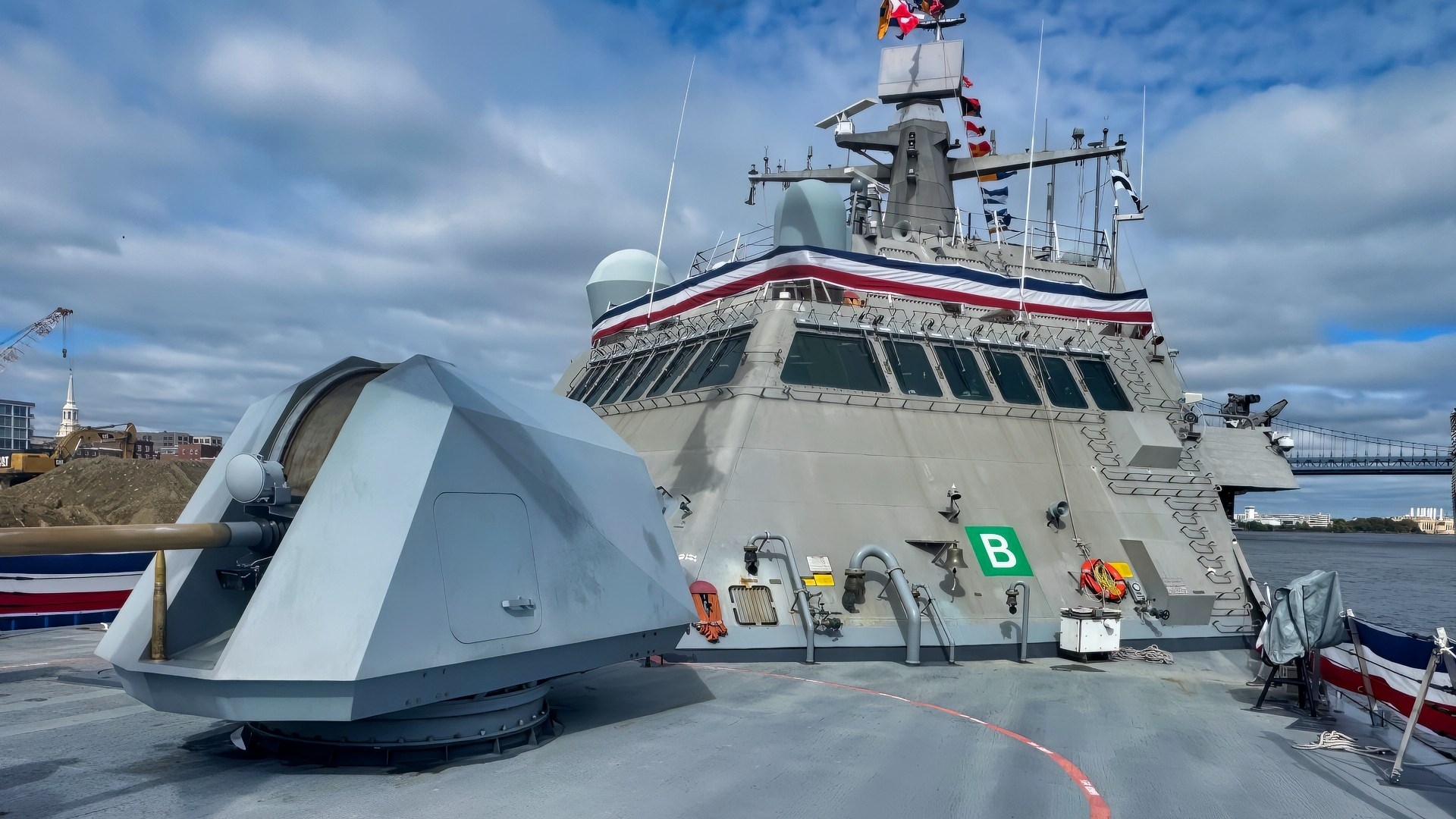
Top of USS Cooperstown Littoral Combat Ship. Taken by National Security Journal on October 14, 2025.
With the Houthi rebels threatening an embargo of Saudi oil through the chokepoint on the Red Sea, analysts are scrambling to assess what happens next with the global oil supply.
CENTCOM Insists The Strait Of Hormuz Is Open
The U.S. military’s Central Command (CENTCOM) said it completed an 11th consecutive night of strikes on Iran at about 8:15 p.m. ET on Tuesday, insisting that the Strait of Hormuz “remains open.”
The command’s latest round of airstrikes centered on aircraft hangars, drone storage and operations centers “to further degrade Iran’s ability to threaten commercial shipping in the Strait of Hormuz.”
However, despite it being declared open, there has been virtually no ship passing through, with only two reported.
Houthis Deploy Missiles And Drones To Attack Red Sea Shipping
Iran’s Houthi proxies in Yemen are prepared to attack ships transiting the Red Sea’s southern access point, a maritime security group led by the U.S. Navy has warned.
“Sources close to the group stated that the Houthis have completed preparations to attack shipping, including the deployment of missiles and drones positioned near Bab el-Mandeb,” the Joint Maritime Information Center (JMIC) said Tuesday. The center, headquartered in Bahrain, provides security updates to commercial ships transiting through the Middle East.
The European Union (EU) naval mission in the Middle East warned Wednesday that “merchant vessels linked to Israeli, U.S. or Saudi interests” should “avoid transiting the Red Sea and Gulf of Aden until the threat level decreases.”
While the Houthis have not fired on any ships in the Red Sea, they have said “all vessels loading or discharging cargo at or from any Saudi ports are prohibited,” according to the EU naval mission.
President Trump has threatened he would “take care of” Yemen’s Iranian-backed Houthi rebels if they carry out threats to block access to Saudi Arabia’s Red Sea ports via the Bab el-Mandeb strait
Iran Insists Strait of Hormuz “Belongs To Us”
The Strait of Hormuz “belongs to us,” an Iranian official said Wednesday, adding that those who fail to understand Iran’s hold on the waterway would “end up at the bottom.”
“We will not seek an alternative route to the Strait of Hormuz because this strait is the heart of Iran,” Ali Zeynivand, a spokesperson for Iran’s Ministry of Interior, said Wednesday, as quoted by the official state news agency IRNA.
“The Strait of Hormuz belongs to us,” he said, and anyone who fails “to properly study Iran’s continuous civilization … will disappear, and only their remains may end up at the bottom of the Strait of Hormuz.”
US Will Bomb Bridges And Powerplants For Every Ship Attacked
President Trump has threatened civilian infrastructure in Iran if the IRGC continues to attack shipping in the Strait of Hormuz
He said on Wednesday that the U.S. would “bomb and destroy” one bridge or power plant in Iran for every new Iranian attack on a ship in the Strait of Hormuz.
“From this point forward, any time the Islamic Republic of Iran shoots at a ship in the Strait of Hormuz, whether it be by Missile, Rocket, Drone, or any other device or weapon, the United States will bomb and destroy ONE BRIDGE OR POWER PLANT, including those located next to, or in, the Capital City of Tehran,” Trump said in a post on his Truth Social page.
The recent gasoline price spike to a $4.00 per gallon national average isn’t likely to come down in the foreseeable future as tensions in Iran, Yemen and Russia show no signs of abating.
The Situation In Russia Is Also Keeping Gas And Oil Prices High
The Strait of Hormuz’s traffic and the Strait of Bab el-Mandeb are hardly the only factor in oil prices being what they are currently. The war in Ukraine is also affecting the price and availability of oil on the global market, and some analysts are concerned it could skyrocket costs.
“Our view is that we’ll be … in this $80-to-$90 range, depending on the news flow,” Jay Hatfield at Infrastructure Capital Management told Bloomberg about oil prices.
“If we actually have a closed Red Sea, that’s a threat. We haven’t seen that yet. That could shoot us over $100.”
President Trump briefly lifted the sanctions on Russia’s gas and oil industries to help ease oil shortages earlier this year. However, those sanctions are back in place, although they don’t currently matter.
Ukrainian drone attacks on Russia’s gas and oil infrastructure and refineries have decimated their production, cutting 25 percent. Russia has been forced to halt exports of gas, oil, and diesel and is now importing gas from India and Belarus.
About the Author: Steve Balestrieri
Steve Balestrieri is a National Security Columnist. He served as a US Army Special Forces NCO and Warrant Officer. In addition to writing on defense, he covers the NFL for PatsFans.com and is a member of the Pro Football Writers of America (PFWA). His work was regularly featured in many military publications


