

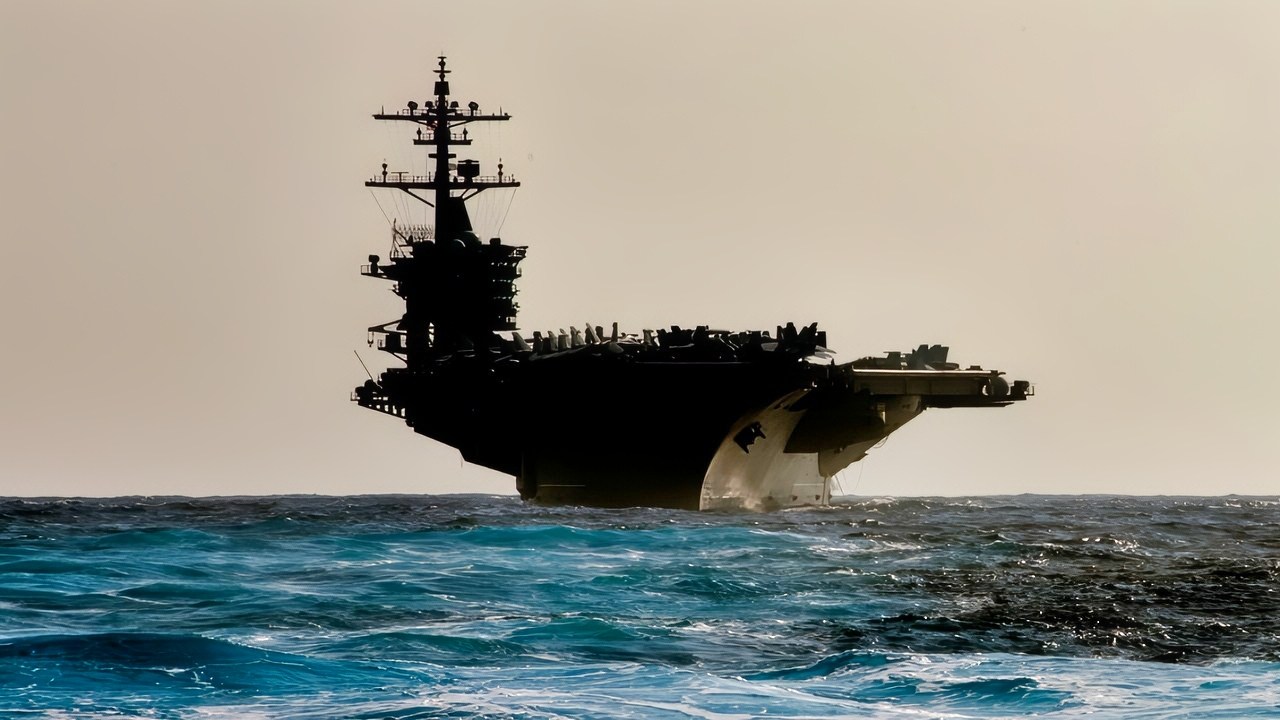
On July 13, as hostilities between the U.S. and Iran were beginning to resume, President Donald Trump declared in a social media post that the United States was now the “guardian” of the Strait of Hormuz.
“We’re going to keep the strait, and we’ll probably run it,” The president added in a Fox News appearance that same day.
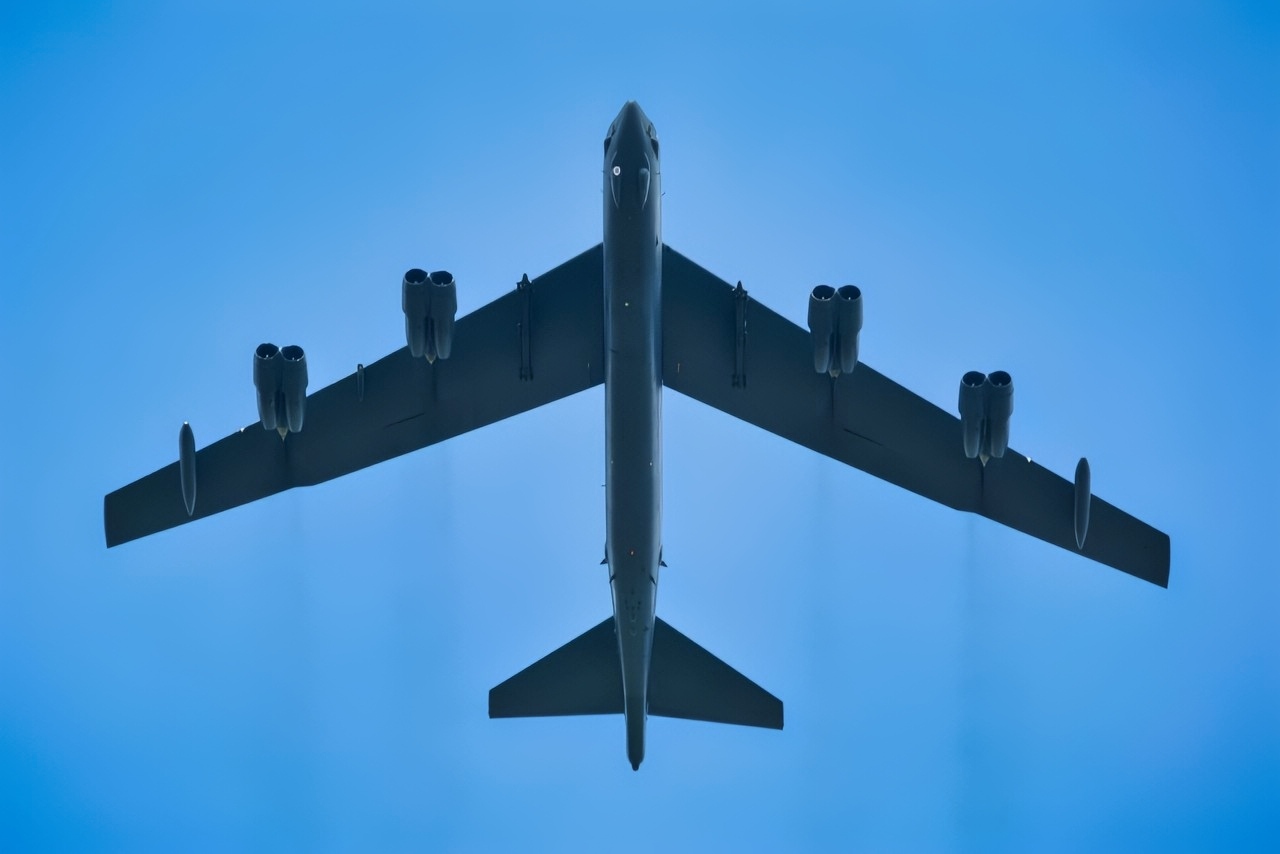
Military service members, veterans, and citizens of Guam gathered for the Memorial Day Commemoration at the Guam Veterans Cemetery. The Ceremony consisted of a fly over from a B-52H Stratofortress, a musical performance from the Guam Territorial Band & Cantate, guest speaking from the honorable Eddie Baza Calvo, a Fallen Soldier Gravesite Tribute, and the playing of Taps. (U.S. Marine Corps photo by Lance Cpl. Jacob Snouffer/Released)
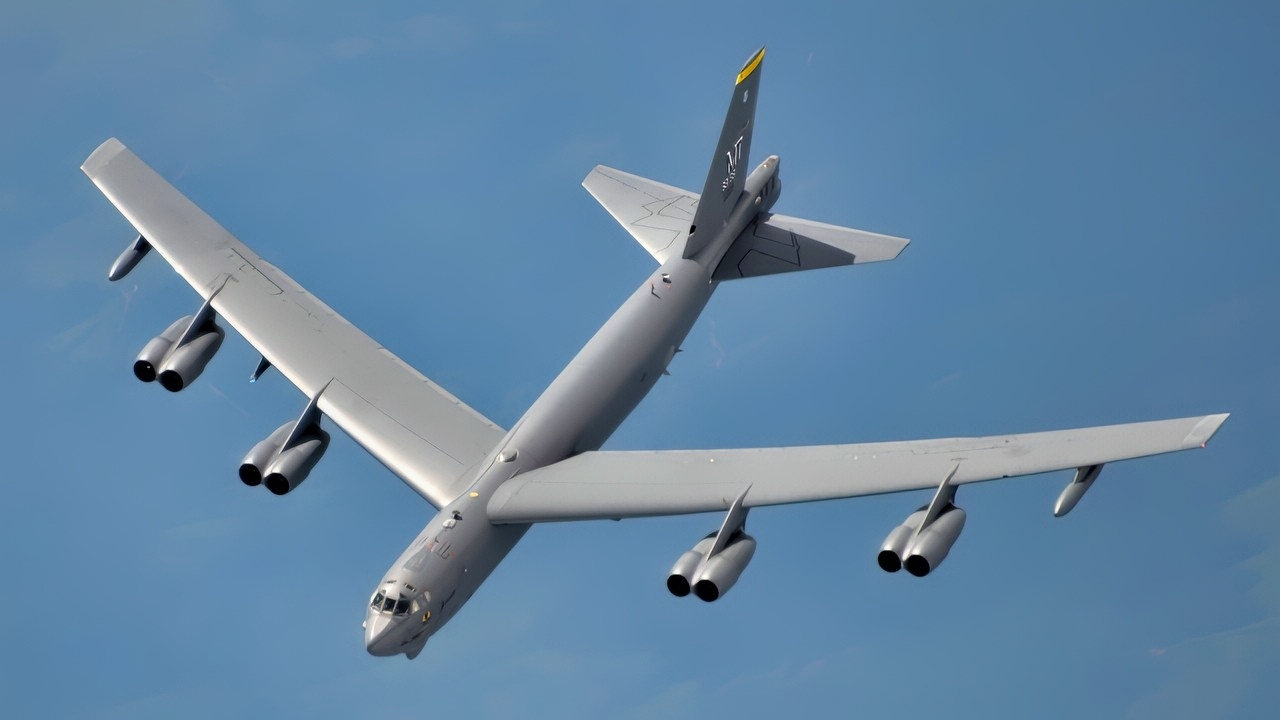
A B-52 Stratofortress assigned to the 5th Bomb Wing, Minot Air Force Base, North Dakota, completes refueling behind a KC-135 Stratotanker assigned to the 134th Air Refueling Wing, Tennessee Air National Guard, during exercise Saber Guardian 19, June 17, 2019. The bombers participated in three exercises in the Baltic and Black Sea regions, providing opportunities for training with our allies and partners. Strategic bomber missions enhance the readiness and training necessary to respond to any potential crisis or challenge across the globe. The USEUCOM, NATO exercise promotes regional stability and security while increasing readiness, strengthening partner capabilities and fostering trust. (U.S. Air National Guard photo by Tech. Sgt. Daniel Gagnon)
“We’ll become the guardian of the strait. Maybe we’ll become the guardian angel of the strait, and we should be reimbursed for that,” Trump added in the TV appearance, which came via phone.
“When we do that, we’re going to be reimbursed because the other nations are very wealthy, they’re on our side, and we can’t be expected to do that for nothing, unlike we had for many years.”
The two weeks since have led to a standoff, including daily strikes by the U.S., followed by a pause that has lasted through last weekend.
But now, Iran is insisting that it continue to control the Strait of Hormuz.
Still “in Control”
Reuters reported Monday that Iran has indicated it still controls the Strait of Hormuz.
“Iran has said it will pause its own attacks for as long as Trump’s self-imposed ceasefire continues,” the report said. “But it also said it was still in control of the contested Strait of Hormuz, and was not seeking to resume peace talks with the United States.”

U.S. Air Force F-16 Fighting Falcons intercept two U.S. Air Force B-1B Lancers during exercise Amalgam Dart 21-2, March 23, 2021. The exercise will run from March 20-26 and range from the Beaufort Sea to Thule, Greenland and extend south down the Eastern Atlantic to the U.S. coast of Maine. Amalgam Dart 21-2 provides NORAD the opportunity to hone homeland defense skills as Canadian, U.S., and NATO forces operate together in the Arctic. A bi-national Canadian and American command, NORAD employs network space-based, aerial and ground based sensors, air-to-air refueling tankers, and fighter aircraft controlled by a sophisticated command and control network to deter, detect and defend against aerial threats that originate outside or within North American airspace. NATO E-3 Early Warning Aircraft, Royal Canadian Air Force CF-18 fighter aircraft, CP-140 long-range patrol aircraft, CC-130 search and rescue and tactical aircraft, and a CC-150T air refueler; as well as U.S. Air Force F-16 fighter aircraft, KC-10 Extender refueler, KC-46 Pegasus, KC-135 Stratotanker, as well as C-130 and C-17 transport aircraft will participate in the exercise. (U.S. Air National Guard courtesy photo)
That report added that Saudi Arabia, Jordan and Iraq all reported drone attacks over the weekend, although the source of those attacks has not been confirmed.
“As previously announced, the traffic route in the Strait of Hormuz is the route specified by Iran, and other routes are contaminated and have no way out,” a source told state media outlets in Iran, per Reuters.
Saturday, per The Hill, was the first night in two weeks in which the U.S. and Iran did not exchange fire.
Why the Pause?
According to the Reuters story, the pause in air strikes was a move that “reflected advice from his military that the bombing had reached the limits of what it could achieve.”
In addition, the chairman of the Joint Chiefs of Staff, General Dan Caine, “had expressed concern over the depletion of air defense munitions.” Mike Waltz, the U.S. ambassador to the United Nations, said over the weekend that the purpose of the pause was to allow for negotiations.
On Friday, the New York Times provided some analysis as to why the American military campaign was on hold.
“President Trump has set aside, at least for now, plans to sharply escalate the American military assault against Iran, with particular concern that intensifying the war could dangerously drain the Pentagon’s already diminished stockpile of Patriot antimissile interceptors and other air defense munitions in the Middle East,” the Times reported.
The analysis added that Trump and his team are also “uneasy about the prospect of a widening war in the Middle East, the alienation of key Gulf allies who are vulnerable to Iranian attack, a global economic crunch, and growing energy and refugee crises.”
Gen. Caine “cautioned privately” that resuming combat operations was “doable but that it would dangerously deplete interceptors available” to Central Command.
Steven Cheung, the White House communications director, told the Times that the White House has “always been consistent in saying he prefers a diplomatic solution, but he continues to retain all options if Iran continues terrorist activities in the Strait of Hormuz or against allies.”
“It would be wise for Iran to work towards a negotiated deal; otherwise, they know what will happen,” Cheung added.
Going For Pickaxe Mountain?
A week ago, Trump was making noises about attacking Pickaxe Mountain, a facility in Iran that is said to hold some of its nuclear materials. Israel had intelligence that Iran had moved nuclear centrifuges to that location, the Wall Street Journal reported last week.
“We’ll be hitting that area very probably pretty soon. There’s not a thing they can do about it,” Trump said last week, during an appearance at the White House with the president of Lebanon.
But those plans, along with others about escalating the war, appear to now be on hold.
About the Author: Stephen Silver
Stephen Silver is an award-winning journalist, essayist, and film critic, and contributor to the Philadelphia Inquirer, the Jewish Telegraphic Agency, Broad Street Review, and Splice Today. The co-founder of the Philadelphia Film Critics Circle, Stephen lives in suburban Philadelphia with his wife and two sons. For over a decade, Stephen has authored thousands of articles that focus on politics, national security, technology, and the economy. Follow him on X (formerly Twitter) at @StephenSilver, and subscribe to his Substack newsletter.


