

Iran’s Supreme Leader Mojtaba Khamenei reportedly outlined Tehran’s conditions for ending hostilities with the United States after meeting with his national security chief, Mohsen Rezaei, on regional security and control of the Strait of Hormuz.
The meeting on Tuesday comes just one day after top officials from Saudi Arabia, Turkey, and Pakistan traveled to Tehran.
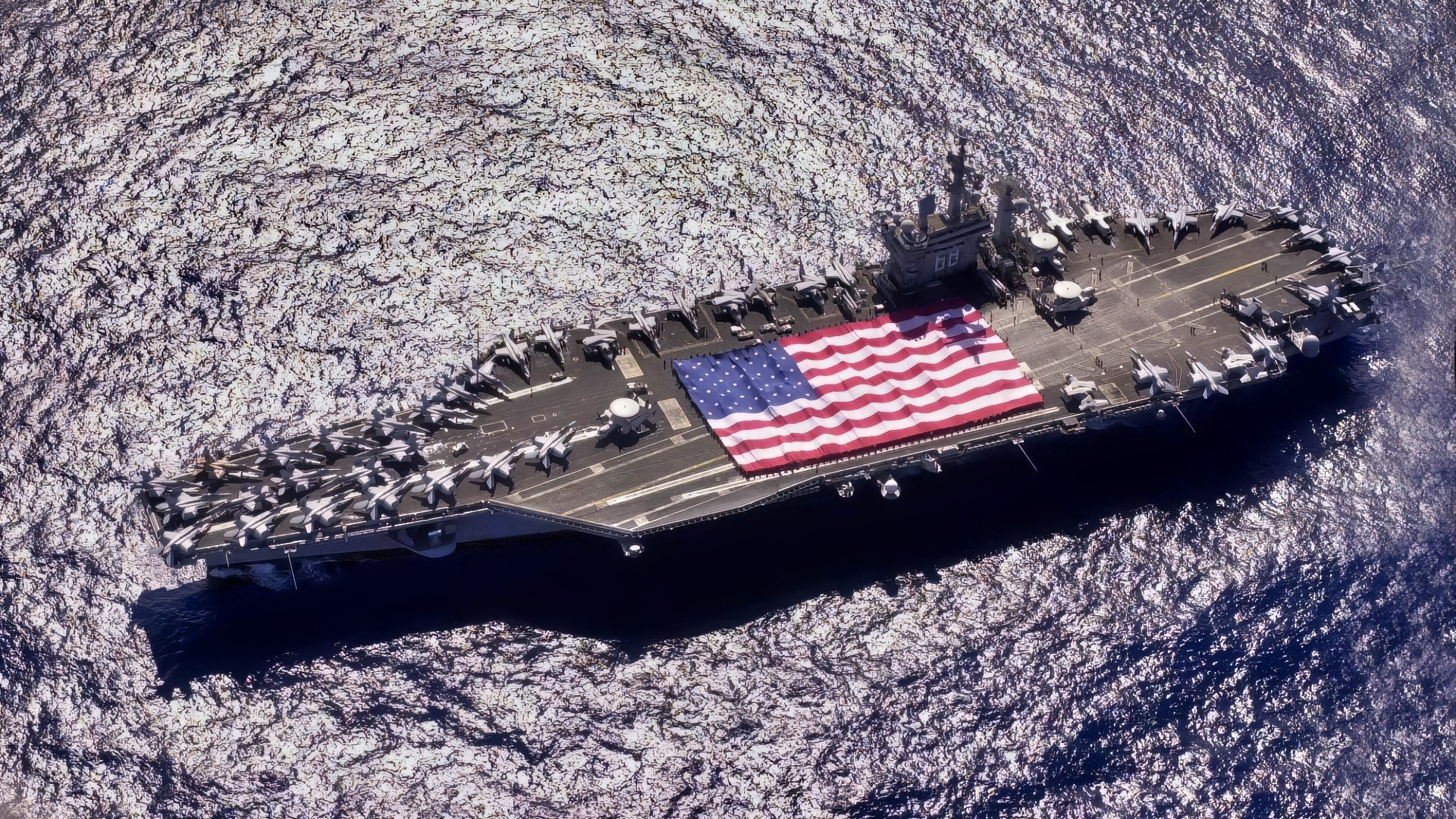
Pacific Ocean (November 3, 2003) — During Tiger Cruise aboard USS Nimitz (CVN 68), Nimitz and Carrier Air Wing Eleven personnel participate in a flag unfurling rehearsal with the help of fellow tigers on the flight deck. The Nimitz Carrier Strike Force and Carrier Air Wing Eleven (CVW-11) are in route to Nimitz homeport of San Diego, California after an eight-month deployment to the Arabian Gulf in support of Operation Iraqi Freedom. U.S. Navy photo.
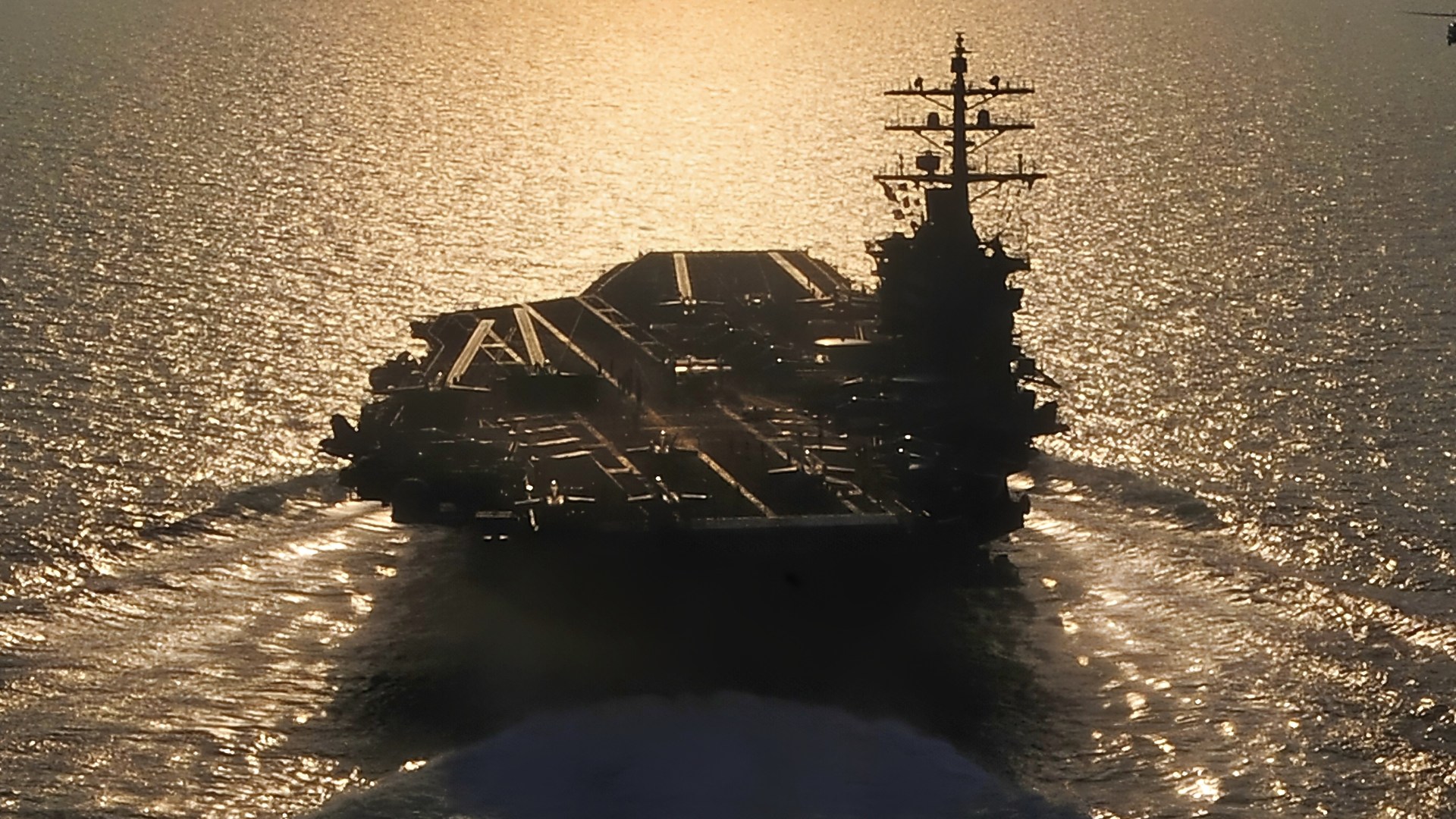
120710-N-RY232-571 MEDITERRANEAN SEA (July 10, 2012) – An SH-60F Seahawk from the Nightdippers of Helicopter Anti-Submarine Squadron (HS) 5 flies alongside Nimitz-class aircraft carrier USS Dwight D. Eisenhower (CVN 69), July 10. Dwight D. Eisenhower is on a regularly scheduled deployment in support of Maritime Security Operations (MSO) and Theater Security Cooperation (TSC) efforts in the U.S. 5th and 6th Fleet areas of responsibility. IKE deployed as part of Eisenhower Carrier Strike Group (CSG), which includes CSG 8, IKE, guided-missile cruiser USS Hue City (CG 66), guided-missile destroyer USS Farragut (DDG 99), guided-missile destroyer USS Winston S. Churchill (DDG 81), USS Jason Dunham (DDG 109), the seven squadrons of Carrier Air Wing (CVW) 7, and Destroyer Squadron 28. (U.S. Navy photo by Mass Communication Specialist 2nd Class Julia A. Casper/Released)
Khamenei, who took over after his father was killed in the U.S.-Israeli airstrikes on February 28, has not been seen publicly since he assumed the role.
Trump and Vance Demand Nuclear Concessions
President Donald Trump has been reluctant to make concessions, given the Islamic Republic’s ongoing program to acquire nuclear weapons.
He also said Iran’s nuclear sites are under close surveillance, stressing, “We know every single thing that is happening at Pickaxe Mountain.” He also claimed that three Iranian nuclear sites that the U.S. has previously targeted have been destroyed.
CNN separately reported that U.S. forces are ready to carry out a large-scale operation within 96 hours of a presidential order.
Vice President JD Vance also told Reuters Tehran must make “meaningful” cuts to their uranium enrichment capabilities.
“We’re not going to trade words for actions,” he said.
An Iranian official denied Washington’s stance, saying “they are at odds with Iran’s demands.”
Pezeshkian told Russian President Vladimir Putin on Tuesday: “I believe we are capable of resolving our problems in the region without relying on the United States.”
Putin said he was concerned about the situation and hoped it would “evolve in a positive direction.”
Tehran is currently insisting on sanctions being lifted before talks about Iran’s nuclear program, but Washington wants concessions.
Khamenei Demands End to ‘Neither War Nor Peace’
Iranian state television Press TV said Khamenei wanted to end the current “neither war nor peace” situation, but only after Tehran met its requirements.
He reportedly said the Supreme National Security Council was the “crossroads of policymaking” and that political, economic, and security decisions should be made together.
He also insisted there should be more national unity and protection for Iranian and Resistance Front interests — Tehran’s name for its network of allied armed terror proxies throughout the region, such as Hamas, Hezbollah and the Houthis.
The news agency said talks covered “the management of the Strait of Hormuz” and improving relations with neighboring nations.
Iran is demanding that the U.S. lift its blockade on Iranian ports and remove sanctions on the country’s oil exports.
Saudi Arabia, Turkey and Pakistan Meet with Tehran
Saudi Defense Minister Prince Khalid bin Salman, Pakistani army chief Asim Munir and Turkish intelligence chief Ibrahim Kalin met in Tehran on Monday.
“We concluded that West Asia’s security must be based on the countries of the region, and any external interference must be prevented,” Rezaei told Anadolu after the talks.
“The four countries believe that cooperation among them offers a way out of the crises facing the region.”
Iran’s President Masoud Pezeshkian welcomed the move, saying Tehran was willing to take measures toward “deepening regional cooperation, resolving differences and drawing on the shared capabilities of Islamic countries.”
Turkish Foreign Minister Hakan Fidan had warned Reuters last Friday: “We are all in agreement that a new attack on Iran would expand the war in the region.”
“A military intervention on Iran is not in any way a solution.”
However, the countries did not reach a peace deal during Monday’s meeting. Instead, the four countries agreed to continue talks, the Associated Press reported.
New Diplomatic Offer to Open Strait of Hormuz
A new diplomatic offer has also emerged in recent days, with Tehran suggesting it could open the Strait of Hormuz four days after sanctions are lifted, rather than the seven days previously proposed, The Guardian reported on Wednesday.
Talks have also been held about Iran’s role in Yemen, where Houthi forces backed by Iran have been fighting those backed by Saudi Arabia.
Oman’s Foreign Minister Badr Albusaidi said he believed a regional settlement would help and that Iran could attract significant future investment with more cooperation.
“The economic potential is going to be enormous for all of us in the region,” he told The Guardian.
Qatar told Reuters it wanted Iran to demonstrate goodwill by opening the once-busy waterway.
About the Author: Georgia Gilholy
Georgia Gilholy is a journalist based in the United Kingdom who has been published in Newsweek, The Times of Israel, and the Spectator. Gilholy writes about international politics, culture, and education.


