

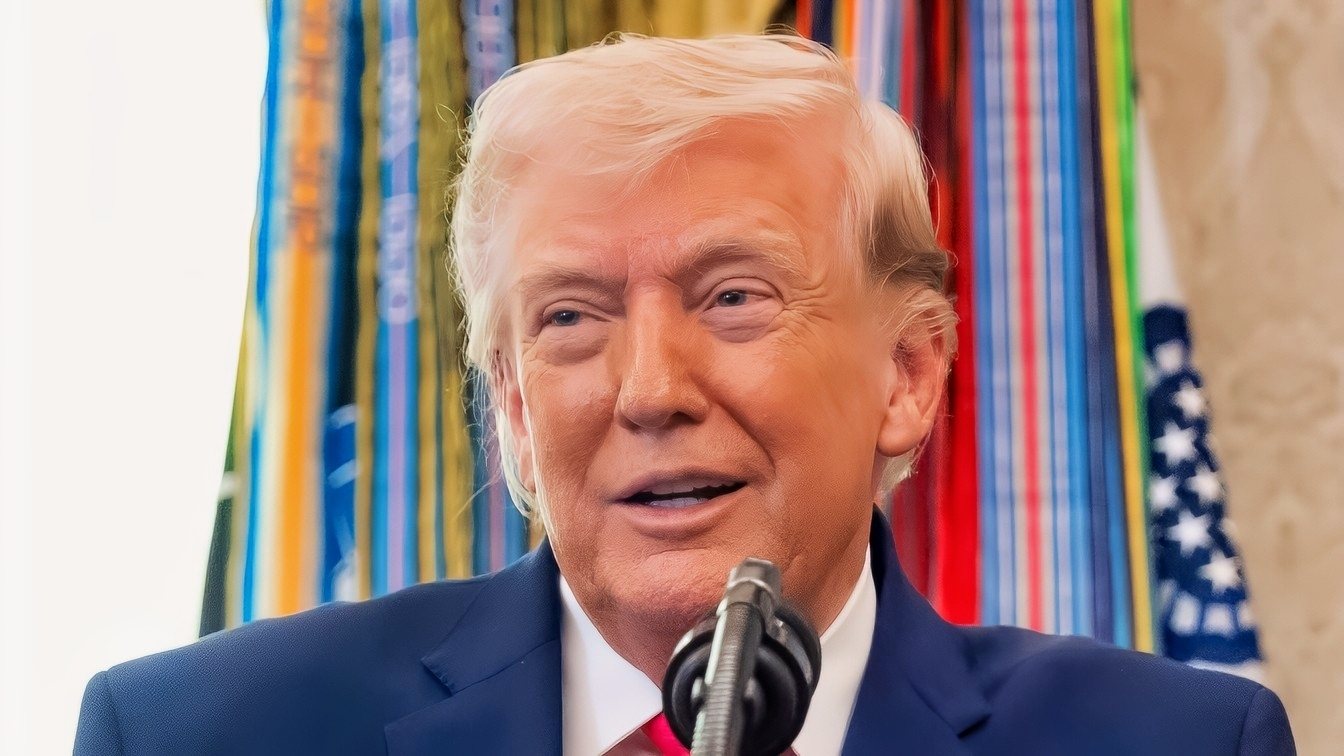
The Republican Party is at a turning point following its historic defeat at the hands of the Democratic Party (more specifically, the GOP’s defeat due to its own failed policies since Donald J. Trump returned to the presidency).
A recent ABC News report found that Republican donors, political consultants, and party officials remain in shock at the magnitude of those losses. GOP strategists had always assumed they would lose some seats in the 2026 Midterms.
They never assumed the party would have received the epic drubbing it did on November 3.
Now, Republicans are in full-blown panic as to whether the party stands a chance in the upcoming 2028 Presidential Elections.
A Decisive Defeat
Democrats now have 256 House seats compared with 170 for Republicans, and nine races still being counted. Democrats have also secured their ninth Senate pickup, following Mary Peltola’s recent victory in Alaska.
The election highlighted how Americans who originally joined the Trump coalition in 2024 have turned away from it. They believed that the president’s policies had created deteriorating economic conditions, and that those conditions were the result of Trump’s war of choice in Iran.
They are correct in that.
The Republican Party’s obsession with fighting the culture war, once a strength for their electoral chances, became viewed by most voters who were struggling economically as being a symptom of how disconnected the GOP had become.
It is the Iran War, which a recent Responsible Statecraft study has described as the most unpopular war since polls started recording American wartime approval ratings going back to the Second World War.
That fact should not surprise anyone.
After all, President Trump was ushered back into office in 2024 because his predecessor, Joe Biden, was viewed as being bad for the US economy.
But once the Iran War got underway, major disruptions to global energy markets drove up costs for American consumers.
At the same time, the lack of a definitive conclusion has created uncertainty about the administration’s foreign policy.
Republicans must now reconcile the interventionist elements of Trump’s second-term foreign policy with noninterventionist sentiments that helped distinguish his original political movement from the traditional Republican establishment.
The damage, though, is likely already done–and the longer that the forty-seventh president continues the Iran War, the harder it will be for him to salvage any semblance of a legacy (at least one that is positive).
Because of that defeat, people are starting to question whether Vice President JD Vance has a political future. Vance was long regarded as the heir apparent to the Trump second term.
That’s starting to change.
The JD Vance Question
So where does this leave JD Vance? His association with an increasingly unpopular administration, however, could significantly undermine those advantages.
Indeed, it increasingly appears as though JD Vance is not the shoo-in for the Republican Party’s nomination that everyone assumed he was because of Trump’s deep and abiding commitment to waging war on Iran.
Sensing weakness, Florida Gov. Ron DeSantis, Sen. Ted Cruz (R-TX), and former Virginia Gov. Glenn Youngkin–two outsiders of the Trump administration–appear poised to start their own presidential exploratory committees.
Meanwhile, neoconservatives are trying to convince Secretary of State and White House National Security Adviser Marco Rubio to put his hat in the ring for the GOP nomination in 2028, sensing that Vance will be unable to win.
Until very recently, all polls indicated that Rubio would not defeat Vance in a primary battle.
However, a recent Reuters/Ipsos poll found that 45 percent of Republican voters considered Rubio an excellent presidential candidate, compared to just 43 percent for Vance.
That’s a close call.
But previous polls had Vance leading Rubio by double digits, suggesting that dissatisfaction with the war and Vance’s inability to distinguish his stance from Trump’s publicly is now catching up to him.
And while Rubio is an actual war hawk, America’s chief diplomat has deftly kept his true opinions on the Iran War out of the public eye (while Vance has proven unable to make enough people understand that he was an early and avowed opponent of the war).
Vance has not formally committed to running in 2028. Some stories have even floated that the vice president is contemplating not running in two years because the political landscape looks so bad for him.
Republican donors are increasingly interested in how the party so quickly squandered its electoral advantages.
Their willingness to finance future campaigns may depend on whether Republican leaders show they understand why they lost.
As a result, a leadership fight is brewing today between Republican National Committee Co-Chairwoman KC Crosbie, who is challenging incumbent Chairman Joe Gruters, and the incumbent for control of the RNC.
The End of MAGA?
“MAGA is dead” is often something you will hear from online Right-wing influencers.
While that might be an overstatement, the movement has been drained of its life force by the massive midterm defeat.
The movement seemed centered on President Donald Trump.
But American voters decisively repudiated Trump and his agenda in November, leaving the MAGA movement significantly hobbled.
Once Trump leaves office in two years, the question will be how the movement reorients away from being centered only on Trump and his mercurial whims.
At that point, the movement will likely die, because it never successfully set an ideological framework to govern itself or the country.
About the Author: Brandon J. Weichert
Brandon J. Weichert is the Senior National Security Editor at 19FortyFive.com. He also manages The Weichert Brief on Substack. Weichert is the co-host of The Mario Nawfal Show on Twitter/X. He is the author of four bestselling national security books, most recently A Disaster of Our Own Making: How the West Lost Ukraine (Encounter Books). His next book, Fortress Americas: A New Monroe Doctrine (Tucker Carlson Books), is due out December 8. Follow him via Twitter/X @WeTheBrandon.


