


Iranian Foreign Minister Urged to Resign Over U.S. Talks – Iranian President Masoud Pezeshkian is facing calls to impeach his foreign minister, Abbas Araghchi, after reports that he contacted American officials to negotiate terms to end the ongoing war.
Iran’s Foreign Minister Faces Challenges

Capt. Kristin “Beo” Wolfe, F-35A Lightning II Demonstration Team pilot and commander, banks hard left making vapor trails over and behind the wings during a practice demonstration at Hill Air Force Base, Utah, Mar. 23, 2021. The demonstration team is part of Air Combat Command and is assigned to the 388th Fighter Wing at Hill AFB. Capt. Wolfe grew up a military child as the daughter of retired Col. Jon Wolfe and has flown the T-6 Texan II, T-38 Talon, F-22 Raptor and now the F-35A Lightning II. (U.S. Air Force photo by Alex R. Lloyd)
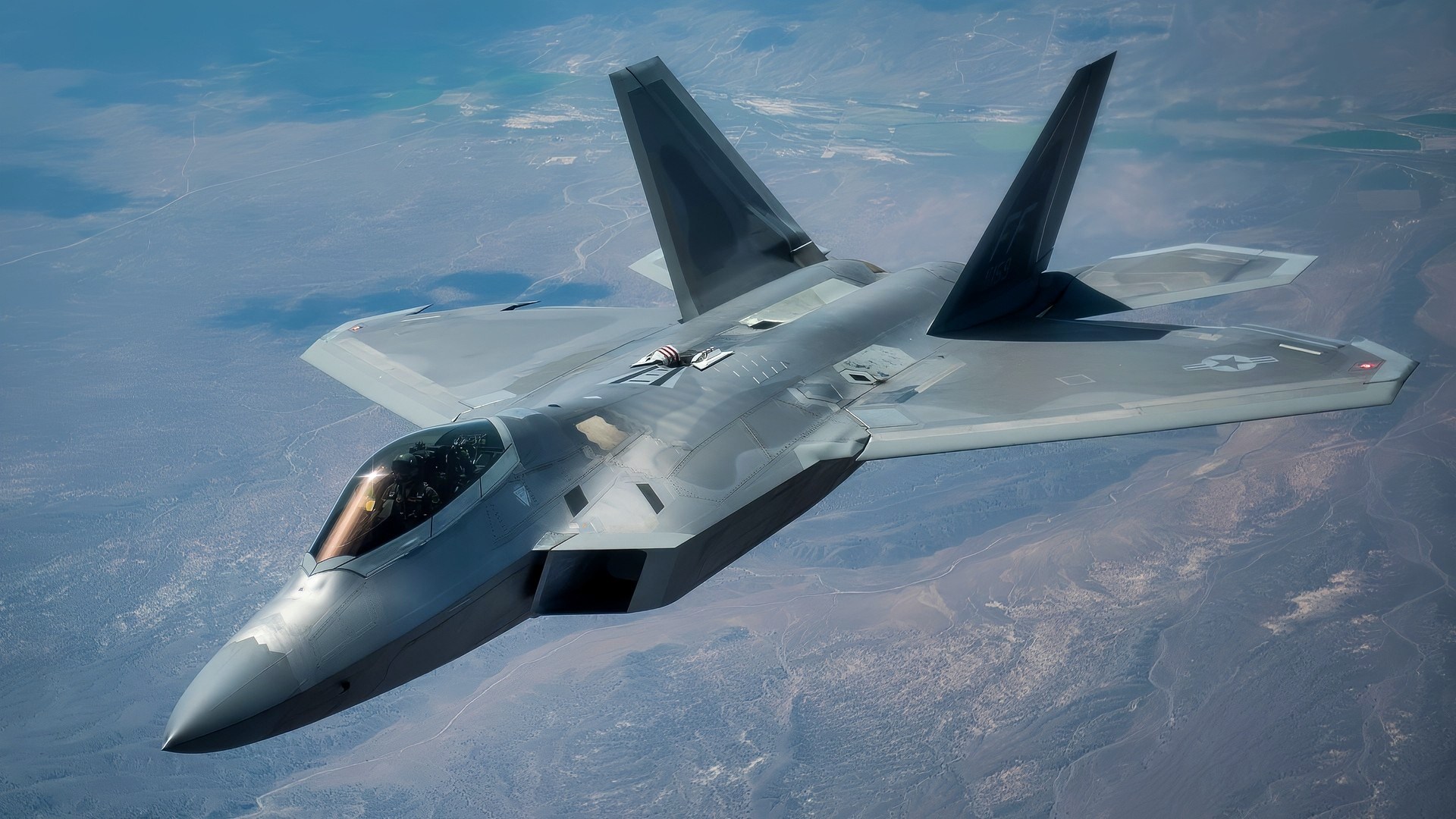
An F-22 Raptor from Langely Air Force Base, V.a. flies by after receiving fuel from a KC-135 Stratotanker from McConnell Air Force Base, Kans., July 27, 2016 during exercise Red Flag, hosted by Nellis Air Force Base, Nev. Red Flag 16-3 is aimed at teaching service members how to integrate air, space and cyberspace elements. (U.S. Air Force photo/Tech. Sgt. David Salanitri)
Parliament member Amirhossein Sabeti accused Foreign Minister Abbas Araghchi of holding talks with Americans without the leader’s knowledge and called for his impeachment earlier this month.
The controversy centers on Araghchi’s reported contacts with U.S. negotiators, including discussions on the sidelines of September’s UN General Assembly in New York.
Critics have accused the foreign minister of acting without authorization from Iran’s leadership. Other lawmakers have defended him, arguing that his diplomatic activity falls within decisions already made by the country’s senior political authorities.
The controversy erupted after Araghchi reportedly met with U.S. special envoy Steve Witkoff on the sidelines of the United Nations General Assembly in New York last month.
Iranian parliament member Mojtaba Zarei has argued in Araghchi’s favor, noting that the foreign minister’s decisions on such matters are authorized by the regime’s decision-making bodies.
Why are Some Iranian Politicians Angry with the Foreign Minister?
Political analyst Ali Afshari told Deutsche Welle that some regime members could exploit the fact that the Foreign Ministry does not set policy, and he criticized the foreign minister for allowing critics to accuse him of undermining the revolution.
The spat broke out against the backdrop of prolonged and inconclusive talks between Iran and the U.S. on ending the war.
President Donald Trump stated on October 8 that “productive discussions are taking place” between Washington and Tehran, even though no deal had been struck.
Trump also assured that the U.S. would not launch fresh attacks on Iran before the midterm congressional elections on November 3.
Iran’s Oil Minister Resigns under Pressure
Oil Minister Mohsen Paknejad resigned on October 4.
He cited “personal reasons” for his resignation, despite the country’s ongoing economic woes. In a highly repressive regime like Iran, the motivations for various political resignations are not always precisely clear.
As of this week, Iran faces a crippling inflation rate of around 73.6 percent, but it could rise.
According to an Al Jazeera investigation, Iran’s judiciary has estimated the debt owed by Iran’s oil intermediaries at several hundred billion currency units.
Al Jazeera’s inquiry into why Iran’s oil shippers owe the government hundreds of billions of dollars found that Iran’s intermediaries, which facilitate oil sales to generate hard currency for the government, have defaulted by an estimated $11 billion and $12 billion.
Such “trustees” were set up in order to offer a workaround to sell oil and remit payments to the regime amidst vast global sanctions.
One such “trustee” reportedly owes almost $2 billion to the National Iranian Oil Company.
Energy expert Umud Shokri has claimed that, because of these complications, oil profits have not reached the Iranian regime. He highlighted the high degree of opacity in how money moves under this murky system.
Shokri added that the main problem is that private entities tied to influential factions, such as the Revolutionary Guards (IRGC), a terrorist group responsible for arming Islamist groups across the Middle East, often dominate Iran’s oil trading.
Washington Clamps Down on Iran’s Revenue Streams
The U.S. is also ramping up efforts to cut Iran off from new revenue routes.
A further 17 vessels and other entities involved in Iran’s oil trade were sanctioned by the U.S. Treasury last week, in a major blow to the Islamic Republic’s energy sector.
Obsidian Risk Advisors expert Brett Erickson has described the expanded sanctions as “economic warfare conducted in the rearview mirror.”
On Friday, Reuters revealed that certain LNG tankers and jet fuel carriers had circumvented sanctions by transporting Iranian petroleum products to other countries.
Jemima Shelley, a senior research analyst at United Against Nuclear Iran, noted that “while the figures show an improvement in trade, it is more due to opportunism than a revival of Iran’s export capabilities.”
The U.S. military has stressed its “ironclad” measures to isolate the regime. Meanwhile, the U.S. Treasury claims its sanctions are “suffocating” Tehran.
About the Author: Georgia Gilholy
Georgia Gilholy is a journalist based in the United Kingdom who has been published in Newsweek, The Times of Israel, and the Spectator. Gilholy writes about international politics, culture, and education.


