

President Donald Trump is considering several days of new U.S. attacks on Iran after the November 3 midterms.
Republicans Likely to Lose
Voters will decide every seat in the U.S. House of Representatives next month, along with one-third of Senate seats.

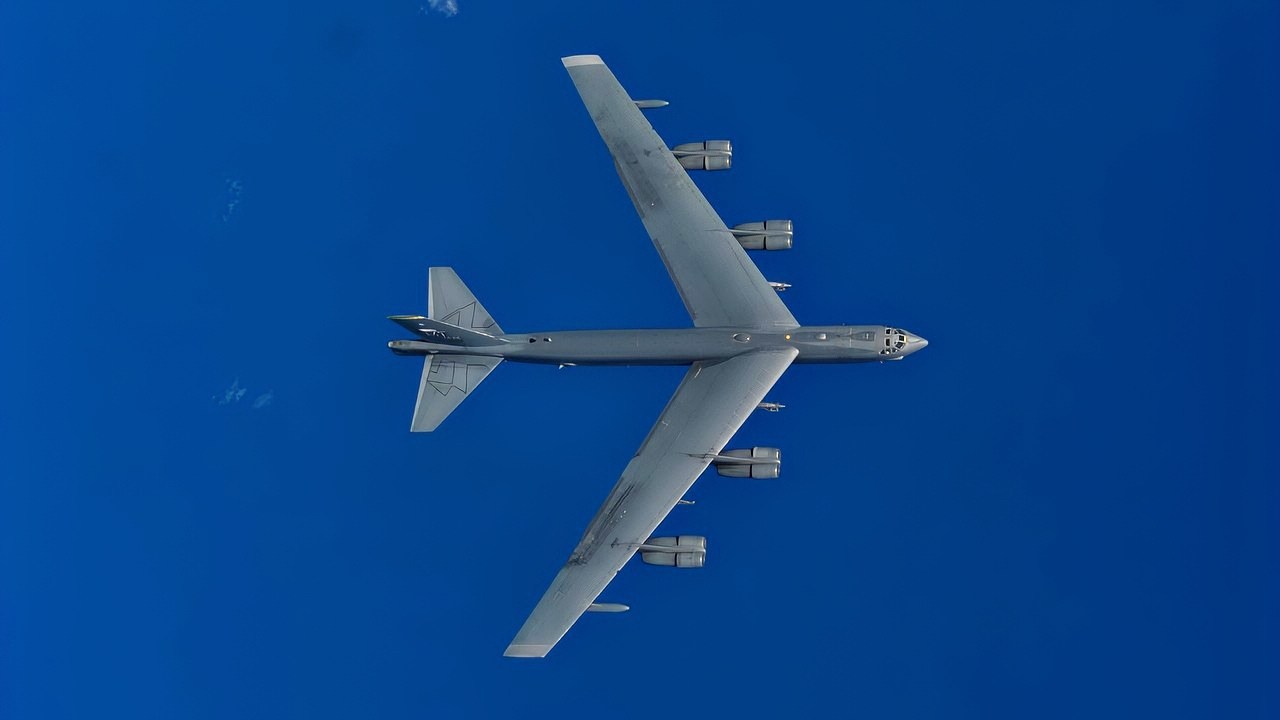
A U.S. Air Force B-52 Stratofortress departs after being refueled by KC-135 Stratotanker over the Pacific Northwest July 18, 2024. The 92nd Air Refueling Wing and 141st ARW’s ability to rapidly generate airpower at a moment’s notice was put to the test when Air Mobility Command’s Inspector General team conducted a no-notice Nuclear Operational Readiness Inspection, July 16–18, 2024. During the NORI, Airmen demonstrated how various capabilities at Fairchild AFB enable units to generate and provide, when directed, specially trained and equipped KC-135 Stratotanker aircrews to conduct critical air refueling of U.S. Strategic Command-assigned strategic bomber and command and control aircraft. (U.S. Air Force photo by Staff Sgt. Lawrence Sena)

A B-52H Stratofortress taxis down the runway at Minot Air Force Base, N.D., Sept. 16, 2021. The bomber is capable of flying at high subsonic speeds at altitudes up to 50,000 feet. (U.S. Air Force photo by Airman 1st Class Zachary Wright)
On Monday, Polymarket traders estimated a 65% likelihood of Democrats taking the Senate, and a 91% chance of Democrats taking the House.
The plans would involve a U.S. naval blockade, sanctions, plus bombs on Iranian missiles and drones, nuclear facilities and possibly oil fields, according to The Atlantic.
An order for strikes has not been given, and Washington has not indicated that fresh attacks on Iran would lead to a deal.
Israel is set to elect a new government on October 27, and the American midterms follow on November 3, making the next round of strikes politically dangerous for both governments.
“Netanyahu wants to attack Iran; that’s not even a question,” said Israeli security analyst Danny Citrinowicz. Primarily, there remain concerns over Iran’s bid to create nuclear weaponry, which could be used to attack Jerusalem.
U.S. and Israel Release Fresh Attack Plans
The New York Times reported that U.S. and Israeli forces have practiced over Iraq while formulating plans for a short, intense attack. Defense Secretary Pete Hegseth also spent the week in Israel, meeting with Netanyahu.
Trump had ruled out attacks before the vote in America, writing on October 8 that “we will not be attacking Iran at any time before the Midterm Elections.”
ABC News reported Thursday that the White House reaffirmed that commitment, and that another administration official said Trump “keeps all options on the table.”
An Israeli source told ABC that “The only question is the timing.” A different Israeli source said the choice was “only for Trump to decide.”
The U.S. president seemed less certain about a negotiated effort on Wednesday.
“I think we’re not negotiating,” Trump said to reporters, adding, “most people seem to think it’s after the election, and we’re going to see what happens.”
Netanyahu Seeks More Than Just a Nuclear Deal
What Netanyahu is calling for is no longer limited to preventing a nuclear and missile-building Iran.
He urged Israel’s military and intelligence services to assist in “overthrowing the regime in Iran,” according to The Washington Post.
Netanyahu suggested that Trump was “ready to finish the job.”
The comments come ahead of Israel’s October 27 election.
A defeat for Netanyahu’s coalition would create uncertainty about the next Israeli government’s course of action, as would a Republican defeat at the polls in America a week later, amid bipartisan frustration with gas prices.
Dana Stroul, a former Middle East official at the Pentagon, told the New York Times that neither leader “has made a compelling case” that continued hostilities would solve the impasse.
Bessent: Iran’s Money Is Running Out
The counterargument in Washington is that Iran’s finances are unraveling fast enough that fresh pressure will force concessions.
Treasury Secretary Scott Bessent has argued that the blockade and additional sanctions were the right moves.
In a September Treasury Department announcement, Bessent warned those suspected of evading sanctions that “we will find you and sanction you” and said, “Either you are with us or against us.”
The U.S. blockade on Iran has already halted exports of some $25 billion worth of crude.
Iran Issues Warnings Over Escalations
Hossein Mohebbi, a spokesperson for Iran’s Revolutionary Guard Corps (IRGC), said seven major internet cables run beneath the Strait of Hormuz, then referred to potential “new targets” and “new weapons.”
The IRGC is listed as a foreign terrorist group by the U.S. government. It extensively funds and trains terror proxies across the Middle East.
The IRGC said on Thursday that Iran claims that seven ships had been struck by mines or Iranian attacks, a claim that has not been verified.
The State Department has ordered the departure of nonessential personnel and family members from Saudi Arabia, in light of Houthi attacks. Iranian Foreign Minister Abbas Araghchi warned that fresh American attacks would result in “an even greater strategic failure” while expressing openness to a diplomatic solution.
U.S. Central Command reported on September 19: “We’ve reached this significant milestone while assisting over 2,000 commercial ship transits through the strait by providing coordinated protection.”
“For the sake of the people of the region and for the broader world,” U.N. spokesman Stéphane Dujarric said in his remarks Thursday, according to the Associated Press, noting: “we need to see tensions go down.”
Citrinowicz put the limitations of Trump’s planned short attack very succinctly to The Atlantic: “You cannot control how Iran responds.”
About the Author: Georgia Gilholy
Georgia Gilholy is a journalist based in the United Kingdom who has been published in Newsweek, The Times of Israel, and the Spectator. Gilholy writes about international politics, culture, and education.


