

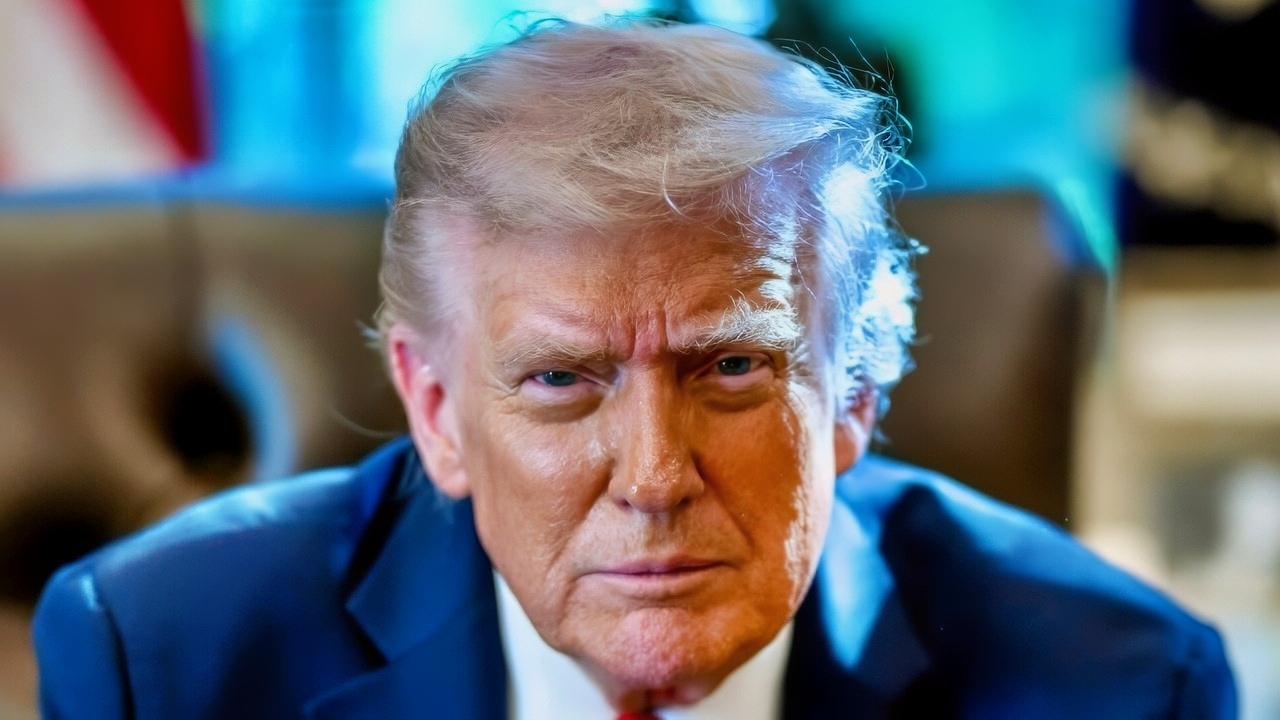
Officials within the Trump Administration are reportedly mulling the next move in the war in Iran — and may be considering a repeat of the beginning of the war that saw most of Iran’s senior military and political leadership killed.
Those decapitation strikes against Iran heralded the beginning of Operation Epic Fury. They were, on paper, highly successful, and killed not only the previous Ayatollah of Iran, Ali Khamenei, but also much of Iran’s National Security Council and other leadership personalities.
But while the Iranian administration had been momentarily headless, the country quickly assembled a new set of leaders.
Ayatollah’s son, Mojtaba Khamenei, was announced as the country’s new leader soon after the strikes, and other generals stepped in.
It is unclear if Iran’s new Supreme Leader is actually physically or mentally competent to lead. However, directives to the country’s civilian and military leadership have been issued in his name.
It is, therefore, somewhat unclear what a fresh round of strikes that target Iran’s leadership would achieve, given the regime’s hydra-esque powers of regeneration.
But advisors to the president seem to believe that a repeat of February’s decapitation strikes would allow President Trump to declare victory while simultaneously sending a message that the United States can eliminate Iran’s leaders at the time and place of their choosing.
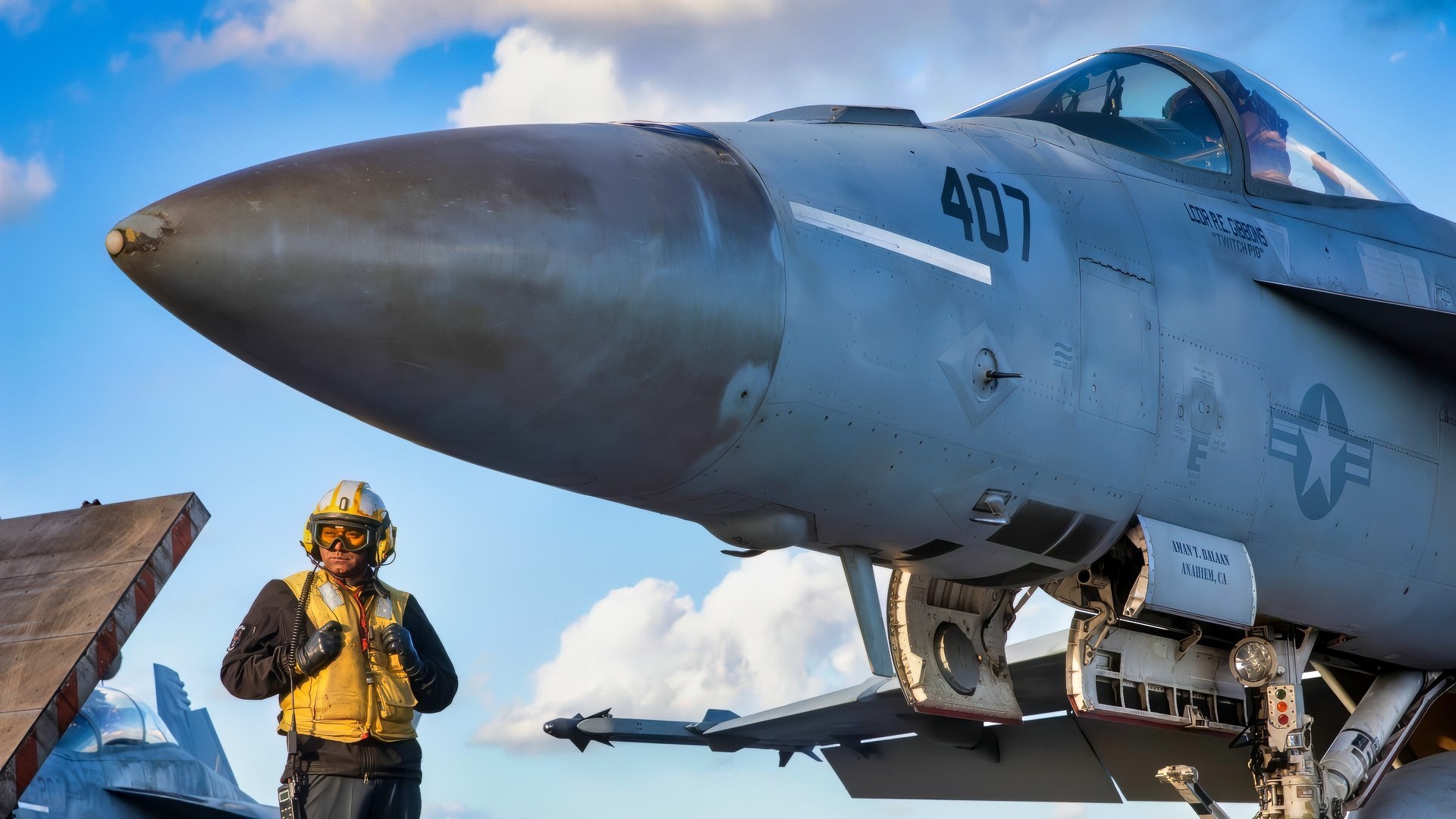
Aviation Boatswain’s Mate (Aircraft Handling) 1st Class Jose Mejiacastro, assigned to Air Department aboard the world’s largest aircraft carrier, USS Gerald R. Ford (CVN 78), prepares to signal to a Carrier Air Wing 8 F/A-18E Super Hornet attached to Strike Fighter Squadron 87 on the flight deck, Sept. 26, 2025. Gerald R. Ford, a first-in-class aircraft carrier and deployed flagship of Carrier Strike Group Twelve, is on a scheduled deployment in the U.S. 6th Fleet area of operations to support the warfighting effectiveness, lethality and readiness of U.S. Naval Forces Europe-Africa, and defend U.S., Allied and partner interests in the region. (U.S. Navy photo by Mass Communication Specialist 2nd Class Mariano Lopez)
One of the fears within the administration, however, is that additional strikes against Iranian leadership could provide additional impetus for Iranian retaliation against American officials in the United States.
There have been several threats against senior administration officials, some of which were seen as credible enough to warrant a response.
Earlier this month, United States Secretary of the Treasury moved to a military base from his Washington, DC residence following threats to his life from the Iranian administration.
“The United States is in a very strong position with control of the Strait of Hormuz and the Iranian economy collapsing. The president has been clear that the greatest naval blockade in history, Operation Economic Outcast, and the new Operation Iron Gate, an operation aimed at closing Iran’s land borders, “will continue with full effect,” an official within the Trump administration told NBC News. “President Trump has many options at his disposal and will make the best possible decision to ensure Iran can never possess a nuclear weapon.”
Strikes Ongoing
While the president had vowed not to strike Iran in the lead-up to the American midterm elections earlier this month, United States Central Command, the combat command that oversees operations in the Middle East, had been prosecuting some strikes against Iran.
The Pentagon defined those strikes as retaliatory or preemptive measures aimed at ensuring the safety of American service members in the region.
Now, however, the war in Iran has settled into a kind of low-grade battle in which both sides trade occasional strikes.

U.S. Navy Aviation Boatswain’s Mate Aircraft Handling 2nd Class Kyle Darmanin, from Mooresville, North Carolina, assigned to air department’s flight deck crash and salvage division, signals an F/A-18E Super Hornet, attached to Strike Fighter Squadron (VFA) 27, on the flight deck of Nimitz-class aircraft carrier USS George Washington (CVN 73) while underway in the Timor Sea in support of Talisman Sabre 2025, July 14, 2025. Talisman Sabre is the largest bilateral military exercise between Australia and the United States advancing a free and open Indo-Pacific by strengthening relationships and interoperability among key allies and partners, while enhancing our collective capabilities to respond to a wide array of potential security concerns. (U.S. Navy photo by Mass Communication Specialist 2nd Class Tyler Crowley)
American forces struck Iran’s Qeshm Island, a body of land on the northern side of the Strait of Hormuz.
For their part, Iranian forces have launched waves of drone and missile attacks against their neighbors in the region, as have the Houthis, the Iranian client rebel group vying for control over Yemen.
A new round of fighting could see Iran’s Pickaxe Mountain and Natanz nuclear sites subjected to repeated bombardment.
Both underground facilities are believed to house significant portions of Iran’s clandestine nuclear research infrastructure and potentially much of the country’s enriched uranium as well.
Blockade Ongoing
The United States Navy’s blockade of Iranian ports on the Persian Gulf is ongoing. Still, the country’s hardliners insist they will somehow break the American blockade, in place since mid-July. “We will definitely not tolerate it (the blockade), and we will use all our tools to confront this US aggression,” Iran’s Foreign Ministry spokesperson Esmaeil Baghaei said.
“We will definitely not tolerate it (the blockade), and we will use all our tools to confront this US aggression,” Baghaei added. “The naval blockade… is considered a military aggression,” Baghaei also said. “Iran has the right to use any available tool to defend itself in this regard.”
About the Author: Caleb Larson
Caleb Larson is an American multiformat journalist based in Berlin, Germany. His work covers the intersection of conflict and society, focusing on American foreign policy and European security. He has reported from Germany, Russia, and the United States. Most recently, he covered the war in Ukraine, reporting extensively on the shifting battle lines in Donbas and writing about the war’s civilian and humanitarian toll. Previously, he worked as a Defense Reporter for POLITICO Europe. You can follow his latest work on X.


