

U.S. Energy Secretary Chris Wright says far more oil is moving through the Gulf region than commercial ship tracking data suggests, and in an interview this week, he explained the logic behind his claim.
The Trump administration official said that ships are passing through the strait with their AIS transponders off, meaning that they cannot be reliably tracked – and while the claims hold up, they are still not providing the confidence that shipping companies and insurers need to return to business as usual in one of the world’s most important energy chokepoints.
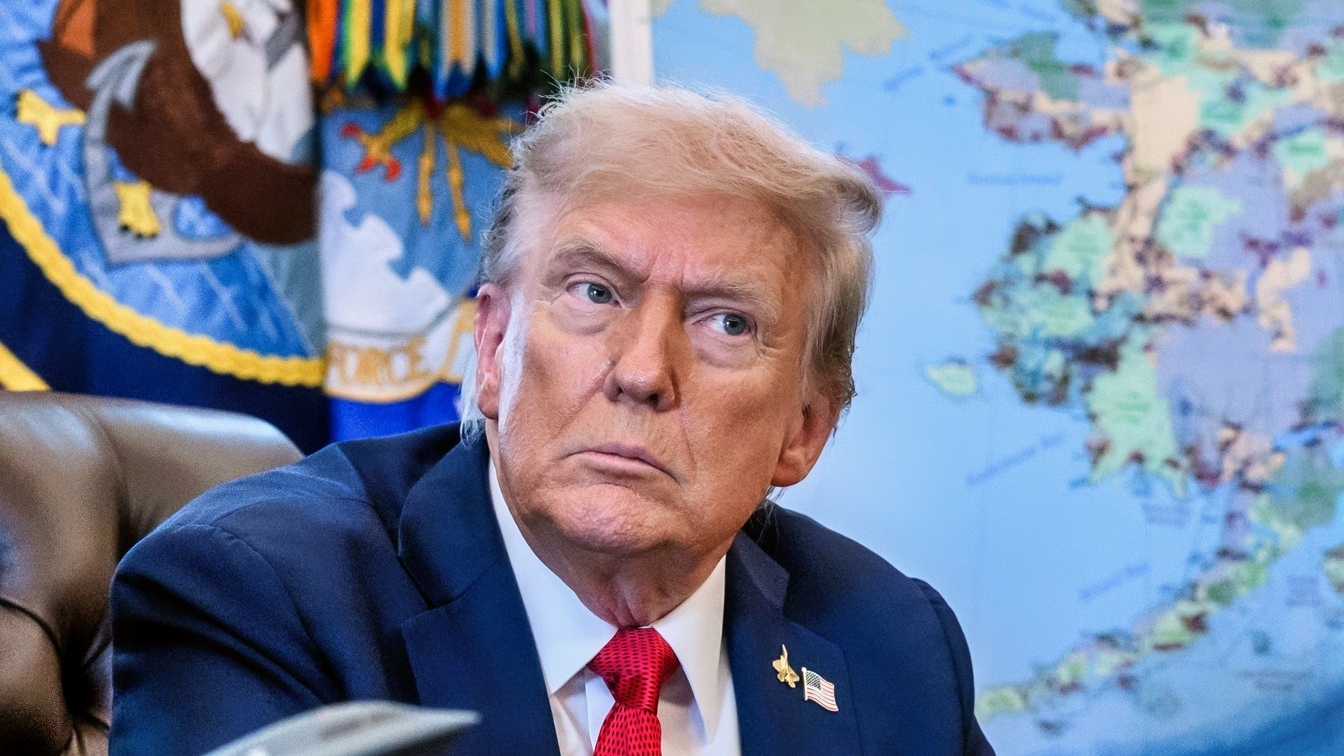
President Donald Trump, flanked by Secretary of Energy Chris Wright and Secretary of the Interior Doug Burgum, signs an Executive Order approving the Ambler Road Project in Alaska, Monday, October 6, 2025, in the Oval Office. (Official White House Photo by Joyce N. Boghosian)

President Donald J. Trump meets with guests, including Penske Corporation Chairman Roger Penske, in the Oval Office before participating in a Freedom 250 Grand Prix Showcase on West Executive Avenue at the White House, Monday, July 13, 2026. (Official White House Photo by Daniel Torok)
“Almost all of these ships have their AIS transponders off so they are dark,” Wright told Fox News on Friday. “In round numbers today, 14 to 15 million barrels a day are leaving the Arabian Gulf region versus the 20 million barrels a day pre-conflict.
So we’re short 5 or 6 million barrels a day from this region, but it’s a much smaller hole than people think it is.”
Wright said around 8 million to 9 million barrels per day are physically passing through the Strait of Hormuz, then explained how he arrived at the 15 million figure that was recently criticized by analysts, noting that another 6 million barrels per day leave the region through pipelines that bypass the strait.
Ship Trackers Show Something Different
Wright’s recent suggestions that more oil is passing through the Strait, or perhaps leaving the Gulf, drew criticism from analysts who point to vessel-tracking data showing something different.
Kpler data published Friday showed that only nine commodity vessels crossed Hormuz on Thursday, up from five on Wednesday and below an August average of 12 per day.
Before the war, more than 100 vessels routinely crossed the strait each day. Most of Thursday’s vessels also traveled through the Iranian route rather than the U.S.-backed route closer to Oman.
That’s hard to reconcile with repeated claims by U.S. President Donald Trump that the United States has “total control” over Hormuz.
In fact, the president is so confident that the U.S. has full control over Hormuz that he claimed during a speech on Friday, August 14, that he would soon declare the Strait of Hormuz a “territory” of the United States.
But an important caveat in the commercial data doing some real heavy lifting for the Trump administration is that Kpler’s figures do not include vessels traveling with their tracking equipment switched off.
What It Means When A Ship Goes “Dark”
The technology that Wright referred to during the interview is the Automatic Identification System, or AIS.
AIS is a continuously broadcast digital identification system.
Equipment aboard a ship automatically transmits information that can include the vessel’s identity, position, course, speed, and direction.
Other ships and shore stations receive those transmissions, allowing vessels to identify and track one another even when visibility is poor.
That system primarily communicates over two dedicated VHF radio channels, with conventional ship-to-ship AIS reception typically extending around 20 to 30 nautical miles, depending on factors like antenna height.
Coastal receivers and satellites can expand the area over which transmissions are collected.
Under normal circumstances, and indeed under International Maritime Organization (IMO) rules, AIS is mandatory for ships of 300 gross tons or more engaged in international voyages and for cargo ships of at least 500 gross tons on domestic voyages.
Passenger ships must also use AIS regardless of their size. But under the extraordinary circumstances in the Strait of Hormuz, the rules are being skirted.
So when ships turn off their AIS, commercial maritime intelligence companies can’t build full, detailed maps of global shipping. Those ships effectively disappear from the picture when they switch the systems off.
Why Switch AIS Off?
Ordinarily, ships required to carry AIS are expected to keep it operating while traveling, but a security exception applies in the ongoing crisis in the Strait of Hormuz.
The IMO recognizes that broadcasting a vessel’s exact location can create a security threat because hostile actors can use that AIS information to locate and target ships.
In its guidance, the IMO permits crews to switch off their AIS in areas where they reasonably judge that continued transmission could compromise the vessel’s safety.
Given the repeated and ongoing strikes against commercial vessels in the Strait of Hormuz by Iranian forces, the reason AIS is being routinely switched off is obvious – and it’s perfectly likely that what Wright is saying is true.
It’s Still Not Normal
While Wright insists that more oil is moving through the Strait of Hormuz, the waterway is no longer a safe route for oil to pass through the Gulf.
Crews know it, insurers know it, commercial shipping companies know it, and the White House also knows it.
It may be a good political defense, but claiming that oil is moving because the ships can simply switch off their AIS does not solve this problem now, nor will it solve it in the future.
Wright’s figures may technically hold up, but if the White House wants a real victory, it needs to guarantee the permanent opening of the Strait of Hormuz and the end of hostilities.
About the Author: Jack Buckby
Jack Buckby is a British researcher and analyst specializing in defense and national security, based in New York. His work focuses on military capability, procurement, and strategic competition, producing and editing analysis for policy and defense audiences. He brings extensive editorial experience, with a career output spanning over 1,000 articles at 19FortyFive and National Security Journal, and has previously authored books and papers on extremism and deradicalization.


