


The U.S. involvement in Iran is a military engagement with no clear end and no clear path to victory, while presenting growing political problems for the president who initiated it.
But no, it is not the same thing as the Vietnam War.
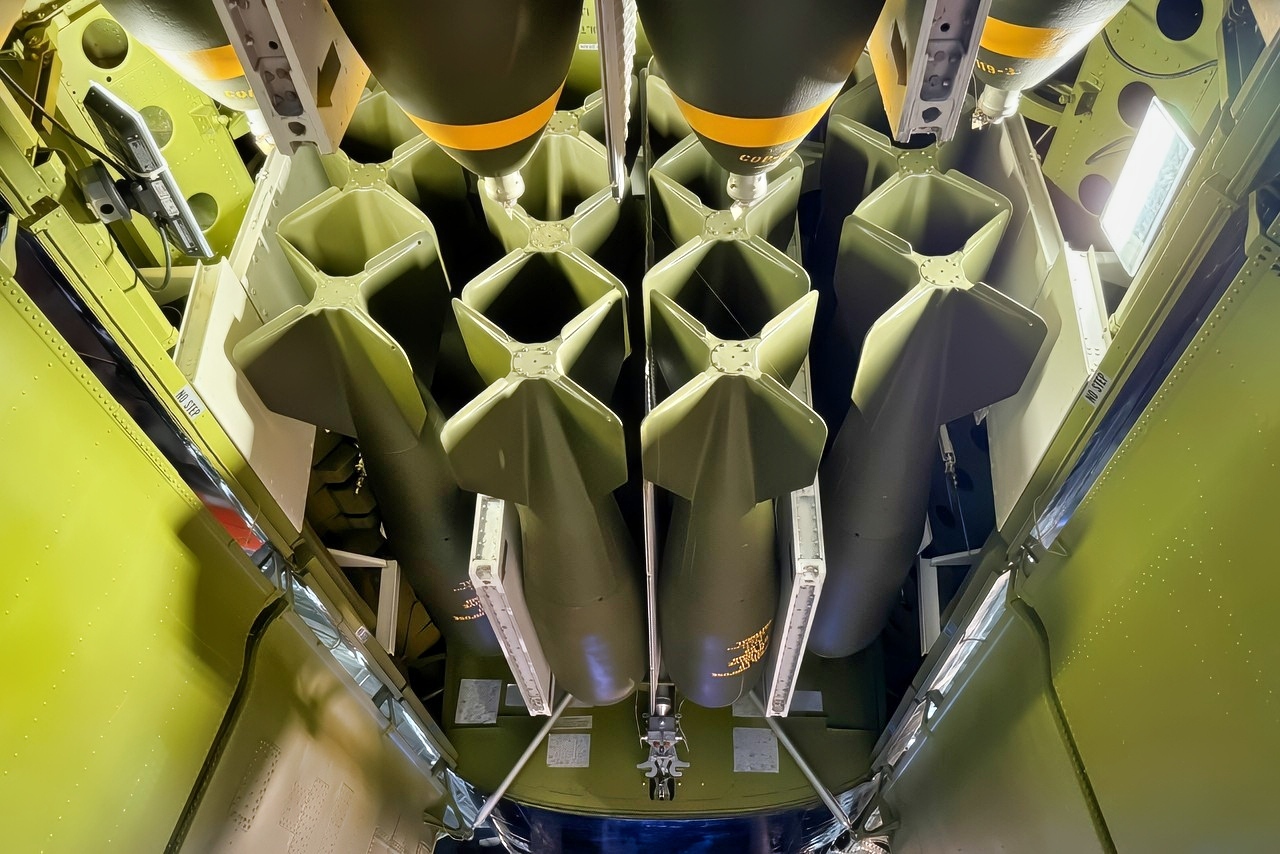
Bombs Inside the B-52 Bomber. Photo taken by Harry J. Kazianis/National Security Journal.

B-52D Bomber at USAF Museum. Image Credit: National Security Journal.
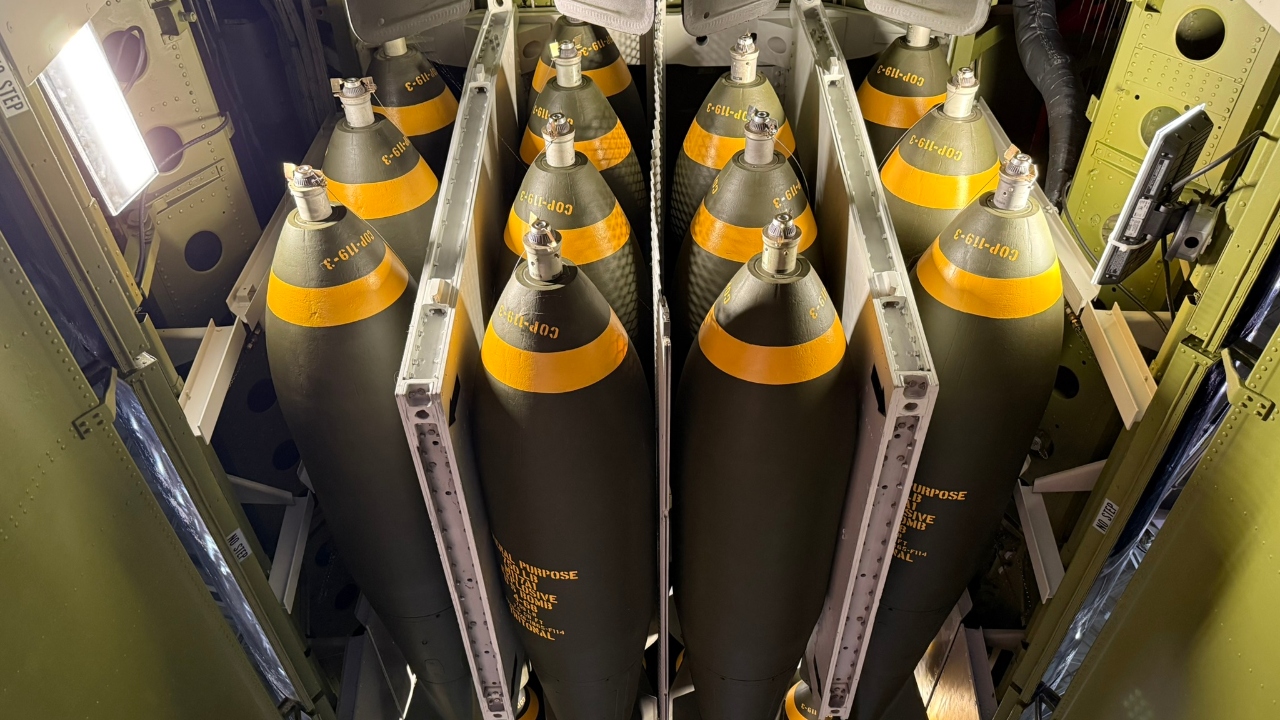
B-52 Bomber Bombs. Image Credit: National Security Journal.
That war continued for many years, involved United States ground troops, and created a great deal more American military casualties than have taken place in the Iran conflict.
The “forever wars” of the post-9/11 years, which included years-long commitments by large amounts of American ground forces, were a much closer Vietnam parallel than Iran is.
However, that doesn’t mean there aren’t lessons for today’s leaders- or that Donald Trump hasn’t made some of the same mistakes President Lyndon Johnson made during the early years of U.S. involvement in the Vietnam War.
That’s the argument made in an op-ed published this week in The Hill, by Mark Toth and Jonathan Sweet. The two authors founded INTREP360.
Toth is a foreign policy writer, while Sweet spent 30 years as a military intelligence officer and led the U.S. European Command Intelligence Engagement Division for three years.
LBJ’s “Failed Approach”
“President Trump and his national security team are heading back to the future in Vietnam,” Toth and Sweet argue.
The comparison, specifically, is to Operation Rolling Thunder, in which, between 1965 and 1968, the U.S. bombed Vietnam with the intention to “coerce the North Vietnamese to the negotiating table.”
“Like President Lyndon Johnson’s administration in 1965, Trump is trying to change Iran’s behavior without first militarily defeating it,” the authors argue. “As in Vietnam, it will not work.”
What else do the two situations have in common? The Iranian regime, much like North Vietnam did in the 1960s, is “using confusion over who is really in charge to keep Washington off-balance,” the authors say.
Trump seems to have concluded that he can bomb Iran into submission, or at least back to the negotiating table.
But that strategy, at least so far, has not worked.
“Johnson, although he failed to learn from it, was first taught that when Operation Mayflower failed 71 days after Operation Rolling Thunder began in Vietnam. Johnson suspended Rolling Thunder for seven days in May 1965 as an incentive for Hanoi to come to the negotiating table,” the authors write.
But the North Vietnamese did not come to the table then.
Johnson kept up the pressure from 1965 until 1968, but it did not bring about a victory. It did, however, bring about the end of Johnson’s presidency, as he announced in March 1968 that he was dropping his reelection bid.
Trump, of course, cannot run for re-election. But continued engagement in Iran could seriously affect both his party’s chances in the midterm elections and his legacy.
Iran’s Strategy
The authors see parallels between Iran’s strategy today and Vietnam’s nearly 60 years ago.
“Leaders in Tehran are more than willing to come to the negotiating table — the regime is even willing to sign deals, such as the June memorandum of understanding,” the Hill op-ed authors write.
“But that won’t bind the Islamic Revolutionary Guard Corps’ commanders from attacking vessels attempting to transit the Strait of Hormuz.
They have no intention of honoring any deal the nation’s civilian leaders enter into with Trump’s White House.”
“Mowing the lawn,” the authors write, or repeatedly attacking the same targets, is unlikely to work in the Iran campaign.
Is It a “Quagmire”?
Trump and Johnson, they argue, have both failed to “identify the decisive terrain” in their respective wars. Both were also prone, they argue, to “managing the war from the Oval Office.”
“Team Trump is not in a quagmire yet in Iran, but it must avoid repeating this same mistake,” Toth and Sweet conclude.
Meanwhile, The Atlantic Council’s Kurt Davis, earlier this week, made another argument for a limited parallel between Vietnam and Iran:
“The quagmire is economic, and it lands at the doorstep of Gulf countries—a group of states that did not necessarily choose this war, will not vote on it, and will carry its costs on their balance sheets long after the war ends,” Davis writes.
About the Author: Stephen Silver
Stephen Silver is an award-winning journalist, essayist, and film critic, and contributor to the Philadelphia Inquirer, the Jewish Telegraphic Agency, Broad Street Review, and Splice Today. The co-founder of the Philadelphia Film Critics Circle, Stephen lives in suburban Philadelphia with his wife and two sons. For over a decade, Stephen has authored thousands of articles that focus on politics, national security, technology, and the economy. Follow him on X (formerly Twitter) at @StephenSilver, and subscribe to his Substack newsletter.


