
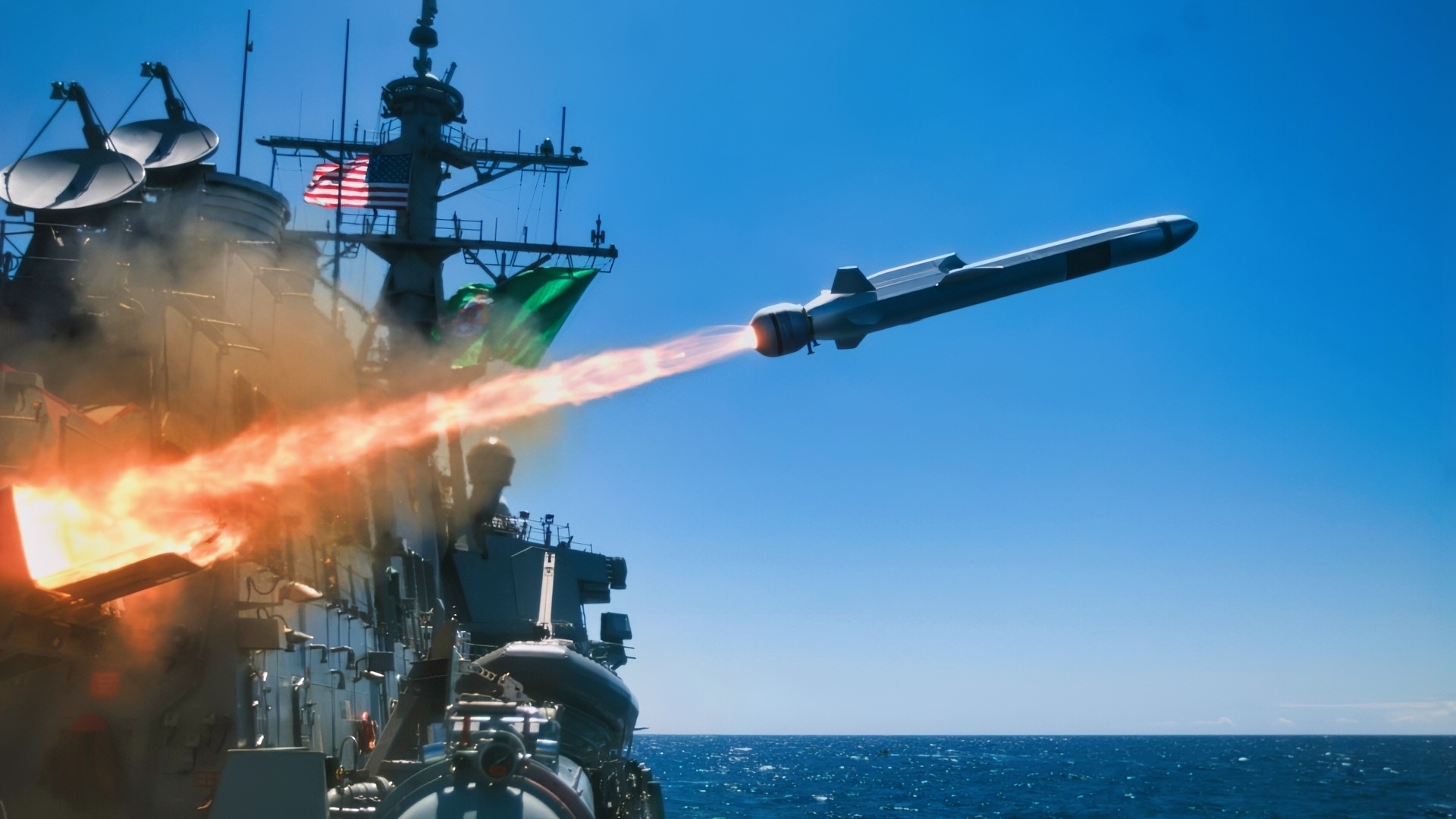
Strikes on commercial shipping in the Strait of Hormuz reached a wartime record last week amid intensified Iranian activity in the vital international waterway.
At least 12 vessels were struck the week beginning Monday, 5th October, the highest weekly tally of the conflict so far, according to data from the UK Maritime Trade Operations (UKMTO).
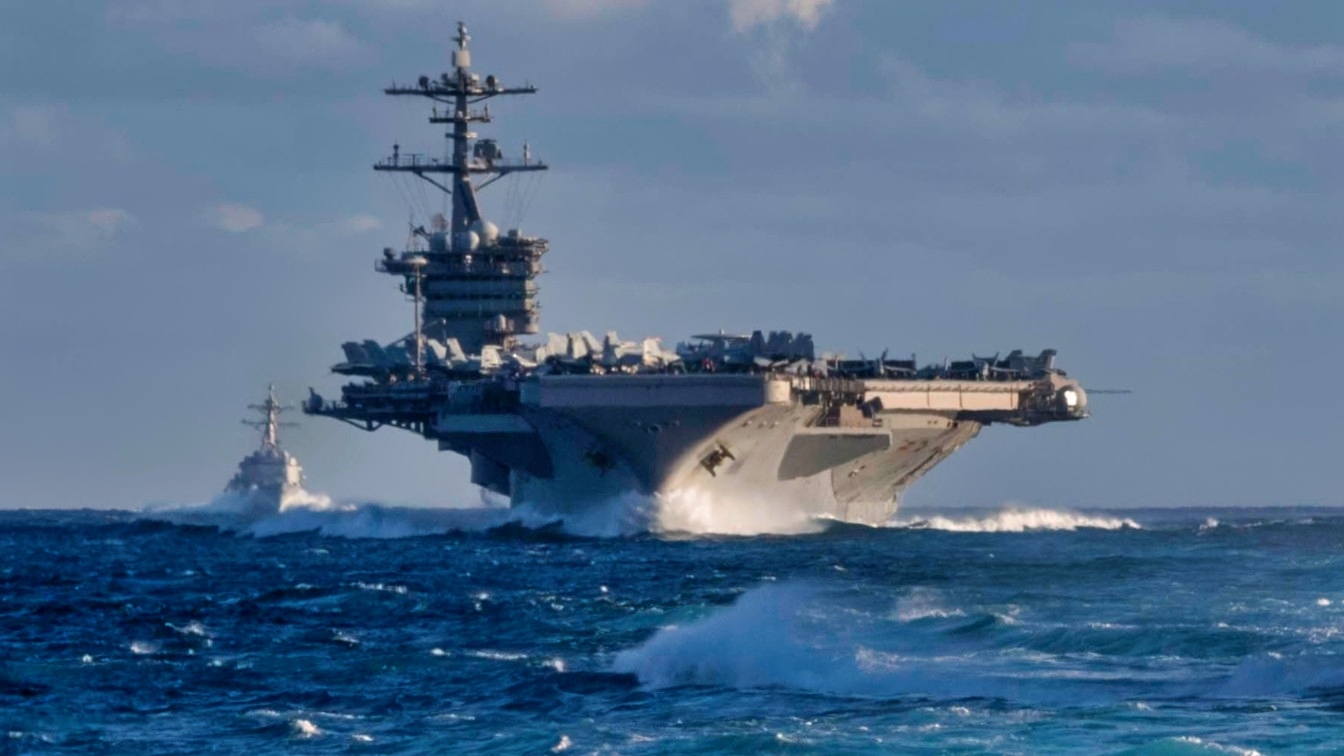
PACIFIC OCEAN (Nov. 27, 2019) The Arleigh Burke-class guided-missile destroyer USS Russel (DDG 59) and the aircraft carrier USS Theodore Roosevelt (CVN 71) transit the Eastern Pacific Ocean Nov. 27, 2019. Paul Hamilton is underway conducting routine training in the Eastern Pacific Ocean. (U.S. Navy photo by Mass Communication Specialist 3rd Class Matthew F. Jackson)
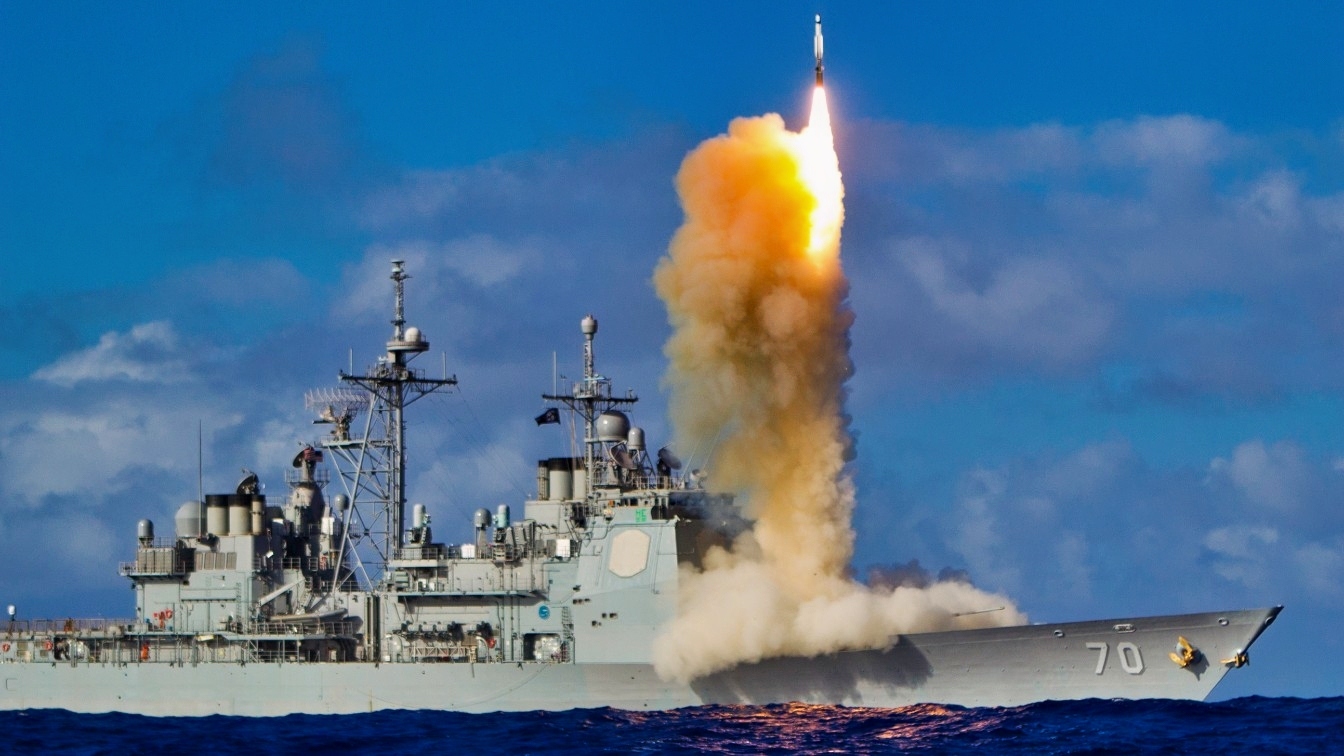
A Standard Missile-3 (SM-3) Block 1B interceptor missile is launched from the guided-missile cruiser USS Lake Erie (CG 70) during a Missile Defense Agency and U.S. Navy test in the mid-Pacific. The SM-3 Block 1B successfully intercepted a target missile that had been launched from the Pacific Missile Range Facility at Barking Sands in Kauai, Hawaii. Lake Erie detected and tracked the target with its on board AN/SPY-1 radar. The event was the third consecutive successful intercept test of the SM-3 Block IB missile. (U.S. Navy photo/Released)
That figure includes six vessels struck in a single day, the highest single-day tally of the war so far.
Iran has sharply increased its focus on the Strait of Hormuz since the start of the month, after Middle Eastern oil exports returned to pre-war levels for the first time in seven months at the end of September.
12 Attacked
Last week saw the highest number of vessels attacked in the Strait of Hormuz since the war began, with 12 reported incidents to the UKMTO.
The week before, 10 vessels were attacked, and at least four have come under fire so far this week.
While most of the vessels have sustained nothing more than damage, one container ship, the GFS Pride, sank on Tuesday, 13th October, after being hit by an unidentified projectile.
All 21 crew members were evacuated safely.
Earlier this week, Iran’s Islamic Revolutionary Guard Corps (IRGC) released footage of the vessel on fire, with the IRGC claiming it had attempted to transit an “unauthorized and dangerous route” through the strait, before striking a sea mine, catching fire and sinking.
The U.S. Central Command (CENTCOM) insists the Strait of Hormuz remains open for passage. “The United States and regional partners control the strait as commercial vessels continue to transit despite unwarranted IRGC aggression,” CENTCOM said in a social media post on Wednesday this week.
CENTCOM also described the IRGC claim regarding GFS Pride as “false,” adding that the vessel sank while being towed to shore. “Despite the attack,” CENTCOM continued, “commercial ships continue to flow through the Strait of Hormuz (whose primary routes remain clear of mines), with more than 40 ships moving in the last 24 hours.”
Crew Missing
The Nicaragua-flagged tanker Petro Dolphin was one of six ships struck on Sunday, and footage emerged of a large fire filmed by the crew of a nearby smaller boat.
Unlike the others, Petro Dolphin was struck more than 150 miles from the strait.
While 11 Indian crewmen were rescued from the ablaze vessel, two remain missing, according to the Forward Seamen’s Union of India.
Shipments Reducing
The rise of attacks and related concerns from shipowners and captains has reduced the volume of oil leaving the Persian Gulf.
According to Kpler data, around 12.6 million barrels of oil passed through the Strait of Hormuz on Tuesday.
This marked a drop from 15 million barrels at the end of September, compared with a pre-war baseline of 17 million barrels per day.
Because of the heightened risk, the U.S. Navy has dramatically increased support for vessels attempting to pass through the strait.
The U.S. Navy aided 85% more vessels during the first ten days of October than in the same period in August.
Iran Seeks to Retake Control
Iran, which closed the strait when the conflict with the U.S. and Israel began at the end of February, maintains that the international waterway is closed, and that the IRGC will target any vessel that attempts to transit through.
Tehran has intensified attacks on shipping in the Strait of Hormuz after an increase in traffic saw Gulf oil exports return to pre-war levels at the end of September for the first time since the war began.
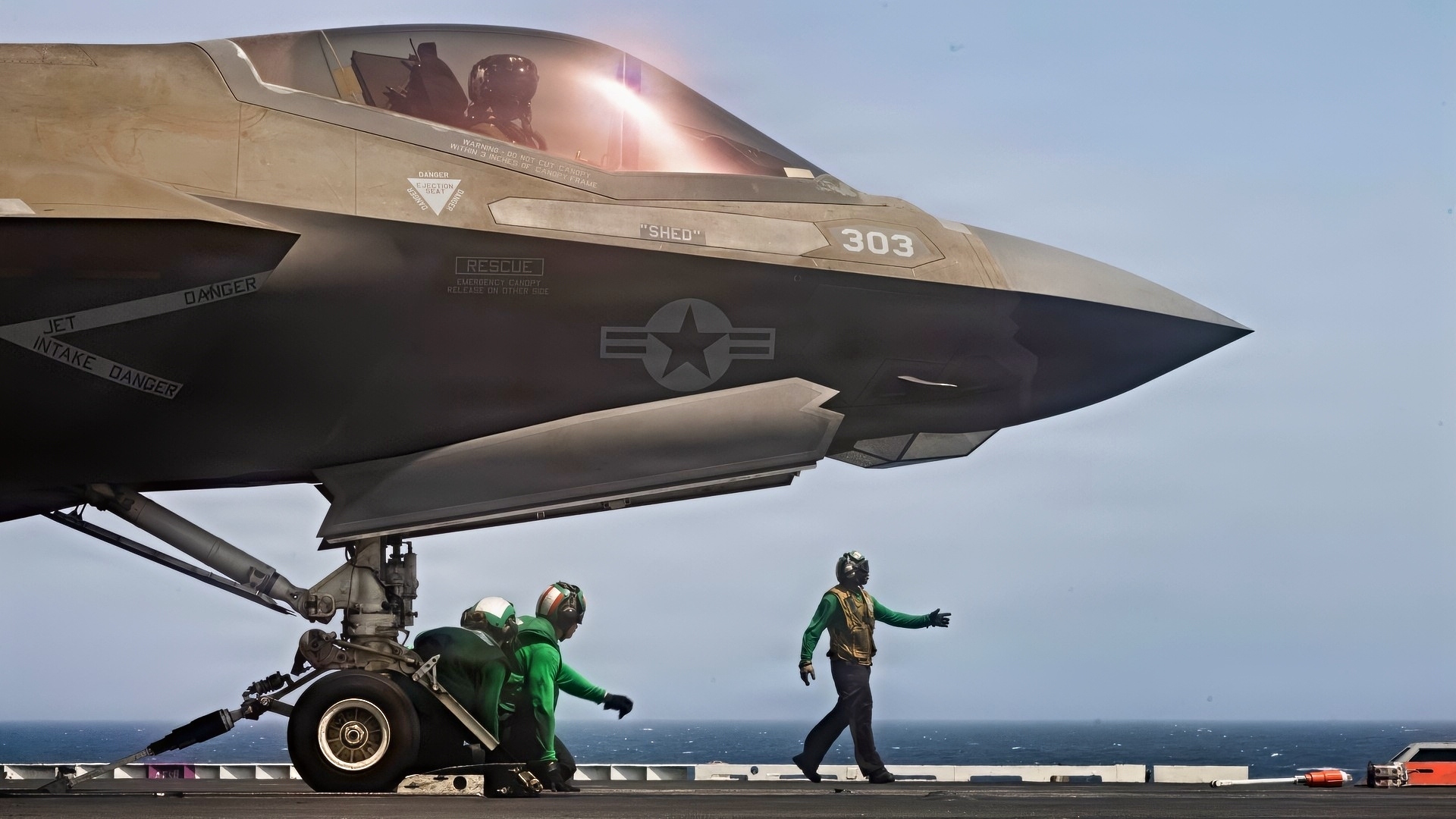
U.S. Sailors prepare an F-35C Lightning II, attached to Marine Fighter Attack Squadron (VMFA) 314, to launch from the flight deck of Nimitz-class aircraft carrier USS Abraham Lincoln (CVN 72), June 1, 2026. Abraham Lincoln is deployed to the U.S. 5th Fleet area of operations to support maritime security and stability in the Middle East. (U.S. Navy photo)
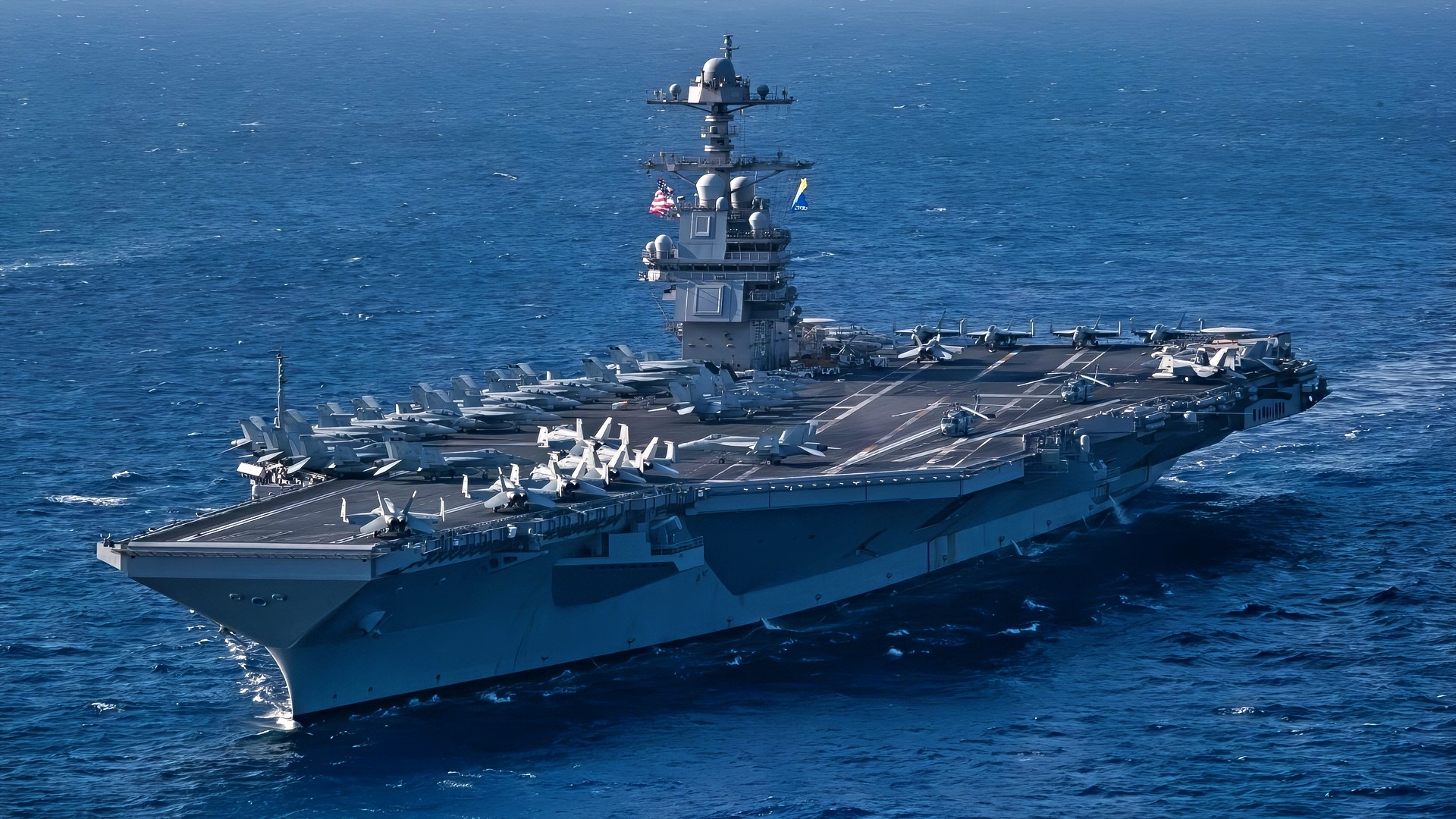
USS Gerald R. Ford Aircraft Carrier At Sea. Image Credit: Creative Commons.
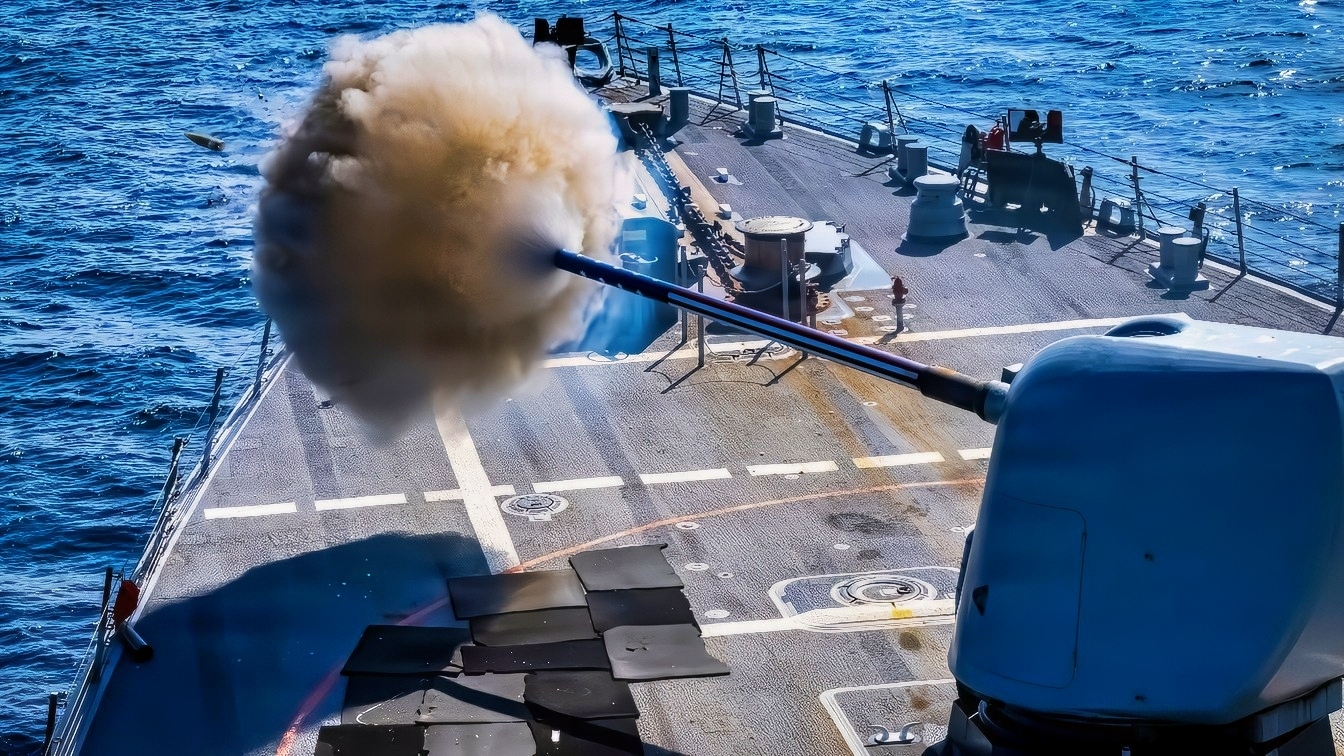
PACIFIC OCEAN (April 27, 2026) U.S. Navy Arleigh Burke-Class guided-missile destroyer USS John Paul Jones (DDG) 53, fires its Mk.45 5-inch deck cannon during a live fire exercise, April 27, 2026. John Paul Jones, part of the Theodore Roosevelt Carrier Strike Group, is underway in the U.S. 3rd Fleet area of operation conducting advanced training to bolster strike group readiness and capability. (U.S. Navy photo by Mass Communications Specialist 2nd Class Ryan Holloway)
Heightened traffic levels are partly due to financial incentives offered to crew members who risk their lives to transit the strait.
Captains reportedly receive $100,000 per month for complete shuttle runs, plus an additional bonus of $50,000 per trip.
Sailors also earn six times their salaries, with a month’s pay netting $9,000 compared to the usual $1,500.
At least directly, Iran cannot attack alternate pipelines in Saudi Arabia and the UAE without effectively declaring war.
It can, however, strike commercial shipping it claims breaches the regulations of a strait under its jurisdiction. Of course, that could still start a war, as that would be clearly disputed.
About the Author: Shay Bottomley
Shay Bottomley is a British journalist. He has written for the Western Standard, Business Insider, Maidenhead Advertiser, Slough Express, Windsor Express, Berkshire Live and Southend Echo.
NOTE: This has been updated since publication.