
Gulf Shipping Data Paints Complex Picture: While the White House insists it maintains full control over the Strait of Hormuz, data show that the number of commercial ships passing through the Strait has fallen back to single digits. Only seven commodity vessels crossed the strait on Thursday, August 20, according to the latest ship-tracking data from Kpler.
Those figures include four ships entering the Persian Gulf and three departing. None of the vessels were very large crude carriers (VLCCs) or liquefied natural gas tankers.

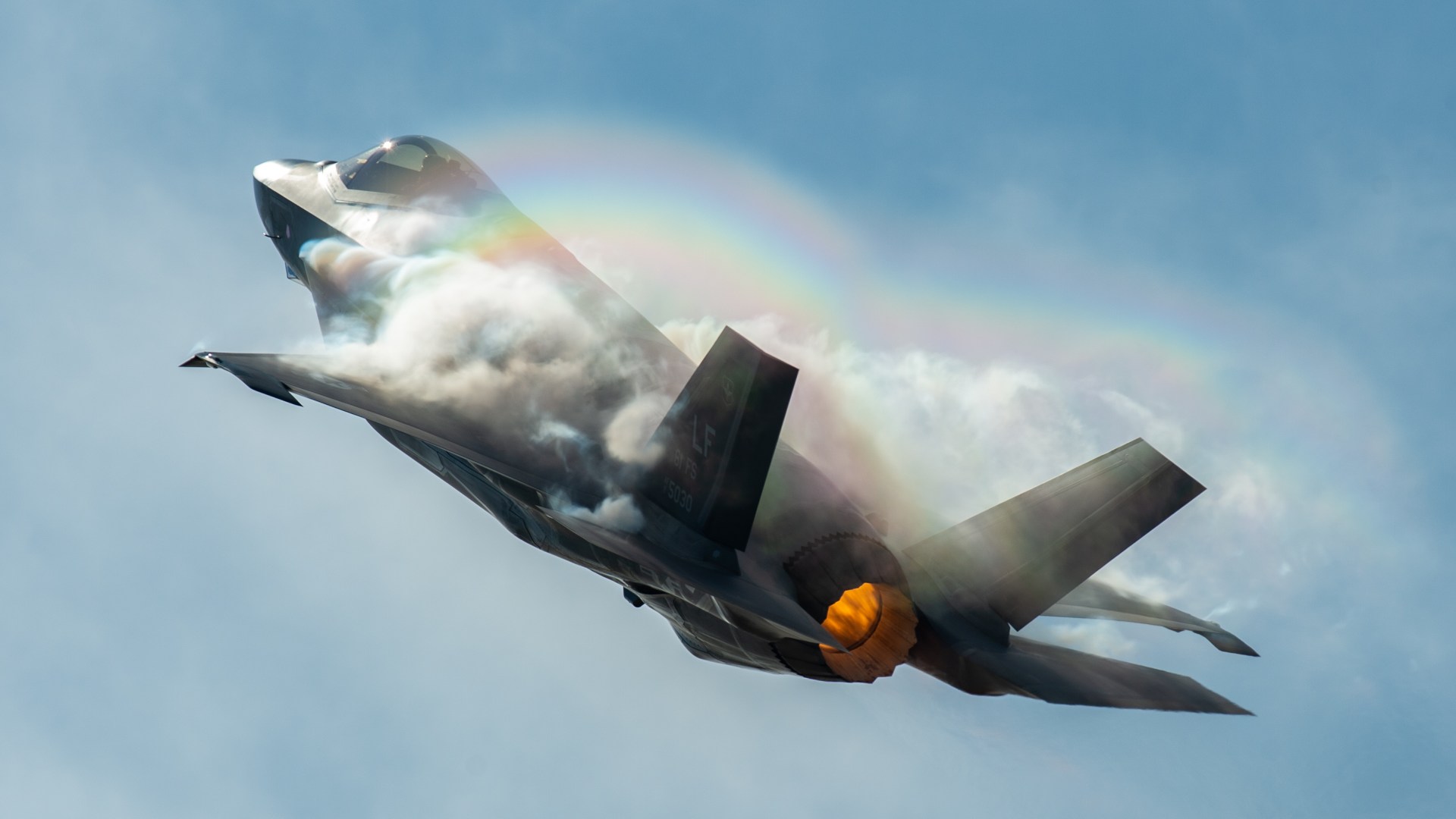
Capt. Andrew “Dojo” Olson, F-35 Demonstration Team pilot and commander performs aerial maneuvers during the Wings Over Houston Airshow Oct. 18, 2019, in Houston, Texas. The show featured performances from the U.S. Air Force Thunderbirds, Tora, Tora, Tora, and Oracle. (U.S. Air Force photo by Senior Airman Alexander Cook)

NAS PATUXENT RIVER, Md. — An F-35 Lightning II test pilot conducts flight test Sept. 10 to certify the carrier variant of the fighter aircraft for carrying the AGM-158C Long-Range Anti-Ship Missile (LRASM). As part of ongoing integration efforts, the Pax River F-35 Integrated Test Force (Pax ITF) team flew two days of test flights to evaluate flutter, loads, and flying qualities with two AGM-158 loaded on external stations. LRASM is a defined near-term solution for the Offensive Anti-Surface Warfare (OASuW) air-launch capability gap that will provide flexible, long-range, advanced, anti-surface capability against high-threat maritime targets. The Pax River ITF’s mission is to effectively plan, coordinate, and conduct safe, secure, and efficient flight test for F-35B and C variants, and provide necessary and timely data to support program verification / certification and fleet operational requirements.
The latest numbers are bad news for the Trump administration amid its claims that the Strait of Hormuz is fully open for business, but they come amid reports that the U.S. has successfully opened a new route near Omani waters, where tankers are ushered through the waterway in the dead of night.
Traffic Falls Back to Seven Ships
Thursday’s figures are a significant decline from the previous day’s total of 14, according to Kpler. The figure is also notable because of the composition of the traffic: there were no VLCCs, the enormous tankers responsible for moving some of the largest individual loads of crude out of the Gulf. There were also no LNG tankers.
One very large gas carrier transporting propane and butane did leave the Gulf, however, and Kpler recorded it using the Iranian route rather than the southern route closer to Oman.
The figures also offer a broader view of the shipping market, which remains extremely cautious. Kpler data continues to show traffic struggling to establish any sustained recovery, with increases in movement typically being followed by periods of even lower traffic. Nine commodity ships passed through the Strait of Hormuz on both Tuesday and Wednesday this week.
However, there is another important consideration: vessels traveling with their Automatic Identification System (AIS) transponders switched off. Those vessels are not necessarily captured in publicly available traffic figures, meaning that the Kpler numbers should not be considered a complete count of every ship physically passing through Hormuz. And the figures could, in fact, instead prove that the U.S. corridor is starting to work – even if it has little chance of ensuring the strait remains open in the long term.
U.S. Corridor Still Hasn’t Restored Normal Shipping
The figures come days after Axios reported that the U.S. military has been operating a protected corridor through the southern side of Hormuz. Two unnamed U.S. officials told the outlet that between 15 and 20 tankers move through the corridor every night, with the operation helping both loaded tankers leave the Gulf and empty vessels enter to load new cargoes. The officials told the outlet that as many as 10 million barrels of oil per day were reaching global markets through the operation.
Those figures don’t necessarily conflict with what Kpler is showing, because Kpler’s data only shows visible vessels. Many of the ships involved in the operation are understood to be traveling without broadcasting their locations via AIS.
Recent analysis found that 80% of liquid cargo movements through the Strait of Hormuz over a two-week period either used the route near Oman or traveled without their transponders switched on. The numbers do, however, show that traffic through Hormuz is difficult to determine precisely, with tankers regularly transiting the strait under military protection. What we do know, though, is that the quantities of oil moving through the waterway every night are still substantially lower than they were pre-war.
The Other Strait Under Pressure
The Strait of Hormuz is not the only critical maritime chokepoint under pressure. The latest data shows that traffic through the Bab el-Mandeb Strait, which connects the Red Sea with the Gulf of Aden, fell to 23 commodity ships on Thursday, down from 34 on each of the previous two days. That data included sixteen vessels entering the waterway and seven exiting.
Among the departing ships were two Suezmax crude tankers. The Stoic Warrior was carrying oil toward Vietnam, while the Dokos was heading for India.
There were again no VLCCs or LNG tankers recorded passing through the Bab el-Mandeb Strait.
The data comes after Yemen’s Houthis, an Iranian proxy group, announced a blockade against Saudi Arabia. Its forces have struck Saudi-linked ships transiting the waterway, with the hostilities causing further pressure on the global oil trade.
Iran Is Hurting
The disruption is also hitting Iran’s oil trade particularly hard and squeezing Iran’s most important oil customer.
Kpler data shows China’s imports of Iranian crude have fallen to around 534,000 barrels per day so far in August, compared with an average of 1.4 million barrels per day last year. Chinese independent refiners are already looking elsewhere for supplies, with some seeking Brazilian and Iraqi crude as replacements. The U.S. blockade appears to be working, and even Iran’s president, Masoud Pezeshkian, suggested on Friday, August 21, that the regime should seek to end the war from a “position of power” as the economic pressure sets in.
About the Author: Jack Buckby
Jack Buckby is a British researcher and analyst specializing in defense and national security, based in New York. His work focuses on military capability, procurement, and strategic competition, producing and editing analysis for policy and defense audiences. He brings extensive editorial experience, with a career output spanning over 1,000 articles at 19FortyFive and National Security Journal, and has previously authored books and papers on extremism and deradicalization.


