

While the United States and much of the global economy have been put through the wringer thanks to the war of choice that the United States and Israel initiated on February 28, the Islamic Republic of Iran — the target of that war of choice — has not had an easy ride.
Indeed, the ongoing blockade of the Strait of Hormuz (SoH) by the United States Navy and the semi-regular escort missions of oil containers passing through the SoH have clearly harmed Iran’s already tenuous economy.

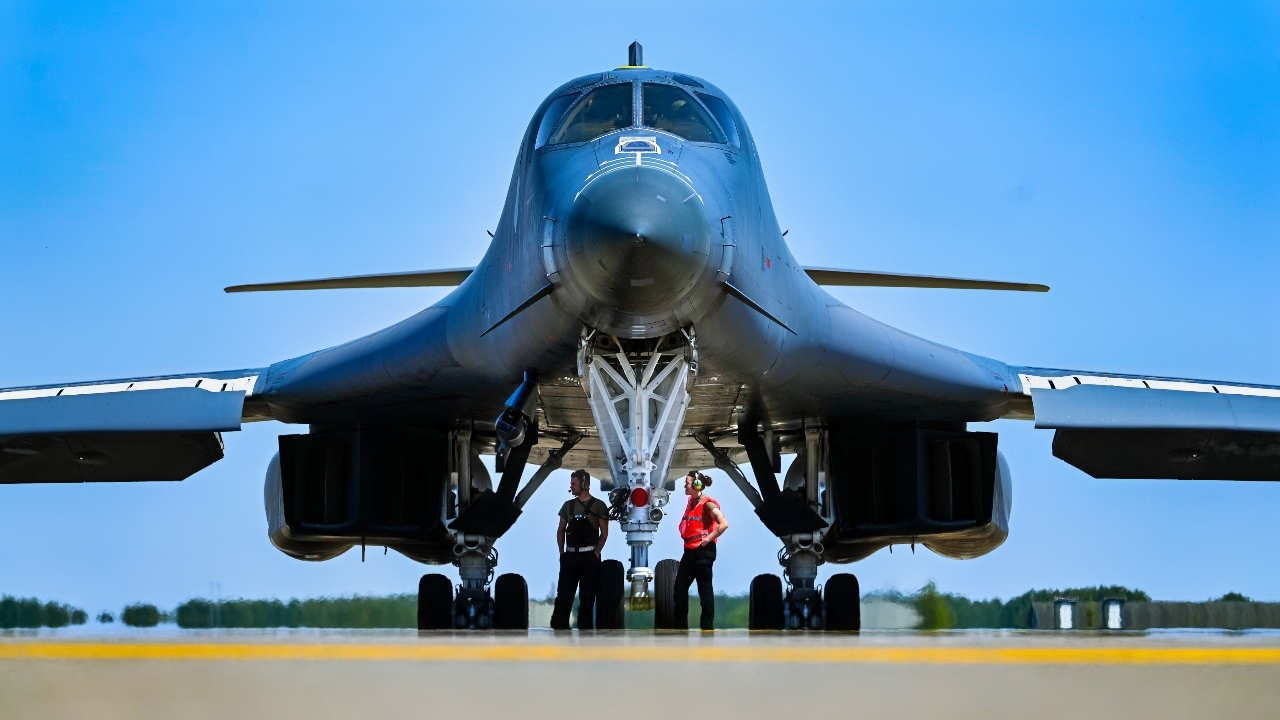
B-1B Lancer Bomber in Museum in Dayton, Ohio. Image Credit: Harry J. Kazianis/National Security Journal.
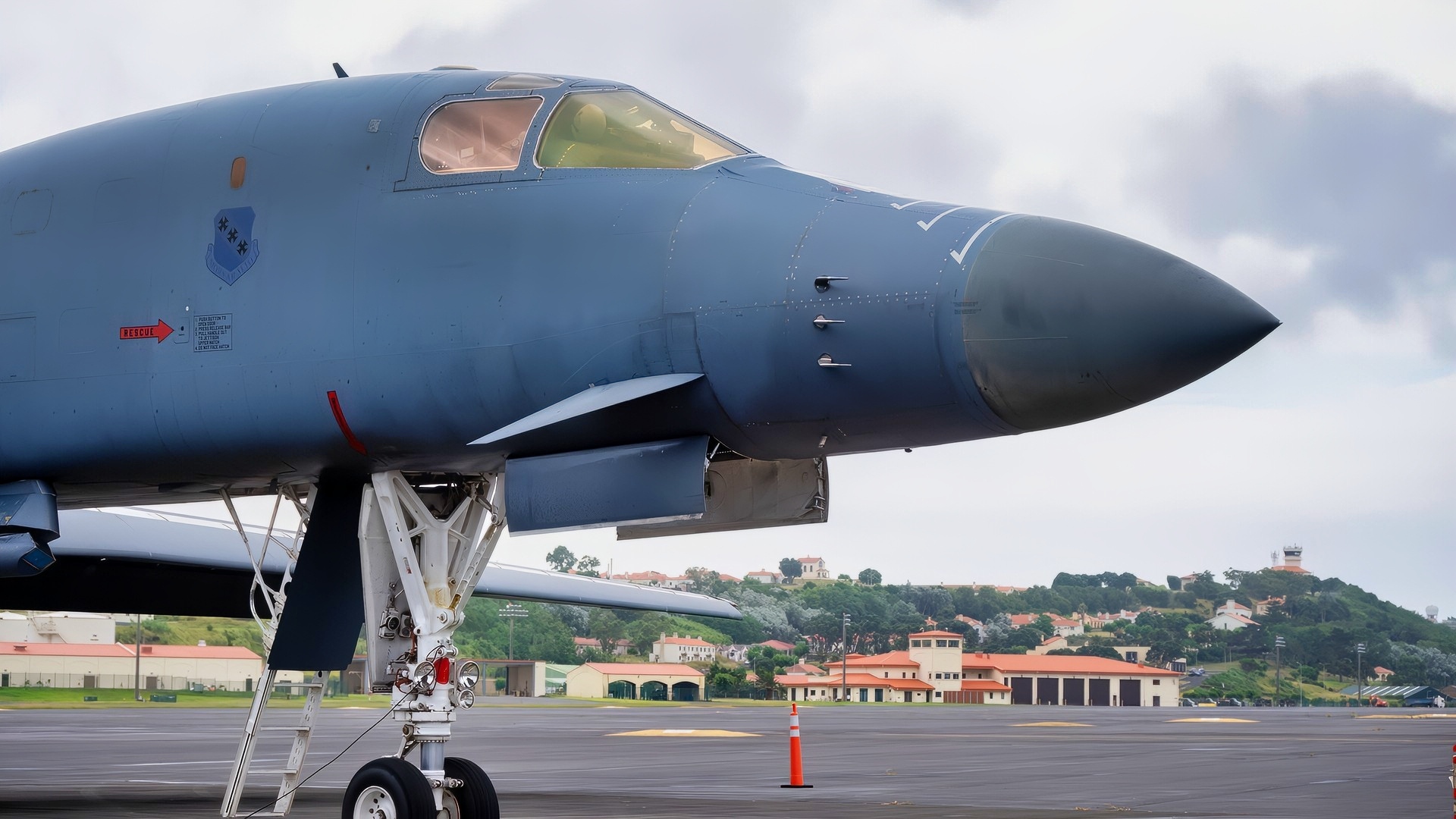
A U.S. Air Force B-1B Lancer sits on the flightline at Lajes Field, Azores, Aug. 22, 2025. The aircraft landed for a hot pit refuel during a Bomber Task Force Europe mission. (U.S. Air Force photo by Cristina Oliveira)
And it isn’t only Western sources claiming that Iran is struggling economically.
An Economic Duel
In fact, that economic struggle was the entire purpose of both the “Project Freedom” blockade and the US Treasury Department-led Operation Economic Outcast: to squeeze the Islamic Republic so much that the people overthrow the hated regime.
While the regime is going through a major crisis–and there were real opposition movements at the start of the year–there remains little evidence showing that the regime is imploding.
There are also more indications of real divisions within the Islamic Republic’s leadership.
While Tehran’s military and national security leaders are clearly committed to maintaining a war footing (and possibly escalating), the political leadership and diplomatic corps remain reticent about escalation.
Iranian Foreign Minister Abbas Araghchi, clearly in Tehran’s restraint camp, has made headlines in the West after saying he no longer believes there is a real military solution to the conflict with the United States.
Araghchi highlighted the fact that the Iranian currency, the Rial, has plummeted to a historic low of more than 2.5 million to the US dollar as the US naval blockade continues seemingly in perpetuity.
Araghchi has already said US military actions and sanctions have not ended the crisis.
He, like the rest of the leadership in the Islamic Republic, does not believe the Islamic Republic will break because of the US economic pressure.
At the same time, unlike many in Iran’s ruling elite, Araghchi does not think either Iranians or Americans can end the war with a decisive military victory.
Because of Araghchi’s comments to the media, US President Donald J. Trump has again indicated an unwillingness to negotiate with Tehran, thinking that the US side has enhanced leverage over the Islamic Republic.
Of course, Araghchi is correct.
Both sides have fought themselves to a stalemate.
And for at least the next six months, if a strategic-level breakthrough happens, the Islamic Republic is likely to advance its interests more than the Americans.
If the situation persists for long enough, the United States may be able to flip it in its favor.
But that remains a big question mark, especially as the war’s economic fallout and political damage hit over the next four weeks.
If the Democrats do take power after November’s Midterm elections, it is highly unlikely that the Democrats will continue funding the war, and they will likely vote to disempower the Trump administration’s war.
Araghchi is not saying the Iranians are about to collapse.
The war is damaging everyone involved with it —and even third parties—because of the economic impacts.
The Trump administration continues seeking greater leverage over the Iranians.
The Iranians keep checking any American attempt to gain greater leverage over them.
After seven months of what was supposed to be a handful-of-weeks war, the idea that either side has a decisive military victory in the offing seems absurd.
Yet both sides appear to believe that (Araghchi’s comments notwithstanding).
We are stuck in a classic escalation trap.
Now, both sides seem interested in expanding the war beyond where it is.
Breakdown Everywhere
Reports suggest that Iranian-aligned elements may have considered an attack on the Royal Air Force (RAF) base in Fairford, England, because of its importance in hosting US Air Force B-1B Lancer long-range bombers critical for the American war effort.

B-1B Lancer Bomber National Security Journal Photo.
Then there’s the complete breakdown in peace in the Arabian Peninsula, notably in Yemen, as the Iranian-aligned Houthis have engaged in a rolling offensive against the Saudi-backed PLC army.
Saudi Arabia has retaliated with massive airstrikes, prompting the Houthis to launch devastating attacks on Saudi energy infrastructure (while closing off the essential Strait of Bab el-Mandeb to Saudi-flagged shipping).
As that situation in Yemen deteriorates, the risk of the conflict escalating into nearby countries in the Horn of Africa just across from the waterway increases, too.
There have already been indicators of instability in Tigray and talk about the unofficial country of Somaliland being recognized by the US and its allies to be used as a counterweight against Houthi-controlled Yemen.
None of this leads to de-escalation.
More importantly, though, there is currently no serious indication that either side in these conflicts can achieve decisive military victory.
The conflicts must be negotiated, which is what Araghchi (and other voices in the West have said.
The Need for Cooler Heads
Instead, both sides appear to be overwhelmingly led by hawks who want to escalate continuously.
That still won’t lead to victory. And the world will struggle through an increasingly difficult economic situation–not only Iran–yet the warring sides won’t stop.
Even if the economic war upon Iran leads to the desired outcome of regime collapse, there is no guarantee that whatever arises in the aftermath will be any better either for the people of Iran or the region than the current Islamic Republic.
What is likeliest, though, is widespread destruction in the region, major damage to the global economy, and political instability everywhere.
About the Author: Brandon J. Weichert
Brandon J. Weichert is the Senior National Security Editor at 19FortyFive.com. He also manages The Weichert Brief on Substack. Weichert also hosts “National Security Talk” on Rumble. He is the author of four bestselling national security books, most recently A Disaster of Our Own Making: How the West Lost Ukraine (Encounter Books). Follow him on Twitter/X @WeTheBrandon.


