
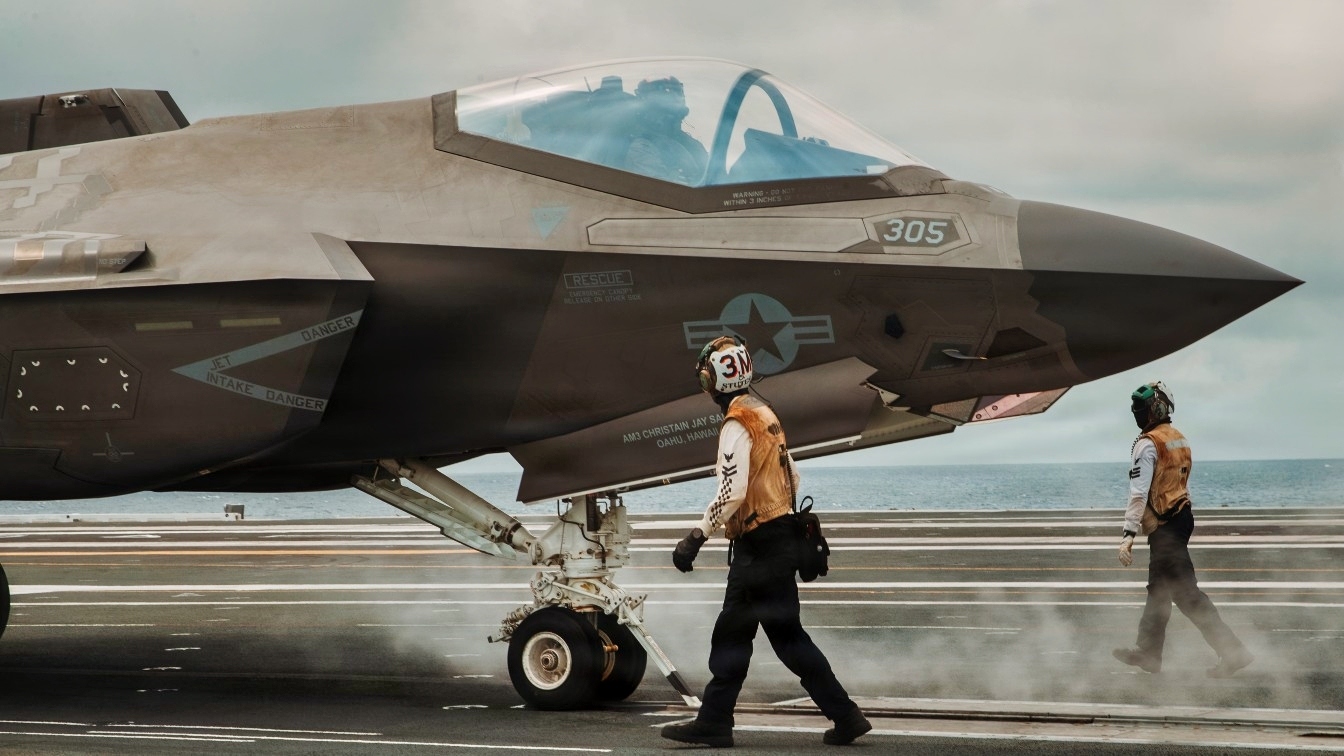
The Pentagon appears to be preparing for another round of military strikes against Iran, concentrating as many as three aircraft carrier strike groups and two amphibious groups in the Middle East.
This follows President Donald Trump’s telling TIME that he believes a new round of strikes could occur soon after the November midterm elections.
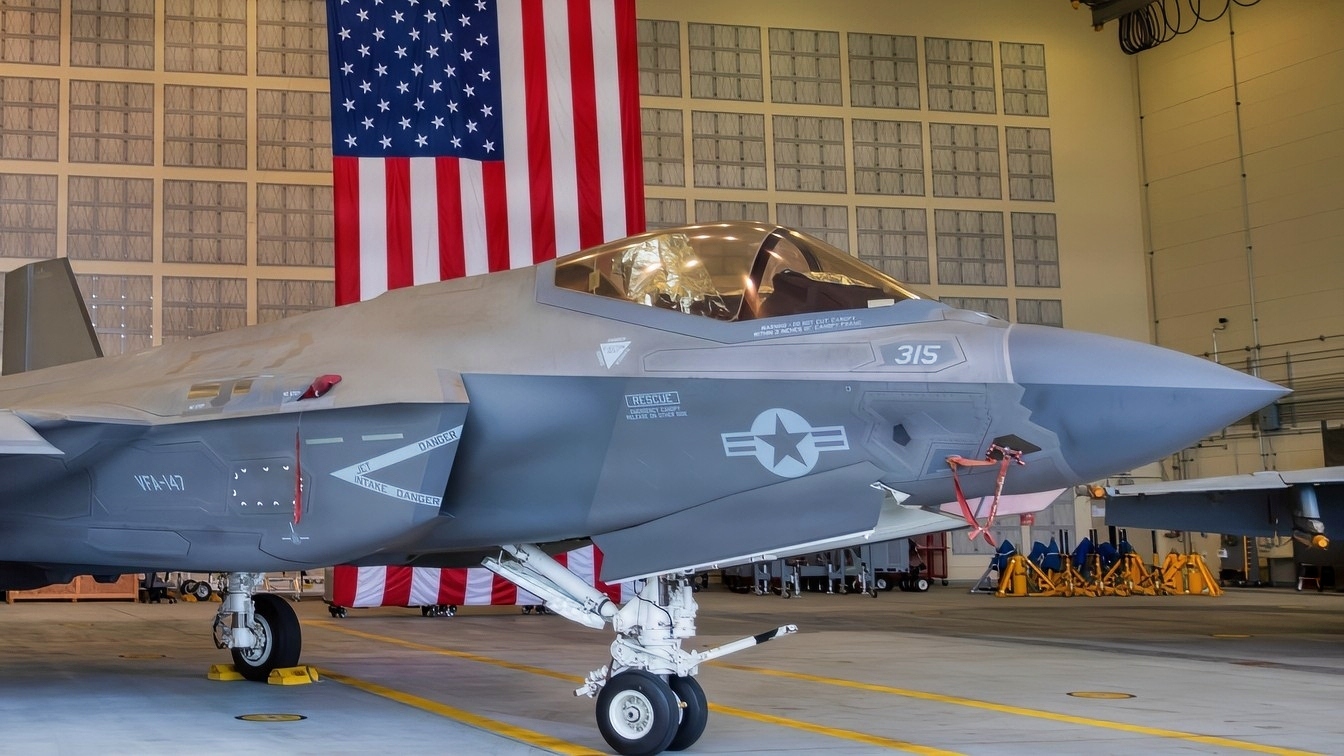
A U.S. Navy F-35C Lightning II static display from Strike Fighter Squadron (VFA) 102, Carrier Air Wing (CVW) 5 inside of Hangar 5300 during Friendship Day at MCAS Iwakuni, May 3, 2026. Since 1973, MCAS Iwakuni has held an air show designed to foster positive relationships and offer an exciting experience that displays the communal support between the U.S. and Japan. The air show encompassed various U.S. and Japanese static display aircraft, aerial performances, food and entertainment. (U.S. Marine Corps photo by Lance Cpl. Isaac De Leon)
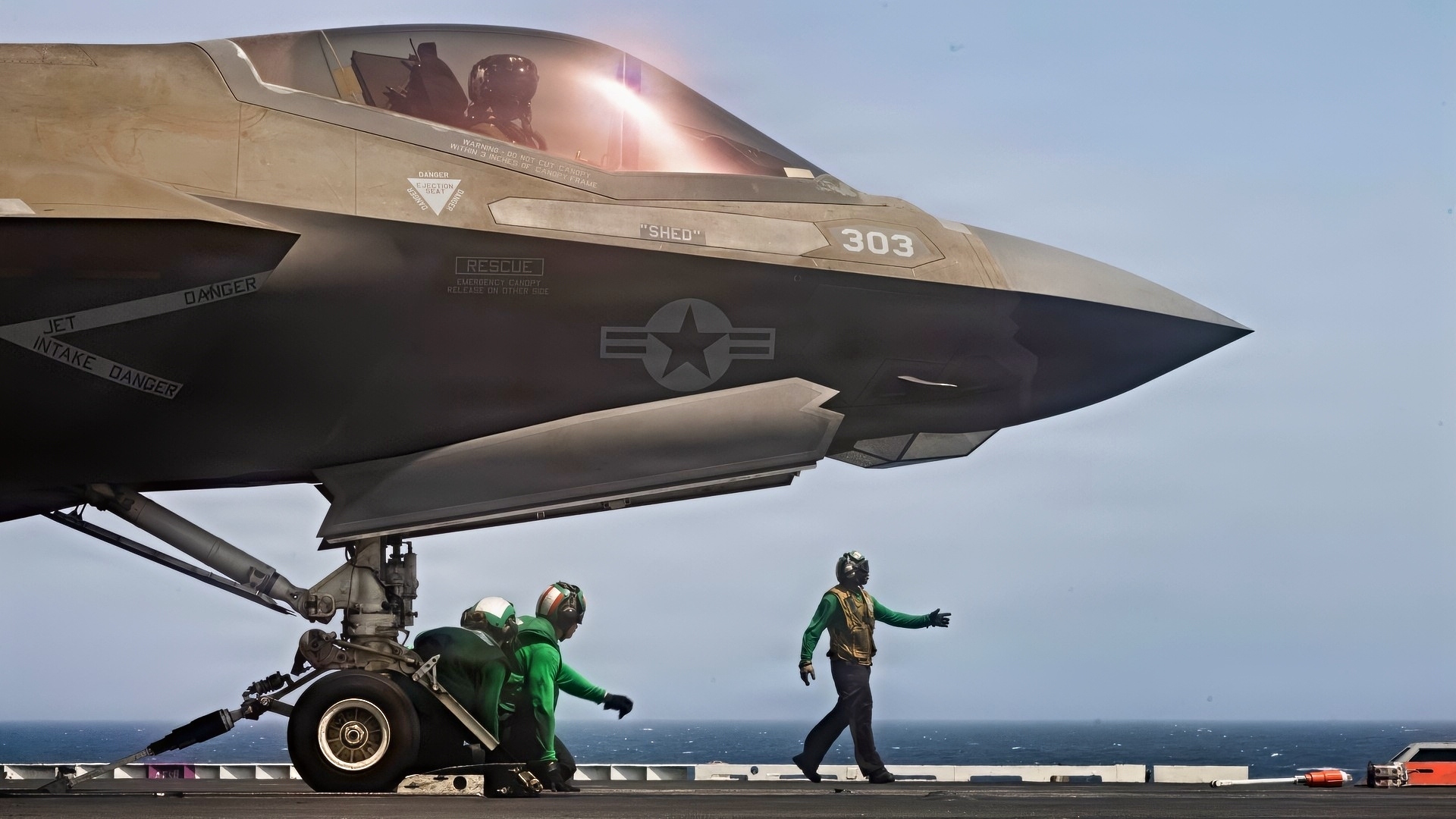
U.S. Sailors prepare an F-35C Lightning II, attached to Marine Fighter Attack Squadron (VMFA) 314, to launch from the flight deck of Nimitz-class aircraft carrier USS Abraham Lincoln (CVN 72), June 1, 2026. Abraham Lincoln is deployed to the U.S. 5th Fleet area of operations to support maritime security and stability in the Middle East. (U.S. Navy photo)
The ongoing buildup could see more than 20,000 U.S. sailors and Marines in the region, supported by roughly 150 carrier-based fighter aircraft and fleets of cruisers, destroyers, helicopters, Marine Corps aircraft, and amphibious ships.
The preparations indicate that the United States may be looking to pressure Iran to make concessions, to deter Iran and its proxies from launching new strikes against neighboring countries, or simply preparing to launch new strikes against Iran in the hope of forcing the regime to make concessions over its nuclear program.
Three Aircraft Carriers
USS George Washington and George H.W. Bush are already in the region, and USS Theodore Roosevelt will soon join them.
The George Washington arrived in the U.S. Central Command area in August after leaving its usual operating area in the western Pacific. USNI News reported on August 20 that the carrier entered the region accompanied by the cruiser USS Robert Smalls and destroyer USS Shoup, initially to relieve the USS Abraham Lincoln Carrier Strike Group.
The George H.W. Bush was deployed from Virginia in March and is still in the region.
Theodore Roosevelt left San Diego on September 27 and, according to reports this week, deployed as the flagship of Carrier Strike Group 9 following months of preparations.
The deployments could mean three U.S. carriers will operate together in the Middle East as early as the end of October.
USS George Washington could then move back toward Japan after Roosevelt arrives, meaning the Pentagon can either rotate the forces or temporarily concentrate them around Iran during a period of escalation.
Thousands Of Additional Personnel
The Theodore Roosevelt, with the Roosevelt Carrier Strike Group and Makin Island Amphibious Ready Group, will move 7,000 sailors and roughly 2,000 Marines to the Middle East.
USS Makin Island departed San Diego on September 28 with the amphibious transport dock USS John P. Murtha and dock landing ship USS Anchorage.
The ships carry the 13th Marine Expeditionary Unit, providing commanders with Marines capable of conducting operations from sea, along with helicopters and other aviation assets.
The group will temporarily overlap with the USS Boxer Amphibious Ready Group, which has been in the Middle East for several months.
Is Trump Preparing New Strikes?
The imminent naval buildup follows weeks of reports suggesting that Trump and his senior advisers are actively considering another round of strikes against Iran after the November midterms.
On September 2, Reuters reported that senior White House officials were considering intensifying military operations against Iran, with four people familiar with internal discussions claiming that advisers were pushing to keep the conflict contained until after Americans turn out to vote.
But no decision has been made yet to return to full-scale war.
Trump has acknowledged that he is considering escalating.
“I have a big decision coming up. Do I want to go in and annihilate them [the Iranian regime] or do I not? It’s a big decision. Anything could happen with me,” Trump told Axios on Thursday, September 17.
The Pentagon has also reportedly been developing more limited alternatives, with reports in late August saying U.S. Central Command had drawn up plans for strikes against Iranian radar and missile sites around the Strait of Hormuz, with Defense Secretary Pete Hegseth reportedly backing the proposal.
Trump Tells Congress
In a September 3 letter to House Speaker Mike Johnson, the president officially left the door open to additional attacks.
The letter was a notification issued under the 1973 War Powers Resolution, a federal law that limits the U.S. president’s ability to initiate or escalate military action without congressional consent.
In it, he informed Congress that U.S. military action against Iran had begun two days earlier, in what he described as defensive strikes against Iranian targets following attacks on American forces in late August.
The targets included Iranian radars and air defense systems, small boats, unmanned surface vessels, tankers, and more.
Trump also stressed that U.S. ground forces had not participated in the recent strikes and that the attacks were “measured” and “limited,” but he also said they may not be the last.
“United States Armed Forces remain postured to take further military action, as necessary and appropriate, to address further attacks against the United States or its allies and partners and to ensure the Government of the Islamic Republic of Iran and Iranian-aligned militia groups cease being a threat to the United States and to our allies and partners,” the president wrote.
About the Author: Jack Buckby
Jack Buckby is a British researcher and analyst specializing in defense and national security, based in New York. His work focuses on military capability, procurement, and strategic competition, producing and editing analysis for policy and defense audiences. He brings extensive editorial experience, with a career output spanning over 1,000 articles at National Security Journal, and has previously authored books and papers on extremism and deradicalization.


