


Israel’s Nuclear Weapons Have One Job: Survival
Key Points and Summary
-Defense expert Harrison Kass evaluates Israel and its nuclear arsenal, arguing its primary function is an existential hedge rather than conventional war-fighting.
-Shaped by the legacy of the Holocaust and the 1973 Yom Kippur War, the Jewish state’s doctrine focuses on survival insurance.
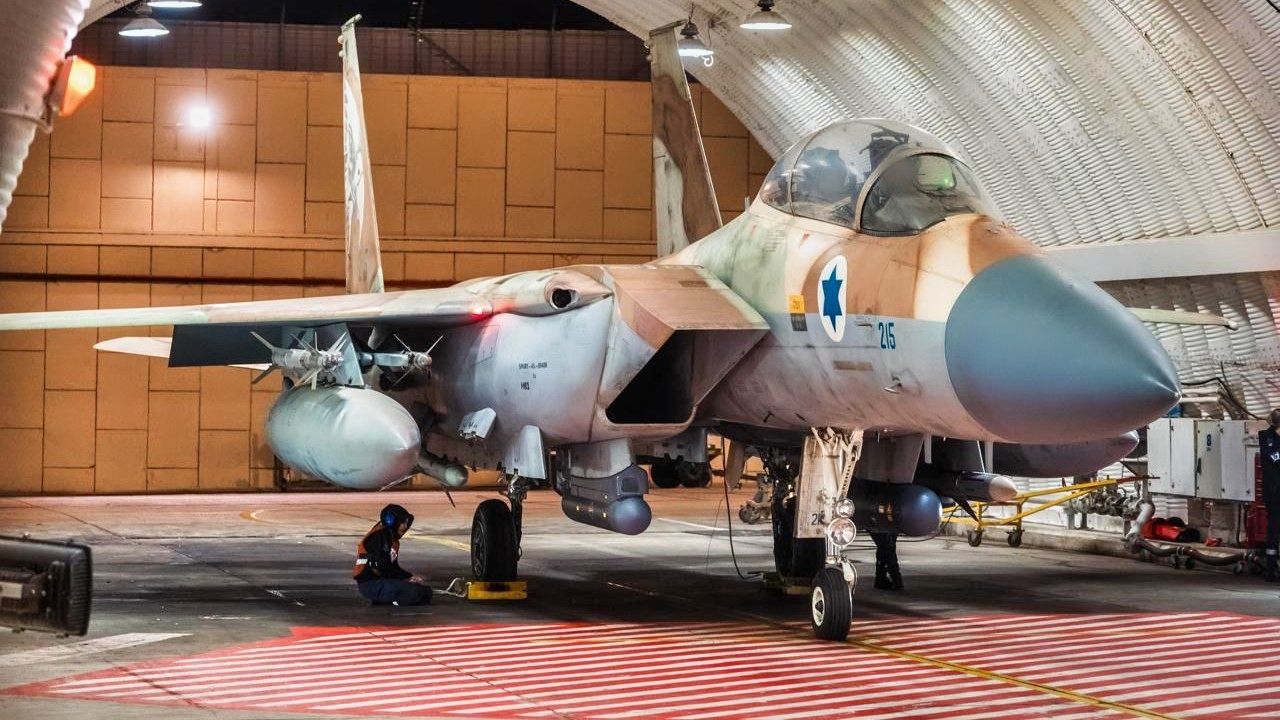
F-15I Fighter Israeli Air Force. Image Credit: Creative Commons.

F-35I Adir Fighter. Image Credit: Israeli Air Force.
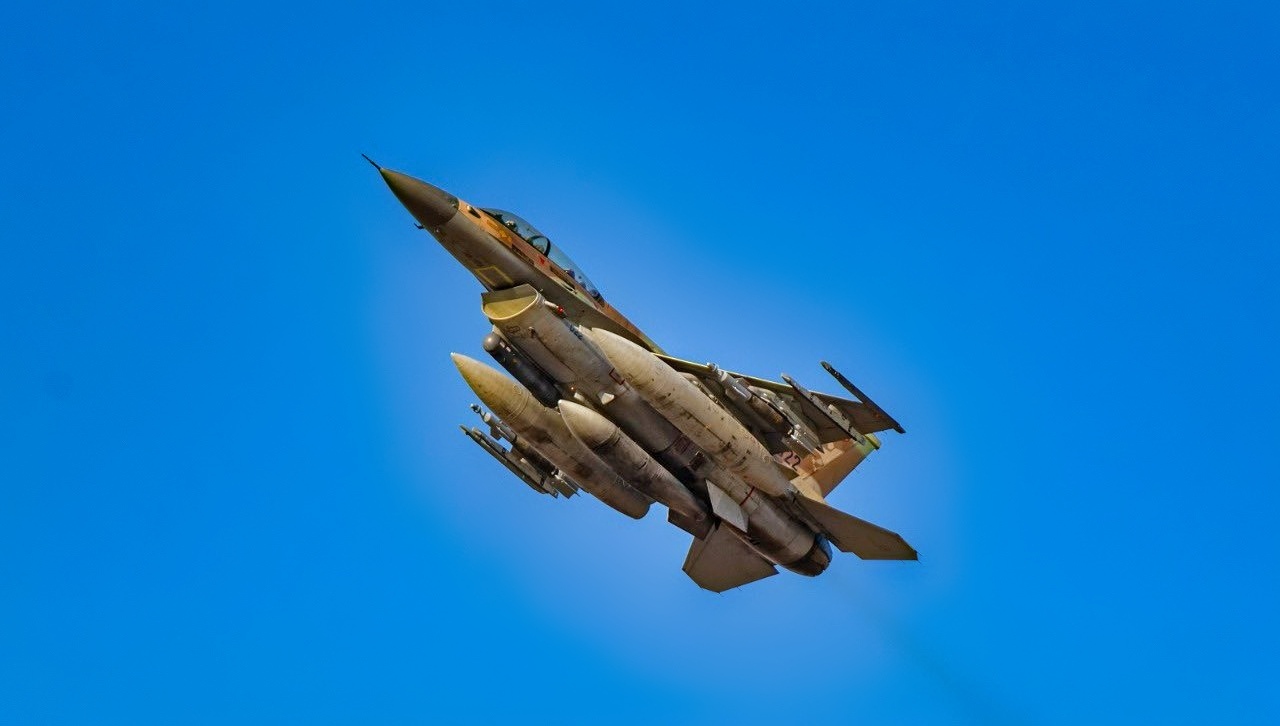
F-16I from Israeli Air Force. Image Credit: Creative Commons.
-Kass identifies four specific thresholds for deployment: a total state collapse, massive strategic bombardment, an attack by weapons of mass destruction (WMD), or a threat to command-and-control survival.
-Because Israel lacks the geographic depth of larger powers, its nuclear threshold is notably lower, utilizing strategic ambiguity to complicate the planning of regional adversaries during Operation Epic Fury.
Beyond Operation Epic Fury: Why Israel’s Nuclear Threshold Remains a 2026 Existential Hedge
Israel’s nuclear arsenal is commonly accepted as real—yet has never been formally acknowledged, existing instead under a veil of deliberate ambiguity.
The policy works and has arguably enhanced Israel’s regional security, keeping adversaries on edge over a simple question: what would push Israel to use its nuclear weapons?
The question seems especially relevant now, with Israel engaged in Operation Epic Fury against Iran. And the answer is likely that Israel would use its nukes only in an existential scenario, where the regime itself was threatened, not in routine war fighting.
Strategic Reality
Israel is small—roughly the size of New Jersey—with tiny geographic depth, a concentrated population, and critical infrastructure tightly clustered. Unlike the United States, or even France or the U.K., Israel cannot absorb large-scale conventional devastation, which makes Israel’s deterrence logic different.
Accordingly, Israel’s nuclear doctrine is likely less about prestige or great-power signaling and more about survival insurance, a hedge against catastrophic military failure.
Never Again
Israel’s nuclear strategy is shaped by memories of the Holocaust, early Arab-Israeli wars, and the reality of living with neighbors who openly call for Israel’s destruction. Israel knows it cannot rely on outside powers for its ultimate survival—that lesson became embedded after the Holocaust.
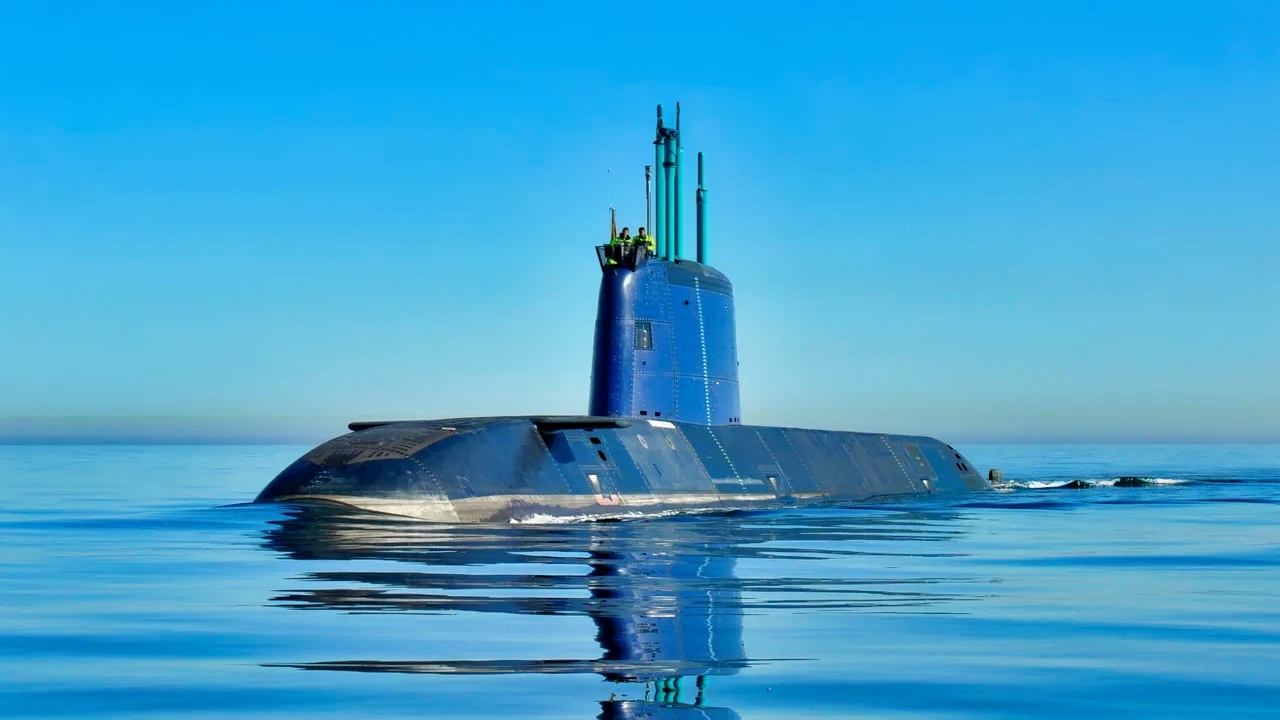
Israel Dolphin-Class Submarine. Image Credit: Creative Commons.

F-16 from Israel. Image Credit: Creative Commons.

Iron Dome from Israel. Image Credit: Creative Commons.

F-15I Ra’am from Israel. Image Credit: Creative Commons.
Instead, Israel likely believes in having an independent last-resort deterrent: nuclear weapons.
Hard Lessons
In Israel’s early history, the new state faced repeated conventional wars—in 1948, 1967, and 1973. Through those first decades, Israel feared large-scale conventional defeat by numerically superior Arab armies. But once Israel achieved a credible nuclear deterrent, the likelihood of a coordinated conventional invasion dropped sharply.
This deterrence is one reason why the conventional style war, the effort to drive Israel into the sea, has faded away; in all likelihood, Israel’s possession of nuclear weapons has prevented the wars that would have triggered nuclear weapon deployment.
Threshold Identification
What would trigger Israel to deploy its nukes? A few scenarios.
One, an existential crisis. If Israeli leaders believed the state itself was at risk of collapse—through say an enemy armored breakthrough, or multiple fronts collapsing simultaneously, or a command breakdown that threatened the regime’s survival—then nuclear weapon deployment would become a serious possibility.
Two, a massive strategic bombardment. If Israel endured sustained missile or drone attacks, causing catastrophic national harm, or if conventional defenses failed and national infrastructure (i.e., air bases, population centers, government centers, etc.) was degrading rapidly at a systemic level, it could respond with nuclear force.
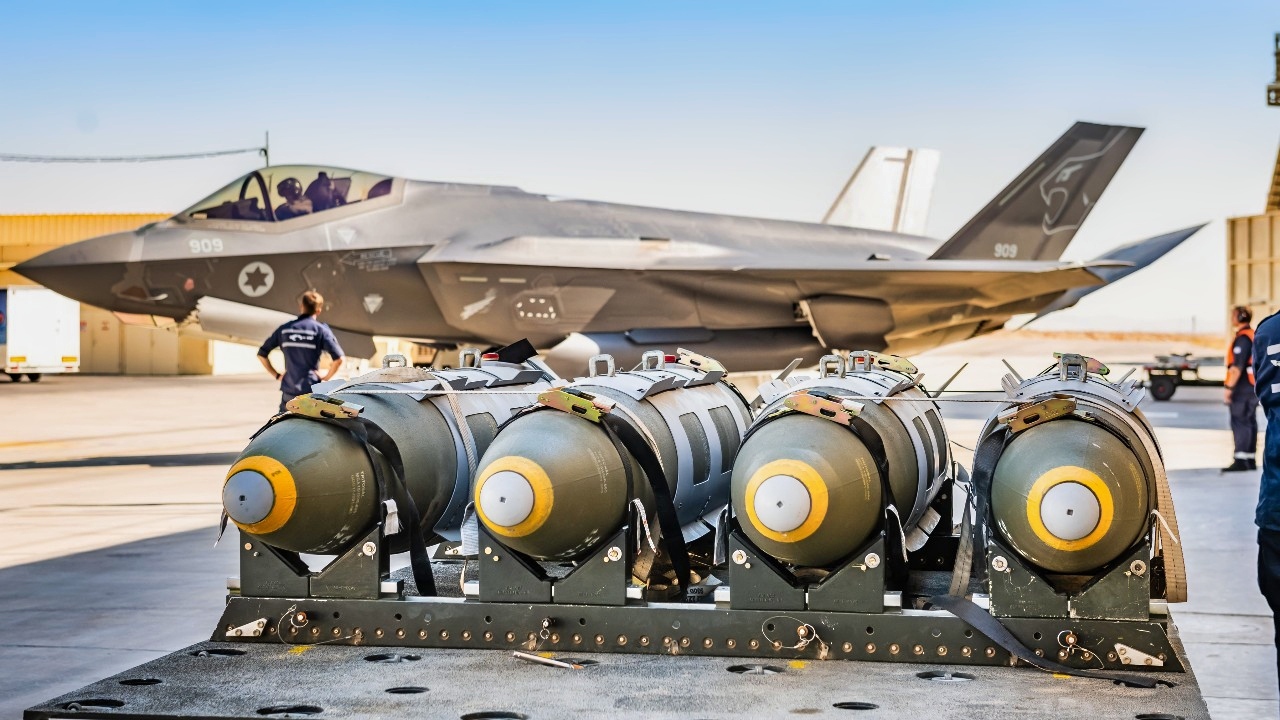
Israel F-35I Adir Stealth Fighter. Image Credit: IAF.

An Israeli Air Force pilot walks to an F-35I Adir prior to a Red Flag-Nellis 23-2 mission at Nellis Air Force Base, Nevada, March 15, 2023. Red Flag is an opportunity to build on the success of JUNIPER OAK 23-2, JUNIPER FALCON, and additional combined exercises to enhance interoperability with Israel, strengthen bilateral cooperation, and improve capabilities in ways that enhance and promote regional stability and reinforce the United States’ enduring commitment to Israel’s security. (U.S. Air Force photo by Airman 1st Class Trevor Bell)

An Israeli Air Force pilot climbs into an F-35I Adir prior to a Red Flag-Nellis 23-2 mission at Nellis Air Force Base, Nevada, March 16, 2023. Red Flag is an opportunity to build on the success of JUNIPER OAK 23-2, JUNIPER FALCON, and additional combined exercises to enhance interoperability with Israel, strengthen bilateral cooperation, and improve capabilities in ways that enhance and promote regional stability and reinforce the United States’ enduring commitment to Israel’s security. (U.S. Air Force photo by Airman 1st Class Trevor Bell)
Three, an attack with weapons of mass destruction. If the Jewish state suffered a chemical, biological, or nuclear strike against an Israeli population center, then retaliation logic would kick in; this is probably the clearest path to Israeli nuclear use.
Four, a threat to second-strike or command survival. If Israeli leadership believed a disarming blow was underway, if Israel believed they would lose the ability to respond later, then a nuclear strike becomes more likely.
Showing Restraint
But the threshold is high. Certain harmful enemy actions would likely not trigger nuclear deployment. For example, limited rocket fire, even if severe, would be unlikely to trigger a nuclear retaliation. Proxy war by itself or simple border skirmishes, again, wouldn’t warrant a nuclear retaliation.
Even if Israel suffered painful conventional losses, if the existence of the state were not in question, nukes would likely remain off the table. Israel has demonstrated repeatedly a preference for air power, special operations, and conventional escalation. Underscoring that the nuclear threshold is high: altercations as significant as Operation Epic Fury, or the attacks of October 7, 2023, have not triggered nuclear escalation.
Always Relative
Yet, despite having a high nuclear threshold, Israel’s threshold is likely lower than that of the United States. Consider the differing strategic realities. The United States has strategic depth, two massive oceanic buffers, and enormous redundancy in terms of resources, geography, infrastructure, and population distribution.

An Israeli F-15I Ra’am assigned to the 69th Squadron launches for a sortie in support of exercise Juniper Falcon May 7, at Uvda Air Base, Israel. Juniper Falcon 17 represents the combination of several bi-lateral component/ Israeli Defense Force exercises that have been executed annually since 2011. These exercises were combined to increase joint training opportunities and capitalize on transportation and cost efficiencies gained by aggregating forces. (U.S. Air Force photo/ Tech. Sgt. Matthew Plew)

Israeli Air Force 69th Squadron – Operation New Order: F-15I jets eliminating Hezbollah and Hassan Nasrallah.
Even more compact nations, like France or the U.K., enjoy more strategic depth than Israel—which has almost no margin for error; a level of damage that would be survivable for a larger power could feel existential to Israel. Accordingly, Israel’s threshold is likely lower than that of the United States, France, or the U.K.—because Israel is more vulnerable.
Ambiguity as Strategy for Israel
Still, this is all speculation. The Jewish state has long committed to a strategy of ambiguity, never spelling out its red lines explicitly.
That ambiguity has value as it complicates enemy planning; since adversaries don’t know exactly where the threshold is, they are likely to make assumptions that err on the side of caution.
That uncertainty has strengthened Israel’s deterrence. So, expect Israel to maintain its strategic ambiguity, with nuclear weapons held in secret, for deployment when (best guess) and only when the state is confronted with an existential crisis.
About the Author: Harrison Kass
Harrison Kass is an attorney and journalist covering national security, technology, and politics. Previously, he was a political staffer and candidate, and a US Air Force pilot selectee. He holds a JD from the University of Oregon and a master’s in global journalism and international relations from NYU.


yeye
March 15, 2026 at 2:40 pm
Israel under the protection of US-NATO has evolved into a fascistic state where its neighbors today serve as free target practice for its vaunted military.
That’s not good at all, because eventually, it will lead to a confrontation with more powerful adversaries who may be far less willing to be treated as free cannon fodder.
US and NATO countries have, until very very recently, openly and also unabashedly spoke about threats coming directly from moscow and beijing.
Seems that they missed the real one altogether.
Israel, together with donald epstein-files trump, unleashed operation epstein fury against iran, a nation half-crippled by decades of sanctions, bans and blockades.
Yet, the two have failed to subdue iran, so far.
Who are they, to think that tomorrow, they could subdue someone like beijing or pyongyang.
That would surely turn into the dreaded armageddon !!!
geh-geh
March 15, 2026 at 9:11 pm
Israel is suspected of having developed the bomb sometime during the sixties, right after the six day war.
Who initiated the first shots of the Six Day War. It was Israel, in a surprise strike which some would call sneak attack.
But the war was coming due to the actions of the Arab states, in particular, the dogbarking tactics of gamal abdel Nasser.
In a fast lightning strike, Israel captured Sinai, west bank and part of golan area.
By this time, the bomb was already in its right hand.
In early 1973, Israeli phantom jets shot down an arab airliner over the Suez canal, killing everyone aboard except for one survivor. The west did nothing.
Thus in October 1973, the Arabs made their own surprise attack, and the Israeli air force quickly responded.
But it received a nasty surprise, with the arabs firing nasty SA-2s, SA-3s and SA-6s.
Israeli jets resorted to low-level attack, but were greeted by 23mm mobile artillery and shoulder-fired SA-7 missiles.
The situation was dire, and Israel with the bomb in hand, considered hitting the Arabs with it.
But US supplied Israel, round the clock, with everything, from army underwear to bombs and missiles.
By 18 October 1973, a surprise attack across the canal got its forces to just 40 miles within Cairo, while cutting off the 3rd army from the rest of Egypt.
After a few more days of fighting, a ceasefire was implemented. The bomb was not used. Not needed after all. Due to the surprise strike across the canal by one general Sharon.
After the war was over, Carter later became president and arranged a meeting between the leaders at camp David.
But Carter failed to achieve permanent peace, awas sidetracked by other events.
zhduny
March 16, 2026 at 2:25 am
Israel’s journey toward acquiring the bomb started with french help in building the dimona facility in the Negev desert.
But the real break or push came in the sixties when a suspected quantity of highly enriched uranium went missing from the NME corp or NUMEC located in Pennsylvania.
The material was smuggled back to Israel, where some time after the 1967 middle east war,Israeli boffins were able to assemble their first bomb.
A mysterious flash of light was detected by a satellite flying over waters off south Africa during the 1970s is believed to be connected with the work of the Israeli atomic boffins.
Now, today, trump and netanyahu are hurling all sorts of accusations at Iran, while totally ignoring the boffins work and the scandal of Epstein.
We today live in a world of upended rules. Genghisian rules.
henry bonk
April 19, 2026 at 2:49 pm
To YeYe, Israel was never under the protection of US-Nato.Lie No. one.
You seem to love the present Government of Iran. The same Government that just murdered 60000 of it’s citizens.But this is of no importanse to you, only your political agenda.