

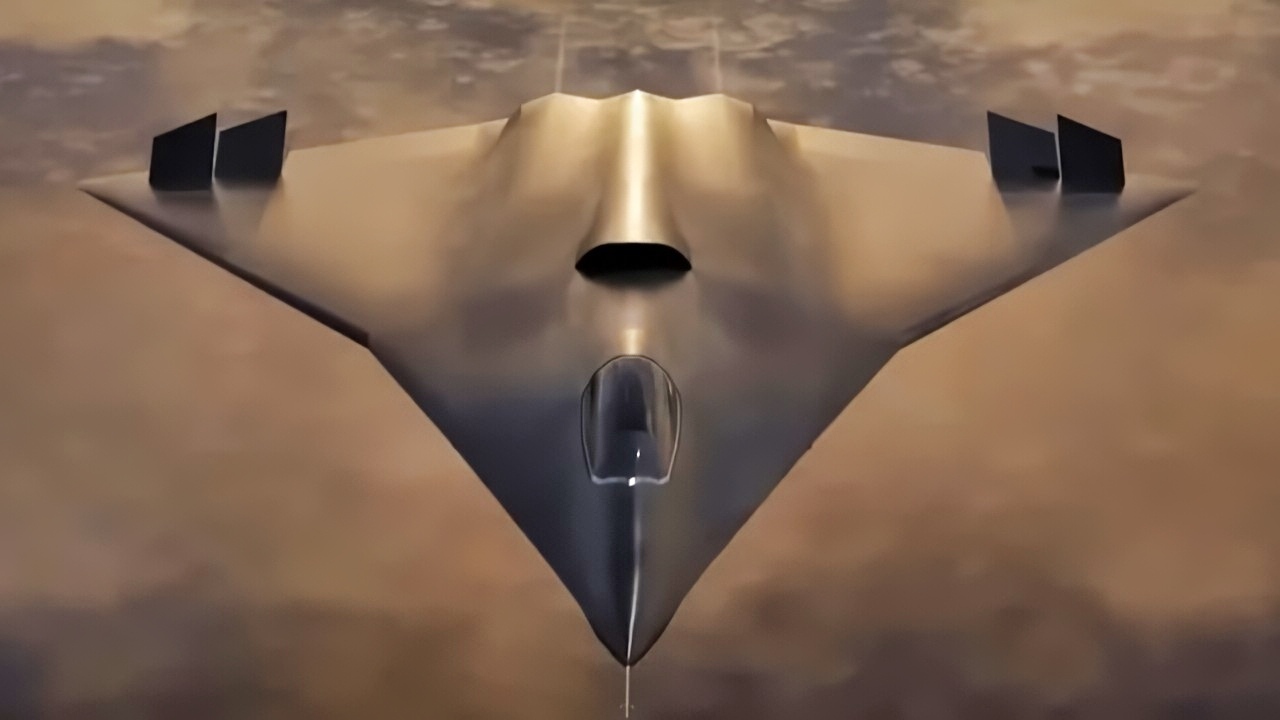
China’s mysterious Chengdu J-36 sixth-generation combat aircraft is far larger than any traditional fighter—measuring roughly 75 feet long with three engines, no tail, and a 25-foot weapons bay capable of carrying 500-kilometer-range missiles.
Analysts call it an “airborne cruiser” designed not to dogfight, but to hunt American tankers, AWACS, and high-value assets across the Pacific—potentially extending China’s combat reach all the way to Guam.

J-36 Fighter in the Sky. Image Credit: X Post.

China J-36 Fighter Takeoff. Image Credit: X Screenshot.

J-36 Fighter X Screenshot Image.
The J-36 Is Born
The Chengdu J-36 is an emerging sixth-generation combat aircraft. First seen during a December 2024 flight, the platform appears to measure about 75 feet in length, which is far larger than typical fighters.
The size and shape of the aircraft suggest the J-36 is not a traditional fighter, but a long-range, stealthy command-and-strike platform that could reshape China’s ability to project air power.
A Different Breed
The J-36 is not a dogfighter; it prioritizes range, stealth, and payload. Analysts have called the J-36 an “airborne cruiser,” reflecting the fighter’s role shift from a close-range fighter to a long-range platform that can control the battlespace.
Modern warfare is less about turning fights and more about sensors, networks, missiles, and other technologies. The J-36 reflects this shift, from fighter-centric warfare to network-centric warfare.
Make It Three
The J-36 is distinctly configured, with two side engines and one top-mounted dorsal intake. Most fighters have just one or two engines; three engines are unusual. The advantages, however, are higher total thrust and higher electrical power output.

J-36 Fighter. Image Credit: Screenshot from X.
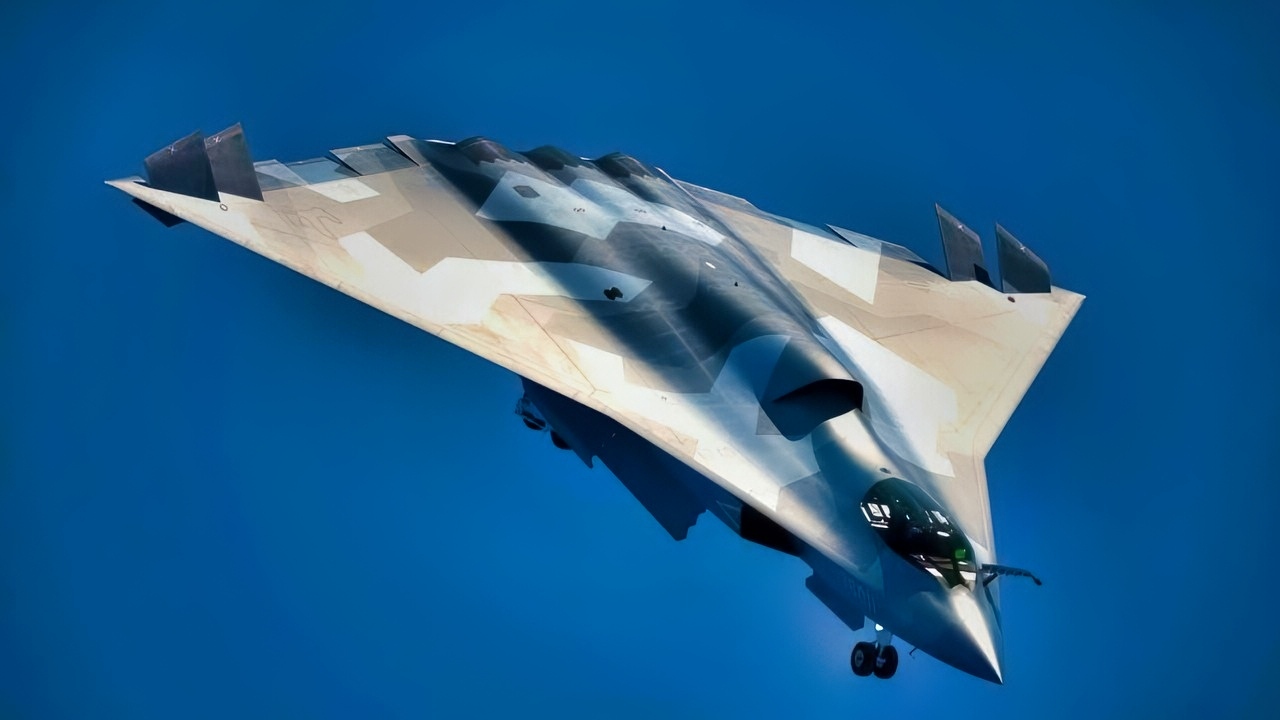
J-36 Fighter Artist Rendition from X Screenshot

The J-36 is expected to be able to sustain supercruise at Mach 2-plus speeds—that is, supersonic flight without the use of afterburners. The J-36’s generous power source matters because future systems—i.e., directed energy weapons, advanced sensors, and EW systems—will be power-intensive. The tradeoffs are that the aircraft is more complex, with a higher maintenance burden and a higher heat signature that compromises IR stealth.
But No Tail
Three engines—but no tail; the aircraft has eliminated major radar reflectors, including vertical stabilizers. The wing shape is diamond- or double-delta. In sum, this shaping reduces radar cross-section across multiple angles. The expectation is that the J-36 will have broader-spectrum stealth performance than the J-20 or the F-22. The trade-off is that the aircraft without tails will be less stable and harder to control. The solution will be advanced fly-by-wire, enabling the pilot to keep the aircraft airborne despite its instability.
Built For Payload and Range
The J-36’s weapons bay appears to be 25 feet long, designed for ultra-long-range missiles such as the PL-17, with a 500-kilometer range. So expect the J-36 to be used for targeting tankers, AWACS, and high-value assets.
This will push the combat zone out to the Second Island Chain and allow China to target the support systems that enable US fighters/air power, specifically tankers. The US is heavily reliant on fighters like the F-22 and F-35, which have relatively short ranges, meaning they, in turn, rely on aerial refueling. So, tankers are vital to air operations. And if the J-36 can successfully target tankers, then US operational reach will collapse; by targeting tankers, the Chinese can render US fighters less flexible, mostly restricting them to areas around their air bases.
Networked Warfare
The J-36 features a two-seat side-by-side cockpit. The second operator is believed to manage the battle network while the pilot flies. Theoretically, the second operator can control drone swarms, manage electronic warfare, and coordinate targeting. The J-36 is expected to be a system-of-systems that integrates with satellites, ships, and ground forces, serving as a command node as much as a strike aircraft.
Being Developed Rapidly
The J-36 is being developed rapidly. The first flight occurred in December 2024, with multiple prototypes already produced. Observed changes in the prototypes include redesigned intakes and thrust vectoring nozzles. China’s operational target for the platform is 2030–2031, meaning the development timeline has been compressed through rapid prototyping.
How Real Is This?
Of course, questions remain about the program’s legitimacy.
China has fielded prototypes and multiple test airframes. But certain facets remain unproven, including engine reliability, true stealth effectiveness, and systems integration. Key program concerns include the thermal engine (likely large from the third engine) and cockpit visibility (the canopy is notably large). Some of the aircraft’s features may be more aspirational than legitimate. While the platform is clearly real, its full capabilities remain theoretical to some extent.
To the extent that the platform’s capabilities are real, the J-36 could extend China’s reach beyond the First Island Chain, possibly threatening Guam and complicating US operations, requiring the US to disperse and harden.
About the Author: Harrison Kass
Harrison Kass is a writer and attorney focused on national security, technology, and political culture. His work has appeared in City Journal, The Hill, Quillette, The Spectator, and The Cipher Brief. He holds a JD from the University of Oregon and a master’s in Global & Joint Program Studies from NYU. More at harrisonkass.com.


