
Israel and Hezbollah Could Blow Up the Iran War MOU: The memorandum of understanding between Washington and Tehran, signed on Monday, is not a deal. Instead, it serves as a framework that will inform how a deal is made. Officials from Washington, Tehran, and Pakistan – the latter of which is serving as a mediator – have all outlined a phased process that is intended to halt the fighting for now while negotiators tackle more contentious issues, like Iran’s nuclear program. In many ways, the MOU is more like a ceasefire than it is a peace deal.
According to Pakistani Prime Minister Shehbaz Sharif, both sides have agreed to an “immediate and permanent” cessation of military operations. In other words, a ceasefire.
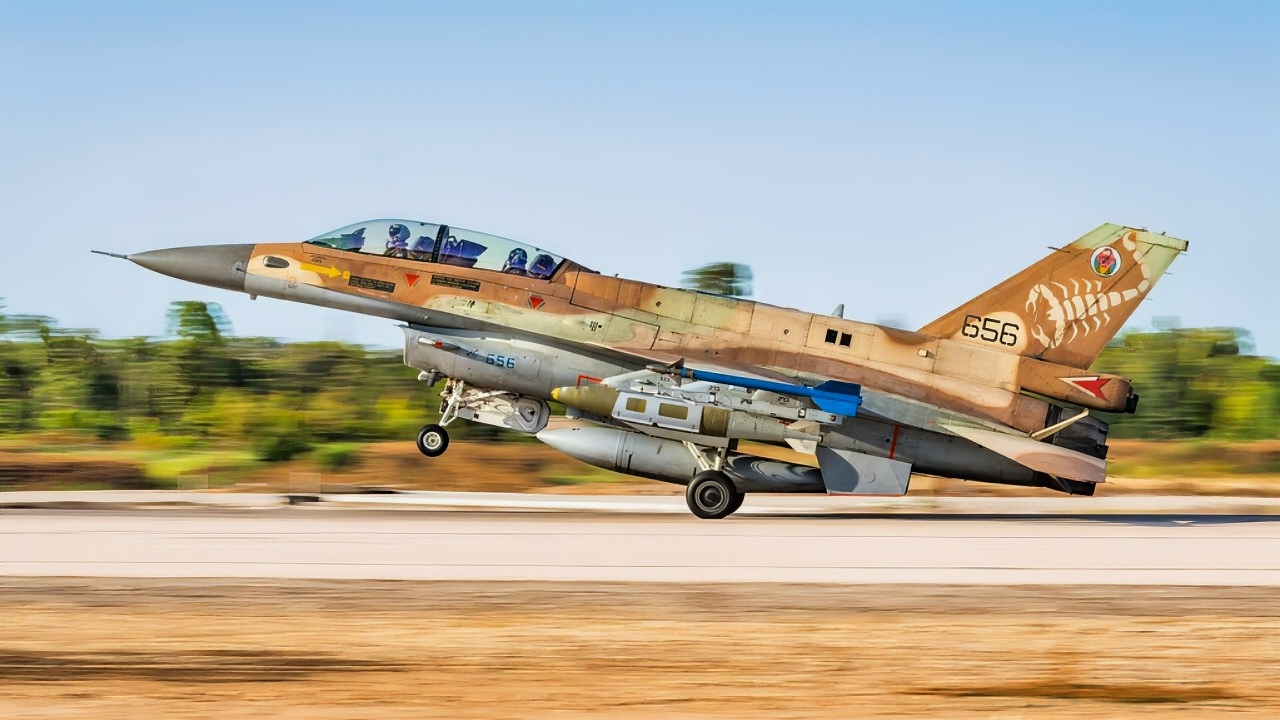
Israeli F-16 Taking Off. Image Credit: IDF/Creative Commons.
Now that the memorandum has been signed, both sides have entered into the second phase of negotiations, which will last approximately 60 days.
During this time, the United States and Iran will attempt to hash out a broader deal that focuses on Iran’s nuclear program, its enrichment of uranium, the collection of nuclear debris from sites targeted by U.S. and Israeli strikes, and the future of sanctions relief.
In effect, the MOU has bought time and allowed the Strait of Hormuz to open – and just in time, too.
Most analysts warn that by mid-July, the oil price shock would become a full-on supply crisis. Assuming traffic begins to move more freely, that supply crisis has now been mitigated substantially.
Hormuz Reopens As Both Sides Ease Tensions
President Donald Trump announced on Truth Social on June 14 that the Strait of Hormuz was open for business.
“The Deal with the Islamic Republic of Iran is now complete. Congratulations to all! I hereby fully authorize the toll-free opening of the Strait of Hormuz, and, simultaneously herewith, authorize the immediate removal of the United States Naval blockade. Ships of the World, start your engines. Let the oil flow!” the president wrote.

Iron Dome from Israel. Image Credit: Creative Commons.
The president’s optimism appears to have been justified, with the memorandum signed the next morning and reports indicating that ships were beginning to move, even as global shippers remain cautious.
Iranian officials have also indicated that commercial traffic will be permitted to resume moving through the waterway, but questions remain about whether Tehran will charge a toll.
While Washington insists that future movement will be “permanently toll-free,” Iranian state media and officials have indicated that commercial traffic will be subject to maritime “service fees.”
What those fees might entail, if they do indeed become part of the deal, remains unknown.
Iran’s Nuclear Future Is Still Being Debated
Despite the good news for the global economy, several very difficult issues are still unresolved.
The agreement so far leaves the central dispute over Iran’s nuclear program unaddressed. Iran has reiterated, according to leaked details, that it does not intend to build nuclear weapons – although it’s worth noting that the regime, under its former leadership, made the same claims during the JCPOA era.
So far, reports indicate that the Iranian side has agreed to temporarily freeze expansion of its nuclear activities while talks continue. That would include refraining from additional uranium enrichment beyond current levels at any of its remaining sites, and avoiding the expansion of its facilities during that same time.
Throughout the conflict, and even before the war began, President Trump has insisted that Iran must never be permitted to build a nuclear weapon.
Washington, therefore, is proposing more robust inspections of the regime to ensure that any settlement is lasting. What remains unclear, however, is how Iran’s existing stockpile of highly enriched uranium will be handled, and what will happen to any of that uranium that happens to be buried under rubble at one of the three major nuclear sites that were struck during Operation Midnight Hammer.
Israel and Hezbollah Could Blow Up the Deal
A deal at the end of the second phase of this agreement is not guaranteed. It is also at risk of continued fighting between Hezbollah and Israel. Israeli officials have made it clear repeatedly that Jerusalem does not consider itself bound by the agreement reached between Washington and Tehran.
On June 15, Israeli National Security Minister Itamar Ben-Gvir said that the memorandum does not apply to Israel.
“Israel is not subject to the United States, and we are an independent and sovereign nation,” he wrote.
Prime Minister Benjamin Netanyahu has also repeatedly said that Israel retains the right to act militarily if it believes Iran is moving toward a nuclear weapon, or indeed if Israel is threatened.
And that leaves the United States with a major problem: the agreement with Iran is already fragile, and no deal has been reached yet.
Even in the event that Hezbollah and Israel refrain from launching strikes over the next two months, it remains perfectly likely that Tehran and the United States cannot come to an agreement over the country’s nuclear future.
Both sides are completely at odds over that issue, and that could mean the U.S. is forced to make yet more concessions to Iran. It could mean the deal collapses entirely and the Hormuz crisis reignites.
And should Hezbollah and Israel return to conflict during those two months anyway, as the Israeli government considers its right, none of this might end up mattering at all.
About the Author: Jack Buckby
Jack Buckby is a British researcher and analyst specializing in defense and national security, based in New York. His work focuses on military capability, procurement, and strategic competition, producing and editing analysis for policy and defense audiences. He brings extensive editorial experience, with a career output spanning over 1,000 articles at 19FortyFive and National Security Journal, and has previously authored books and papers on extremism and deradicalization.


One Who Knows
June 16, 2026 at 12:18 am
The fatal flaw is expecting Iran to uphold it’s terms.
They think they have the power of Satan behind them and cannot EVER loose.
MookieCheeks
June 16, 2026 at 8:55 am
Yes. Anyone can erupt and cause mayhem at any time. What disingenuous commentary. The only way to permanently cease problems with fully activist muslim populations is to permanently eliminate them.