


Key Points and Summary – The U.S. Army is developing the M1E3, a significantly redesigned Abrams tank, skipping the planned M1A2 SEPv4.
-Distinct from the AbramsX technology demonstrator, the M1E3 aims to address modern threats, particularly drones.
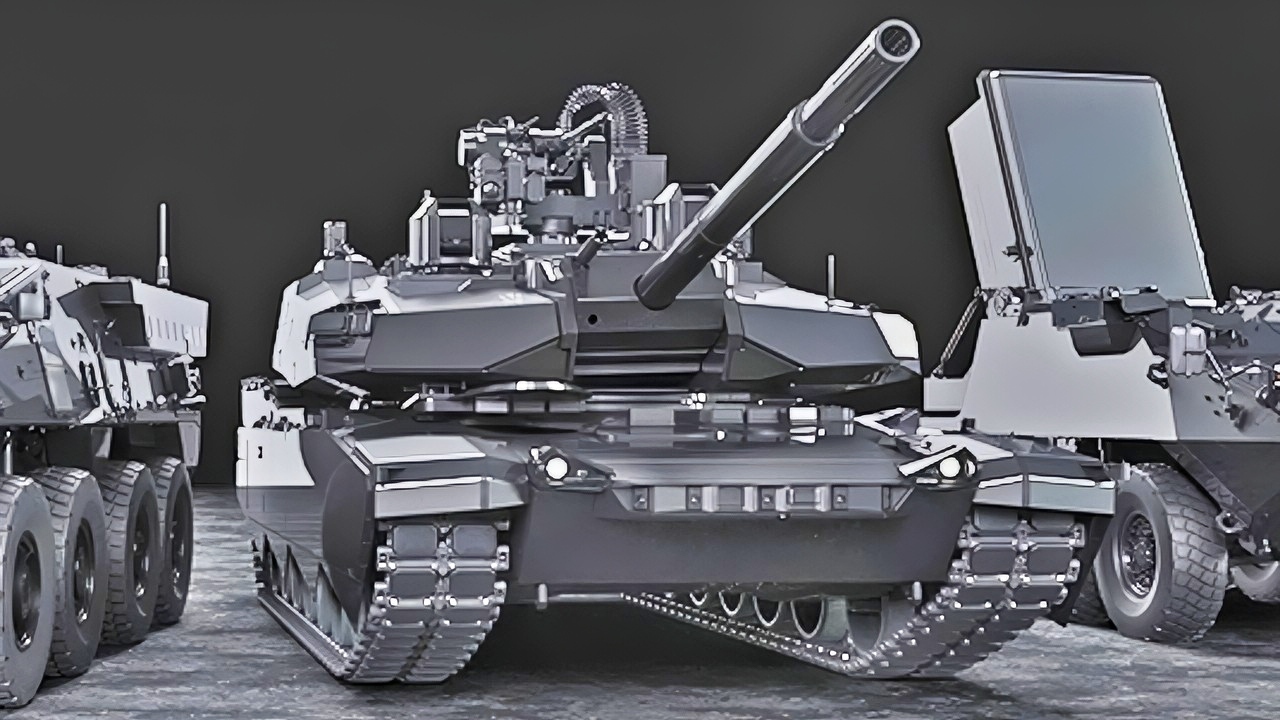
AbramsX Tank U.S. Army Image.
-Key upgrades include a lighter 60-ton weight for better mobility, a fuel-efficient hybrid-electric engine reducing its signature, and an autoloader enabling a 3-person crew (possibly with an unmanned turret).
-Crucially, it will feature advanced armor, Active Protection Systems, and integrated counter-drone capabilities (C-UAS). This AI-enhanced, networked tank represents a doctrinal shift, focusing on fire support rather than leading assaults in the drone age.
AbramsX vs. M1E3: What’s the Real Difference?
The M1E3 is the newest variant of the venerable M1 Abrams.
Previously, the Army had been looking into the M1A2 SEPv4 as its next variant, but this project was later shelved in favor of a lighter version of the tank.
The M1E3 incorporates a wide variety of new technologies that set it apart from previous models.
These upgrades include a hybrid electrical powerplant, a new autoloader, improved command-and-control networking, AI integration, and more.
However, given the lackluster performance of Western-made tanks in Ukraine, is this enough to enable the Abrams to survive in the drone age, or is the U.S. making another billion-dollar mistake?
M1E3 vs AbramsX: What You Need to Know
Before we evaluate the M1E3, we must make a crucial distinction: the M1E3 and the AbramsX are NOT the same tank.

AbramsX. Image Credit: Creative Commons.
The AbramsX is a technology demonstrator from General Dynamics Land Systems (GDLS) that incorporates many of the same technologies as the M1E3, but they are not the same.
The final design of the M1E3 has not yet been approved, but some photos have been released.
Many readers can easily get confused by this and assume that the two platforms are the same, but this is a false assumption.
However, we do know what the Army wants in its newest tank.
Currently, a big concern is the Abrams’ weight. While previous Abrams variants could weigh up to 80 tons, the M1E3 is expected to come in at around 60 tons, which is only 20 tons heavier than a base T-72.

Russian T-72 Tank Ukraine War. Image Credit: Creative Commons.
This reduction improves strategic mobility, enabling the tank to be deployed more easily across varied terrain and in regions such as the Indo-Pacific, where rapid movement is essential.
The lighter weight also eases logistical burdens, making it easier to transport and maintain the tank in combat zones.
What the M1E3 Brings to the Table
Another major innovation is the hybrid-electric propulsion system.
This combines traditional diesel power with electric motors, offering up to 40% better fuel efficiency.
Beyond the logistical advantages, the hybrid system reduces the tank’s thermal and acoustic signatures, making it harder to detect by enemy sensors and drones.
This stealthier profile is crucial in a battlefield increasingly dominated by surveillance and precision targeting.
The M1E3 also includes an all-new autoloader system which reduces the crew from four members to three members.
It is not currently known whether the Army will stick with the 120mm cannon or introduce a variant with a larger caliber gun.
In 1996, the U.S. experimented with a bustle autoloader system for the Abrams. This design was never introduced, but a similar system could very well be introduced on the M1E3. Another big question is whether the turret will even be manned.
The AbramsX proposed an unmanned turret with the crew housed entirely in an armored capsule, completely isolated from any ammunition.
Regardless, the turret will likely look noticeably different from other M1 models.
Protection in the Drone Age
The U.S.’s main concern, however, is survivability.
What does the M1E3 have to make it more survivable in today’s and tomorrow’s battlefield?
The M1E3 incorporates several measures to increase survivability, like advanced armor and active protection systems (APS).
These systems are designed to intercept incoming projectiles, including anti-tank guided missiles and rocket-propelled grenades.
More importantly, the M1E3 is expected to include counter-unmanned aerial systems (C-UAS) capabilities.
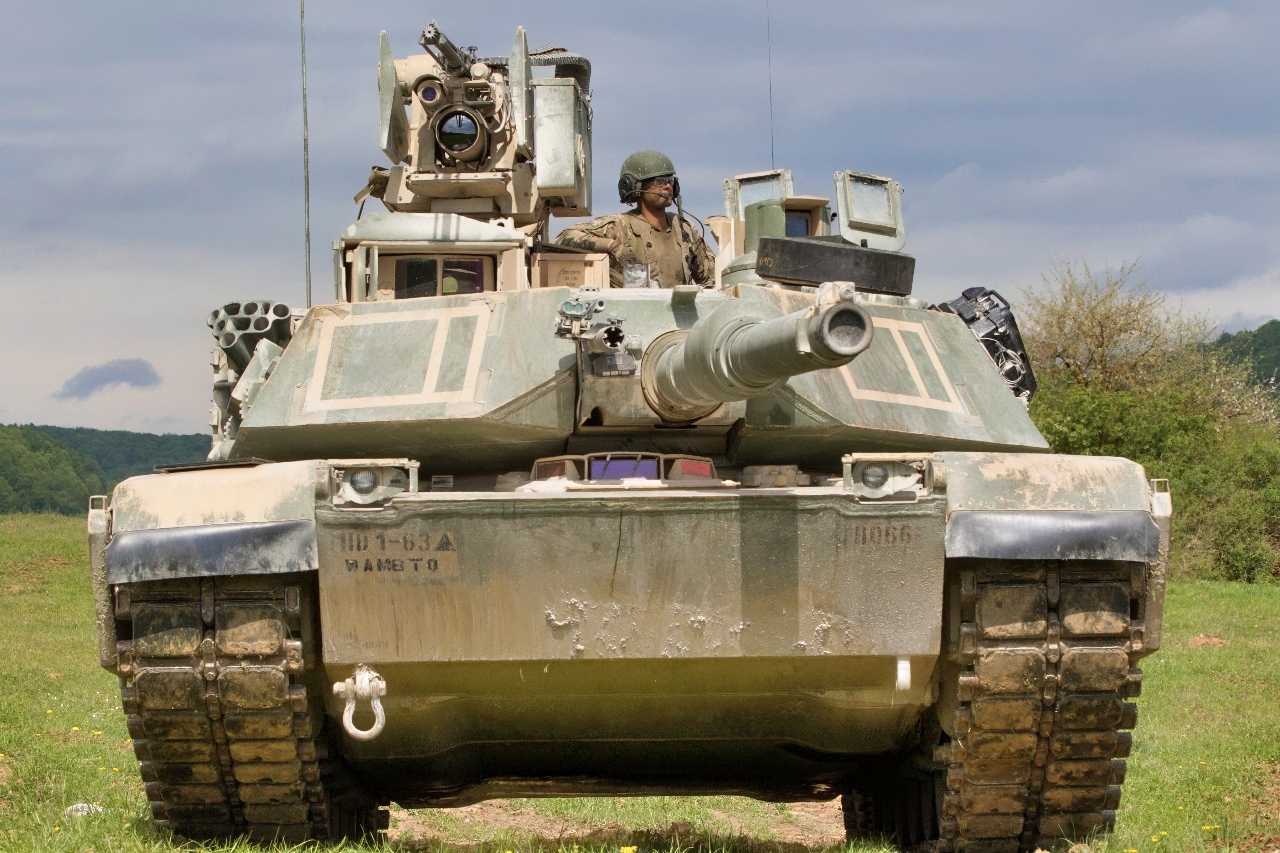
An M1A2 Abrams tank from 1st Battalion, 63rd Armor Regiment, “Dragons,” 1st Infantry Division, Fort Riley, Kansas, pulls during Combined Resolve X at the Hohenfels Training Area, Germany, May 1, 2018. Exercise Combined Resolve X is a U.S. Army Europe exercise series held twice a year in southeastern Germany. The goal of Combined Resolve is to prepare forces in Europe to work together to promote stability and security in the region. (U.S. Army photo by Spc. Andrew McNeil / 22nd Mobile Public Affairs)

A U.S. Army tank crew assigned to 2nd Battalion, 5th Cavalry Regiment, 1st Armored Brigade Combat Team, 1st Cavalry Division, maneuvers an M1A2 Abrams tank at a railhead in preparation to transport it to Hohenfels, Germany during a railhead operation, Corbu, Romania, October 24, 2018. The Battalion has deployed to Europe in support of Atlantic Resolve, an enduring training exercise between NATO and U.S. Forces. (U.S. Army National Guard photo by Sgt. Jamar Marcel Pugh, 382nd Public Affairs Detachment/ 1st ABCT, 1st CD/Released)

U.S. Soldiers assigned to the 2nd Armored Brigade Combat Team, 1st Cavalry Division supporting the 4th Infantry Division maneuver an M1A2 Abrams tank and M2 Bradley Fighting Vehicle past a simulated opposing force’s Leopard 2A6 tank during exercise Arrow 23 in Niinisalo, Finland, May 5, 2023. Exercise Arrow is an annual, multinational exercise involving armed forces from the U.S., U.K., Latvia, Lithuania and Estonia, who train with the Finnish Defense Forces in high-intensity, force-on-force engagements and live-fire exercises to increase military readiness and promote interoperability among partner nations. (U.S. Army National Guard photo by Sgt. John Schoebel)
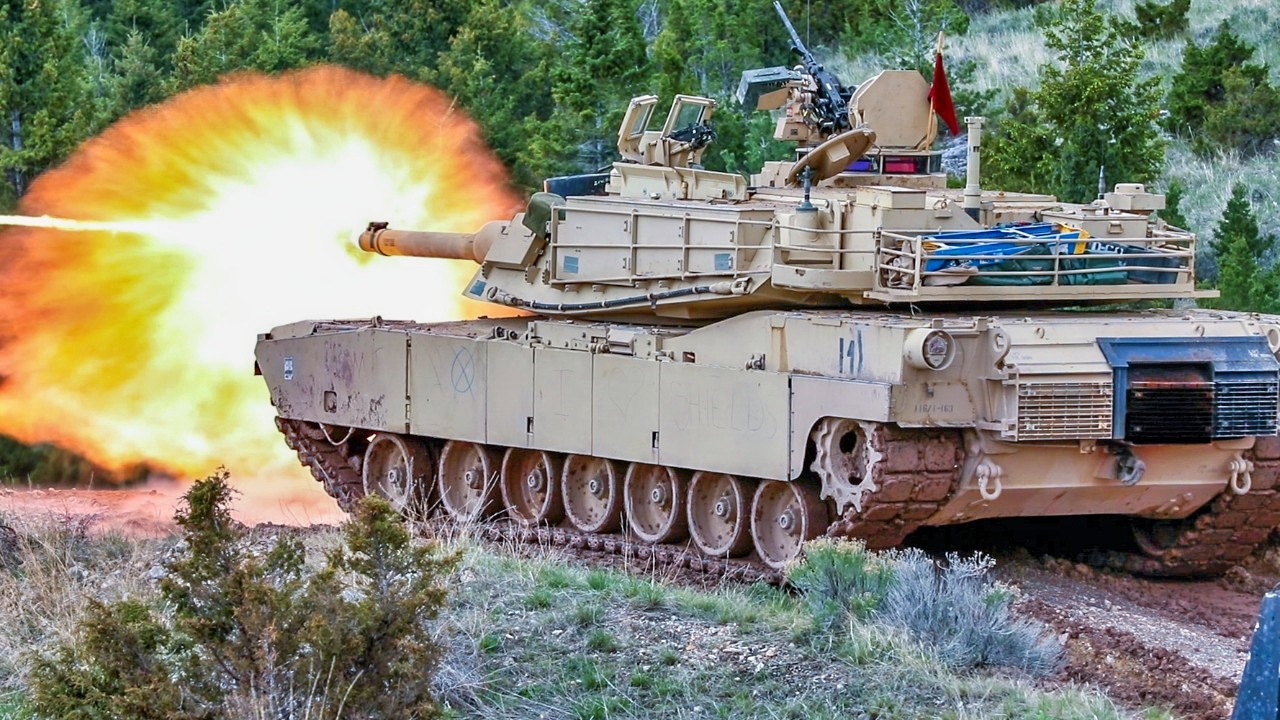
On May 16th 2025, Montana’s 1-163rd Combined Arms Battalion hosted over a dozen British Army Soldiers of the Royal Wessex Yeomanry (RWxY) at the Limestone Hills Training Facility in a joint training event to help their armored crewmembers transition to the Challenger 3 tank which is currently in production. Training involved British armored crewmembers serving in their assigned roles on the M1A2 Abrams alongside our Montana National Guard Soldiers.
These will allow the tank to detect, track, and neutralize drones and loitering munitions, threats that have proven devastating in recent conflicts.
The tank’s top-attack defense mechanisms are particularly vital, as many drones are designed to strike from above, where armor is traditionally weakest.
Electronic warfare and artificial intelligence also play a central role in the M1E3’s design. AI-supported sensors will enable faster threat detection and response, while electronic countermeasures can jam or spoof drone guidance systems.
The tank will be fully integrated into network-centric warfare environments, allowing it to coordinate with friendly drones, unmanned ground vehicles, and command networks.
This digital integration ensures that the M1E3 is not just a standalone weapon, but one of many nodes in a broader battlefield ecosystem.
Is it Enough?
Experience in Ukraine has led to a broader rethinking of the role of tanks in the future.
In the drone age, tanks are no longer expected to lead frontal assaults and break through enemy lines like they used to.
While many suspect that the tank is reaching its end, I do not think this is the case. Instead, platforms like the M1E3 will provide long-range fire support and enter battle only after drones have cleared the area of threats. This shift in doctrine reduces the tank’s exposure to loitering munitions and FPV drones, which are often deployed in swarms and can overwhelm traditional defenses.

An M1A2 Abrams Tank fires a round at Fort Stewart, GA., June 23, 2025. (U.S. Army photo by Sgt. David Resnick)
The M1E3 is a significant deviation from previous Abrams models. The older variants relied on gas turbine engines, had manned turrets, and lacked comprehensive drone countermeasures. They were also heavier and less fuel-efficient.
The M1E3’s hybrid-electric powertrain, unmanned turret, modular open systems architecture, and advanced APS make it far more suited to modern combat. Is this enough to survive and thrive in the drone age?
It is hard to say. A lot depends on the unit price and the new tank’s reliability. Until we get a better look at the M1E3, we can only speculate.
However, if the T-72 still has a place on the battlefield, surely the M1E3 will as well.
About the Author: Isaac Seitz
Isaac Seitz, a Defense Columnist, graduated from Patrick Henry College’s Strategic Intelligence and National Security program. He has also studied Russian at Middlebury Language Schools and has worked as an intelligence Analyst in the private sector.


Eric
October 24, 2025 at 3:35 pm
The Marines made the case for these changes 10-15 years ago but the Army couldn’t understand it. Around 2020 the Army wanted to make changes that would’ve put the weight at 83 tons…. How did they think made sense??