
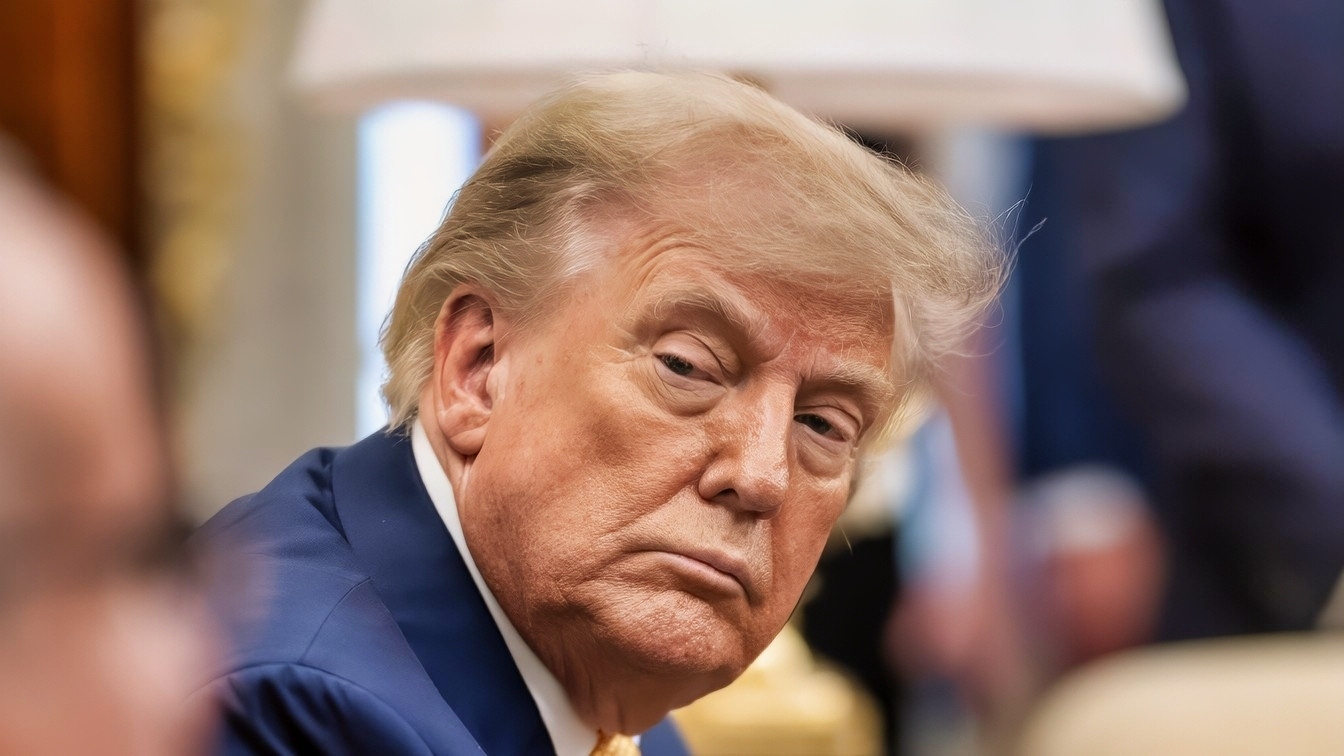
President Donald Trump has halted Vice President J.D. Vance’s efforts to negotiate a permanent peace agreement with Iran. In a Truth Social post on Thursday, Trump announced he had directed Vance to now “focus his complete and total attention on the Massive Corruption and Crime taking place in Democrat-run Cities and States throughout the U.S.”
The move effectively means an end to the ongoing push from Vance — who blamed the conflict for widespread Republican losses in last week’s midterm elections — to end hostilities that have continued for more than eight months.
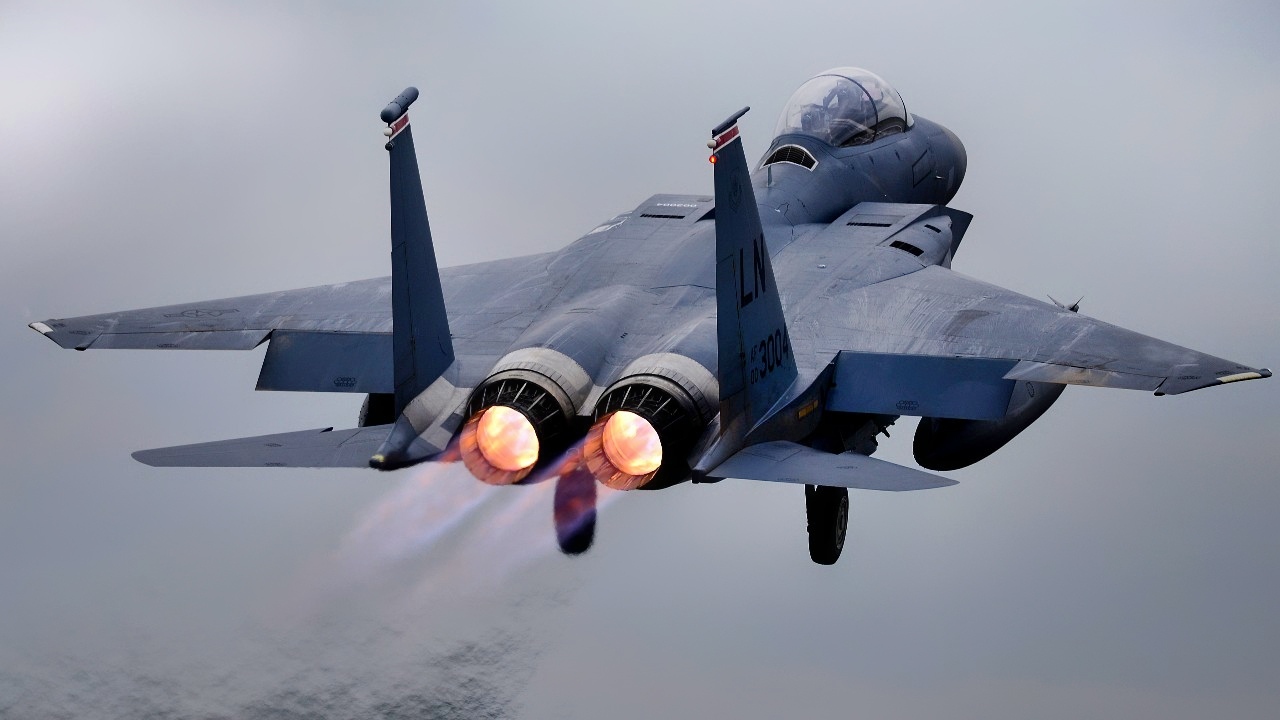
An F-15E Strike Eagle assigned to the 494th Fighter Squadron takes off for a training sortie at Royal Air Force Lakenheath, England, Oct. 26, 2018. The 494th trains regularly to ensure RAF Lakenheath brings unique air combat capabilities to the fight. (U.S. Air Force photo/ Tech. Sgt. Matthew Plew)

The F-15EX, the Air Force’s newest fighter aircraft, arrives to Eglin Air Force Base, Florida March 11. The aircraft will be the first Air Force aircraft to be tested and fielded from beginning to end through combined developmental and operational tests. The 40th Flight Test Squadron and the 85th Test and Evaluation Squadron personnel are responsible for testing the aircraft. (U.S. Air Force photo/1st Lt. Karissa Rodriguez)
Trump Says No Need for a Permanent Deal
A lengthy statement on Truth Social confirmed what U.S. officials, including the president himself, pointed to earlier this week.
Announcing that he was moving Vance away from his diplomatic efforts to end the war, Trump said the vice president would now “focus his complete and total attention on the Massive Corruption and Crime taking place in Democrat-run Cities and States throughout the U.S.”
“We don’t need a deal with Iran,” Trump added. “Those days have long since passed. We’ve got their money, Hundreds of Billions of Dollars, and we’ve got their Strait!”
Earlier in the week, Trump told reporters that a resumption of major strikes was “highly unlikely” after weeks of threatening a return to the bombardment seen in the war’s initial weeks following the midterm elections, adding that “Iran, militarily, is effectively over,” and that there is “positive momentum” behind ongoing discussions to end a conflict that is now into its ninth month.
“We’re just keeping it the status quo,” the president said. “And we’re doing that really at the behest of countries that are their neighbors.”
Vance’s Efforts Fall Flat
Last month, the vice president reportedly sent a letter to Mohsen Rezaei, secretary of Iran’s Supreme National Security Council. According to the New York Times, which cited American and Iranian officials familiar with the issue, Vance proposed direct talks and offered to lead the American delegation.
President Donald Trump subsequently downplayed the idea of peace talks, telling reporters: “They need help with medical supplies and various things. [Vance] asked me what I thought. I said, ‘If you want to do that, that’s OK.’”
The letter was believed to stress that Washington’s key objective is to prevent Iran from obtaining a nuclear weapon, while recognizing Tehran’s interests in rebuilding its economy and preserving its national sovereignty. Vance also told Iran that it needed to appoint representatives authorized to negotiate over its nuclear program.
Qatari Mediation Fails to Resolve Outstanding Differences
Regional leaders intensified diplomatic efforts after last Tuesday’s midterm elections, following President Trump’s repeated threats of a military reescalation during the electoral campaign.
On Monday, Trump met with Qatari Prime Minister Sheik Mohammed bin Abdulrahman bin Jassim Al Thani at the White House.
Qatar, a U.S. ally, has played a key role in mediation efforts.
It is one of several Gulf states whose seaborne exports have been limited by the ongoing closure of the Strait of Hormuz.
SheikMohammed joined foreign ministers from Saudi Arabia and European governments for discussions in Paris focused on de-escalation and maritime navigation after leaving Washington.
The Qatari prime minister presented an interim agreement that would restore shipping through the Strait of Hormuz.
At the same time, Washington lifted its blockade of Iranian ports and released access to frozen funds.
The Nuclear Issue Remains Prevalent
Trump has repeatedly justified the conflict as a means to prevent Iran from obtaining a nuclear weapon.
Washington and Tehran remain polarized on the latter’s nuclear program, with the Trump administration insistent that discussions begin immediately, rather than after Iranian conditions are met, to finalize a peace agreement.
Iran maintains that its nuclear ambitions are peaceful, but further doubt was cast on the highly disputed claim earlier today (Friday, November 13) when reports emerged that the International Atomic Energy Agency (IAEA) was “increasingly concerned” by an underground Iranian uranium-enrichment facility that its inspectors were not permitted to assess.
Tehran has not permitted the IAEA to visit any of its nuclear facilities that were bombed in a 12-day operation by the U.S. and Israel last year.
The agency said it is unaware of the specific whereabouts of the Isfahan Fuel Enrichment Plant, its status for safeguards purposes, or whether the site contains nuclear material.
About the Author: Shay Bottomley
Shay Bottomley is a British journalist. He has written for the Western Standard, Business Insider, Maidenhead Advertiser, Slough Express, Windsor Express, Berkshire Live and Southend Echo.