


Ukraine’s Drones Are Leaving Russian-Occupied Crimea Without Reliable Power, Water or Fuel: Ukraine’s expanding drone campaign hit Russian-occupied Crimea again on July 26, cutting electricity across settlements in the peninsula’s northwest, east and south. The Russian-installed utility Krymenergo blamed “external influence on power supply facilities” and described distribution conditions as “complex,” while reports placed explosions near an electrical substation in Feodosia and the Tavriya Thermal Power Plant outside Simferopol.
Russia’s Defense Ministry said air defenses destroyed 133 Ukrainian drones over Russian territory, the Black Sea and Crimea between 8 p.m. July 25 and 8 a.m. July 26. The figure remains unverified. Ukraine’s General Staff separately said its forces struck a Chornomornaftogaz fuel facility near Vnukove and a relay station near Chornomorske used to control Geran and Gerbera attack drones.
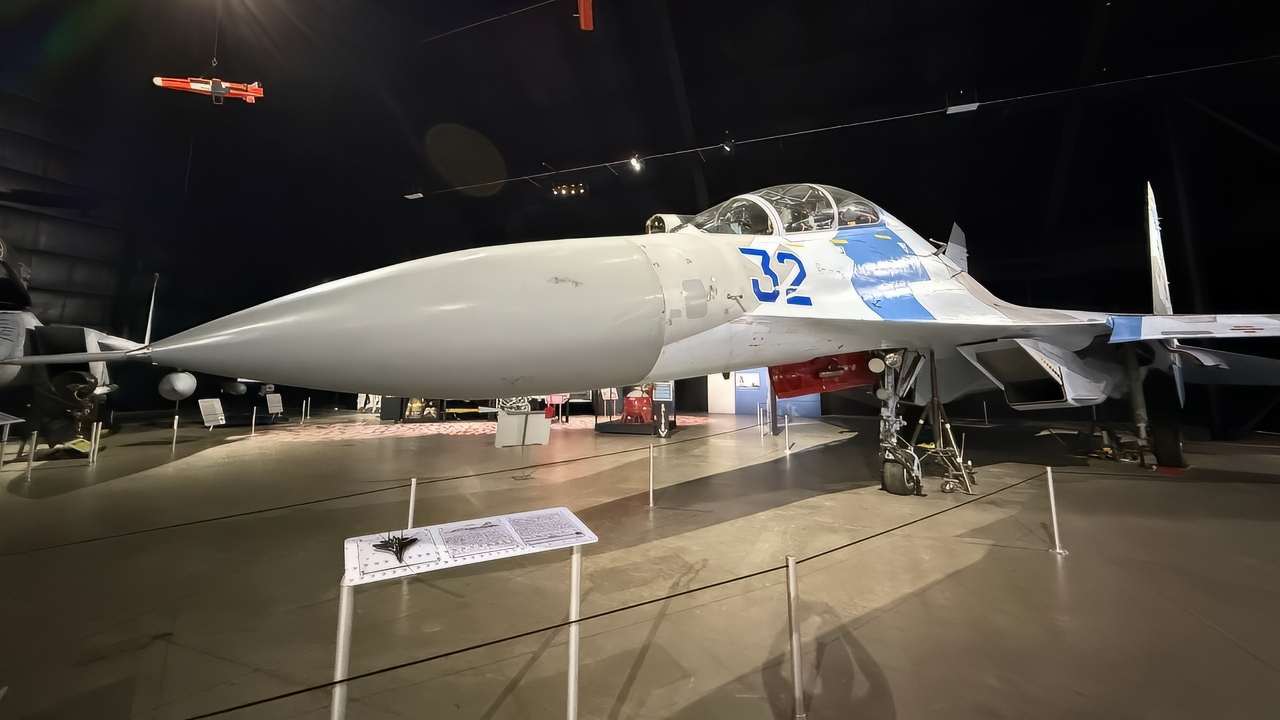
Su-27 Flanker Up Close. Image Credit: National Security Journal Taken on July 19, 2025.
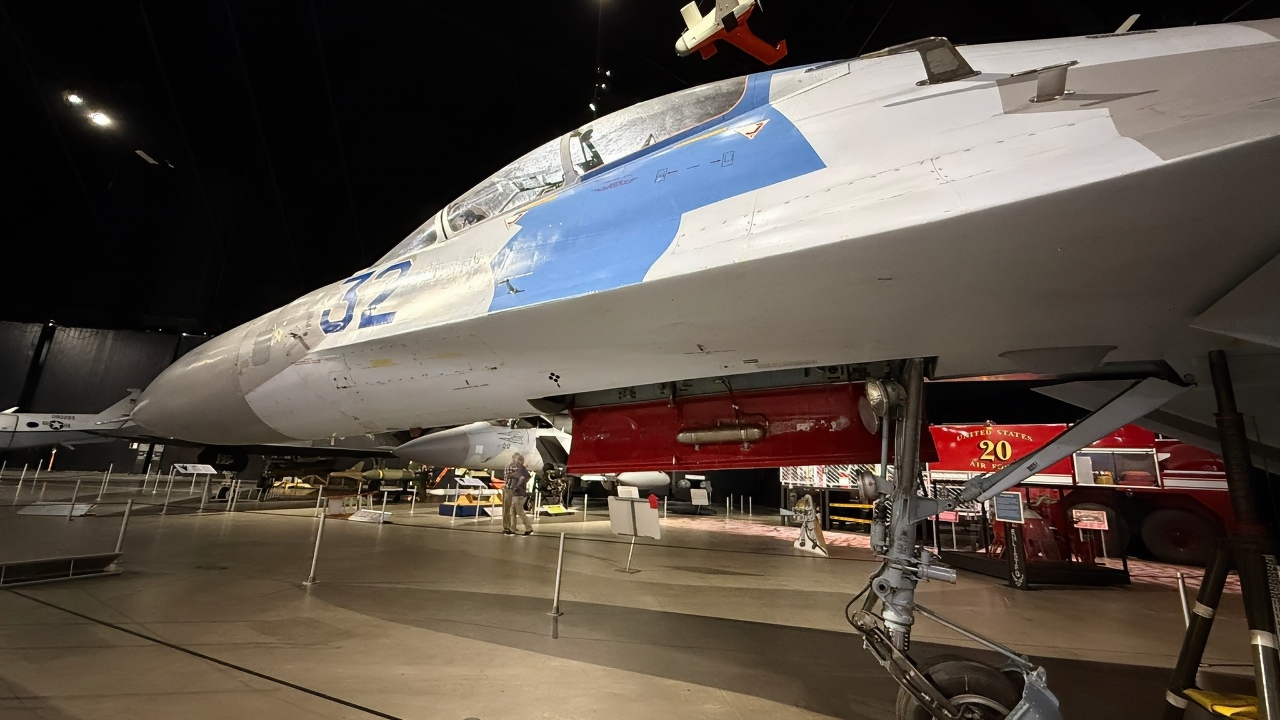
Russian Su-27 Flanker from USAF Museum. Image Credit: National Security Journal.
The July 26 outages followed weeks of attacks on substations, thermal plants, bridges, fuel depots and shipping routes. Reuters reported July 24 that Ukrainian drone units claimed more than 180 vessels and other maritime targets struck around Crimea during the previous three weeks. Reuters did not independently confirm the tally.
The disruption has moved far beyond Russian military sites. Crimea has installed public street phones for emergency calls during mobile outages, canceled children’s summer camps, reduced transit and cafe hours, and faced serious fuel shortages, Reuters reported. A Guardian analysis found more than 70 percent of the peninsula’s roughly 2.5 million residents had experienced some form of power outage.
Ukraine Is Attacking Crimea as a Connected Logistics Network
Ukraine’s target list points to a coordinated effort to make the peninsula harder for Russia to supply and use. Power supports rail yards, pumping stations, air defenses, ports, communications, repair depots and military bases. Strikes on electrical infrastructure reinforce attacks on fuel tankers and maritime logistics rather than standing apart from them.
Russia seized and illegally annexed Crimea in 2014. The peninsula is both a military base and a transit hub. Russia used Crimea to support its 2022 invasion of southern Ukraine, and its airfields, ports, depots and roads remain tied to operations along the front. A disruption affecting electricity or fuel therefore reaches beyond homes and businesses into Russia’s military supply system across Crimea.
The Associated Press reported in June that Ukrainian forces struck a railway bridge over the North Crimean Canal, a power plant, an oil depot, a substation and a gas distribution site. Kyiv described the bridge as a route for Russian forces in southern Ukraine; AP said the claims were not independently verified. The pattern also extends to Russia’s Sea of Azov shipping network.
Russia Has to Defend Every Route at Once
Ukraine chooses where to concentrate each wave. Russia has to guard high-voltage substations, two major thermal plants, the Kerch crossing, fuel storage, ports, ships and military installations spread across the peninsula. The pressure grows when Ukrainian units first target radars and air-defense equipment and then send additional drones toward the infrastructure behind them.
Blackouts alone do not establish complete isolation or an end to Russian military operations. Repair crews, generators and power transfers preserve essential services, and many Ukrainian strike claims remain unconfirmed. Repeated damage still imposes a steady cost: equipment requires repair, air defenses must move, and fuel travels through fewer routes. The operational value lies in making Crimea progressively harder to use.
Crimea’s Power Crisis Is Now Reaching Civilian Life
Russia has repeatedly attacked Ukraine’s electrical infrastructure, especially in frontline regions. Kyiv says Crimea’s energy sites support the occupation and military logistics. The resulting outages still fall on residents, including people without electricity, running water, mobile service or dependable transport.
Russian-appointed officials have acknowledged they cannot provide reliable rolling-blackout schedules, while local administrations have distributed generators to communities facing extended outages. After the July 26 strikes, Krymenergo still reported difficult conditions across three power districts. It gave no public timetable for a full return to stable service.
About the Author: Harry J. Kazianis
Harry J. Kazianis (@Grecianformula) was the former Senior Director of National Security Affairs at the Center for the National Interest (CFTNI), a foreign policy think tank founded by Richard Nixon based in Washington, DC. Harry has over a decade of experience in think tanks and national security publishing. His ideas have been published in the NY Times, The Washington Post, The Wall Street Journal, CNN, and many other outlets worldwide. He has held positions at CSIS, the Heritage Foundation, the University of Nottingham, and several other institutions related to national security research and studies. He is the former Executive Editor of the National Interest and the Diplomat. He holds a Master’s degree focusing on international affairs from Harvard University.


