
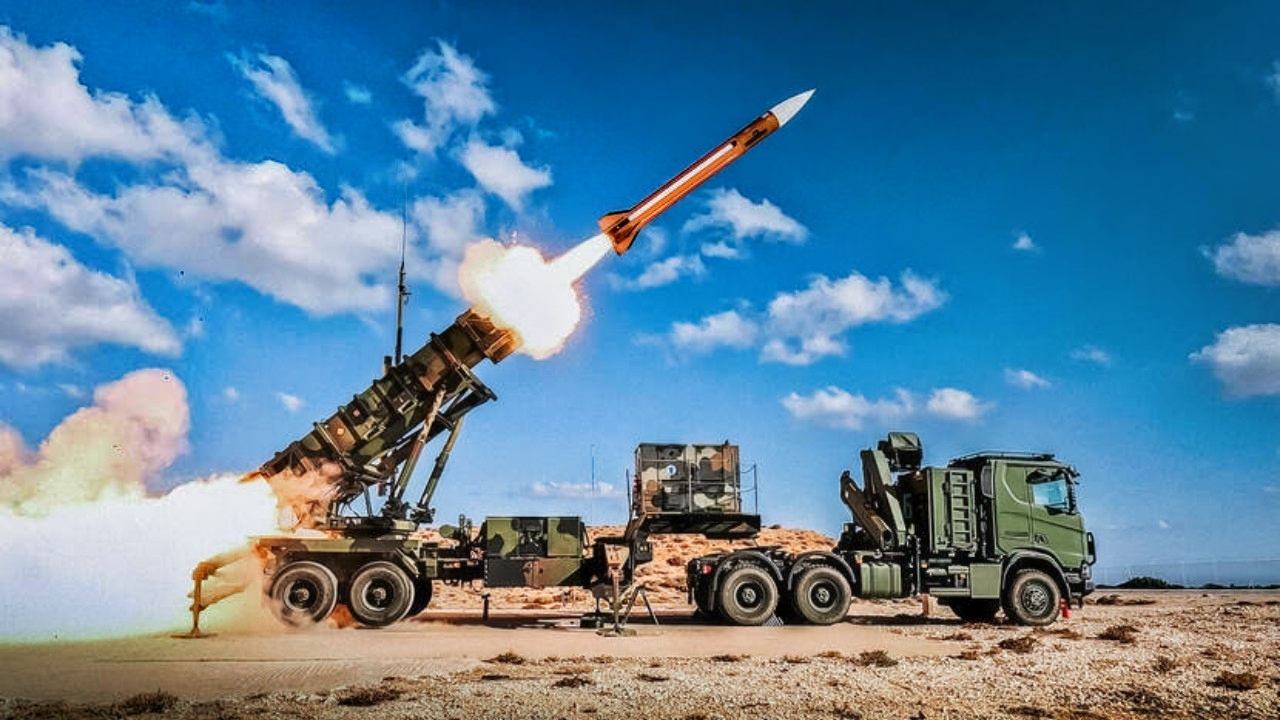
Why Moscow Is Using Ballistic Missiles In Huge Numbers: Russia launched yet another major overnight missile and drone assault across Ukraine, killing civilians and destroying residential buildings. Targets spanning Kyiv to the country’s far west were hit as Moscow ramps up its ballistic missile attacks in response to Ukraine’s continued long-range strike campaign against military and energy infrastructure, as well as logistics hubs throughout Russia.
The latest barrage included dozens of ballistic missiles, cruise missiles and attack drones, forcing Ukraine to expend valuable interceptors and struggle to prevent strikes on targets hit by ballistic missiles. The attack also came only days after the Ukrainian president appealed to Western allies for additional air defense systems, warning that every delay costs civilian lives.
Putin in a meeting. Image Credit: Kremlin.
Putin In a Meeting Last Year in 2025 Creative Commons Image
What Zelenskyy Said
In a statement issued on Saturday, August 1, Zelenskyy described the rescue efforts underway in Kyiv and surrounding regions to save lives and prevent further damage. He described a city engulfed in fires, with seven districts affected and residential buildings left destroyed.
“Since last night, response efforts have been underway in Kyiv and the surrounding region following Russia’s strike. There were numerous fires across the city. Seven districts were affected, and, as usual, the Russians struck ordinary residential buildings,” Zelenskyy’s post reads, accompanied by video footage of rescue workers operating in the city.
He claimed that eighteen residential buildings, along with a school and even the Lithuanian Embassy, were damaged as part of the strikes, and confirmed that nine people had been reported dead following the attack.
Patriot Shortage Leaves Ukraine Vulnerable
Zelenskyy explained how Russia launched 35 missiles at Ukraine, including 27 ballistic missiles – a figure that suggests Moscow is now deliberately taking advantage of Ukraine’s ongoing Patriot interceptor shortage. Having previously leaned more heavily on cruise missiles and long-range drones, Russia is now more willing to expend its ballistic missile stock, knowing that they are more likely to cause significant damage to Ukrainian infrastructure.
Zelenskyy admitted that the shortage was the primary reason Russia’s strikes caused so much damage, too.
“Overnight, the Russians launched 35 missiles at Ukraine, including 27 ballistic missiles, as well as 185 attack drones of various types. Kyiv was the primary target, but strikes also hit the Dnipro, Sumy, Kharkiv, and Poltava regions. Only one ballistic missile was intercepted, simply because there are no interceptors for the Patriot systems. And it is this shortage of ballistic missile interceptors that only encourages Russia to launch such attacks that take human lives,” he said.
Zelenskyy also used the opportunity to again call on his international partners to urgently send more Patriot interceptors to protect lives.
“Every package of ballistic missile interceptors saves the lives of our people. And every night without them results in more casualties. I thank everyone who is working to strengthen our defenses,” he said.
Russia Drawing On Missile Stockpiles
The latest barrage is not just an indicator that Russia is now deliberately leaning more heavily on ballistic missiles to take advantage of Ukraine’s Patriot interceptor shortage, but also that Russia is expending some of its most advanced missiles. Moscow is now launching ballistic missiles at a rate that exceeds its current monthly production, suggesting that the Kremlin is drawing on stockpiles built up over many months to sustain its intensified air campaign at just the right time.
As Critical Threats notes: “Russian forces have launched more ballistic missiles against Ukraine thus far in July than Russia reportedly produces each month. Ukrainian defense source Militarnyi reported on July 19 that Russia used up to two-thirds of its planned annual production of Zirkon missiles in July 2026 alone and that Russia launched more ballistic missiles in July than Russia’s reported total monthly production volume.”
Estimates also suggest that Russia manufactures roughly 60 Iskander-M ballistic missiles and around 40 S-400 air defense missiles every month. Combined, that amounts to around 100 ballistic missiles per month. Ukrainian Air Force data, however, shows Russia fired at least 126 ballistic missiles during July alone. Moscow, therefore, appears to have calculated that now is the ideal time to deplete existing inventories to maximize pressure on Ukraine, as it struggles to adequately defend multiple targets at once.
What Russia Said
Russia’s Defense Ministry claimed that the overnight strikes constituted a “massive strike” directed against Ukrainian “military-industrial complex facilities and logistics centers in Kyiv.”
The attacks appeared to cause widespread damage well beyond military facilities; however.
“️Last night, the Armed Forces of the Russian Federation carried out a massive strike with ground-, sea-based high-precision weapons as well as long-range unmanned aerial vehicles, which hit enterprises of the defence industry and logistics centres of Ukraine in Kiev and Kiev region,” a statement from the Russian Defense Ministry reads.
As well as drone manufacturing and storage sites, the statement also claimed that two vessels delivering military equipment were struck.
“In addition, two dry cargo vessels delivering military hardware to one of the Ukraine’s ports were hit yesterday at a sea passage south of Odessa,” the statement continues.
About the Author: Jack Buckby
Jack Buckby is a British researcher and analyst specializing in defense and national security, based in New York. His work focuses on military capability, procurement, and strategic competition, producing and editing analysis for policy and defense audiences. He brings extensive editorial experience, with a career output spanning over 1,000 articles at 19FortyFive and National Security Journal, and has previously authored books and papers on extremism and deradicalization.


