
Russia’s new jet-powered drones are bombarding Ukraine on a daily basis.
For four days beginning on Thursday, 27th August, Russia sent close to 1,500 drones westwards towards Ukraine.
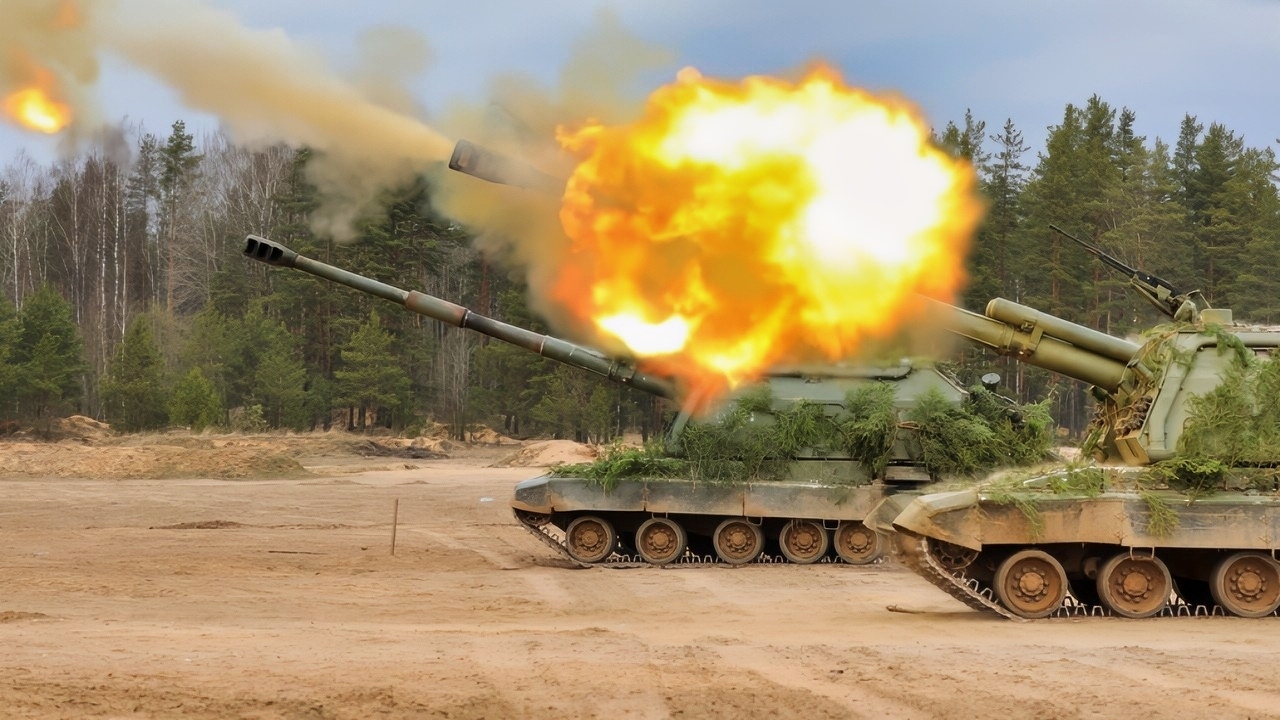
MSTA Artillery Firing Creative Commons Image
The country’s capital, Kyiv, has been attacked continually for five consecutive days, with Russia strategically launching waves of attacks to maximize the number of air raid alerts Ukrainian life must endure.
It’s not just military targets, either. Russia is once again attacking infrastructure not directly connected to Ukraine’s combat readiness.
Jet Drones Cause Havoc
Approximately 800 of the drones fired toward Kyiv were jet-powered. Capable of reaching 400mph, Russia’s jet-powered drones have tested an already struggling Ukrainian air defense system.
Ukraine’s existing interceptors, while cheap to produce and increasingly effective against traditional propeller drones, are becoming obsolete against jet-powered weapons that are three times as fast.
Ukraine has begun developing specialized interceptors to counter modernized drones, with tests taking place last week.
Historically, Russia has bombarded Ukraine overnight with one large-scale attack.
Awakening Ukrainian civilians and forcing them underground soon became a daily habit for life in cities such as Kyiv, and the alerts would usually cease within a couple of hours.
However, Russia has switched this strategy.
Rather than one longer attack, Moscow has sent drones towards Ukraine in smaller waves.
An air raid alert will quickly be followed by another.
A glimpse of last Thursday in Kyiv shows how this works. Across a 24-hour period, Kyiv recorded 13 air raid alerts, surpassing the single-day record of 12 set in the first week of the full-scale invasion.
In total, the capital spent almost 15 hours under air raid alert.
“Right now, Russia’s tactic is to wear down Ukraine and Ukrainians – first and foremost, our people,” said Ukrainian President Volodymyr Zelensky on Sunday, 30th August.
Attacks on Civilian Entities
Throughout the war, Moscow has struck civilian infrastructure in addition to conventional military targets.
Russia has frequently attacked Ukrainian energy infrastructure, particularly during the country’s freezing, dark winter months, but its approaches are now shifting to also target everyday life.
Russian missiles have targeted food distribution centers and online warehouses. This disruption to Ukrainian logistics has left some supermarket shelves empty, raising concerns about potential food shortages.
Ukraine’s Minister of Agrarian Policy and Food, Taras Vysotskyi, said on Friday that Russian attacks had damaged almost 90% of food retailers’ warehouses.
However, Vysotskyi dismissed concerns over food shortages, noting that there was “no threat” of widespread starvation.
Defense advisor Serhii Beskrestnov also stressed that Ukrainians would not “die of hunger”, urging his Telegram followers: “Don’t give in to rumors, disinformation, and panic.”
What Will Russia Do Next?
Russia’s defense ministry openly said on Sunday that its armed forces had “begun preparations to launch massive strikes against Ukraine’s energy facilities”.
As in the previous four winters, Moscow is likely to target energy infrastructure over the coming months.
Taking out such infrastructure during the Ukrainian winter, where temperatures regularly fall below freezing, not only impacts supply lines and fuel for the armed forces, but also strikes Ukrainian morale as civilians live with no electricity and no heating, sometimes for days at a time.
Kyiv has ramped up preparations ahead of the fifth full winter of the war.
Deputy Prime Minister and Energy Minister Denys Shmyhal told Politico earlier this month that he was expecting Russia to target water supplies in addition to electricity and gas.
In preparation, the country has been developing protective covers and distributing modular boilers and power generators nationwide.
How is Ukraine Responding?
Zelensky has been campaigning to secure more air defense systems from Western allies.
U.S. stockpiles of Patriot missiles are low due to the war in Iran, and so the Ukrainian President is urging other NATO members to send air defenses.
Ukraine is also waging a similarly morale-busting campaign against Russia.
Kyiv’s drones have struck facilities across its enemy’s territory throughout the summer, and targets have stretched beyond military bases.
Warehouses for online retailers have been attacked, as have energy facilities across Russia.
This multifaceted strategy is forcing the Kremlin to respond. Russia’s economy is being affected, while everyday life is disrupted for ordinary Russians.
However, Kyiv’s best form of attack may in fact be defense, and with a long, cold winter approaching, many are bracing for what will be yet another challenging season.
About the Author: Shay Bottomley
Shay Bottomley is a British journalist. He has written for the Western Standard, Business Insider, Maidenhead Advertiser, Slough Express, Windsor Express, Berkshire Live and Southend Echo.