

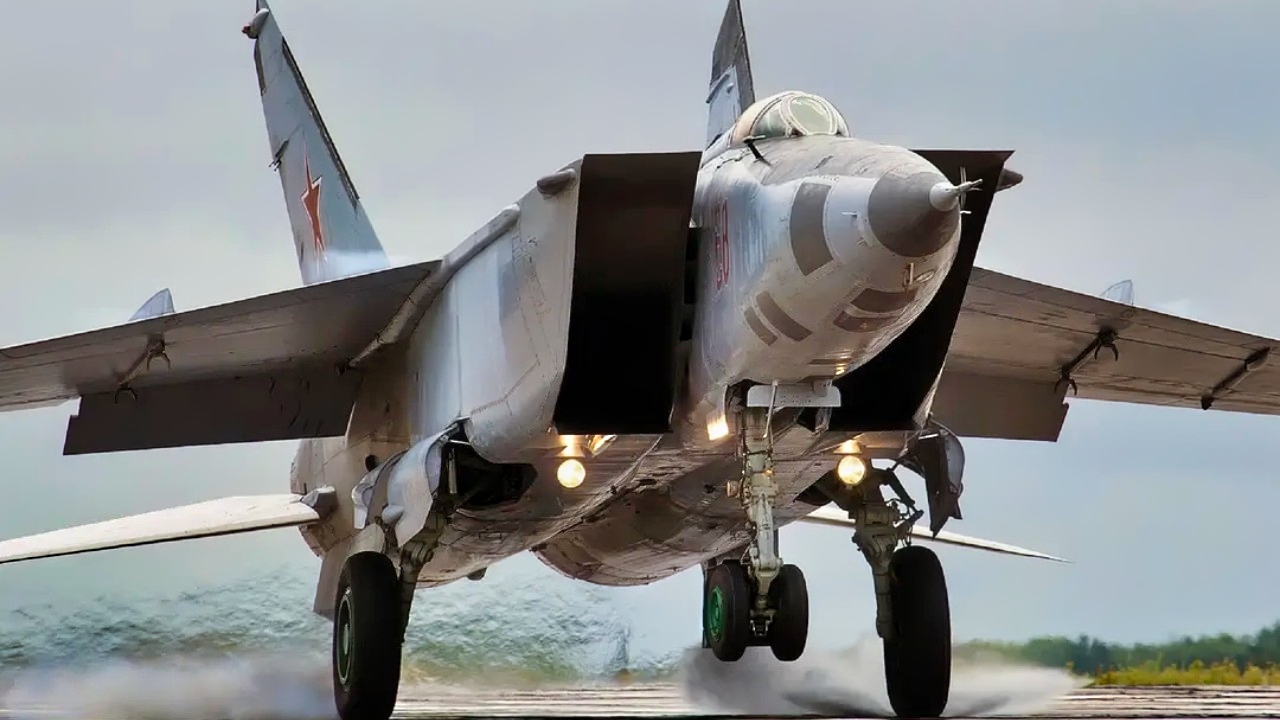
Key Points and Summary – Born to stop America’s planned XB-70 Valkyrie, the MiG-25 Foxbat evolved into one of the Cold War’s most feared interceptors.
-Built in large numbers and exported widely, it offered blistering speed, huge climb rates, and powerful long-range missiles, even if visibility, fuel burn, and agility disappointed pilots.

MiG-25. Image Credit: Creative Commons.
-Iraq used Foxbats for reconnaissance, bombing, and interception in the Iran–Iraq War and scored a headline-grabbing kill on a U.S. Navy F/A-18 during Desert Storm.
-A defector’s MiG-25 gave the West insight into its strengths and flaws, but the Foxbat still earned a reputation as a demanding, dangerous opponent.
MiG-25 Foxbat Had 1 Mission: Fight the XB-70
It was the 1960s, and the Soviet Union’s air force was worried. Generals warned that the Americans were working on a new bomber so powerful that it could shift the balance of the Cold War in the United States’ favor.
The airplane in question was the XB-70 Valkyrie nuclear-equipped bomber. This strategic strike aircraft was going to be a lightning-fast supersonic warbird capable of MACH 3 speeds.
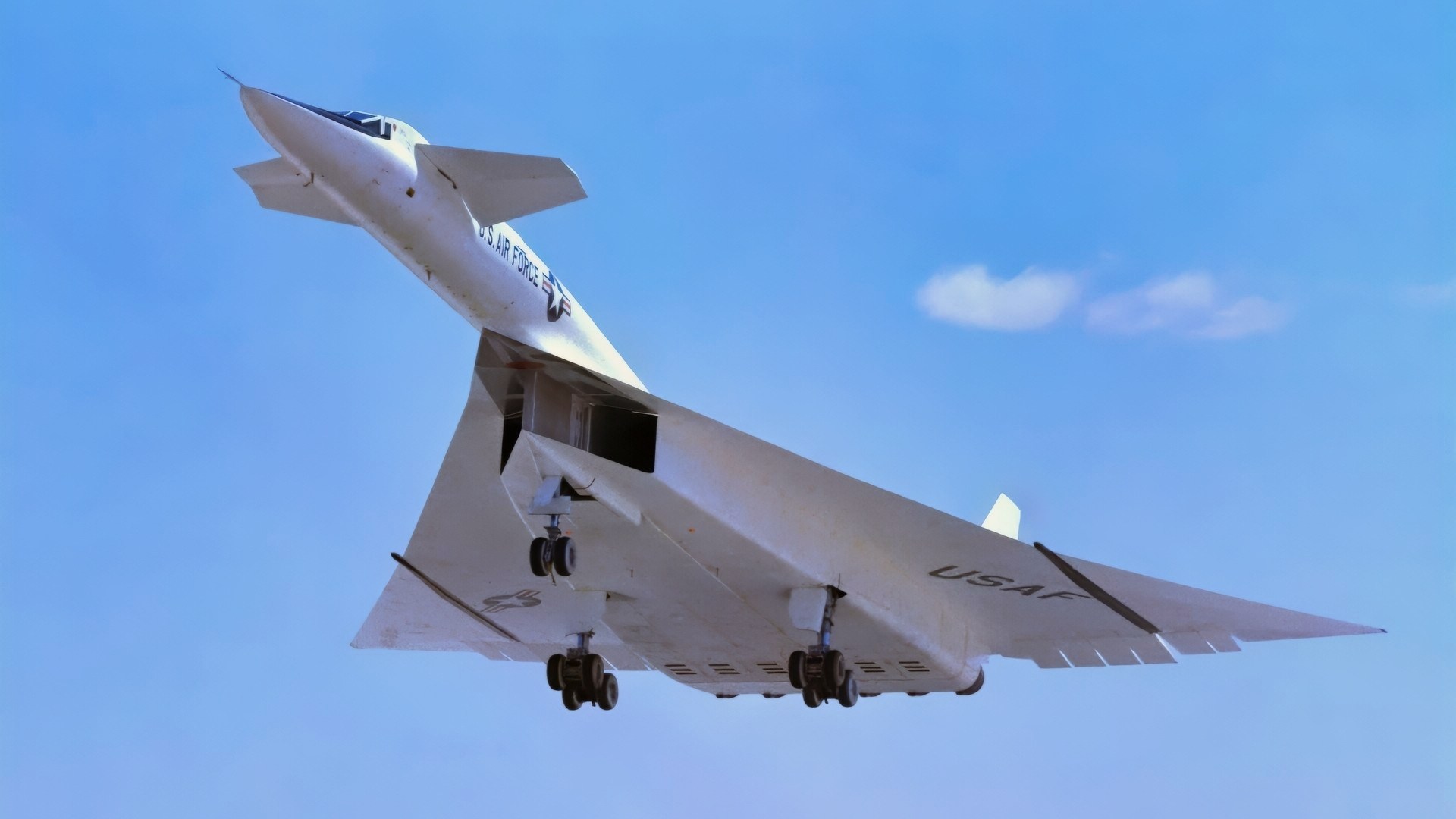
Viewed from the front the #1 XB-70A (62-0001) is shown climbing out during take-off. Most flights were scheduled during the morning hours to take advantage of the cooler ambient air temperatures for improved propulsion efficiencies. The wing tips are extended straight out to provide a maximum lifting wing surface. The XB-70A, capable of flying three times the speed of sound, was the world’s largest experimental aircraft in the 1960s. Two XB-70A aircraft were built. Ship #1 was flown by NASA in a high speed flight research program.
The Soviets needed an intercepting fighter jet that could challenge the XB-70 if it flew a nuclear mission over the Motherland. This was to become the MiG-25 Foxbat. The Foxbat was a sparkling gem with good speed and a remarkable ability to hit high altitude.
The climbing rate and thrust would enable an attack on the XB-70.
The Foxbat Was a Hit
The XB-70 program was later cancelled, but the Russians had a hot rod on their hands.
The MiG-25 was deemed a stellar option, and the Soviets got into high gear to produce the Foxbat in numbers. Perfected throughout the 1970s, the Soviets built more than 1,190 Foxbats for many customers of the Communist empire.
Iraqi Pilots Learned to Depend on the Foxbat
One of these countries that utilized the MiG-25 was Iraq. The Foxbat was in service during the Iraq-Iran War. The Foxbat was an important asset against Iranian F-5 Tigers but less successful against Tehran’s F-14 Tomcats.
There was a MiG-25 reconnaissance and electronic warfare version, which was useful during the war. The Foxbat also excelled at bombing ground targets to punish the Iranians. Iraqi pilots enjoyed its long-range radar and its ability to leave air bases quickly and synchronize with ground radar to intercept Iranian fighters. The Foxbat also had the large, long-range R-40 air-to-air missiles.
The US Air Force Had an Answer for the Foxbat: the F-15
Following the success of the Foxbat, the United States began developing the F-15 Eagle, an interceptor and air superiority fighter to counter the MiG-25. The Americans thought that the MiG-25 was overrated. Iraqi pilots complained about the Foxbat’s limited cockpit visibility.

Two U.S. Air Force F-15EX Eagle IIs assigned to the 85th Test and Evaluation Squadron, Eglin Air Force Base, Florida, taxi after landing at Kadena Air Base, Japan, July 16, 2025. Local units conducted integration and familiarization training with the F-15EX. (U.S. Air Force photo by Airman 1st Class Arnet Shayne Tamayo)
The MiG-25 was not particularly fuel-efficient either.
In turn, the Soviets decided to use even better long-range missiles for the Foxbat, such as the large AA-6 Acrid series, which had a 50-mile range that was top-notch for the era.
The Russians were once stung and embarrassed by one exploit with a Foxbat. Defector Viktor Belenko stole a MiG-25P and took it to Japan.
The Americans learned much about the design of that pilfered MiG-25P. Air-Force Technology wrote that it was “a twin-finned, high-wing monoplane with slightly swept wings and a variable-angle tail plane. To improve the aircraft’s longitudinal stability, and to avert stall at steep angles and subsonic speed, there are two shallow upper-surface fences on each wing.
The high-wing monoplane configuration together with lateral air intakes have the effect of reducing the loss of aerodynamic efficiency resulting from wing-fuselage interference. High-strength steels and titanium are used in approximately 80% of the MiG-25 airframe.”
Munitions and Engines Were Able to Create Firepower and High Performance
The MiG-25 did not have a gun, but it could carry a wide range of missiles for better dogfighting, such as the Aphid, Apex, and Archer – all formidable weapons.
The Foxbat featured a decent propulsion system, two R-15B-300 single-shaft turbojets, which enabled a top speed of MACH 2.35 to MACH 2.45. This high velocity was achieved with afterburners.
The Foxbat Played Its Cards Right During the First Gulf War
MiG-25s were used extensively during Operation Desert Storm by the Iraqis. The Foxbat immediately got off to a good start. One MiG-25 shot down a F/A-18 Hornet on the first night of combat. The Americans were worried this was a bad sign for the air war.
Then the F-15s had a turn. Two MiG-25s survived a mission in which they confronted and escaped four F-15s after the Eagles launched an assortment of missiles that missed the mark.
On the night of January 17, 1991, Iraqi pilot Zuhair Dawoud noted how he shot down the Hornet. “I locked a target 38km [20.5 miles] from me and at 29km [15.6 miles] I fired [the] R-40RD missile from under my right wing. I kept the target locked with my radar [un]till I witnessed a huge explosion in front of me,” according to Aviation Geek Club.
This successful encounter by the Foxbat was probably aided by a neat radar known by NATO as the Fox Fire sensor suite.
The MiG-25 was also adept at friend-or-foe identification, which helped in aerial combat. The Polyot-11 navigation and landing system was also a key asset for pilots.
The MiG-25 overall was a quality fighter. It had the speed and climbing ability to do some damage. The thrust of its engines aided dogfighting, and its avionics suite was ahead of its time during its heyday. The Soviets developed several variants of the Foxbat to improve the base model.
The MiG-25 later became a respected ground-attack aircraft with an effective anti-radar missile.
The Foxbat never got to confront the XB-70 Valkyrie, but it did have success in the Middle East. It was a good thing the West was able to examine the MiG-25P after its defection to learn some of the ins and outs of the airplane.
Its success during Operation Desert Storm was one of the only bright spots in the war for the Iraqis.
So give some credit to the Soviets for making an admirable airplane that worked well over the years. It was a workhorse that logged the flight hours to be a dogfighter and a ground punisher. The Foxbat had much going for it, and the Americans quickly learned it was a demanding customer.
About the Author: Brent M. Eastwood
Author of now over 3,000 articles on defense issues, Brent M. Eastwood, PhD is the author of Don’t Turn Your Back On the World: a Conservative Foreign Policy and Humans, Machines, and Data: Future Trends in Warfare plus two other books. Brent was the founder and CEO of a tech firm that predicted world events using artificial intelligence. He served as a legislative fellow for US Senator Tim Scott and advised the senator on defense and foreign policy issues. He has taught at American University, George Washington University, and George Mason University. Brent is a former US Army Infantry officer. He can be followed on X @BMEastwood.


