
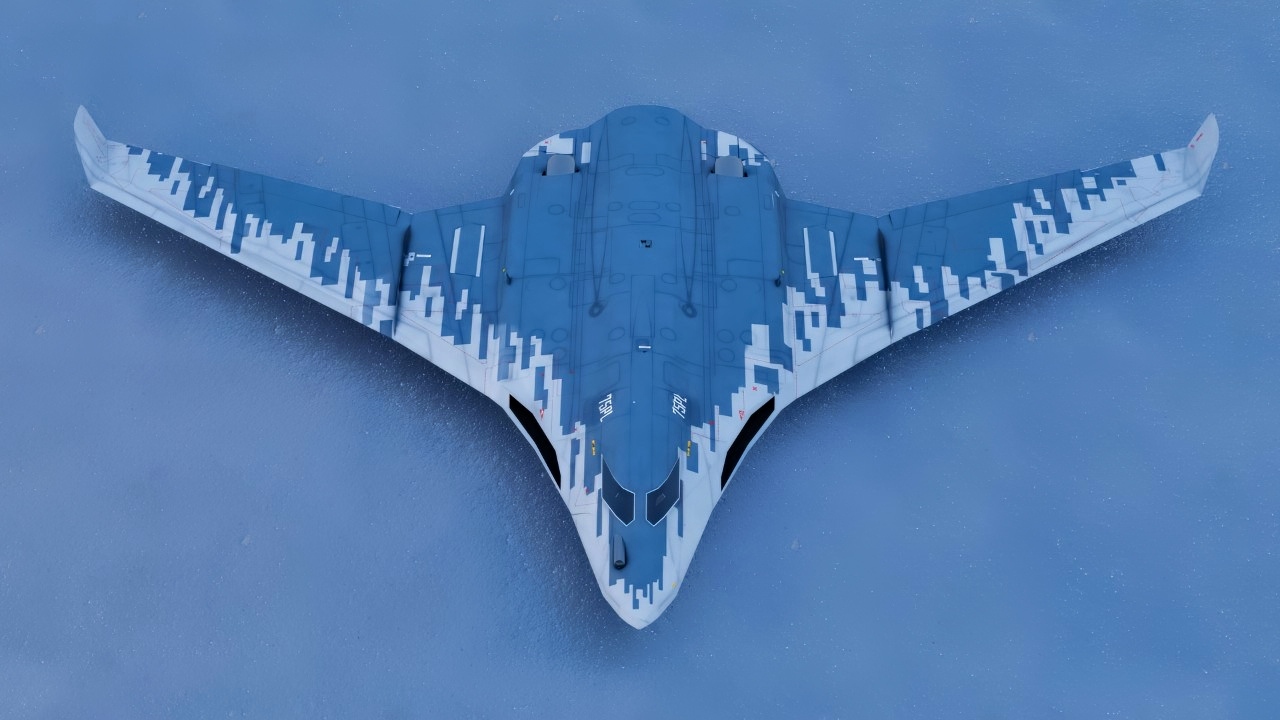
Russia’s PAK DA Bomber Hit Hard by Sanctions, Leak Reveals: A newly published intelligence leak has revealed details about Russia’s next-generation strategic bomber program, raising questions about whether Moscow can produce its most advanced new aircraft at scale.
The material, released by InformNapalm and the Fenix cyber analytics center, shows internal documents from the Experimental Design Bureau of Motor Engineering (OKBM), a Russian engineering firm involved in both the PAK DA stealth bomber and Su-57 fighter programs.
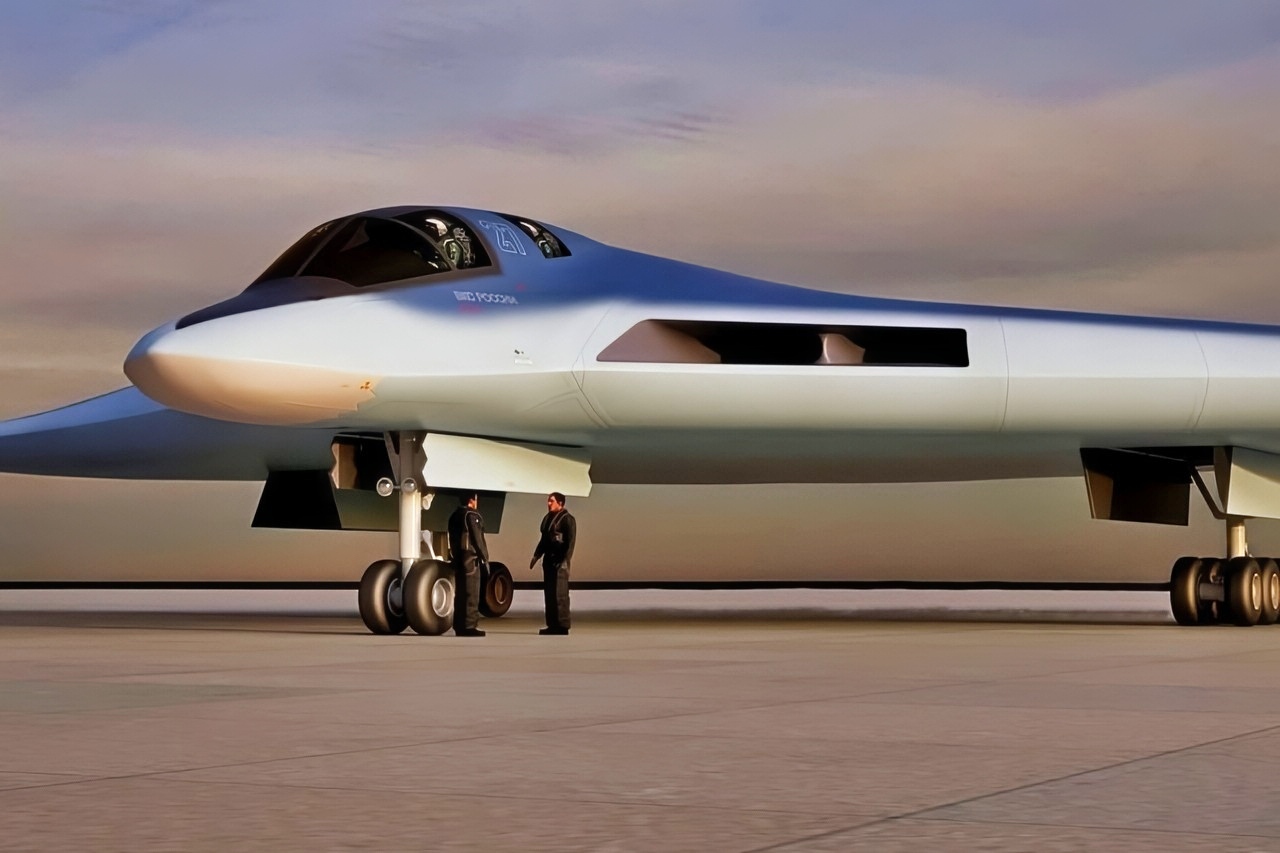
PAK DA Stealth Bomber Artist Rendering. Image Credit: Creative Commons.
The files reportedly include classified contracts and production schedules spanning 2024 to 2027, along with evidence that key aircraft components rely on foreign machine tools.
The findings are relevant because the PAK DA – Russia’s “Prospective Aviation Complex for Long-Range Aviation” – is intended to become the backbone of the country’s future bomber fleet, replacing and supplementing its Cold War-era aircraft still in service today.
And while the leak suggests the design is confirmed, it also raises doubts about the industrial capacity to build it amid ongoing sanctions and the war in Ukraine.
What the OKBM Leak Shows on PAK DA Bomber
According to the InformNapalm report, the cyber operation penetrated OKBM’s internal systems and retrieved technical documentation used “for months” by Ukraine’s defense forces and allied intelligence before being published.
The documents identify OKBM as a key subcontractor producing RSh-type geared hinges used in bomb-bay actuation systems – the mechanisms that open and close an aircraft’s internal weapons bay doors – for the PAK DA, specifically components coded “80RSh115.”
The contract structure outlined in the leaked documents shows a chain from Russia’s Ministry of Defense to Tupolev, then to OKBM, confirming that OKBM plays a role in the order. The same documentation also shows that similar hinge components were first developed for the Sukhoi Su-57 and later adapted for the PAK DA bomber.

PAK DA Stealth Bomber. Image Credit: Creative Commons.
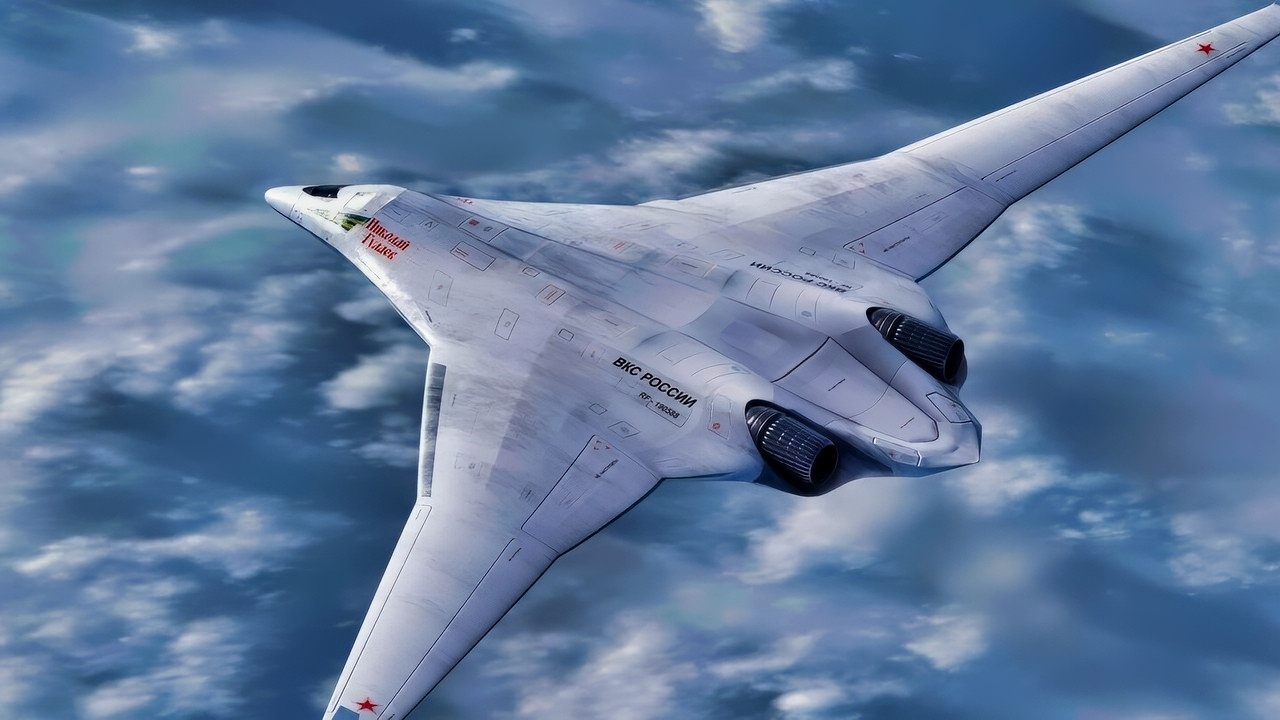
PAK DA Bomber from Russia. Image Credit: Creative Commons.
The production timelines running through 2027 indicate that the PAK DA is in active development. Additionally, InformNapalm notes that the contracts are classified under Russian state secrecy laws and include termination clauses in the event of disclosure.
Sanctions Are Slowing Russia’s Aviation Industry
Perhaps the most consequential finding in the leak is not the existence of the PAK DA program, which has already been documented, but the industrial problems that could prevent its on-time delivery.
InformNapalm’s disclosure indicates that OKBM relies heavily on imported high-precision computer numerical control (CNC) machine tools to manufacture critical aircraft components. Among them are Taiwan-made Hartford and Johnford systems, as well as Serbian Grindex equipment, all reportedly acquired through state-backed programs.
The same internal documents suggest that Russian aerospace production timelines continue to slip due to the loss of Western suppliers following sanctions imposed after the invasion of Ukraine. And without consistent access to high-end tooling, Russia faces bottlenecks in machining the precision parts required to build modern stealth aircraft.

PAK DA Bomber from Russia. Image Credit: Creative Commons.

PAK DA Bomber Russian Air Force. Image Credit: Creative Commons.
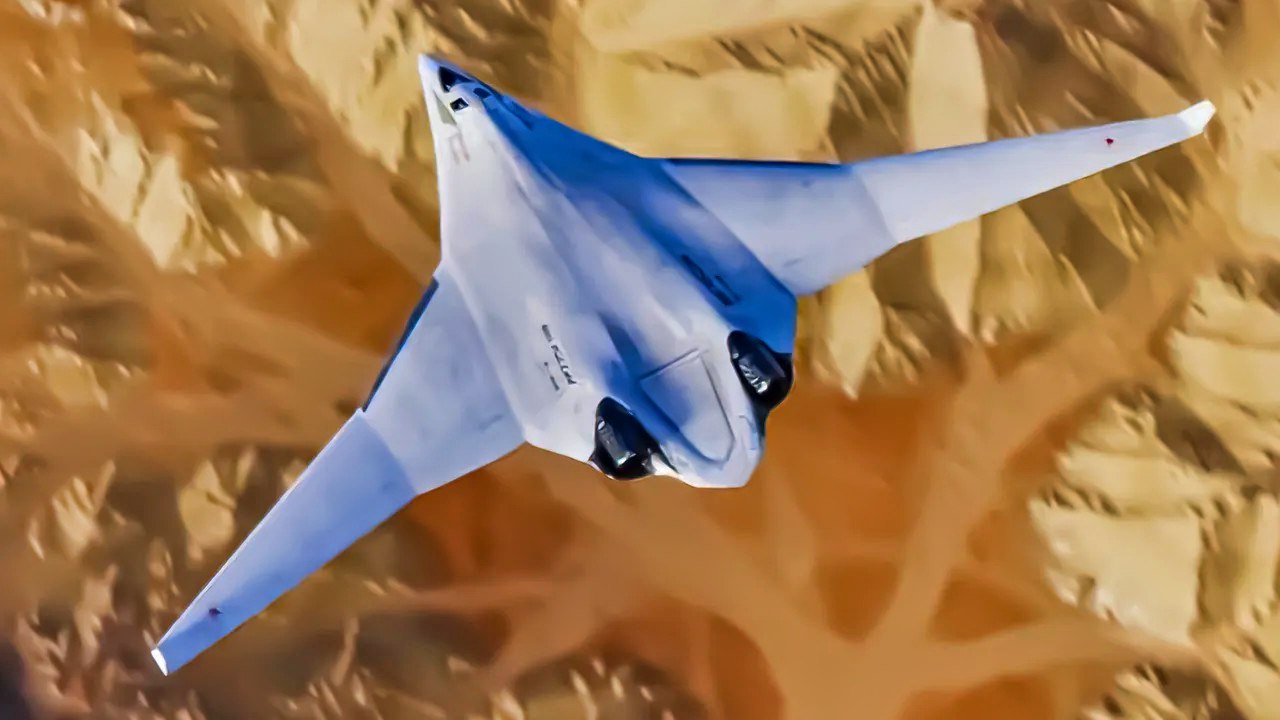
PAK DA Russian Bomber. Image Credit: Creative Commons.
Among the sanctions causing trouble is the European Union’s 2025 19th sanctions package targeting Russia’s defense-industrial base and sanction-evasion networks, which aims to restrict access to exactly the kinds of high-precision manufacturing tools identified in the leak.
InformNapalm noted, however, that these sanctions will only work properly “if they are comprehensive and tight.”
“This means preventing Russia from circumventing them through third countries, and keeping tight controls over the supply of critically important high-precision machine tools needed to produce components for Russian weapons,” the report continues.
While the program has not been halted, the news casts doubt on Russia’s ability to produce the new aircraft consistently and at scale.
What PAK DA Is Supposed to Become
The Tupolev PAK DA is Russia’s attempt to field a modern stealth bomber conceptually comparable to American systems like the B-2 Spirit and the upcoming B-21 Raider. It is designed as a subsonic flying-wing aircraft with long endurance and the ability to carry both nuclear and conventional payloads.
The program dates back to the late 1990s and early 2000s, when Russia began exploring a successor to its aging bomber fleet.
Today, that fleet still relies heavily on legacy platforms such as the Tupolev Tu-95, first introduced in 1956, and the Tupolev Tu-160, which entered service in 1987. The Tu-95 remains one of the oldest operational strategic bombers in the world, while the Tu-160, although more modern, is not a stealth platform and relies on stand-off weapons for survivability.
PAK DA, once fielded, will change that by providing a lower-observable platform capable of penetrating advanced air defenses or launching long-range cruise missiles from safer distances. Previous reporting has indicated that the aircraft would enter service later this decade, with some projections pointing to initial production around 2027. The program, however, has been plagued by delays.
For the U.S. and NATO, the findings are largely positive: they indicate that sanctions are working, and that the PAK DA remains years away from reliable production.
That gives U.S. and NATO planners more time to adapt – and while the program could still mature into a credible threat, current industrial constraints significantly reduce its near-term impact on the strategic balance.
About the Author: Jack Buckby
Jack Buckby is a British researcher and analyst specializing in defense and national security, based in New York. His work focuses on military capability, procurement, and strategic competition, producing and editing analysis for policy and defense audiences. He brings extensive editorial experience, with a career output spanning over 1,000 articles at 19FortyFive and National Security Journal, and has previously authored books and papers on extremism and deradicalization.


xi-xi-xi-xi
May 1, 2026 at 11:32 pm
(xi-xi-xi-xi = die four times.)
PAK DA is a rich man’s toy, a high luxury item, one the Russian people today, now, simply cannot afford.
What the Russian people today need are tons of hazels, or oreshniks.
In order to crush the nazis, and also defeat the euro liberal-progressivist fascists and the US deep state representatives.
And send Putin to rikers, too.