


Iran’s US and Israeli election strategy is ramping up in the final days.
As the Pioneer Press reported yesterday morning in its Associated Press coverage, Iranian state television claimed that seven oil tankers were struck or hit naval mines overnight in and around the Strait of Hormuz.

A U.S. Air Force F-15EX Eagle II flies over the Gulf of America, September 16, 2025. The F-15EX, from the 40th Flight Test Squadron at Eglin Air Force Base, Florida, is one of the first F-15EXs in the Air Force, and is going through developmental and operational test series at Eglin to confirm its operational capabilities before it is delivered to the combat Air Force. (U.S. Air Force photo by Staff Sgt. Blake Wiles)

A crew chief from the 158th Fighter Wing taxis an F-35 II Lightning in for rapid refueling and rearming, July 24, 2025, at Westover Air Reserve Base, Chicopee, Mass.
During the D-ICT exercise, F-15’s from the 104th Fighter Wing and F35’s from the 158th Fighter Wing received simultaneous rapid rearming and refueling from the 103AW C-130H Hercules with all engines running. Performing these D-ICT exercises helps aircraft quickly return to their mission and highlights our ability to distribute and operate from anywhere. (U.S. Air National Guard Photo by Jay Hewitt)
If that number holds, it would be possibly the largest single-day toll since the conflict began on February 28. While the AP couldn’t independently verify the exact number of ships hit, the strategy has been clear for quite some time.
The IRGC Navy attached a familiar threat.
If the US keeps guiding commercial ships through the strait, American bases in the region are on the target list.
Israelis vote on October 27. Americans go to the polls for the midterms on November 3.
In Tehran, these shipping attacks are part of their effort to influence the upcoming elections.
They’ve done so by attacking tankers and container ships transiting the Strait of Hormuz, trying to monetize the waterway by coercing companies into paying a toll to pass through.
What Iran Claims And What We Actually Know
By the IRGC’s own account, its forces hit four tankers conducting ship-to-ship oil transfers in the northern Persian Gulf, and three more struck mines laid west of the strait.
However, the IRGC did not provide ship names, flag states, or casualty figures.
UKMTO, the British center that logs shipping incidents in the region, had confirmed only two attacks in the same window: the Kuwait-flagged Al Dasma and the Liberia-flagged Soyia.
Both crews were reported safe.
Which one of the stories is true matters not, because the regime got exactly what it wanted.
The oil market didn’t wait for the difference to be sorted out. Brent jumped about 3 percent to near $112 a barrel nearly immediately.
Kpler had already counted 18 tanker attacks in the two weeks before Thursday.
However, despite the increased attacks, oil exports via the Gulf have exceeded pre-conflict levels.
The New York Post, citing Kpler data, noted that more than 24 million barrels of oil flow through every day. Part of the increase centers on the pipeline the Saudis use to reach the Red Sea port of Yanbu.
The International Maritime Organization counts 119 maritime security incidents and 24 dead seafarers since the shooting started. Those sailors were merchant mariners, not combatants.
The Calendar Is The Weapon
On October 8, President Trump said flatly, “We will not be attacking Iran at any time before the midterm elections.”
The same reporting said IDF Chief of Staff Lt. Gen. Eyal Zamir had warned his American counterparts that a renewed strike, and the Iranian missile barrage expected in return, could force Israel to postpone its election.
Tehran hasn’t missed this. Washington has publicly taken a major strike off the table until after November 3.
Jerusalem is worried that a new round of airstrikes could disrupt its own vote.
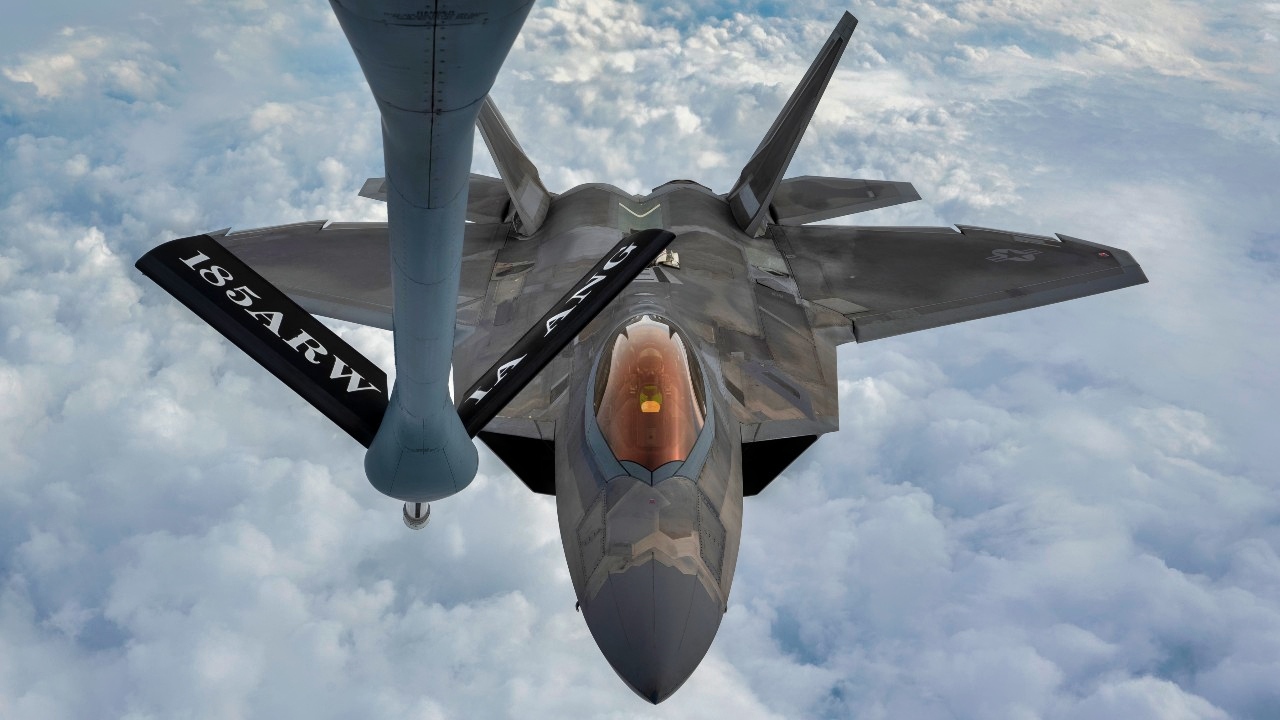
A U.S. Air Force F-22 Raptor approaches the boom of a KC-135 Stratotanker during a refueling mission over the Florida Panhandle, Dec. 14, 2022. Aerial refueling allows pilots to stay airborne for longer periods of time, increasing the mission capabilities individual aircraft can support. (U.S. Air Force photo by Tech. Sgt. Betty R. Chevalier)
That is a window of opportunity for the IRGC, and their attacks are designed to influence the vote.
This is hardly a surprise.
In September, George Washington University’s Sina Azodi told Al Jazeera that Iran could try to drag the conflict to the midterms to hurt Trump politically at home.
FDD’s Mark Dubowitz warned of a 1980-style October surprise, the playbook Tehran pioneered with the hostage crisis.
He predicted Tehran would escalate attacks in the Gulf, and it has.
Prime Minister Netanyahu said last month that Israel had indications its enemies would try to strike before the election, and US intelligence reportedly shares that assessment.
The Jerusalem Post posted that Iranian domestic media have “published more than 1,200 Persian-language articles within the past two weeks about Trump and the midterm elections.” They are trying to escalate their way to a US ballot box victory.
Trump has predicted the conflict would end right after the midterms, arguing Tehran is trying to influence the vote. The second part of that is correct; the first…not likely.
The Leverage Cuts Both Ways
However, leverage cuts both ways, and Iran is bleeding economically badly.
The US blockade of Iranian ports has strangled its oil income.
Kpler analysts told Maritime Executive that Iran has been cutting production, and none of its large tankers have left the Gulf since the blockade was reinstated.
Even Mohsen Rezaei, head of Iran’s Supreme National Security Council, acknowledged this week that the Islamic Republic will suffer under a prolonged blockade.
Washington has also shown it will hit back at sea.
In September, after the IRGC fired ballistic missiles at US warships, CENTCOM sank five Iranian crude carriers, and Secretary of State Marco Rubio warned that every Iranian attempt meant Tehran was going to lose tankers.
So why are the Iranians escalating now?
Because a regime under economic siege has few cards left, and Hormuz is the best one.
Seven tankers hit in a night, real or only partly true, drives up insurance, oil prices, and political pressure in two capitals at once.
It does it cheaply.
A ballistic missile costs a fraction of a $150 million supertanker, and you only need to hit a few to make every shipowner and insurer on earth reconsider moving tankers at all.
The counterargument deserves a hearing.
Some former US officials argue Tehran is badly misreading Washington and that a midterm calendar won’t restrain this administration once the votes are counted.
If they’re right, Iran is spending its last leverage on a bet that pays off for about two weeks.
We’ve Seen This Play Out Before
The Tanker War of 1987 and 1988 ended with the US Navy reflagging and escorting Kuwaiti tankers under Operation Earnest Will.
In 2019, two tankers, the Front Altair and the Kokuka Courageous, were hit in the Gulf of Oman, and the world treated it as a full-blown crisis.
Today, seven in one night, whether true or not, is just Thursday’s news.
What’s different now is the mix. Iran has a propaganda arm that announces the score before anyone can check it.
The disinformation angle gets too little attention.
The IRGC doesn’t need to sink seven ships.
It needs markets and voters to believe it could, while US media reports only half the story.
What To Watch For
Keep an eye on three things over the next 12 days. First, whether UKMTO and the insurers confirm more of Iran’s claimed hits.
Second, whether CENTCOM resumes striking Iranian tankers despite the pre-midterm pledge by the president.
Third, whether Iran or its proxies try something bigger before Israelis vote on Tuesday, which would come from either Hamas or the Houthis.
About the Author: Steve Balestrieri
Steve Balestrieri is a National Security Columnist. He served as a US Army Special Forces NCO and Warrant Officer. In addition to writing on defense, he covers the NFL for PatsFans.com and is a member of the Pro Football Writers of America (PFWA). His work was regularly featured in many military publications.


