

British factories manufacturing weapons for Ukraine may face attacks from “unknown sources,” a top Kremlin adviser said on Monday.
Andrei Fedorov, who served as Russian deputy foreign minister in 1991, issued the warning following the news that Britain would release classified information to aid Ukrainian manufacturing of long-range SCALP cruise missiles.

Sea Baby Drone Ukraine. Image Credit: Creative Commons.
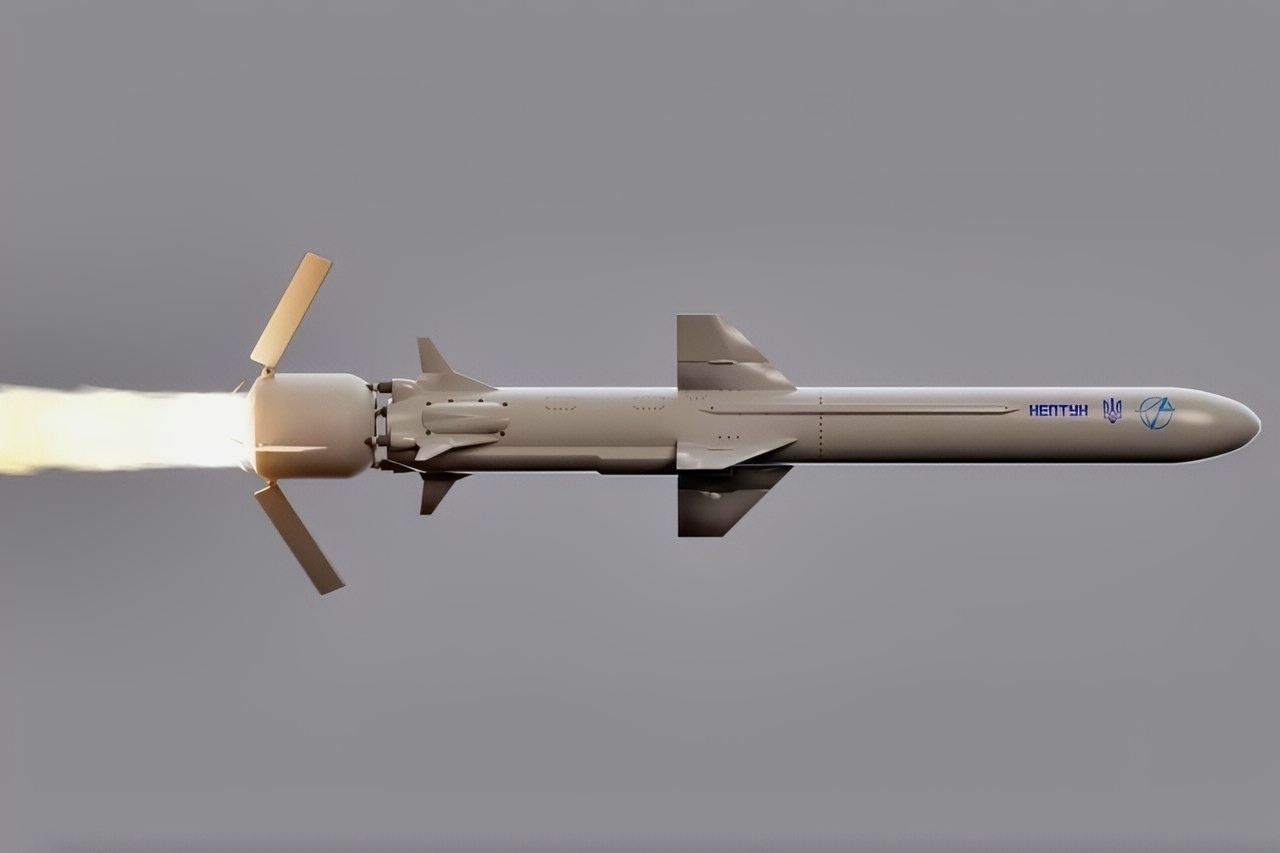
Neptune Missile. Image Credit: Government of Ukraine.
Speaking to the BBC’s Newsnight show, Fedorov stated that “sooner or later” Russia’s response to Britain could become “visible,” explaining that Moscow’s options could include “technical reaction” or a cyberattack. Fedorov also noted that he could not “exclude 100 percent” any “semi-military” action.
When asked what such action might involve, he referenced British industry. “Something might happen with enterprises, with the factories which are producing drones for Ukraine,” he said.
When pressed on whether this could mean attacks on factories on British soil, Fedorov said such sites could face targeting “not by Russia” but by “unknown sources.”
Burnham Visits Kyiv
Fedorov’s strong wording came after Prime Minister Andy Burnham’s visit to Kyiv on Monday to mark Ukrainian Independence Day.
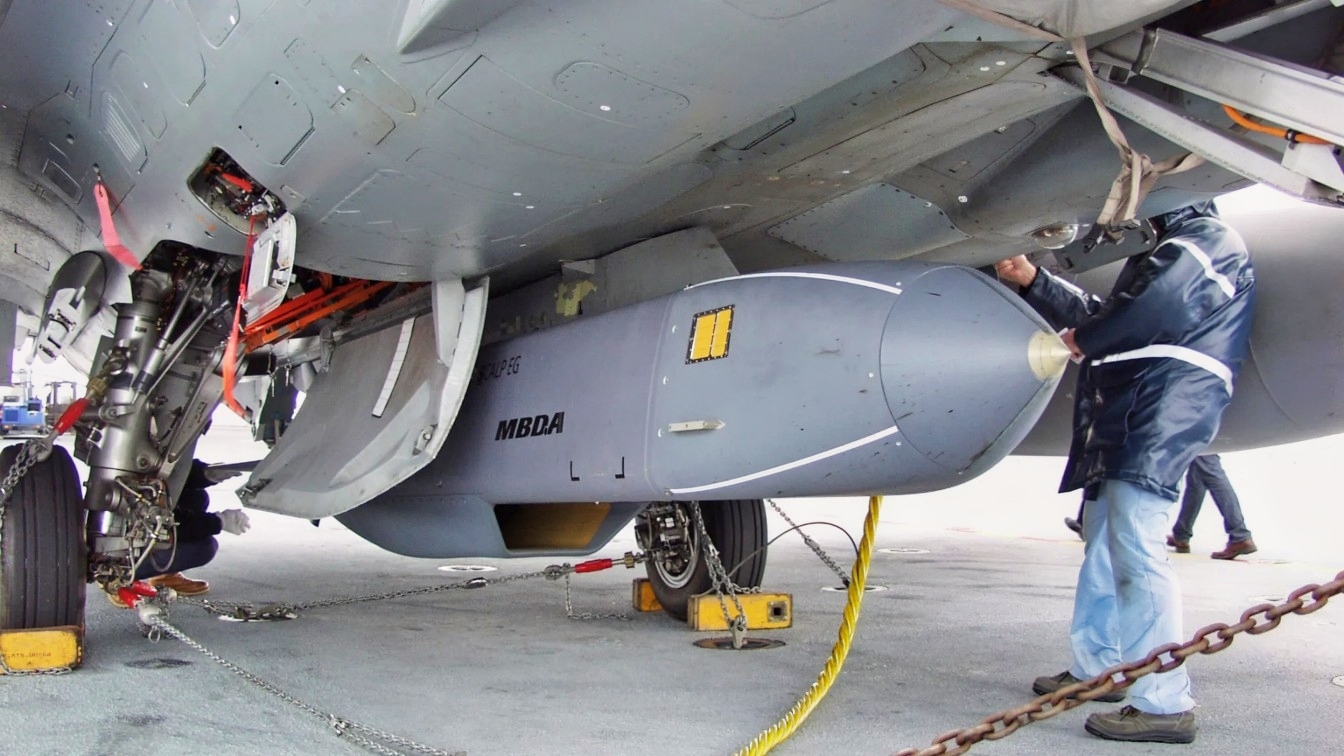
Defense manufacturer MBDA has received the British government’s green light to provide classified information about UK-made components used in the French SCALP missile, closely related to Britain’s Storm Shadow. The blueprints will support Ukraine’s plans to domestically assemble the weapons.
Both Storm Shadow and SCALP missiles have already been supplied to Ukraine and used against Russian targets. What is new this week is that Kyiv can now work toward domestic manufacture of the cutting-edge weapon in the long term, so it doesn’t have to lean on allies’ inventories forever.
‘We Didn’t Start the Fire’
Kremlin spokesman Dmitry Peskov said last week that “Britain is participating in this war,” and that London has been “adding fuel to the fire.”
He also said Russian forces were working to identify sites producing missiles and other military equipment in Ukraine in order to destroy them.
Discussing the issue on Monday, Burnham noted: “Who started the fire? That’s the question, isn’t it?”
The prime minister also took the opportunity to slam Moscow’s threats as “outrageous,” stressing that they would not prompt any change in Britain’s approach to Ukraine.
Prior to his arrival in Kyiv, Burnham told journalists that Russia should be “in no doubt of our resolve.” “We will not back down until there is a just and lasting peace,” he continued.
Last week, Russia’s Foreign Minister Sergei Lavrov said that Moscow might regard Britain as a participant in the war following reports that British-made drones had been used for Ukrainian strikes far behind the front line with Russia. Britain is already set to supply Ukraine with 150,000 drones in 2026.
No Russian Ambassador in London, Yet
Anglo-Russian diplomacy is far from well.
The Russian ambassador to Britain, Andrei Kelin, departed his post on July 21 after a seven-year stint in London. While Moscow has not yet nominated a successor, the Russian Embassy currently insists it has no intention to formally downgrade relations.
The Sunday Times reported that Britain’s chief of the defense staff, Air Chief Marshal Sir Richard Knighton, has also been repeatedly unsuccessful in attempts to speak with Russian military chief Gen. Valery Gerasimov.
Burnham also used Monday’s meeting of the 34-country Coalition of the Willing to push for stronger Ukrainian air defenses as Russia intensifies missile attacks.
The coalition condemned Moscow’s “systematic and escalating strikes” and said its members would not be deterred by “irresponsible Russian threats.” It pledged to strengthen Ukraine’s air defenses, expand cooperation with its defense industry and tighten sanctions on Russia.
The immediate danger, however, is that the increasingly hostile rhetoric is no longer confined to events on the ground in Ukraine.
Fedorov himself acknowledged that risk when discussing possible attacks on British industry. The danger now, he told the BBC, is that “the Ukrainian conflict will be beyond Ukrainian borders.”
The ‘Gray Zone’
Russia is already involved in extensive “gray zone” warfare against NATO members.
“Hostile states have recognized that cyberattacks, influence operations and economic disruption can achieve strategic objectives without crossing the threshold into open conflict,” Craig Watt, senior threat intelligence specialist at Quorum Cyber, recently told the British radio station LBC.
In July, Poland said Russian intelligence had attempted to launch a major cyberattack on the country’s energy grid. If the attack had been successful, it could have prompted blackouts across Poland during the cold winter period.
About the Author: Georgia Gilholy
Georgia Gilholy is a journalist based in the United Kingdom who has been published in Newsweek, The Times of Israel, and the Spectator. Gilholy writes about international politics, culture, and education.


