

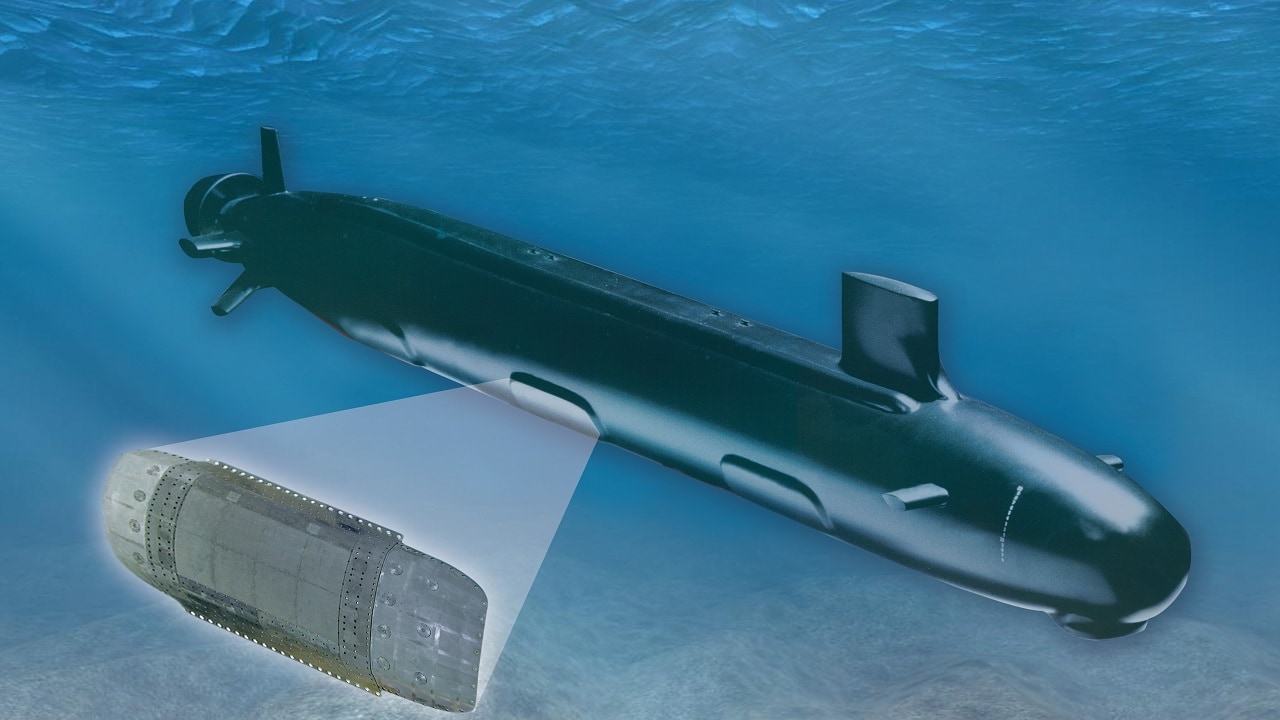
SSN(X) Key Points and Summary – The SSN(X) is the U.S. Navy’s next-generation attack submarine, a revolutionary platform designed to ensure American undersea dominance against growing threats from China and Russia.
-This new “super-sub” will combine the high speed of the Seawolf-class with the versatility of the Virginia-class.

NAVAL BASE GUAM (Dec. 11, 2024) – The Los Angeles-class fast-attack submarine USS Annapolis (SSN 760) transits Apra Harbor, Naval Base Guam, Dec. 11, 2024. Assigned to Commander, Submarine Squadron 15, based at Polaris Point, Naval Base Guam, Annapolis is one of five forward-deployed fast-attack submarines. Renowned for their unparalleled speed, endurance, stealth, and mobility, fast-attack submarines are the backbone of the Navy’s submarine force. Regarded as apex predators of the sea, Guam’s fast-attack submarines serve at the tip of the spear, helping to reaffirm the submarine force’s forward-deployed presence in support of a free and open Indo-Pacific. (U.S. Navy photo by Lt. James Caliva)
-It’s being engineered to be radically quiet, significantly faster, and to carry a larger and more diverse weapons payload than any previous U.S. attack sub.
-However, the ambitious program already faces significant challenges, including a five-year procurement delay and concerns about straining the U.S. industrial base.
SSN(X) Explained
The SSN(X)-class submarine, or Next-Generation Attack Submarine as it is sometimes called, is the U.S. Navy’s ambitious project to ensure American undersea dominance for the next several decades.
As the successor to the Virginia-class and Seawolf-class submarines, the SSN(X) is being designed to address modern and future threats posed by near peers like China and Russia.
This new class of nuclear-powered fast attack submarines is expected to combine the best features of its predecessors while introducing revolutionary capabilities that will ensure U.S. dominance beneath the waves for decades to come.
Why the U.S. Needs a New Submarine
Work on the SSN(X) program began in the early 2010s, when the Navy began to assess the long-term viability of the Virginia-class submarines. While the Virginia-class has proven to be a versatile and capable platform, the threat posed by China and Russia necessitates a new and more advanced class of submarines. The U.S.’ adversaries are rapidly developing quieter submarines, more sophisticated anti-submarine warfare (ASW) capabilities, and advanced surveillance systems, all of which challenge the U.S. Navy’s traditional undersea superiority.
In response, the Navy conceptualized the SSN(X) as a platform that would not only match but exceed the capabilities of any potential adversary. The design philosophy behind the SSN(X) emphasizes stealth, speed, firepower, and adaptability.
Unlike the Virginia-class, which was optimized for a broad range of missions, including special operations and intelligence gathering in shallow waters, the SSN(X) is being tailored for high-end conflict in deep ocean environments. This shift reflects a strategic pivot toward preparing for potential large-scale naval engagements in contested regions such as the Indo-Pacific.
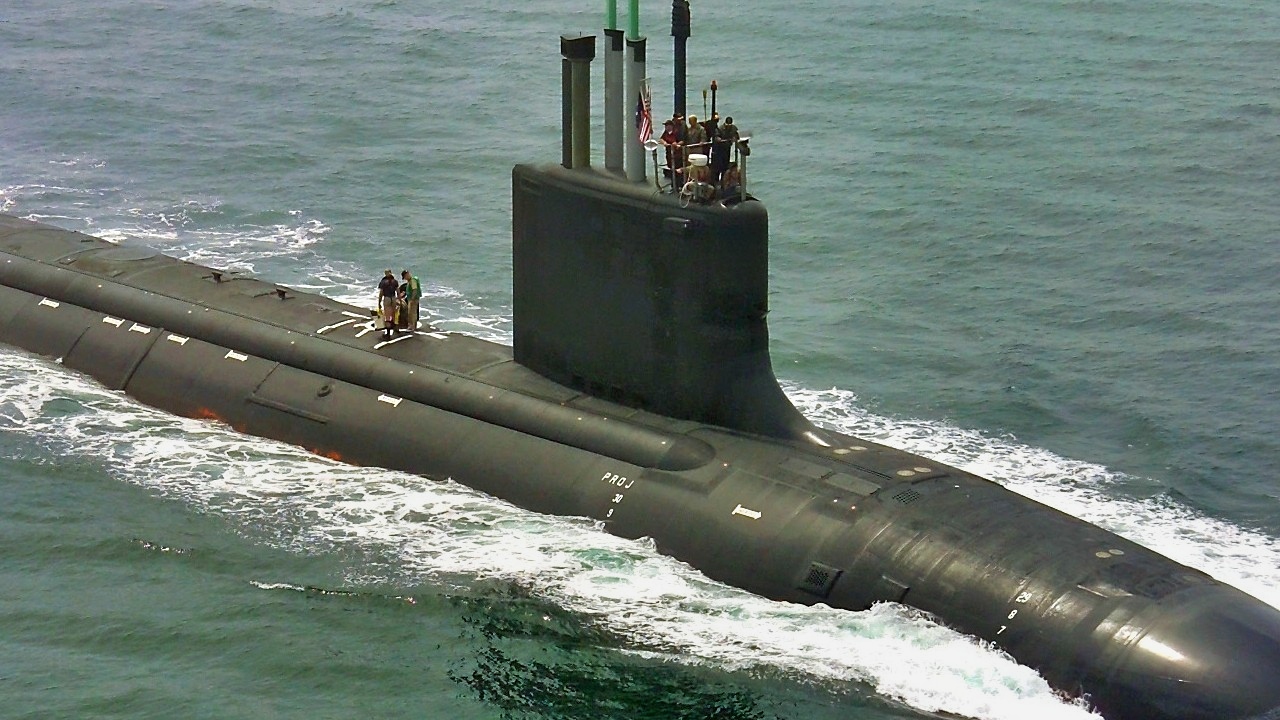
Groton, Conn. (July 30, 2004) – The nation’s newest and most advanced nuclear-powered attack submarine and the lead ship of its class, PCU Virginia (SSN 774) returns to the General Dynamics Electric Boat shipyard following the successful completion of its first voyage in open seas called “alpha” sea trials. Virginia is the Navy’s only major combatant ready to join the fleet that was designed with the post-Cold War security environment in mind and embodies the war fighting and operational capabilities required to dominate the littorals while maintaining undersea dominance in the open ocean. Virginia and the rest of the ships of its class are designed specifically to incorporate emergent technologies that will provide new capabilities to meet new threats. Virginia will be delivered to the U.S. Navy this fall. U.S. Navy photo by General Dynamics Electric Boat (RELEASED)
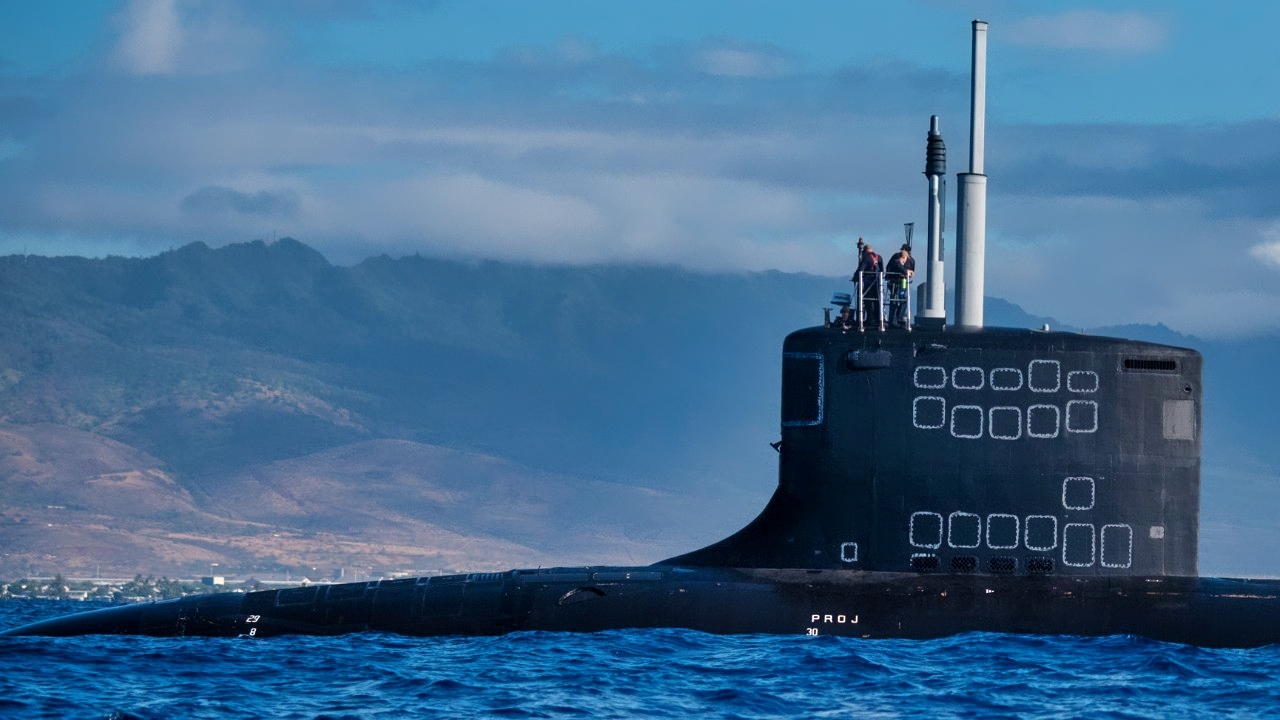
180709-N-KC128-1131 PEARL HARBOR (July 9, 2018) – Multi-national Special Operations Forces (SOF) participate in a submarine insertion exercise with the fast-attack submarine USS Hawaii (SSN 776) and combat rubber raiding craft off the coast of Oahu, Hawaii during Rim of the Pacific (RIMPAC) exercise, July 9. Twenty-five nations, 46 ships and five submarines, about 200 aircraft, and 25,000 personnel are participating in RIMPAC from June 27 to Aug. 2 in and around the Hawaiian Islands and Southern California. The world’s largest international maritime exercise, RIMPAC provides a unique training opportunity while fostering and sustaining cooperative relationships among participants critical to ensuring the safety of sea lanes and security of the world’s oceans. RIMPAC 2018 is the 26th exercise in the series that began in 1971.` (U.S. Navy photo by Mass Communication Specialist 1st Class Daniel Hinton)
Design of the SSN(X)
One of the most critical aspects of the SSN(X) is its emphasis on stealth. As detection technologies improve, maintaining acoustic superiority becomes increasingly difficult. The SSN(X) is expected to feature a radically quiet propulsion system, possibly building on or surpassing the pump-jet propulsion used in the Virginia-class. Its hull design will likely incorporate advanced materials and coatings that minimize sonar reflections and absorb sound, making it extremely difficult to detect. These features are essential for operating undetected in areas where adversaries deploy dense sensor networks and unmanned surveillance systems.
Speed and maneuverability are also central to the SSN(X)’s design. The submarine is expected to be significantly faster than the Virginia-class, enabling it to reposition quickly across vast oceanic distances.
This capability is crucial for responding to dynamic threats and for maintaining a persistent presence in key strategic areas. The design may draw inspiration from the Seawolf-class, which was known for its high speed and deep-diving capabilities, but will likely incorporate modern enhancements to propulsion and hydrodynamics.
Designed to Operate Anywhere at Any Time
In terms of firepower, the SSN(X) is projected to carry a larger and more diverse payload than any previous U.S. attack submarine.
It will be equipped with torpedoes for anti-submarine and anti-surface warfare, as well as vertical launch systems capable of deploying cruise missiles for land-attack and anti-ship missions. Additionally, the SSN(X) will likely be able to deploy unmanned underwater vehicles (UUVs) and naval mines, expanding its operational versatility. This broad arsenal will allow the submarine to engage a wide range of targets and perform multiple mission types without needing to return to port for reconfiguration.
The SSN(X) will also feature state-of-the-art sensors and processing systems. These will include advanced sonar arrays, mast-mounted sensors, and potentially even enhanced data analysis tools that can rapidly interpret vast amounts of acoustic and electromagnetic data.
Such capabilities are vital for detecting and tracking increasingly stealthy enemy submarines, as well as navigating complex undersea environments.
The integration of artificial intelligence and machine learning will also support decision-making, threat prioritization, and system diagnostics, reducing the cognitive load on the crew and improving operational efficiency.
The SSN(X) is designed to operate anywhere in the world under any conditions. It will be tasked with traditional roles, such as anti-submarine and anti-surface warfare, as well as land-attack missions, intelligence gathering, and special operations support.
Its ability to deploy and coordinate with unmanned systems will further enhance its reach and effectiveness. In a future battlespace characterized by distributed operations and networked warfare, the SSN(X) will serve as a critical node, capable of operating independently or as part of a larger naval task force.
Some Setbacks
Despite its promise, the SSN(X) program faces several challenges. Budgetary constraints have already led to delays in the procurement timeline, with the first submarine now expected to be acquired in fiscal year 2040, rather than 2035.
The Navy’s fiscal year 2026 budget includes over $600 million for research and development, reflecting the program’s growing importance. However, sustaining this level of investment over the long term will require consistent political and strategic support.
Another concern is the readiness of the industrial base. The U.S. submarine construction industry is currently focused on building the Columbia-class ballistic missile submarines, which are a top strategic priority. Maintaining the workforce, facilities, and supply chains necessary to transition smoothly to SSN(X) production will be a complex task. The Navy is working closely with its two primary submarine builders to ensure that the necessary infrastructure and expertise are in place.
Despite the delays, the SSN(X) remains one of the Navy’s top priorities. As the undersea domain becomes more contested, the ability to operate undetected and strike decisively will be a decisive advantage.
The SSN(X) is not simply meant to replace older submarines; rather, it is intended to usher in a new era of naval warfare.
Currently, the new submarines are still in the development stage. The SSN(X) still has a long way to go before it is ready for construction, but it is one of the most important projects underway at the Navy.
About the Author:
Isaac Seitz, a Defense Columnist, graduated from Patrick Henry College’s Strategic Intelligence and National Security program. He has also studied Russian at Middlebury Language Schools and has worked as an intelligence Analyst in the private sector.
More Military
We Almost Touched the F-117 Stealth Fighter


