

Iran Threatens to Strike Gulf Energy Sites Again – Iran says it could soon strike U.S.-linked energy infrastructure in the Persian Gulf if Washington strikes further Iranian assets in the region.
‘Strike and Get Struck’: Iran Issues a Warning
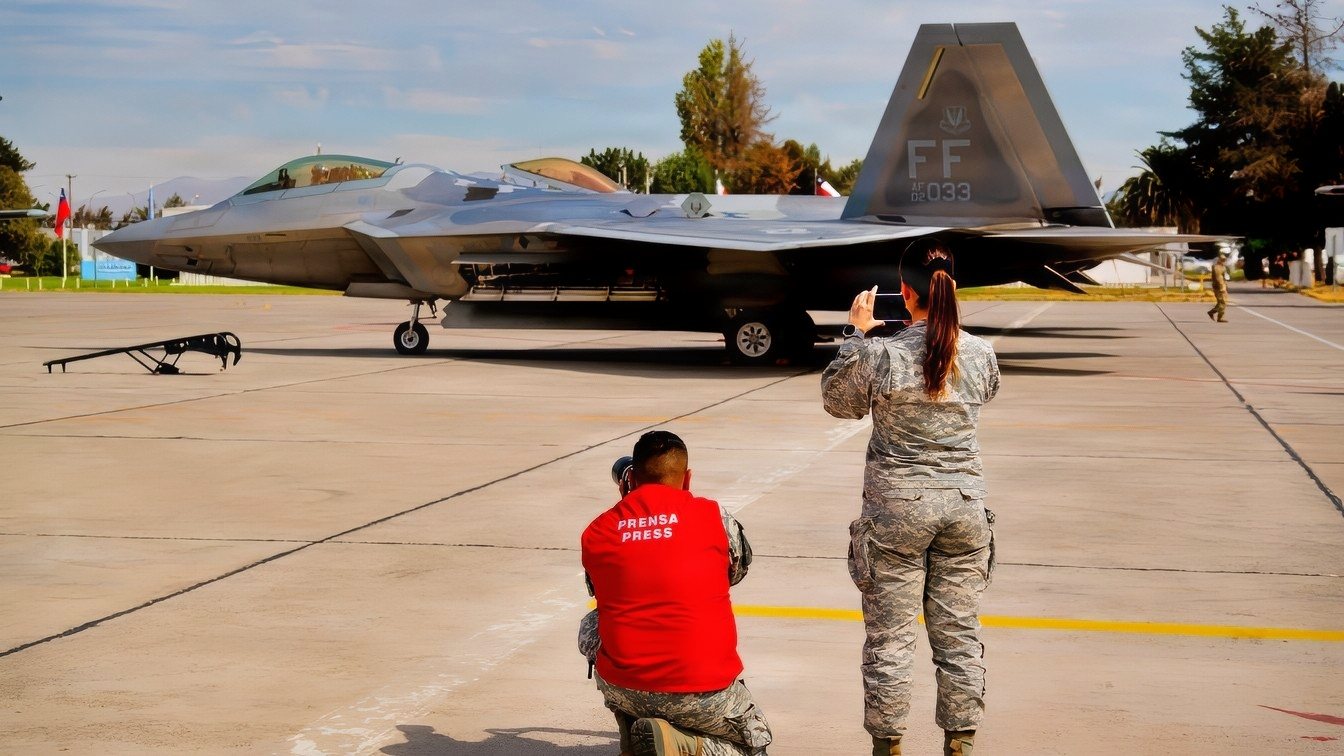
Members of the F-22 Raptor Aerial Demonstration Team perform at FIDAE 2024, Santiago, Chile, April 4th, 2024. The F-22 Raptor Aerial Demonstration showcases the unmatched maneuverability of the airframe by executing a series of combat maneuvers to inspire Americans and their allies, and deter foreign adversaries. (U.S. Air Force photo by Staff Sgt. Michael Bowman)
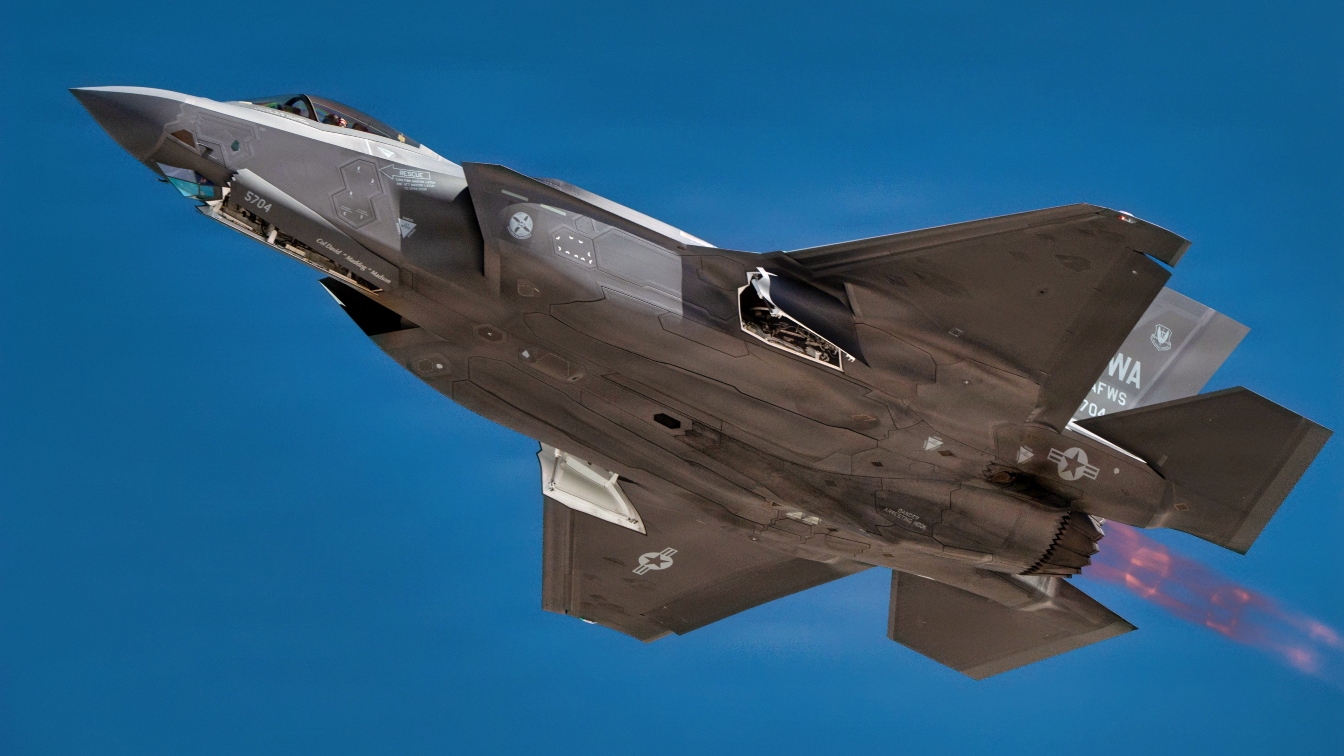
A U.S. Air Force F-22 Raptor aircraft assigned to the 433rd Weapons Squadron takes off during the U.S. Air Force Weapons School Integration at Nellis Air Force Base, Nevada, June 9, 2026. WSINT is a graduate-level training event that integrates multi-domain assets in large-force scenarios, enabling U.S. Air Force and joint service members to refine tactical expertise and employ advanced capabilities in a dynamic threat environment. (U.S. Air Force photo by Airman 1st Class Bella Swarr)
“Strike our assets and you get struck,” Iranian Parliament Speaker Mohammad Baqer Qalibaf wrote on X on Monday. “The oil and gas production chain here is sprawling, accessible, and exposed. American oil and gas companies across these waters and facilities share that exposure,” Reuters reported.
Qalibaf’s warning followed a direct exchange of fire at sea. U.S. Central Command said the Islamic Revolutionary Guard Corps fired ballistic missiles toward an American aircraft carrier and a guided-missile destroyer on Friday. Both vessels evaded the attacks, and no U.S. personnel were injured.
The following day, American forces struck three Iranian crude carriers. CENTCOM subsequently claimed that it had “permanently disabled” the M/T Downy close to Iran’s primary oil-export hub on Kharg Island, along with the M/T Stark 1 near Jask. The M/T Kylo was destroyed in the Gulf of Oman after its crew was instructed to abandon ship.
“If you shoot at two of our ships, we will impose an even higher economic cost — taking out three of yours,” CENTCOM commander Adm. Brad Cooper said. “We will not hesitate to defend American forces, and if necessary, destroy Iran’s limited and exposed oil fleet.”
The IRGC then said it targeted a trio of tankers and another three U.S.-linked vessels. The U.S. military did not confirm those strikes. On Sunday, Iran also alleged that it had hit an American unmanned surface vessel entering an area it considers restricted. A CENTCOM spokesman slammed that claim as “a total lie.”
Iran Wants New Shipping Corridor
As it stands, Iran is now attempting to formalize its control over elements of the waterway. Mohsen Rezaei, secretary of Iran’s Supreme National Security Council, announced that Tehran would, in the coming days, inaugurate a new restricted zone in the Gulf and release maps for a shipping corridor through Hormuz.
Rezaei said the zone would begin where the U.S. naval blockade of Iran starts and extend into the Gulf, with ships entering it set to be placed on an Iranian sanctions list.
“We will only commit to the Strait of Hormuz being open when they [the Americans] stop the sabotage, threats and attacks on Iran,” Rezaei said, according to Reuters.
The threat is already affecting shipping. Reuters reported Monday that an average of just 10 commodity vessels a day crossed the Strait during the previous 10 days, the lowest rate since May. Before the war, Hormuz carried roughly one-fifth of global oil and gas shipments.
Brent Crude Reaches Highest Price Since July
Brent crude reached $97.93 a barrel on Monday, its highest level since July 24, before slipping back to $96.19.
Iran does not necessarily need to sink a tanker to keep ships away. Former CENTCOM commander Gen. Joseph Votel told Iran International that even the possibility of Iranian mines in the Strait can deter commercial traffic.
“The mere threat out there, just the threat of these, is enough to deter traffic, certainly commercial traffic,” Votel said. “It has a huge deterrent effect and it puts the burden on us to keep really, really close watch on this area.”
The United States said last week that it struck Iranian launchers on Larak Island that were preparing to fire rockets carrying sea mines into the Strait. Farzin Nadimi, a senior fellow at the Washington Institute, told Iran International that Tehran may be turning to smaller rocket-launched mines because attacks have degraded its ability to deploy larger mines by more conventional means.
‘Biggest’ U.S. Role Is Blockade
Washington is also describing the campaign in explicitly economic terms. Energy Secretary Chris Wright told CBS on Sunday that the “biggest role” of U.S. forces in the region was stopping Iranian energy exports.
“We are strangling their economy to try to bring either a change in policy from the existing regime or a new regime,” Wright said.
He separately told ABC that “there may not be a nuclear agreement” with Tehran and said preventing an Iranian nuclear weapon could instead mean “simply destroying their capabilities to do it.” However, speaking to CBS, Wright said the U.S. was still “always open for a deal.”
About the Author: Georgia Gilholy
Georgia Gilholy is a journalist based in the United Kingdom who has been published in Newsweek, The Times of Israel, and the Spectator. Gilholy writes about international politics, culture, and education.


