

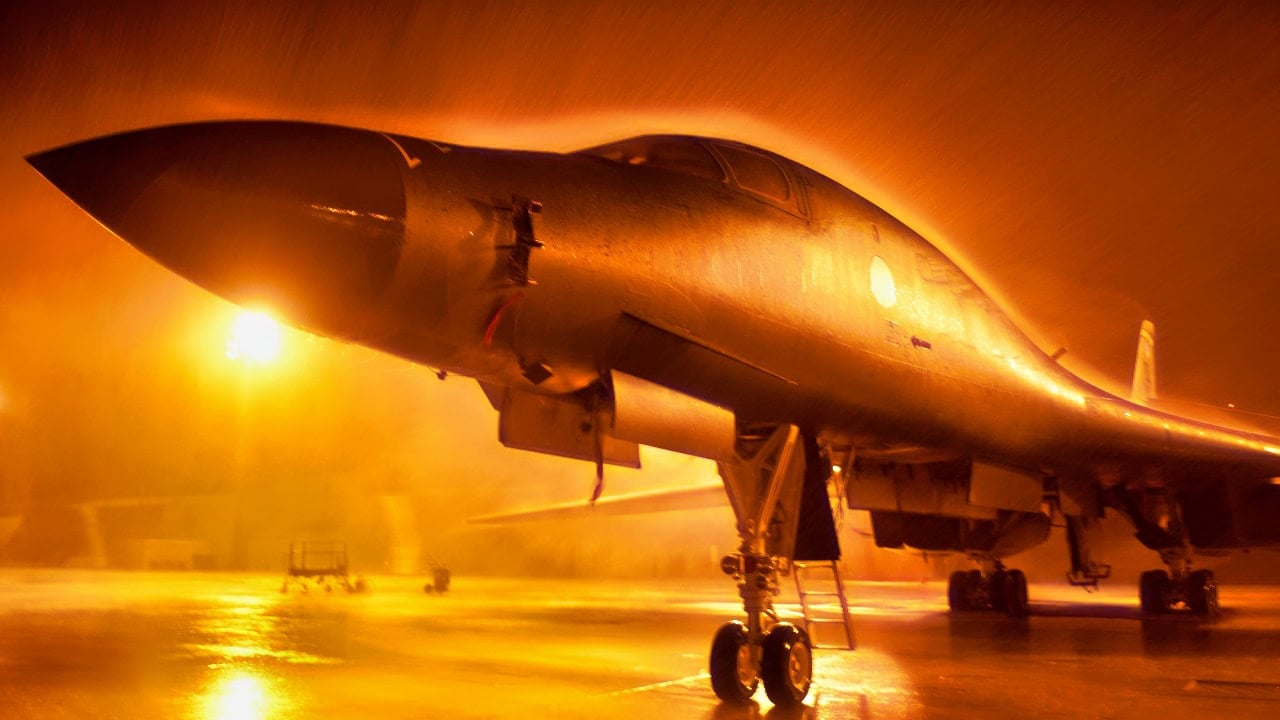
The B-1B Lancer was first developed in the 1970s and was designed to penetrate Soviet airspace at high speeds and high altitudes in order to deliver devastating nuclear strikes. However, today the strategic landscape is completely different.
Over time, both China and Russia have begun fielding advanced air defense systems such as the HQ-9 and the S-400, thereby reducing the likelihood that the B-1B could penetrate their airspace. Despite this, the USAF retains 45 B-1Bs in its inventory.

The Oklahoma City Air Logistics Complex at Tinker Air Force Base, Oklahoma, is the largest depot repair complex in the Air Force. The Complex’s depot Artisans perform award-winning program depot maintenance and modifications on B-1 Lancer aircraft, supporting the sustainment of combat-ready airpower. (U.S. Air Force photo/Gina Anderson)

A U.S. Air Force B-1B Lancer departs after conducting aerial refueling with a 28th Expeditionary Air Refueling Squadron KC-135 Stratotanker during a mission in the U.S. Central Command area of operations, Oct. 25, 2019. The B-1B flew directly from its home station of Ellsworth Air Force Base, S.D., demonstrating the U.S. Air Force’s ability to rapidly deploy strategic bombers anywhere in the world. (U.S. Air Force photo by Master Sgt. Russ Scalf)
Why? Because the Lancer’s usefulness extends far beyond its ability to penetrate airspaces. The B-1B carries a range of standoff munitions, making it a threat well beyond enemy air defense zones.
Why the B-1B is Still Relevant Today
The B-1B Lancer combines range, payload, and speed in a way that no other aircraft in the U.S. inventory can quite replicate.
While stealth bombers like the B-2 Spirit are built to slip unnoticed through an enemy’s most sophisticated radars, and legacy bombers like the B-52 are designed to loiter with immense payloads for long periods of time, the B-1 occupies a middle ground.
It was conceived in an era when U.S. planners believed that high-speed, low-altitude penetration was the best way to survive the Soviet Union’s radar networks.
As a result, its variable-geometry wings, powerful engines, and terrain-following radar enable it to fly at high subsonic speeds for extended periods and to maneuver aggressively at low level if needed. Even after its conversion to an exclusively conventional bomber in the 1990s, those traits continued to serve it well.
A second major factor in the B-1’s continued relevance is its adaptability. Over the decades, the aircraft has received numerous upgrades to its avionics, software, and weapon integration.

B-1B Lancer Getting Closer. Image Credit: Creative Commons.
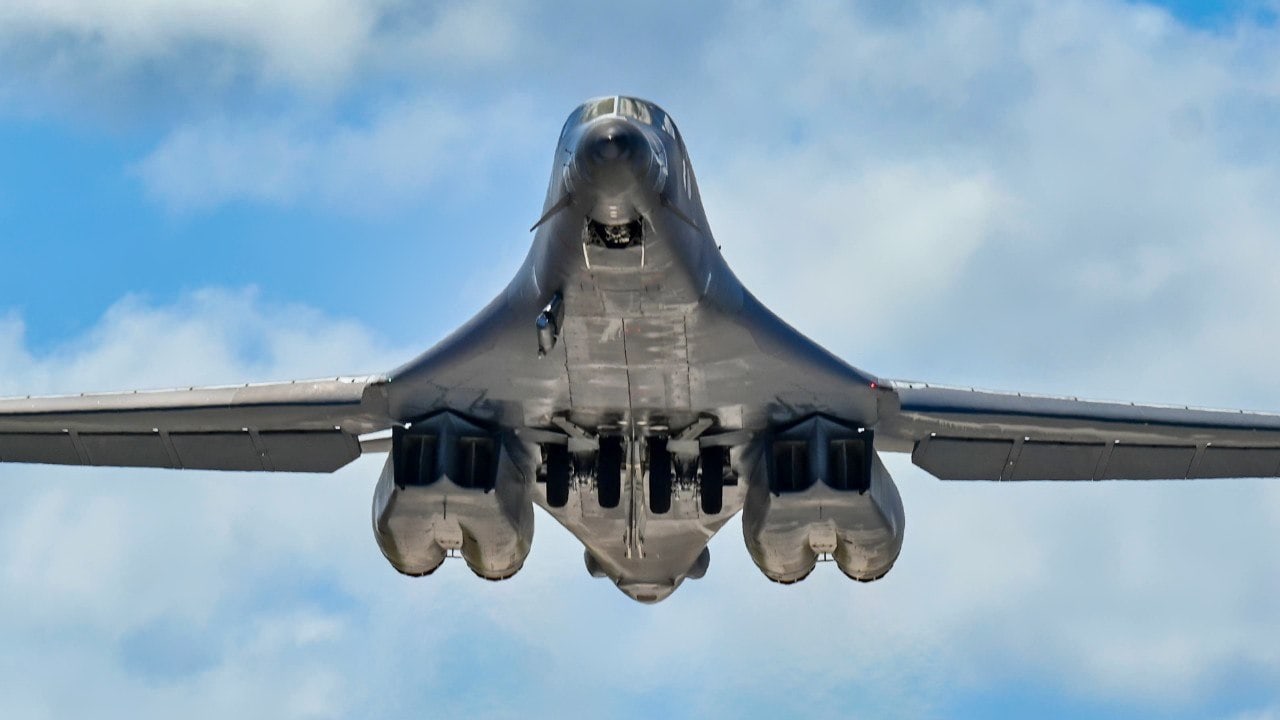
B-1B Lancer Bomber. Image Credit: Creative Commons.
While the original airframe is now more than forty years old, the systems inside it are far more modern. These upgrades have shifted its mission profile from the Cold War low-altitude penetrator to a highly capable platform for delivering an array of long-range, precision, standoff weapons.
Standoff Weapons and Hypersonic Missiles
This shift is crucial because the nature of modern air warfare has changed dramatically. It is no longer necessary, or even desirable, for a bomber to fly directly into the heart of an enemy’s integrated air defense system.
Instead, standoff weapons such as the Joint Air-to-Surface Standoff Missile (JASSM) and its extended-range counterpart allow bombers to launch devastating attacks from hundreds of miles away. The B-1 has played an important role in this evolution because its internal weapons bays can accommodate a large number of advanced munitions, and its airframe is robust enough to accommodate future weapon configurations, including oversized or heavier next-generation systems.
In fact, for several years, the B-1 was expected to be the Air Force’s first bomber to carry hypersonic weapons. Although structural fatigue and airframe retirements altered parts of that plan, the bomber still plays a significant role in testing and integrating emerging strike technologies.
Its large bays and flexible hardpoints make it suitable for experiments that smaller or stealthier aircraft cannot accommodate. In this sense, the B-1 serves as a bridge between the legacy bomber force and the future B-21 Raider era, providing the Air Force a platform to test new concepts before transitioning them to a new stealth fleet.
Not Yet Obsolete
The B-1 also continues to serve because of how it fits within the broader U.S. bomber fleet. Rather than relying on a single aircraft to perform all long-range strike missions, the Air Force has maintained a three-bomber force consisting of the B-52, B-1B, and B-2.
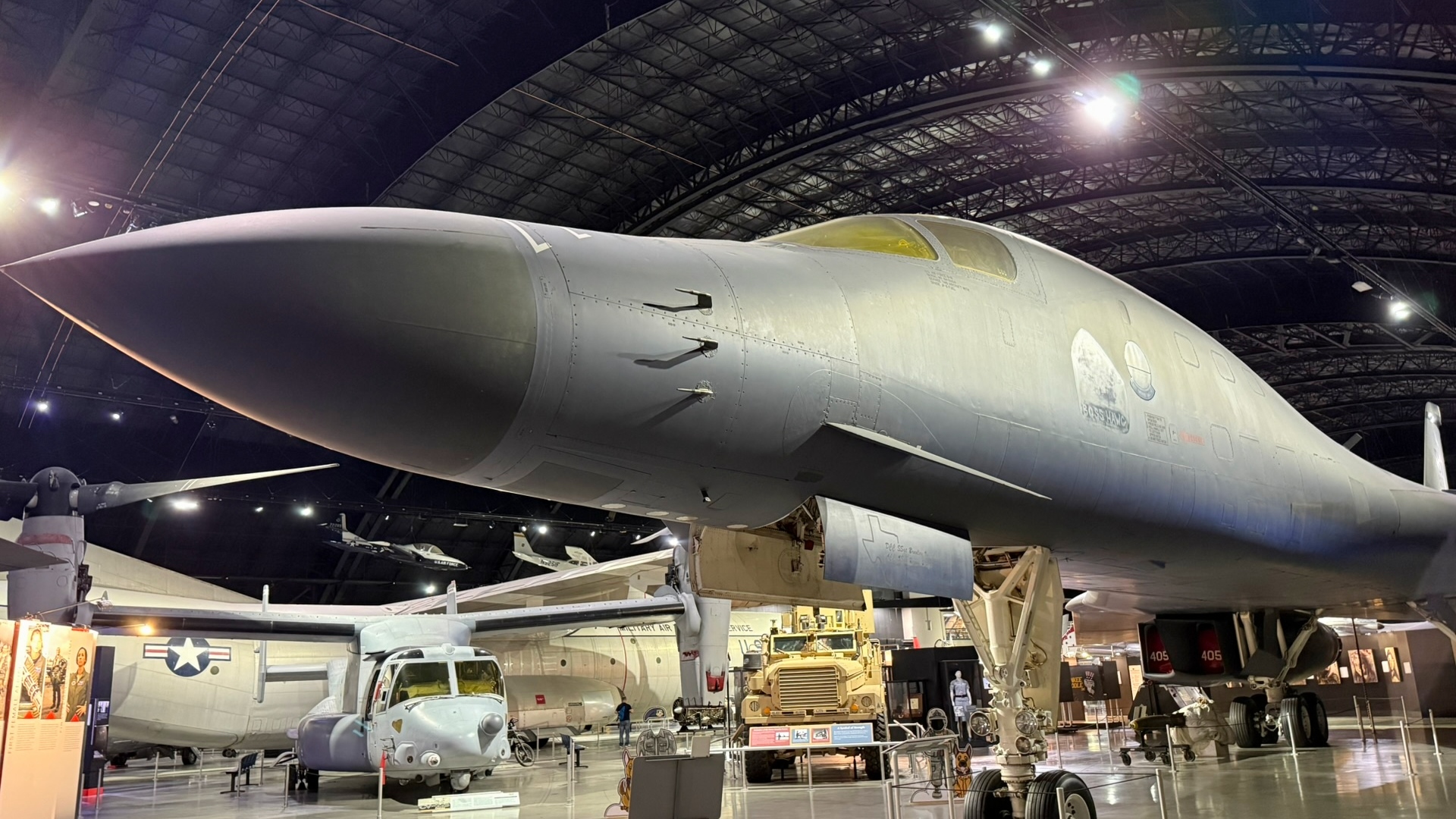
Sideview of B-1B Lancer Bomber. Image Credit: National Security Journal.
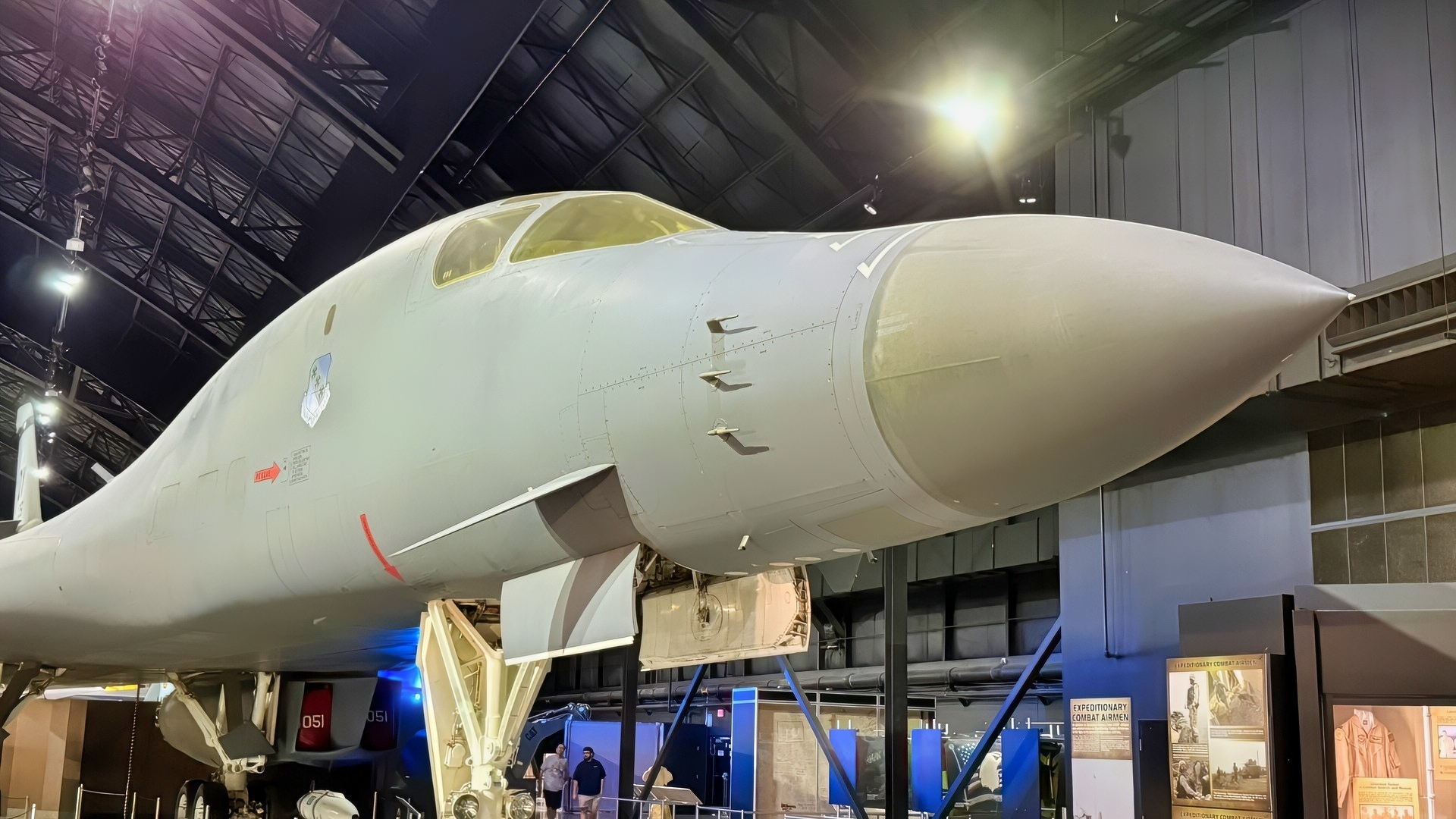
B-1B Lancer 2025 National Security Journal. Image Credit: Harry J. Kazianis/NSJ.

B-1B Lancer at USAF Museum in July 2025. Image Credit: National Security Journal.
Each aircraft brings different strengths: the B-52 is a missile-carrying workhorse with unmatched endurance; the B-2 is a stealthy, deep-penetration platform for the most heavily defended targets; and the B-1 is a fast, flexible conventional bomber with the largest payload of the three.
This mix enables planners to tailor strike packages to mission requirements, overwhelm enemy defenses by presenting multiple threat types, and maintain strategic redundancy if one fleet is grounded for maintenance or upgrades.
Until the B-21 Raider reaches full operational service in significant numbers, the Air Force cannot afford to retire any major segment of its bomber force without risking gaps in capability.
The presence of advanced air defense systems, far from rendering the B-1 obsolete, has actually helped drive the evolution of new tactics that keep the aircraft relevant.
Modern integrated air defenses, such as Russia’s S-400 or China’s HQ-9, certainly pose a threat, but the B-1 no longer needs to penetrate them directly. Instead, it launches its weapons from well beyond the reach of these systems, coordinated with stealth assets, stand-in electronic warfare platforms, and other long-range strike systems.
Survivability in modern air warfare does not depend solely on stealth; it also stems from standoff range, electronic countermeasures, unpredictable routing, and the ability to rapidly mass long-range fires. In this ecosystem, the B-1’s speed, payload, and flexibility remain significant advantages.

A U.S. Air Force B-1B Lancer assigned to the 37th Bomb Squadron receives maintenance during Red Flag 24-3 at Nellis Air Force Base, Nev., July 24, 2024. Red Flag is an exercise that provides Airmen and Guardians with the opportunity to work alongside allied air forces in a realistic combat training environment. (U.S. Air Force Photo by Senior Airman Yendi Borjas)
One need only look at the war in Ukraine to see these tactics in action. Russia has made extensive use of all its long-range supersonic bombers, including the aging Tu-22M3 Backfire.
Even with the presence of advanced Western AD systems like the Patriot and NASAMS, the Russians still use their bombers to deliver highly lethal missile strikes against electrical infrastructure from standoff distances.
This demonstrates that far from being obsolete, supersonic bombers remain vital to modern air campaigns due to their large payloads and long combat ranges. Similarly, the B-1B serves a similar role. Although it has not been used in combat for quite a while, the B-1B can conduct similar standoff strikes.
About the Author: Isaac Seitz
Isaac Seitz, a Defense Columnist, graduated from Patrick Henry College’s Strategic Intelligence and National Security program. He has also studied Russian at Middlebury Language Schools and has worked as an intelligence Analyst in the private sector.


