
Summary and Key Points: Jack Buckby, a defense and national security analyst, evaluates the strategic deployment of the B-1B Lancer during Operation Epic Fury.
-Flying a non-stop, round-trip mission from Ellsworth Air Force Base, three Lancers utilized their unmatched 74,000-pound payload to strike Iranian ballistic missile infrastructure.

Four B-1B Lancers assigned to the 9th Expeditionary Bomb Squadron, deployed from Dyess Air Force Base, Texas, arrive Feb. 6, 2017, at Andersen AFB, Guam. The 9th EBS is taking over U.S. Pacific Command’s continuous bomber presence operations from the 34th EBS, assigned to Ellsworth AFB, S.D. The B-1B’s speed and superior handling characteristics allow it to seamlessly integrate in mixed force packages. While deployed at Guam the B-1Bs will continue conducting flight operations where international law permit. (U.S. Air Force photo/Tech. Sgt. Richard P. Ebensberger)

A U.S. Air Force B-1B Lancer departs after conducting aerial refueling with a 28th Expeditionary Air Refueling Squadron KC-135 Stratotanker during a mission in the U.S. Central Command area of operations, Oct. 25, 2019. The B-1B flew directly from its home station of Ellsworth Air Force Base, S.D., demonstrating the U.S. Air Force’s ability to rapidly deploy strategic bombers anywhere in the world. (U.S. Air Force photo by Master Sgt. Russ Scalf)

The Oklahoma City Air Logistics Complex at Tinker Air Force Base, Oklahoma, is the largest depot repair complex in the Air Force. The Complex’s depot Artisans perform award-winning program depot maintenance and modifications on B-1 Lancer aircraft, supporting the sustainment of combat-ready airpower. (U.S. Air Force photo/Gina Anderson)
-This 19FortyFive report analyzes the B-1B’s role as a “volume” platform, functioning as a high-capacity standoff launcher for AGM-158 JASSM missiles.
-Buckby concludes that while the B-1B lacks the stealth of the B-2 Spirit, its involvement confirms the successful suppression of Iranian air defenses and the establishment of U.S. air dominance.
Why the B-1B Lancer’s Entry into Operation Epic Fury Signals Air Superiority
On March 2, 2026, U.S. officials confirmed that three B-1B Lancer bombers flew from Ellsworth Air Force Base in South Dakota and conducted strikes against Iranian ballistic missile sites and command-and-control infrastructure as part of Operation Epic Fury.
The mission followed earlier B-2 Spirit stealth-bomber strikes and formed part of a broader campaign involving more than 100 aircraft, naval Tomahawk launches, and coordinated cyber and space-domain operations.
The B-1Bs reportedly flew a round-trip sortie from the continental United States, supported by aerial refueling across the Atlantic and Mediterranean, then struck targets and returned home. U.S. Central Command later confirmed the aircraft were used to degrade Iranian missile capabilities.
The decision to use B-1Bs in the attacks offers an interesting look at how the United States is tackling the threat of Iranian air defense and missile systems.
What the B-1B Lancer Is, and What It Is Not
The B-1B was originally designed in the Cold War as a fast, low-level penetrator capable of evading Soviet radar through terrain-following flight and speed. Its nuclear role was removed in the 1990s, and it transitioned into a conventional heavy bomber with the largest payload capacity of any operational U.S. bomber.
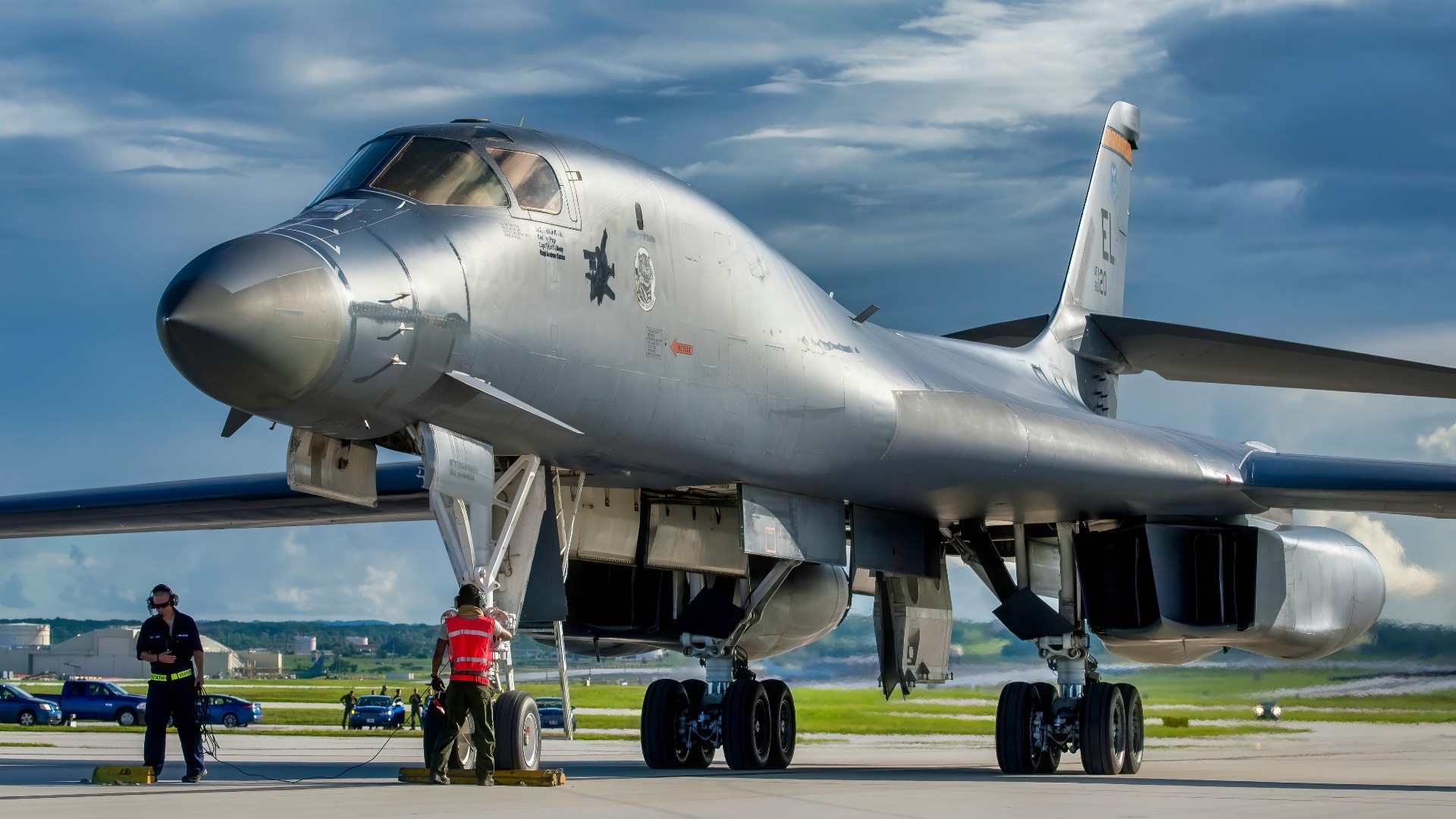
Sideview of B-1B Lancer Bomber. Image Credit: National Security Journal.
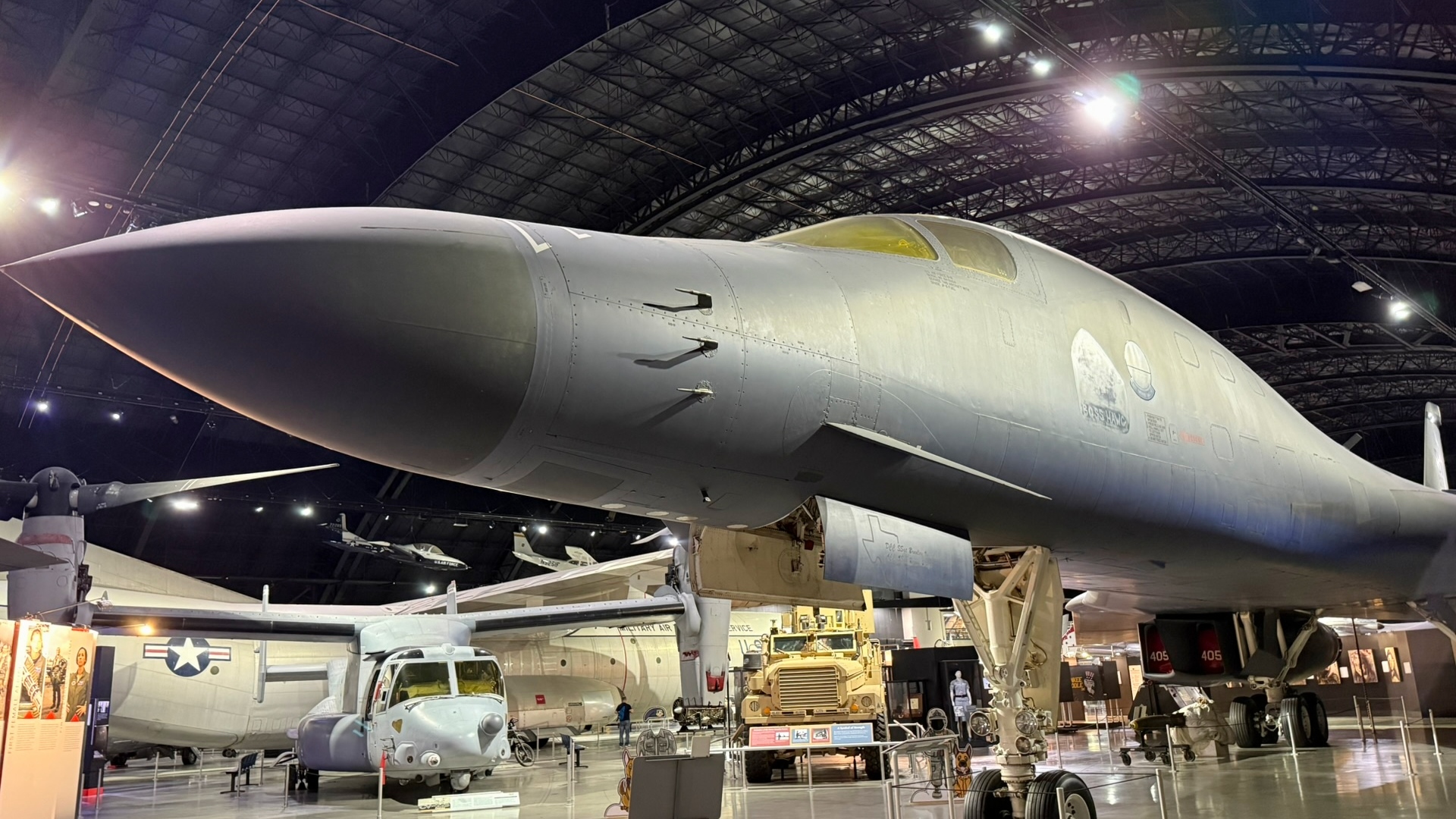
B-1B Lancer 2025 National Security Journal. Image Credit: Harry J. Kazianis/NSJ.

B-1B Lancer at USAF Museum in July 2025. Image Credit: National Security Journal.
It is not, however, a stealth aircraft. Unlike the B-2 Spirit, which relies on a low-observable design to reduce radar detection, the B-1B has a reduced radar cross-section for its size but remains detectable by modern integrated air defense systems. Iran fields layered air defenses, including Russian-origin systems and domestically developed radar networks, alongside a dispersed ballistic missile force. That reality shapes how the aircraft can be used.
If the B-2 can approach closer to heavily defended or hardened targets, the B-1B must either operate after air defenses have been degraded or remain outside the most densely defended areas altogether.
Standoff Weapons
Since the strikes began, U.S. officials have confirmed that the opening phase of Operation Epic Fury involved non-kinetic operations by U.S. Cyber Command and Space Command intended to disrupt and degrade Iranian sensors and communications. Naval forces launched Tomahawk cruise missiles, and more than 100 aircraft participated in the first wave. U.S. commanders later confirmed that air superiority had been established.
In that context, the B-1B’s likely role appears to emerge.
Consider this: the B-1B can carry a large number of long-range cruise missiles, including variants of the AGM-158 Joint Air-to-Surface Standoff Missile (JASSM), enabling it to strike from hundreds of kilometers away. That enables the bomber to contribute significant firepower without entering the highest-risk engagement areas.
The B-1B, then, was probably not used as a penetrating bomber – the B-2 can do that instead. Instead, it would have functioned as a high-capacity launch platform delivering precision weapons once Iranian air defenses had been disrupted or while remaining outside the most dangerous zones.
Long-Range Sorties
The B-1Bs flew directly from Ellsworth AFB, supported by tankers across the Atlantic and Mediterranean, conducted their strikes, and returned to the United States.
At the same time, the United Kingdom has now allowed U.S. forces access to RAF Fairford and Diego Garcia for some missions related to the Iran strikes, providing additional flexibility for U.S. forces. Forward basing like this would reduce the transit time and increase sortie generation if the campaign continues.

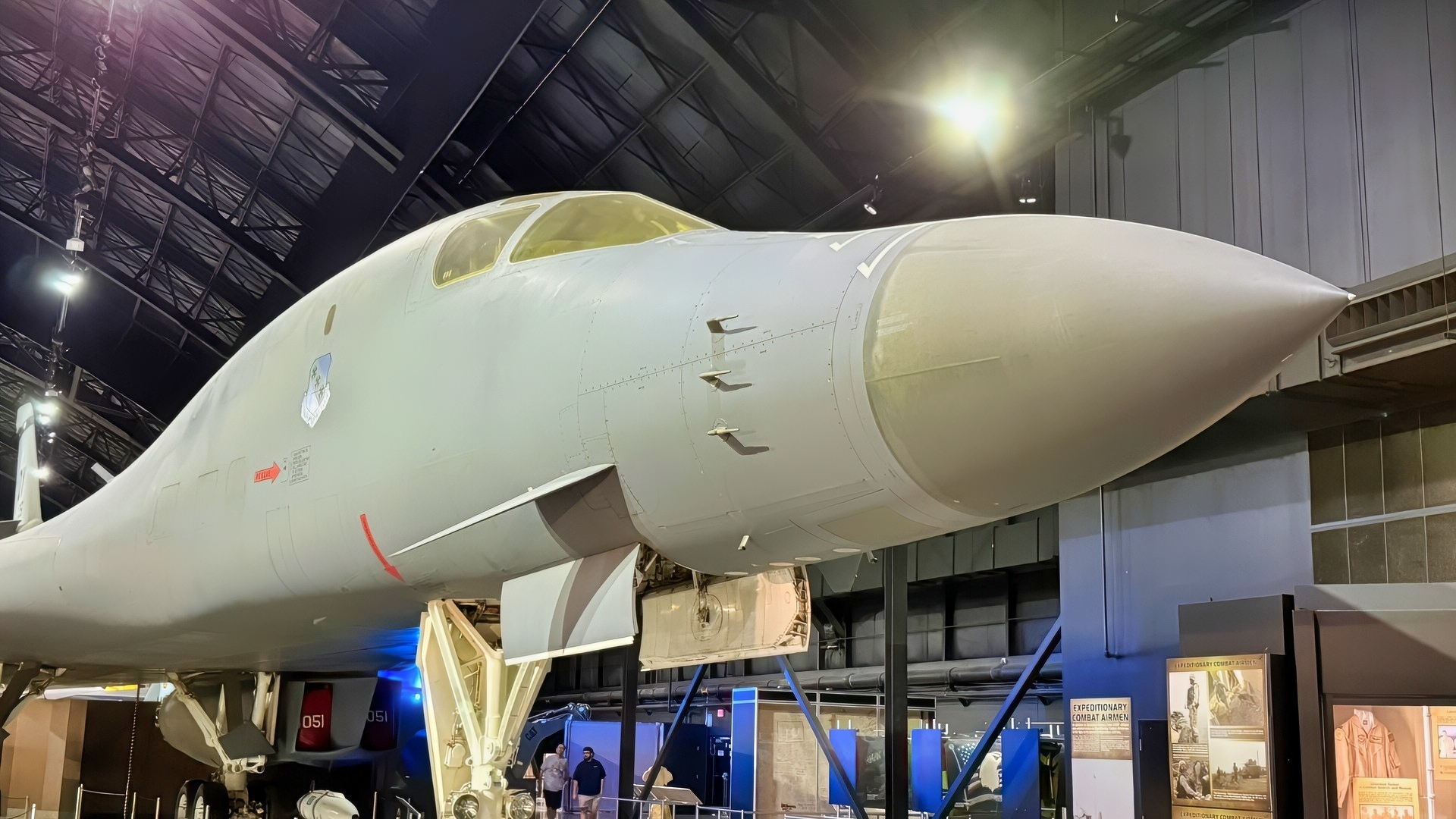
B-1B Lancer Bomber U.S. Air Force Display. Image Credit: National Security Journal.
Flying from the United States carries some advantages: it reduces vulnerability to regional missile attacks and avoids political complications that may come with large bomber deployments overseas. But it also increased strain on crews and tankers.
The B-1B’s involvement in the strikes, therefore, is a kind of balancing act: it can deliver a significant payload at intercontinental range, but its survivability depends on the suppression of enemy air defenses and careful routing. In that sense, reports that the B-1B was used is an indication that the U.S. is succeeding in suppressing Iranian air defenses.
What We Can Assume Based on the Bomber Mix
We now know that Operation Epic Fury involved B-2 stealth bombers, B-1Bs, naval strike assets, electronic warfare aircraft, fighters, and missile defense systems intercepting Iranian missiles. Three F-15E Strike Eagles were reportedly lost in a friendly fire incident, though the crews survived. Integrated air and missile defenses have also been used extensively to counter ballistic missile and attack drone threats.
Among that mix of assets, the B-1B fills an important, specific role. This is not the platform that opens up airspace in heavily defended areas. That task falls to the stealth aircraft and cyber-electronic tools used to suppress Iranian capabilities.
The B-1B is also not optimized for prolonged loitering within these dense air-defense zones. Instead, it can deliver volume once the battlefield has been shaped by other assets – and it could be a sign that things are going largely to plan so far.
About the Author: Jack Buckby
Jack Buckby is a British researcher and analyst specialising in defence and national security, based in New York. His work focuses on military capability, procurement, and strategic competition, producing and editing analysis for policy and defence audiences. He brings extensive editorial experience, with a career output spanning over 1,000 articles at 19FortyFive and National Security Journal, and has previously authored books and papers on extremism and deradicalisation.


look-in-the-mirror
March 2, 2026 at 10:56 pm
Donald trump has made a really big serious mistake in attacking Iran, and while he’s making Iran pay, …
…..the coming crises in ammunition shortage, fuel shortage, spare parts shortage and dollar shortage will mean the end of the great American adventure in Ukraine.
Recall that in 2019, Donald trump made the silly mistake of supplying heavy weapons to Ukraine, something that Hussein Obama refused to do.
Now, trump is making another big silly mistake.
Well, two and two together, makes for another ultimate failure in trump’s flip-flop foreign policy.
Bye-bye. BYE !
geh-geh
March 3, 2026 at 7:25 pm
The trump administration is finished. By its brazen mangling and crippling of Iranian society, as evidenced by attacks on schools, hospitals and broadcasting stations.
What the end result of trump’s big-hammer strategy.
A country fully ready for infiltrators from al-Qaeda and ISIS. Besides usual suspects like mossad operatives. And other miscreants. All seeking to take advantage.
More migrants surging to Europe, and UN asking for more donations. More money.
Meanwhile, other major powers will not fail to take notice of trump’s unpredictable foreign policy. And America’s penchant for military operations.
They’ll have to deploy AI-controlled arsenals to space, to forestall future Donald trumps. And America’s future bigger military operations.
Kumbaya my Lord, kumbaya.