

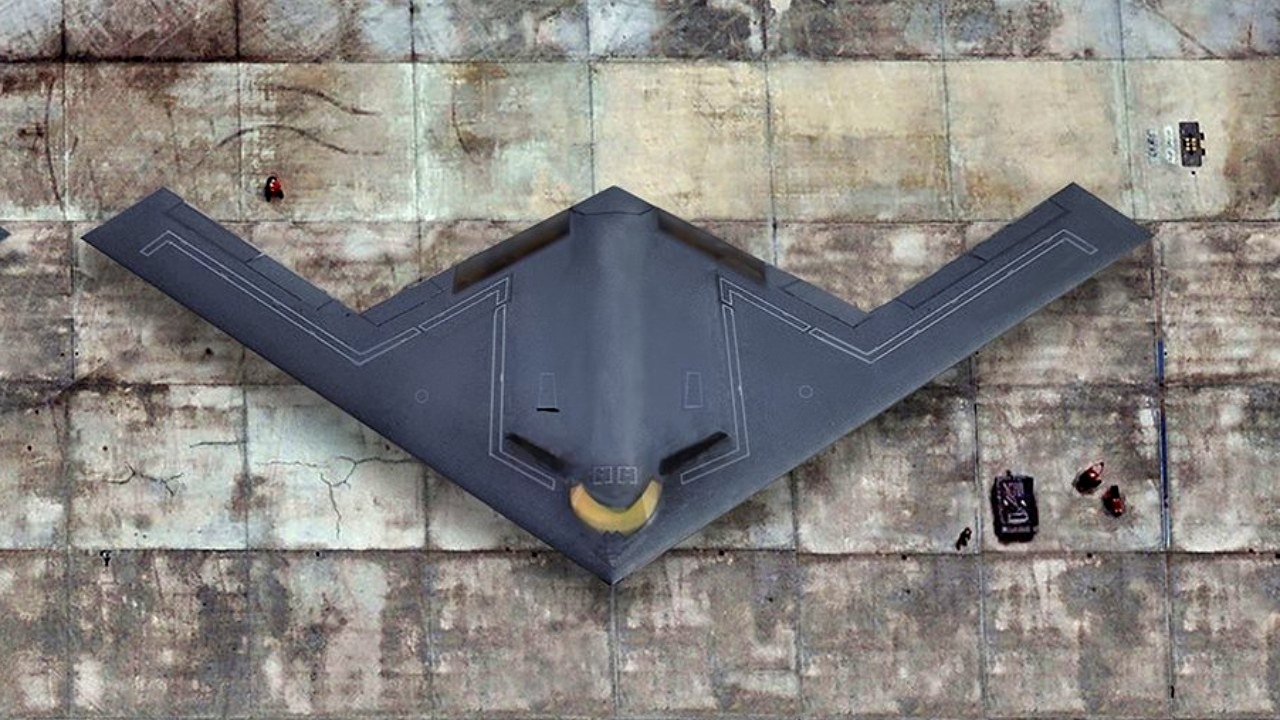
Key Points and Summary – The B-21 Raider is designed to replace the B-1B and B-2, backstop the aging B-52, and anchor America’s long-range strike and nuclear deterrent in an era of Chinese and Russian A2/AD.
-With low observability, dual nuclear/conventional roles, and open-architecture systems, it is the only bomber built to penetrate future air defenses.
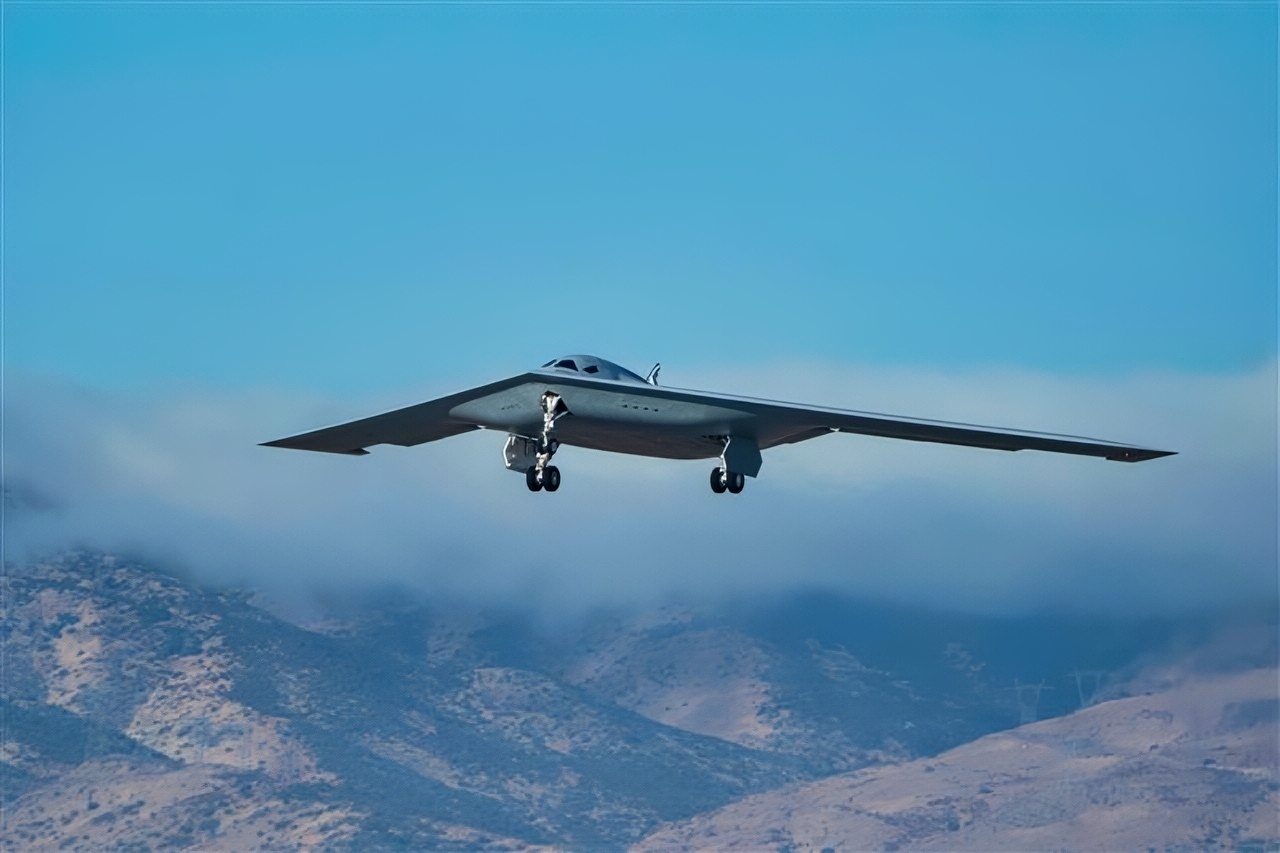
A second B-21 Raider, the nation’s sixth-generation stealth bomber, joins flight testing at Edwards Air Force Base, Calif., Sept. 11. The program is a cornerstone of the Department of the Air Force’s nuclear modernization strategy, designed to deliver both conventional and nuclear payloads. (Courtesy photo)
-But the timeline is unforgiving. B-1s retire by 2030, B-2s remain few and costly, and B-52J upgrades are already slipping.
-Any serious delay to the B-21 risks a dangerous bomber deficit just as great-power crises over Taiwan or Ukraine intensify, stretching U.S. strike capacity to the breaking point.
If the B-21 Bomber Slips, America Faces a Dangerous Bomber Gap
The B-21 Raider is one of the most advanced aircraft in the skies at the moment. Built to replace the aging B-1B and B-2, the B-21 is a quantum leap in stealth and sensor technologies.
The aircraft is currently in low-rate initial production and, according to reports, development is currently proceeding on schedule.
The United States has more riding on the B-21 than many realize. If the program were delayed, the U.S. could find itself with a bomber deficit at a time when bombers are desperately needed.
America’s Newest Bomber
Developed by Northrop Grumman under the Long-Range Strike Bomber initiative, the Raider is intended to replace aging platforms such as the B-1B Lancer and the B-2 Spirit while complementing the venerable B-52 Stratofortress. Its design reflects the evolving demands of warfare in an era dominated by advanced air-defense systems and defined by great-power competition.
The aircraft is a sixth-generation stealth bomber optimized for penetrating highly contested environments. Its flying-wing configuration, radar-absorbing materials, and low-observable technologies make it far more survivable than previous bombers.
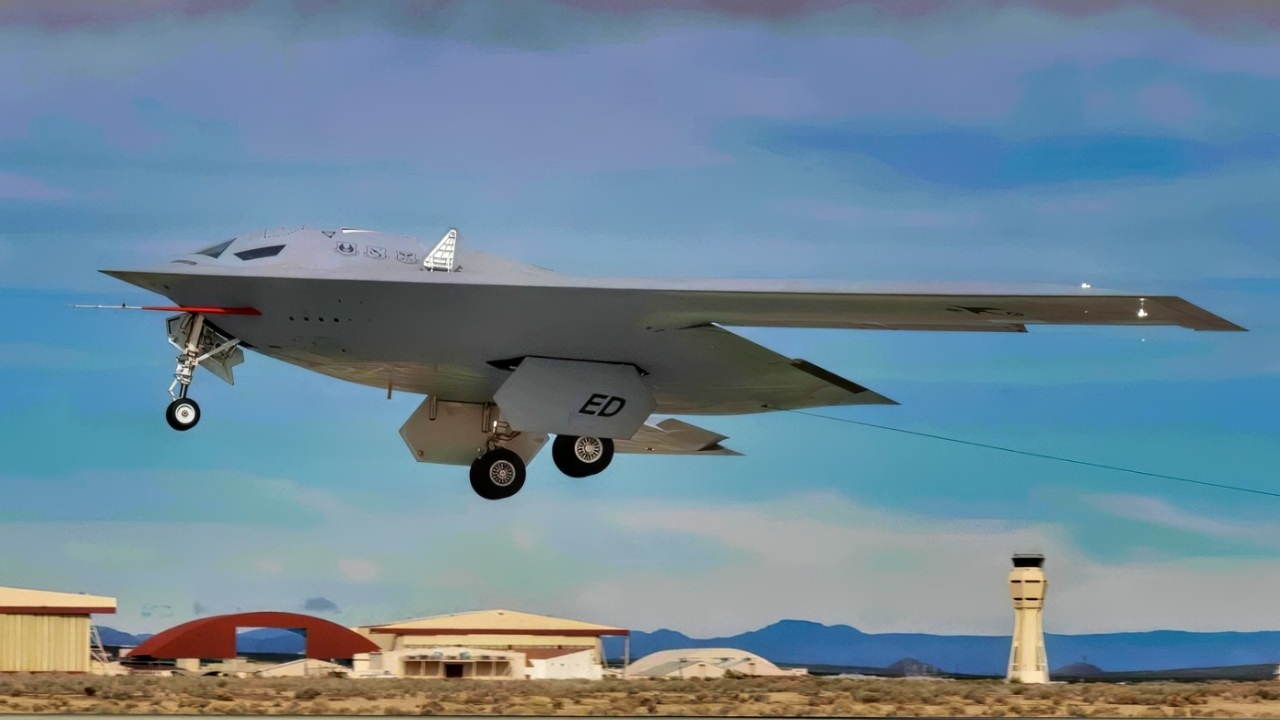
A B-21 Raider conducts flight tests, which includes ground testing, taxiing, and flying operations, at Edwards Air Force Base, California, where it continues to make progress toward becoming the backbone of the U.S. Air Force bomber fleet. The B-21 will possess the range, access, and payload to penetrate the most highly-contested threat environments and hold any target around the globe at risk. The B-21 program is on track to deliver aircraft in the mid-2020s to Ellsworth Air Force Base, South Dakota, which will be the first B-21 main operating base and location for the B-21 formal training unit. (Courtesy photo)
Beyond stealth, the B-21 offers dual capability—it is able to deliver both conventional and nuclear weapons, ensuring its role as a cornerstone of the U.S. nuclear triad. It is also built with an open systems architecture, allowing rapid integration of new technologies and adaptability to future threats. Operational flexibility is another hallmark, as the Raider is designed for manned or unmanned missions and can operate as part of a broader family of systems that includes Collaborative Combat Aircraft and advanced Intelligence, Surveillance, and Reconnaissance (ISR) platforms.
The Air Force plans to acquire at least 100 B-21s, though some analysts argue that 150 to 225 aircraft may be necessary to meet future strategic requirements. The first flight occurred in late 2023, and low-rate initial production is underway, with Ellsworth Air Force Base designated as the first main operating base.
Why the U.S. Needs the B-21
The current bomber fleet is aging rapidly. The B-52, a design dating back to the 1950s, is undergoing modernization but will not be fully upgraded until the 2030s. The B-1B fleet is scheduled for retirement by 2030, and the B-2 fleet, which numbers fewer than 20 aircraft, is costly to maintain and increasingly difficult to sustain. Without the B-21, the Air Force risks losing its ability to project power globally with a credible long-range strike capability.
This challenge is compounded by the rise of peer competitors. While the U.S. is currently still the only nation in the world that operates stealth bombers, in another decade or two China or Russia could be fielding stealth bombers of their own.

A second B-21 Raider, the world’s sixth-generation stealth bomber, test aircraft arrives at Edwards Air Force Base, Calif., Sept. 11, 2025. The addition of the second test aircraft expands mission systems and weapons integration testing, advancing the program toward operational readiness. (Courtesy photo)
The Indo-Pacific Theater, in particular, demands platforms capable of penetrating anti-access/area denial systems, and the B-21 was designed with this environment in mind. In addition to conventional missions, the Raider plays a critical role in nuclear deterrence.
Its stealth and flexibility ensure that the United States can maintain a credible second-strike capability even against adversaries equipped with advanced air defenses.
Bomber Task Force missions have surged in recent years, with B-1s and B-52s flying extended sorties to demonstrate global reach. Without the B-21, sustaining these missions will become increasingly difficult.
What Happens if the B-21 gets Delayed?
The bomber inventory is already stretched thin, and delays would exacerbate the problem as older platforms retire. A shrinking fleet would create a bomber gap, reducing the ability to conduct simultaneous operations in multiple theaters.
This would weaken deterrence and limit strike capability, particularly in scenarios involving China or Russia. In a Taiwan contingency or a second major crisis, the United States might lack the capacity to deliver overwhelming strikes, increasing the risk of escalation or even defeat. Operational strain would also intensify. Existing bombers would need to fly more missions, accelerating wear and tear and driving up maintenance costs.
The B-2 fleet, for example, is already stretched thin; during past operations, only a handful of aircraft were available due to maintenance and nuclear mission commitments.

A second B-21 Raider test aircraft takes off, Sept. 11, from Palmdale, Calif., to join the Air Force’s flight test campaign at Edwards Air Force Base, Calif. The addition of the second test aircraft expands mission systems and weapons integration testing, advancing the program toward operational readiness. (Courtesy photo)
Budgetary challenges would compound the problem. Delays often lead to cost overruns, and the B-21 program has already faced criticism for its estimated $700 million-per-aircraft price tag and a projected $203 billion lifecycle cost for 100 bombers.
Slower production could force the Air Force to keep B-52s and B-1s in service longer, requiring expensive upgrades and sustainment. Strategically, throttling B-21 acquisition below 20 aircraft per year could leave the United States vulnerable during the critical 2027–2035 window when China may attempt to seize Taiwan. A delay would also undermine joint force planning, as the B-21 is intended to integrate with Next Generation Air Dominance fighters, collaborative combat aircraft, and future ISR platforms.
Needed Now More Than Ever
To mitigate these risks, the Air Force might accelerate B-52 modernization as a stopgap measure, extend the service lives of B-1s and B-2s despite high costs, and increase reliance on standoff weapons launched from non-stealth platforms.
However, the B-52J program has already come under fire for cost overruns and mismanagement. Integrating new technologies such as improved engines and avionics has also proved troublesome, driving back the program’s timeline by at least a year.

B-2 Bomber. Image Credit: Creative Commons.
This means that there is a lot riding on the B-21. If the development schedule is pushed back, the U.S. will be forced to rely on older models to make up for the deficit. In a worst case scenario, the U.S. still moves ahead with B-1 and B-2 retirement and has to delay B-21 for some reason.
This would leave the U.S. with a dangerous bomber deficit at a time when the Air Force needs all the bombers it can get. With the war in Ukraine continuing and China eyeing Taiwan, it is of utmost importance that the United States maintain its nuclear deterrence as much as possible.
About the Author: Isaac Seitz
Isaac Seitz, a Defense Columnist, graduated from Patrick Henry College’s Strategic Intelligence and National Security program. He has also studied Russian at Middlebury Language Schools and has worked as an intelligence Analyst in the private sector.


