

The F-22 and F-35 Have What Might Be a Forward Basing Problem
The United States built the F-22 Raptor and F-35 Lightning II to dominate contested airspace, and technically, both aircraft remain among the most capable fighters ever made. But the conditions they were designed for – secure forward bases and relatively short operating distances – are rapidly disappearing. In today’s evolving strategic environment, defined by long-range missile proliferation and vast operational theaters, the issue is no longer whether these aircraft can win in the air. It’s about whether the aircraft can get to the fight, remain there, generate sustained combat power at range, and win the fight.
This is among the many reasons the F-22 Raptor will soon be replaced by the next-generation F-47 NGAD fighter, which will team with a large and growing fleet of F-35s.
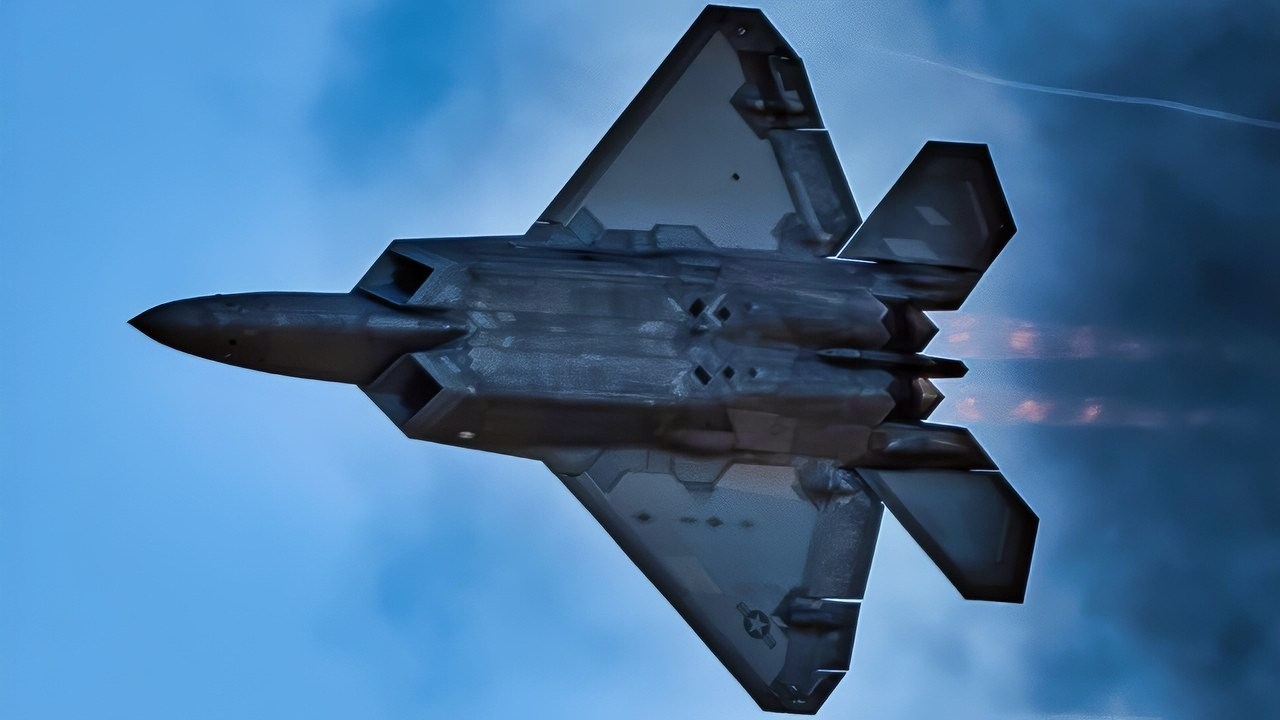
U.S. Air Force Lt. Col. Paul Lopez, F-22 Demo Team commander, flies through smoke during the Thunder over South Georgia Air Show at Moody Air Force Base, Ga., Nov. 2, 2019. Founded in 2007, the F-22 Raptor Demonstration Team showcases the unique capabilities of the world’s premier 5th-generation fighter aircraft. (U.S. Air Force photo by 2nd Lt. Sam Eckholm)
Is the “Sanctuary” of Forward Basing Over?
When the F-22 and F-35 were conceived in the 1990s and early 2000s, U.S. airpower doctrine assumed that forward air bases would either be secure or quickly made secure.
That assumption was borne out in conflicts like the Gulf War and the Iraq War, where U.S. forces operated from well-protected bases with minimal threat of sustained enemy strikes.
That model is now being challenged. RAND analysis has warned that the era of air base “sanctuary” is ending due to the proliferation of long-range precision missiles capable of targeting infrastructure.
“The emergence of the long-range, highly accurate, conventional missile (both ballistic and cruise) as a threat to air bases is now widely recognized in the U.S. defense community, and, with that recognition, there is a growing appreciation that this era of sanctuary is coming to an end. Consequently, there is renewed interest in neglected topics, such as base hardening, aircraft dispersal, camouflage, deception, and air-base recovery and repair,” a June 12 report explains.
In the years since, that analysis has been proven correct – and the trend only continues. Air bases are increasingly becoming frontline targets, with runways, fuel storage, maintenance facilities, and even parked aircraft now vulnerable to precision strikes from hundreds or thousands of miles away.
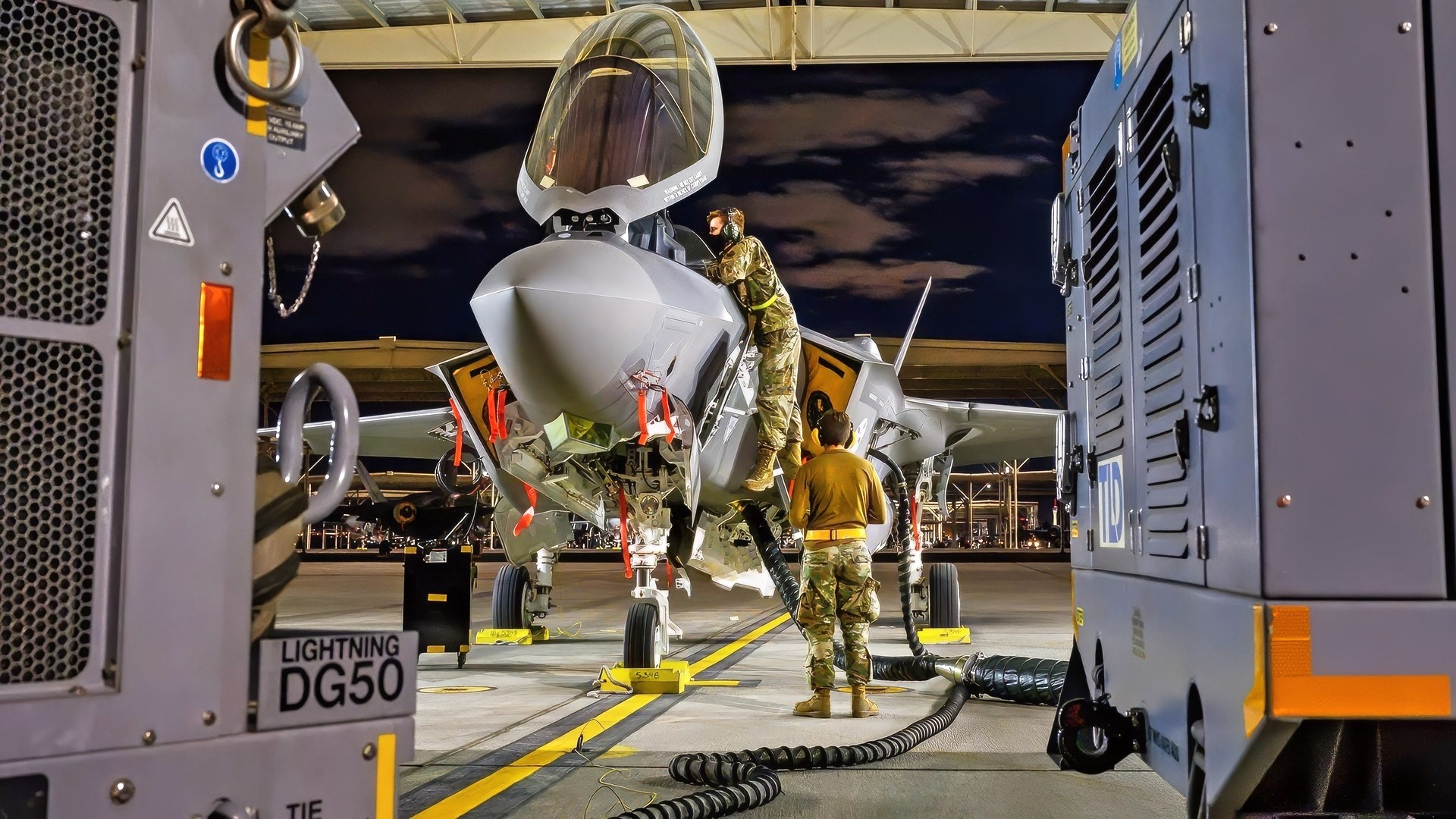
F-35 Fighters Ready. Image Credit: Creative Commons.
And that shift, which we’re seeing unfold in real time with the Iran conflict and missile strikes on NATO bases, undermines the founding operational concept behind fifth-generation fighters: that they can reliably launch and regenerate sorties from fixed locations close to the battlespace. Fifth-generation fighter capability is by no means useless – far from it, in fact – but it is being increasingly challenged.
Range vs. Geography
The limitations of the F-22 and F-35 become most apparent when mapped against geography. The F-35A, for example, has a combat radius of just over 1,000 kilometers (roughly 540 nautical miles), and the F-22 can achieve something roughly similar depending on mission profile. That range is not inherently insufficient, but it could be argued that it is insufficient relative to modern threat envelopes.
Take a potential conflict over Taiwan, for example. In this case, U.S. aircraft would likely operate from bases like the Kadena Air Base, which sits well within the strike range of China’s growing arsenal of ballistic and cruise missiles.
A 2024 Stimson study found that Chinese missile strikes could shut down U.S. airbases in Japan for nearly two weeks in the opening phase of a conflict, preventing fighter operations entirely during that period.
“Since the end of the Cold War, U.S. dominance in conventional power projection has allowed American airpower to operate from a sanctuary, largely free from enemy attack. This led to a reduced emphasis on air-base defense measures and the misperception that sanctuary was the normal state of affairs rather than an aberration. The emergence of the long-range, highly accurate, conventional missile (both ballistic and cruise) as a threat to air bases is now widely recognized in the U.S. defense community, and, with that recognition, there is a growing appreciation that this era of sanctuary is coming to an end,” the report explains.

F-35I Adir Lockheed Martin Photography by Todd R. McQueen.
What’s more, those strikes could also deny access to aerial refueling infrastructure for more than a month, effectively grounding long-range air operations even if aircraft themselves remain intact.
The implication is that range limitations force aircraft to depend on bases that may not be usable when war begins, or on carriers that may be forced to operate from a distance.
Tanker Dependency
To compensate for their combat radius, both the F-22 and F-35 rely on aerial refueling platforms such as the KC-135 Stratotanker and KC-46 Pegasus – creating a secondary vulnerability.
Tankers are large, non-stealth, and must operate within reach of the battlespace in order to be effective. As a result, they are exposed to long-range air-to-air missiles and other threats.
In fact, adversary missile systems are specifically designed to push U.S. airpower further away from the fight, increasing reliance on tankers that can be targeted at extended ranges.
If tankers are forced to operate from further afield, fighters lose time on station, sortie rates decline, mission effectiveness drops, and aircraft may simply be unable to reach where they need to be.
“The missile threat to US forces in countries like Japan or aboard vessels in the Philippine Sea is meant to compel US airpower to be employed from greater distances, and thus increase their reliance on assets like tankers, which the People’s Liberation Army can engage at much longer ranges than fighter aircraft,” a February 2026 paper published by the Royal United Services Institute for Defence and Security explains.
The range problem, then, is not solved by refueling – and the next generation of fighters must solve this problem.
Ukraine Proves Bases Are Targets
The war in Ukraine serves as a real-world example of how modern conflicts affect infrastructure. Both sides have repeatedly targeted air bases, fuel depots, and logistics hubs using missiles and drones. The strikes have forced aircraft dispersal, reduced sortie generation, and disrupted operational planning.
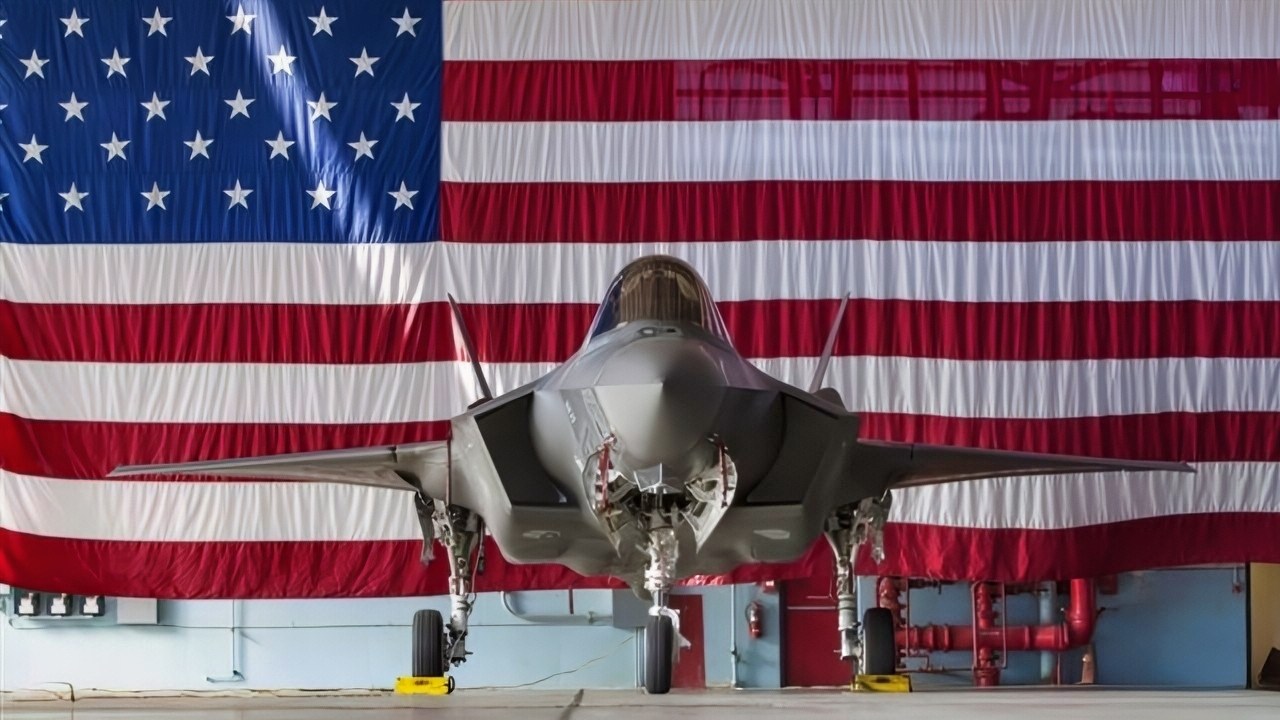
F-35 Fighter Image by Lockheed Martin
Even advanced military forces cannot assume the survivability of high-value assets on the ground anymore, particularly when faced with persistent long-range strike capabilities – or even the risk of drones being smuggled close to a base and deployed when they’re within reach.
For U.S. airpower, which has not operated under sustained base attacks in decades, this represents a significant shift – and the challenge is not just surviving in contested airspaces but maintaining operations when the ground infrastructure itself is under attack.
So, What Now?
These dynamics are well established and understood by Washington and the Pentagon, and solutions are already taking shape. The Next Generation Air Dominance (NGAD) initiative is being designed with significantly greater range and survivability than today’s fifth-generation platforms. It is also designed to operate as part of a distributed system; it will not only fly with Collaborative Combat Aircraft (CCAs) or “loyal wingman” drones, but can also rely on a network of dispersed operating locations rather than depending on a single base.

A U.S. Navy F-35A Lightning II with the U.S. Navy F-35C Airshow Demonstration Team performs an aerial demonstration over Rickenbacker International Airport during the Columbus Air Show, Aug. 24, 2025. This year’s event featured more than 20 military and civilian planes, including a KC-135 Stratotanker from the 121st Air Refueling Wing, which served as the base of operations for military aircraft participating in the show. (U.S. Air National Guard photo by Staff Sgt. Ivy Thomas)
The use of CCAs will also reduce reliance on tankers, as they pair manned fighters with autonomous systems that can be deployed in place of aircraft. And at the same time, concepts like Agile Combat Employment are being pushed toward dispersed and rapidly relocatable basing to complicate enemy targeting.
It’s clear now that future airpower will not just need to be designed to win in contested environments against increasingly capable adversaries, but to survive and disperse, and to project power across distance while under constant threat.
About the Author: Jack Buckby
Jack Buckby is a British researcher and analyst specializing in defense and national security, based in New York. His work focuses on military capability, procurement, and strategic competition, producing and editing analysis for policy and defense audiences. He brings extensive editorial experience, with a career output spanning over 1,000 articles at 19FortyFive and National Security Journal, and has previously authored books and papers on extremism and deradicalization.


