


Australia paused its order for a fourth squadron of 28 F-35s to redirect defense funding toward long-range missiles and upgrade its existing Super Hornet fleet.
This shift allows the country to align with its “strategy of denial” by prioritizing strike depth and survivability while maintaining the core of its F-35 fleet.
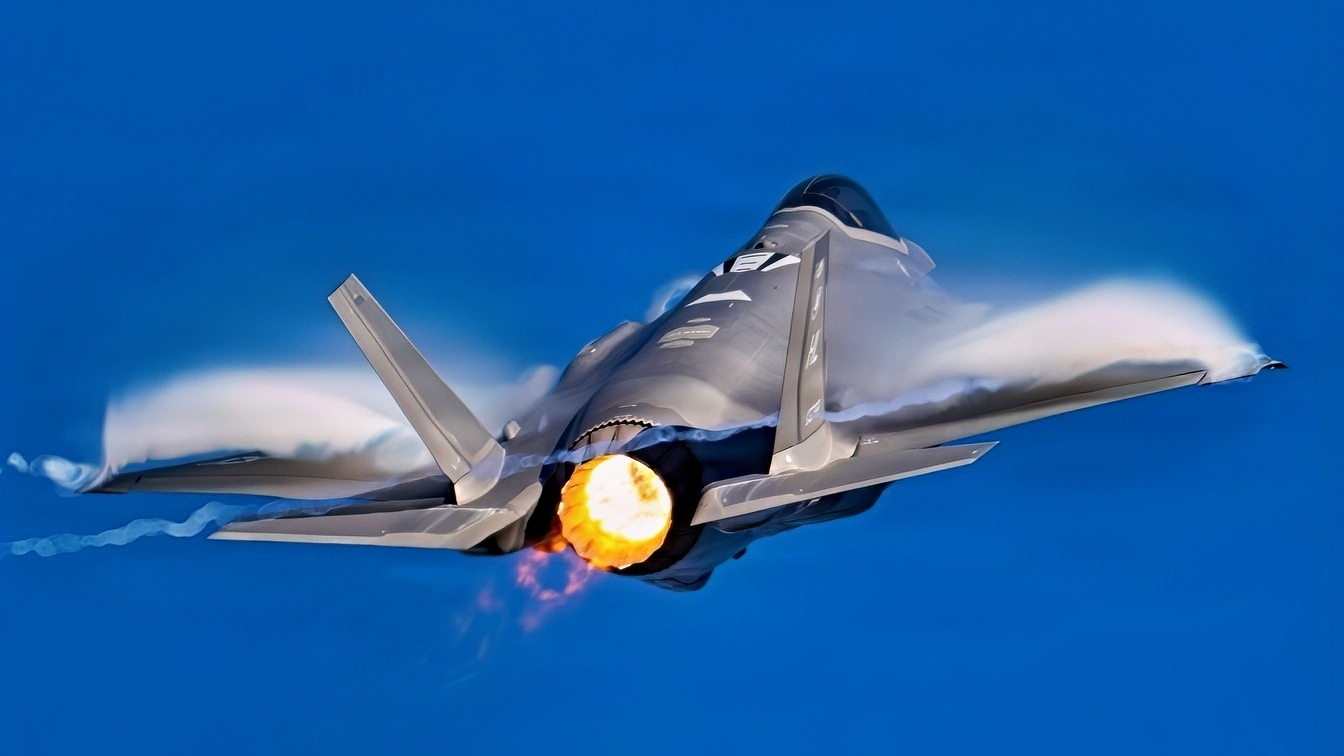
A U.S. Air Force F-35A Lightning II assigned to the F-35A Lightning II Demonstration Team performs a maneuver during the Feria Internacional del Aire y del Espacio (FIDAE) over Santiago, Chile, April 8, 2026. The F-35A Demonstration Team showcases the aircraft’s advanced performance and versatility through dynamic aerial maneuvers. (U.S. Air Force photo by Staff Sgt. Zachary Rufus)
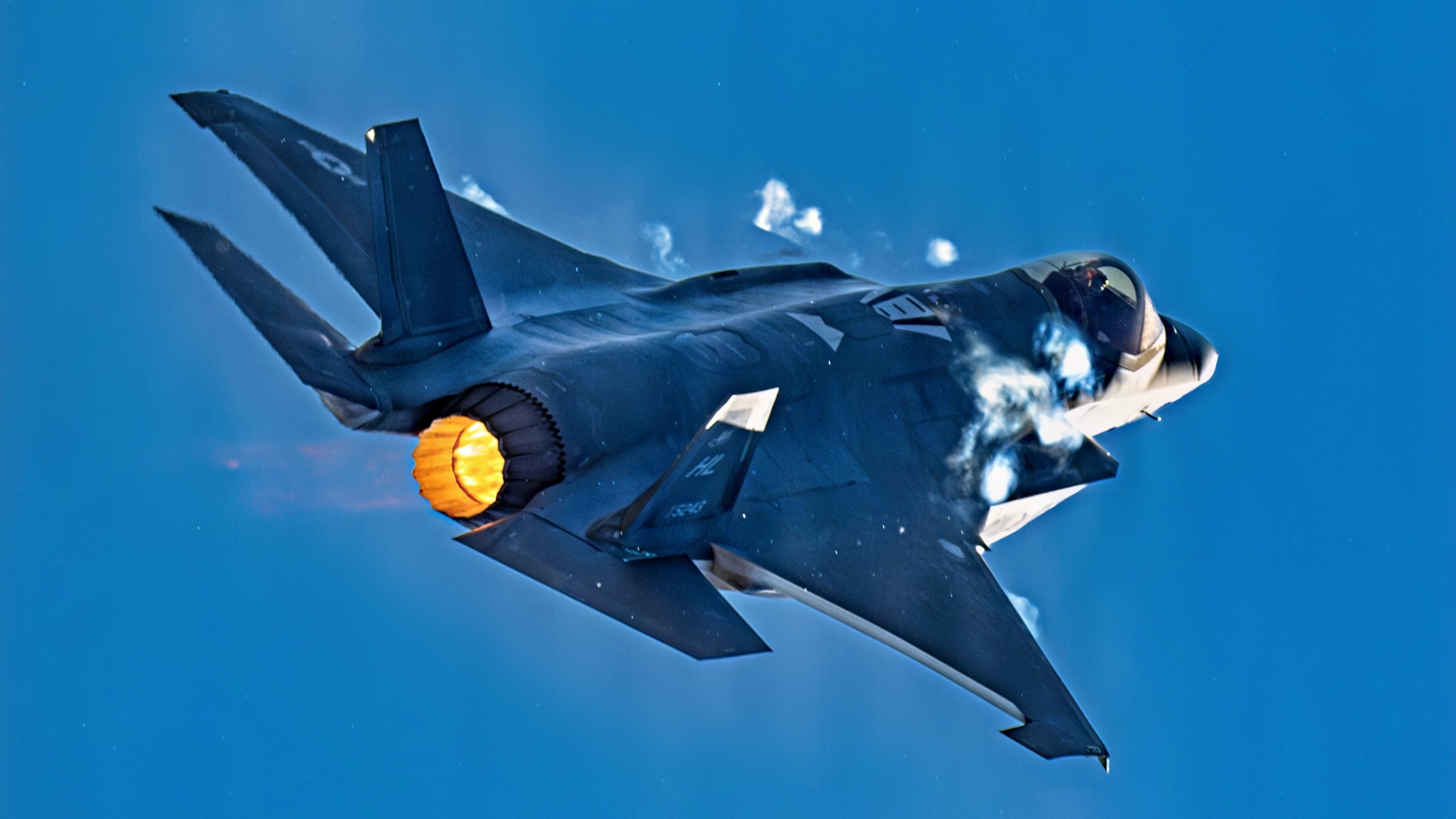
U.S. Air Force Maj. Sean “Rambo” Loughlin, pilot of the F-35A Demonstration Team, conducts aerial maneuvers during a practice demonstration at Hill Air Force Base, Utah, May 4, 2026. These practice demonstrations maintain the skills required to execute precise maneuvers at airshows worldwide. (U.S. Air Force photo by Staff Sgt. Nicholas Rupiper)
Australia currently has a fleet of 72 F-35s and hasn’t closed the door on purchasing more F-35s at a later date, but it could opt to purchase the Tempest/GCAP in the future.
“More Capable Than We Initially Thought”
Australian Aviation posted that, “the federal government has confirmed it has put on hold plans to buy a fourth squadron of F-35s and will instead redirect some of that investment towards long-range missiles.”
Prime Minister Anthony Albanese’s administration stated that it had halted plans to grow the Royal Australian Air Force’s (RAAF’s) F-35 fleet beyond 72 jets.
The Labor government said it would redirect funding toward long-range missiles and more-diverse strike capabilities. At the time, Defense Minister Pat Conroy claimed Australia’s F/A-18E/F Super Hornets were “doing great work” and that the F-35 was “even more capable than we initially thought.”
Australia Spending Big Money On Missiles
The pause of F-35 orders isn’t to be construed as the Australians cutting back on their defenses, but rather spending money on other areas.
The money that was saved by delaying extra F-35 purchases would therefore be spent on air defense missiles.
The government has ordered $2.12 billion worth of additional purchases of advanced medium-range air-to-air missiles, including AIM-120C-8s and AIM-120D-3s that can be used by the F/A-18F, EA-18G, and the F-35A.
As Georgia Gilhooly wrote earlier this spring, Magazine depth, electronic warfare, sustainment, and the ability to strike at range may matter just as much in any future Indo-Pacific contingency. Australia’s 12 EA-18G Growlers remain especially valuable here, giving the RAAF a specialized electronic attack capability possessed by very few U.S. allies.
Long-Range Missile Defense Investments
Under the National Defense Strategy, the Australian Defense Force (ADF) has pivoted its strategic focus to a “strategy of denial”.
While pausing the expansion of the F-35 fleet, the government is extending the life of its Super Hornet aircraft and reallocating funds to build its long-range missile defenses.
The government is increasing funding for the procurement of advanced munitions, including Standard Missile 2s (SM-2), Standard Missile 6s (SM-6), and the Precision Strike Missile (PrSM).
Hybrid Air Defenses are being developed and tested as the unique “Frankenstein” medium-range, ground-based air defense systems that seamlessly integrate existing Australian and American software, sensors, and missile launchers.
Australia’s system links ground-based launchers, sensors, and software to fire standard medium-range missiles like the SM-2, avoiding the reliance on expensive, dedicated Patriot-type batteries.
They are also integrating long-range anti-ship missiles—like the AGM-158C LRASM—onto its existing F-35s and platforms, transforming the jets into command-and-control nodes for broader operations.
Regional Defenses Have Adopted The F-35
With tensions rising in the Indo-Pacific region, Australia has partnered with several other nations to provide collective defense against Chinese bellicose actions. And it purchased the F-35 to handle much of its defense.
It has a program of record for 100 F-35s but has only committed to contract for 72, all of which it has received, the last being delivered in December 2024. Australia is one of the most significant export customers of the F-35 in the world.
According to the South China Morning Post, Japan is flying about 105 F-35As and 42 F-35Bs. Tokyo is projected to become the second-largest operator of the F-35 in the world after the US.
South Korea currently operates 40 F-35A jets, with active plans to procure additional aircraft. Singapore is slated to begin delivery of a dozen F-35Bs and additional F-35As on order.
The US currently has permanently deployed 48 F-35As to Misawa Air Base in Japan. This is supplemented by rotating Marine Corps F-35Bs and carrier-capable Navy F-35Cs stationed on regional aircraft carriers.
That puts the collective regional defense well stocked with F-35s. And as Aaron Spray wrote in Simple Flying, “the F-35 is its own worst enemy.”
“The F-35 is so advanced that Australia doesn’t currently see the need to purchase more of them to reach the level of capabilities that it requires.”
About the Author: Steve Balestrieri
Steve Balestrieri is a National Security Columnist. He served as a US Army Special Forces NCO and Warrant Officer. In addition to writing on defense, he covers the NFL for PatsFans.com and is a member of the Pro Football Writers of America (PFWA). His work was regularly featured in many military publications.


