

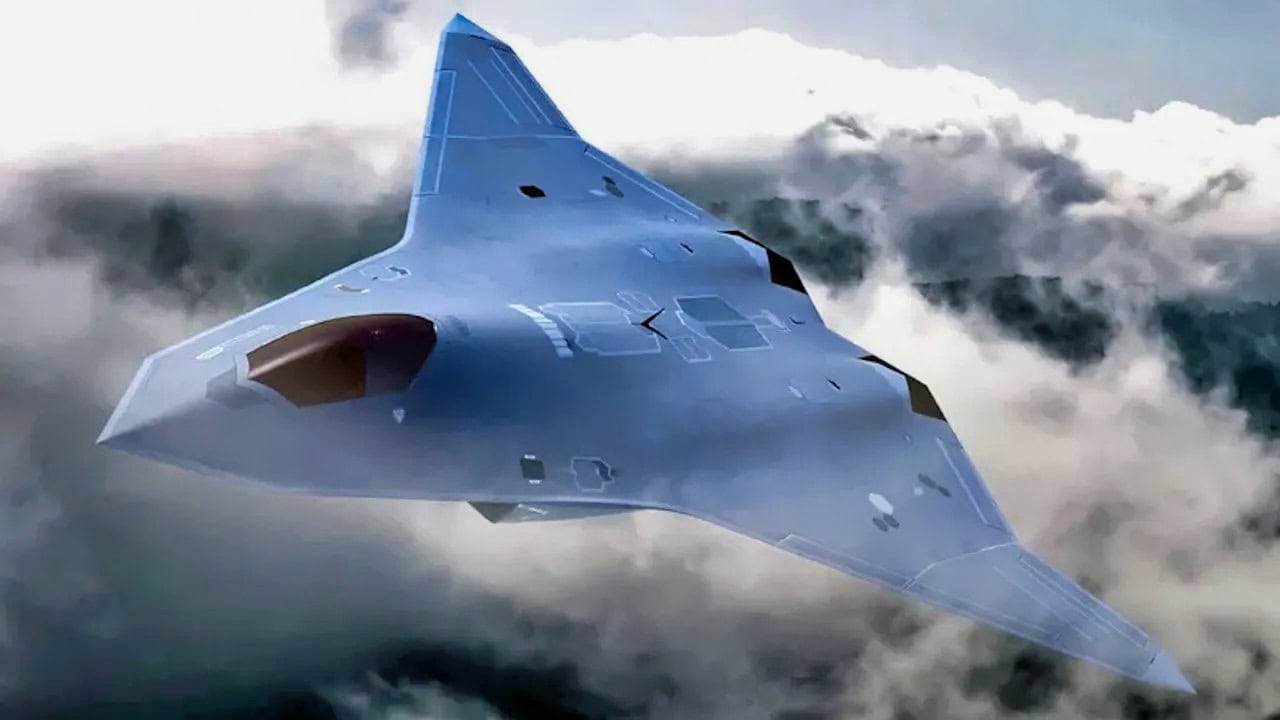
Key Points and Summary – The U.S. Navy’s nominee for Chief of Naval Operations, Adm. Daryl Caudle, has made an urgent case to Congress for funding the F/A-XX sixth-generation fighter.
-Caudle testified that the new jet is essential to keep pace with China’s rapidly advancing air power and to maintain the striking power of U.S. aircraft carriers.
-He argued that stop-gap measures, like upgrading older F/A-18s or buying more F-35s, would be a costly and ineffective use of resources.
-This testimony supports a new Senate push to restore $1.4 billion to the program, challenging a White House decision to prioritize the Air Force’s F-47.
The F/A-XX Crisis Begins?
Testifying last week before the US Congress during his confirmation hearings to become the next Chief of Naval Operations (CNO), Adm. Daryl Caudle told lawmakers that the US Navy (USN) needs 6th-generation fighter jets for more than one legitimate reason.
One is that a modern-day fighter is needed to pull even with America’s peer competitor, the People’s Republic of China (PRC), which has been developing new-generation aircraft for almost two decades. This means the USN requires a suitable tactical aircraft platform operating from the new Gerald Ford-class of USN aircraft carriers.
Beijing’s major defense and aerospace firms are currently testing at least two next-generation combat aircraft – the Chengdu J-36 and the Shenyang J-50. The two Chinese design teams also have two previously developed 5th-generation fighters in production, the Chengdu J-20 that first flew in 2011 and the Shenyang J-35A/B/B.
The J-35B model has been confirmed as a carrier-capable platform that will be launched by catapult aboard the newest PRC Navy (PLAN) CV 18 Fujian. Having some response to these Chinese fighters is the only way to remain “relevant” in the air battlespace of the future, he said.
The other issue is that if the USN does not move out on development of its 6th-generation program now, the service will be forced to improvise, as it were, and develop short-term alternatives. This would mean trying to retrofit the 4th-generation F/A-18E/F Super Hornets with more advanced onboard systems and longer-range weapons.
Problems With Short-Term Alternatives
However, these types of retrofits have the unfortunate aspect of being very expensive, but also not a very effective use of resources.
The Non-Recurring Engineering (NRE) costs required to develop new configurations price out in the tens of millions, if not more. On top of this outlay would be the cost for the latest hardware to be installed in these aircraft – improved sensors, better electronic warfare, etc.
In the end, those combined costs would achieve some level of increased effectiveness, but the aircraft would still not match the capability of a next-generation fighter. The efficacy of these modernized aircraft would likely drop off in the short term, meaning the “bang for the buck” does not last very long. Also, the costs for these retrofits would be siphoning off funding for a next-generation aircraft, making the opportunity costs relatively high.
The other option would be to acquire additional older aircraft like the F-35C, the carrier-capable model of that stealthy aircraft, according to Caudle. But this platform is again rated as a 5th-generation design, which still puts it behind the developmental cycle of the Chinese aerospace firms mentioned above.
Overall, Caudle’s testimony seeks to reverse a previous decision that has reduced funding for the F/A-XX to almost symbolic levels and to delay the selection of a prime contractor to design the Navy aircraft for another two years.
Senate Appropriations May Reverse Decision
As of last Friday, a new Senate Appropriations Committee draft defence spending bill now includes $1.4 billion to continue developing the F/A-XX, plus another $647 million to preserve the E-7 Wedgetail programme. If the legislation is adopted, it would reverse the previous Pentagon decision to freeze the funding on the Navy program. That budget plan was instead intended to apply most of the tactical fighter developmental budget to the US Air Force (USAF) F-47 Next-Generation Air Dominance (NGAD) project.
If adopted, the measure would have the Pentagon no longer prioritising the F-47 over the Navy program and instead provide them with nearly equal budgetary outlays. The question is that although no procurement “battle lines” have been drawn, the Senate’s move would appear to be a case of the new CNO opposing a decision on funding for the Navy and US Air Force programs that was made back in March by the White House. One likely concern on the part of the USN is how US President Donald Trump might react to his decisions being overturned.
“Nothing in the joint force projects combat power from the sea as a carrier strike group, which at the heart has a nuclear-powered aircraft carrier (CVN),” Caudle had told Congress in written testimony last week. “To maintain this striking power, the CVN must have an air wing that is comprised of the most advanced strike fighters.”
The F/A-XX has been in development for years, with the competition for the contract to design and build a prototype coming down to between Boeing and Northrop Grumman. The highly classified stealthy aircraft concept would have the lowest radar cross section of any carrier fighter yet and would be able to interface with unmanned collaborative combat aircraft (CCA).
The F/A-X would, of course, eventually replace the Super Hornet, which in recent years has had extensive combat experience against Iran-backed Houthi rebels in the Red Sea and Gulf of Aden.
The F/A-18E/F /F has been adequate against a non-peer competitor like the Houthis. But if the USN does not have a 6th-generation aircraft to replace the Super Hornet in the proper time frame, Caudle stated, carrier battle groups would be reduced to hoping that they can utilize existing technologies in an “attempt to compete with the new 6th generation aircraft that the threat is already flying.”
About the Author: Reuben F. Johnson
Reuben F. Johnson has thirty-six years of experience analyzing and reporting on foreign weapons systems, defense technologies, and international arms export policy. Johnson is the Director of Research at the Casimir Pulaski Foundation. He is also a survivor of the Russian invasion of Ukraine in February 2022. He worked for years in the American defense industry as a foreign technology analyst and later as a consultant for the U.S. Department of Defense, the Departments of the Navy and Air Force, and the governments of the United Kingdom and Australia. In 2022-2023, he won two awards in a row for his defense reporting. He holds a bachelor’s degree from DePauw University and a master’s degree from Miami University in Ohio, specializing in Soviet and Russian studies. He lives in Warsaw.
More Military
Su-57 vs. J-20 Fighter: Who Wins?


