
The Iran War: On Pause? Over? Or Ending Soon? The Middle East spent Thursday, September 3, waiting to see whether the sudden return of heavy exchanges of fire would see the United States escalate further and initiate another sustained bombing campaign.
It followed another wave of missiles and drones launched by Iran overnight against American military positions in the Gulf, and threats that more sites would be targeted in the near future.

U.S. Air Force Capt. Kristin “Beo” Wolfe, F-35A Lightning II Demonstration Team commander and pilot, takes off from Selfridge Air National Guard base for the 2020 London SkyDrive Air Show in Canada Sep. 12, 2020, Harrison Township, Mich. The F-35 Demo Team flew alongside the F-16 Viper, the F-22 Raptor, the A-10 Thunderbolt II, and the Air Force Thunderbirds aerial demonstration teams in London, Ontario, Canada. (U.S. Air Force photo by Capt. Kip Sumner)

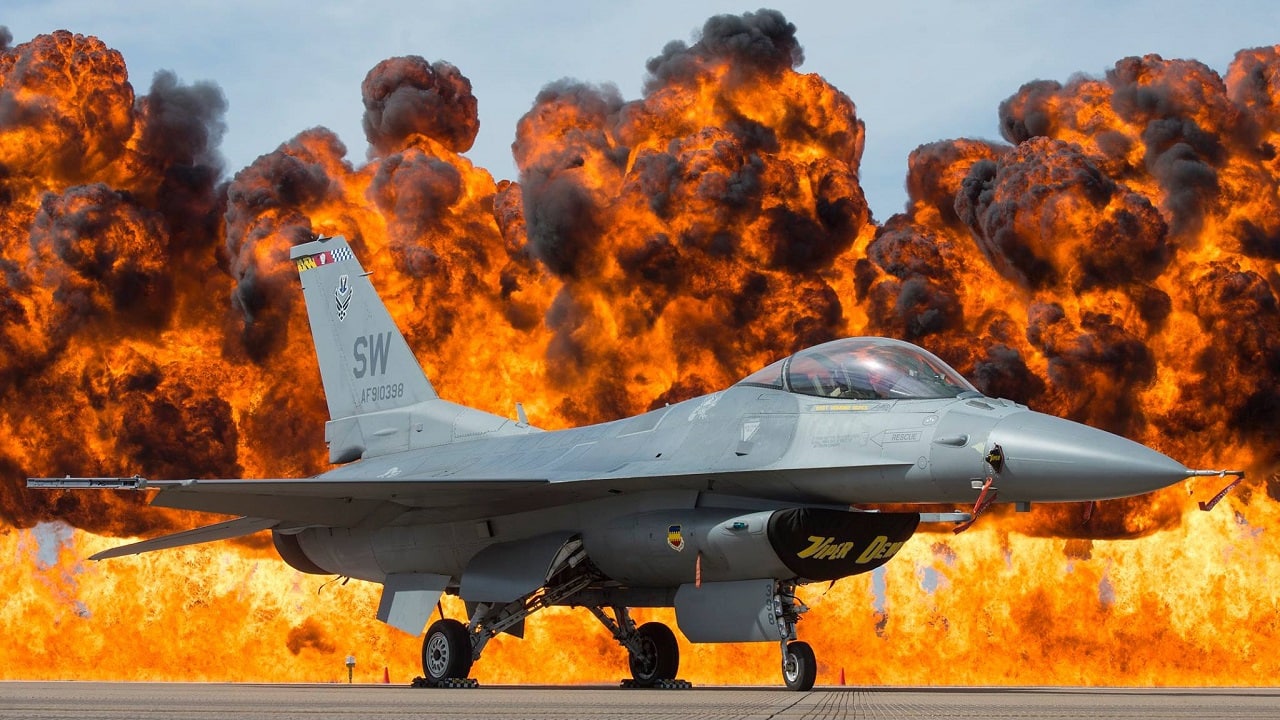
U.S. Air Force Staff Sgt. Jason Lewey from the 8th Aircraft Maintenance Squadron marshals an F-16 Fighting Falcon from the 35th Fighter Squadron at Kunsan Air Base, South Korea, after returning from a training mission during RED FLAG-Alaska 09-2 at Eielson Air Force Base, Alaska, on April 20, 2009. RED FLAG-Alaska provides training for deployed maintenance and support personnel in sustainment of a large-force deployed air operation.
(DoD photo by Senior Airman Jonathan Snyder, U.S. Air Force. (Released))
Iran attacked targets in Kuwait early on Thursday in retaliation for strikes by U.S. forces against military sites and radar installations surrounding the Strait of Hormuz.
Iran had already launched strikes against facilities used by U.S. forces in Kuwait, Bahrain, Iraq, Jordan, Qatar, and the United Arab Emirates.
Kuwaiti authorities said that the country’s air defenses intercepted projectiles launched by Iran, while Tehran also confirmed it had targeted American military storage facilities and communications equipment.
By late Thursday afternoon, however, neither side had launched another major wave of attacks, and President Trump appears to still be considering ways to declare the war over — in private, at least.
Kuwait Pulled Deeper Into the Conflict
For Kuwait, the return to fighting presents an immediate problem.
Iran is now retaliating against the United States by targeting American military facilities, or any sites connected to the U.S. military, on Kuwaiti territory.
That means a country that is not formally at war with Tehran is now being subjected to Iranian missile and drone strikes.
Kuwait’s Defense Ministry has confirmed that its air defenses engaged Iranian missiles and drones early on Thursday, while the Interior Ministry said a drone struck a residential building in the Sabah Al Salem area.
Firefighters also extinguished a fire at the site, though Kuwaiti authorities said that there were no casualties.
The Islamic Revolutionary Guard Corps (IRGC) took responsibility for the strikes and confirmed that it had targeted facilities connected to U.S. forces in Kuwait, and said targets included communications systems, storage facilities, aircraft hangars, and other military infrastructure.
Kuwait responded by condemning the strikes in a statement describing them as a “grave violation” of the country’s sovereignty. The statement also said that the Iranian strikes threatened civilians and critical infrastructure.
What Does Iran Have to Lose?
Other Gulf governments share these concerns. Qatar, which hosts thousands of American personnel at Al Udeid Air Base, condemned the attacks on Kuwait on Thursday and warned that continued strikes threaten regional security.
The danger for Gulf governments is that Iran sees any U.S.-related infrastructure as a legitimate target regardless of what countries host them – and given that Tehran is already at war with one of the world’s greatest superpowers, and that it is already under immense economic pressure, there is little reason not to continue striking at its neighbors.
For Iran, the cost of not responding may be higher than the cost of launching attacks on sites in neighboring Gulf states.
Pentagon Prepares to Stay Through 2027
Even as President Trump considers declaring the war over, the Pentagon is preparing for the likelihood that the U.S. military will need to remain heavily committed in the Middle East well into 2027.
Defense Secretary Pete Hegseth has extended deployments for American forces involved in the Iran conflict, according to a new report by The Wall Street Journal, with roughly 50,000 troops already deployed across the region.
Those troops are supported by 19 warships, fighter squadrons, and air defense units.
Even if Trump declares the war over, an American presence in the region would be essential to enforce the naval blockade against Iran and protect against constant Iranian missile strikes.
But in declaring the war over, Trump risks the possibility of allowing Iran to rebuild its military infrastructure with the support of far larger friends like China or Russia.
Is The War Already Over?
The Trump administration is reportedly considering ways to declare the war over, and reports this week also revealed that Vice President JD Vance and Secretary of State Marco Rubio are among those in the administration determined to keep the conflict “quiet” until after the November midterm elections.
Speaking to reporters from the White House on Thursday, Vice President Vance appeared to confirm those reports, suggesting to reporters that the war isn’t really happening in any meaningful sense.
When asked how the president would declare an end to the war if the U.S. naval blockade needs to remain in place, Vance questioned whether the U.S. was even at war.
“The phrase ‘an end to the war,’ I wanna push back on that just a little bit because major combat operations are currently not ongoing, and they haven’t been ongoing in a very long time,” he said.
The last round of U.S. strikes was conducted only hours before his statement.
About the Author: Jack Buckby
Jack Buckby is a British researcher and analyst specializing in defense and national security, based in New York. His work focuses on military capability, procurement, and strategic competition, producing and editing analysis for policy and defense audiences. He brings extensive editorial experience, with a career output spanning over 1,000 articles at National Security Journal, and has previously authored books and papers on extremism and deradicalization.


