

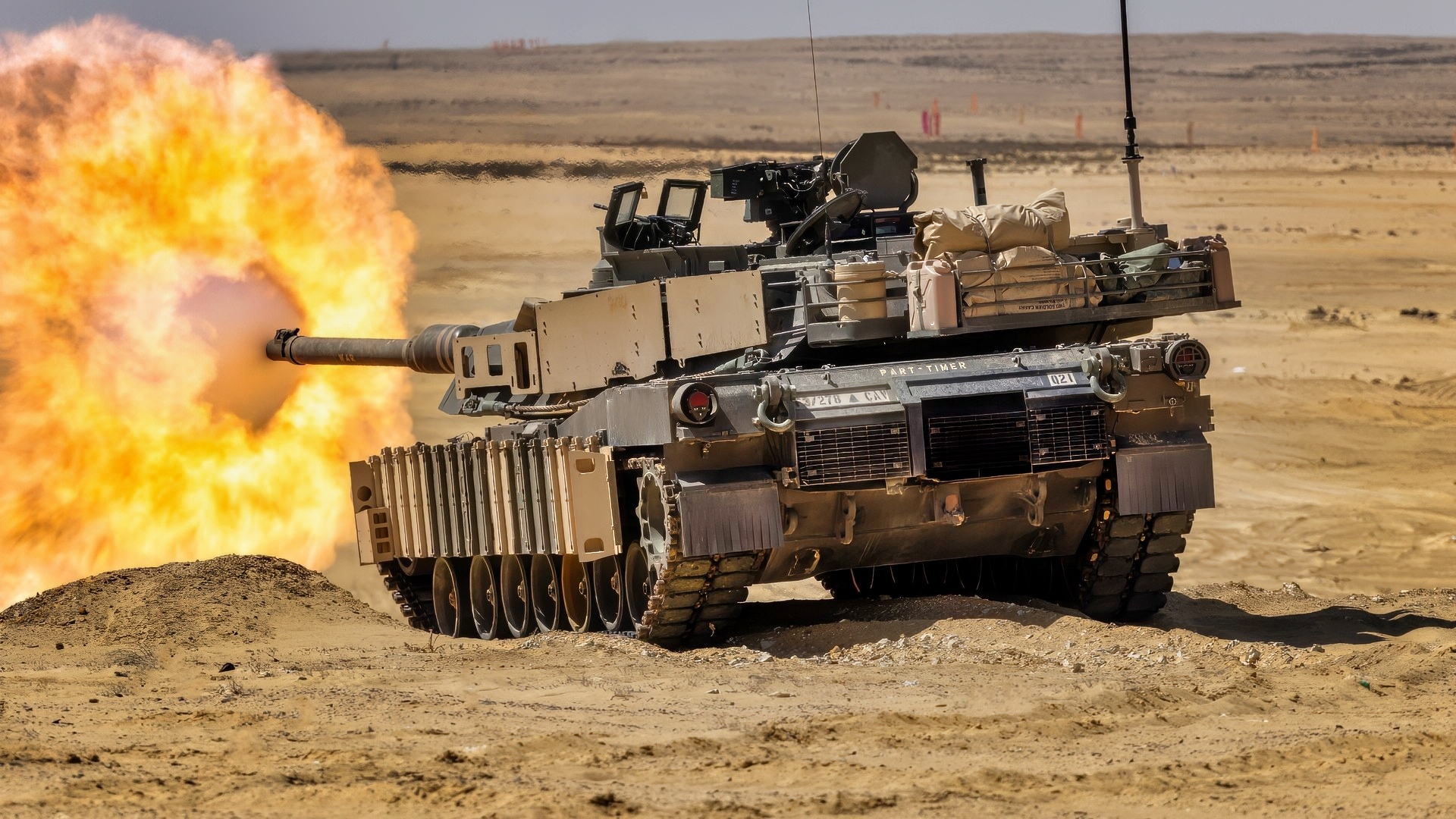
Summary and Key Points: Despite initial reports of high attrition and crew complaints, the deployment of 31 U.S. and 80 Australian M1A1 Abrams tanks to Ukraine is now viewed as a strategic necessity.
-While approximately 27 of the first 31 U.S. tanks were damaged or destroyed, retired Lt. Gen. Mark Hertling has labeled many crew complaints as “BS,” attributing the losses to inexperience and a lack of combined-arms support. By early 2026, the initial “bellyaching” has largely subsided.

U.S. Soldiers assigned to 3rd Battalion, 8th Cavalry Regiment, 3rd Armored Brigade Combat Team, 1st Cavalry Division fire an M1 Abrams at enemy targets during Rotation 24-06, at the National Training Center, Fort Irwin, Calif., April 11, 2024. Rotations at the National Training Center ensure Army Brigade Combat Teams remain versatile, responsive, and consistently available for current and future contingencies. (U.S. Army photo by Staff Sgt. Julie Jaeger, Operations Group, National Training Center)
-As crews complete their “long apprenticeship,” the Abrams is proving its durability against the drone-saturated battlefield, provided it is operated with proper tactics and field-expedient armor.
Was It a Mistake to Send M1A1 Abrams Tanks to Ukraine?
The United States donated 31 M1A1 Abrams tanks to Ukraine in late 2023. Australia also stepped up to the plate. The Aussies granted 80 Abrams combat chariots to the Ukrainians. The last 49 were delivered in December 2025. The American batch struggled in the war after being deployed in battle in February 2024.
There were likely 27 of the 31 American main battle tanks destroyed, damaged, or otherwise knocked out. This was a surprising result, and some military analysts wondered if the Abrams deployment was a mistake.
Laundry List of Tank Complaints
The Ukrainian tankers were not happy. Some reportedly complained about how the Abrams was not the right tank to serve in the war. The engines often failed to run properly. The tanks were not a good fit for the kind of terrain they faced in Ukraine. The wet, foggy conditions created a high level of condensation on gauges and controls, rendering the Abrams’ combat ineffective.

Soldiers with the Ohio National Guard’s 1st Combined Arms Battalion – 145th Armor Regiment conduct live fire training with the M1A2 SEPv3 Abrams Main Battle Tank at the Camp Ripley Training Center near Little Falls, Minnesota, on July 28th, 2025 (Minnesota National Guard Photo by Mr. Tony Housey).
The soldiers also groused about the main gun, which seemed to be ineffective against targets, leaving enemy tanks and armored personnel carriers intact after multiple strikes. Plus, the Russians seemed to make special missions to ensure they destroyed Abrams tanks for the propaganda effect. Moscow wanted to show that American weapons systems were inferior.
American General Says No Way
Retired U.S. Army Lieutenant General Mark Hertling was having none of it. Hertling called the complaints “BS” during an interview on CNN last year. He believed that the Ukrainians were inexperienced and unskilled. They were not ready to handle such a sophisticated piece of military hardware.
“Hertling emphasized that the Abrams tanks were designed for NATO environments and dismissed the reported issues as exaggerated or unfounded. He argued that the complaints about condensation, armor, and obstacle clearance were ‘nonsense,’ attributing any perceived shortcomings to crew errors in selecting and maintaining the appropriate weapon systems,” according to ArmyRecognition.com.
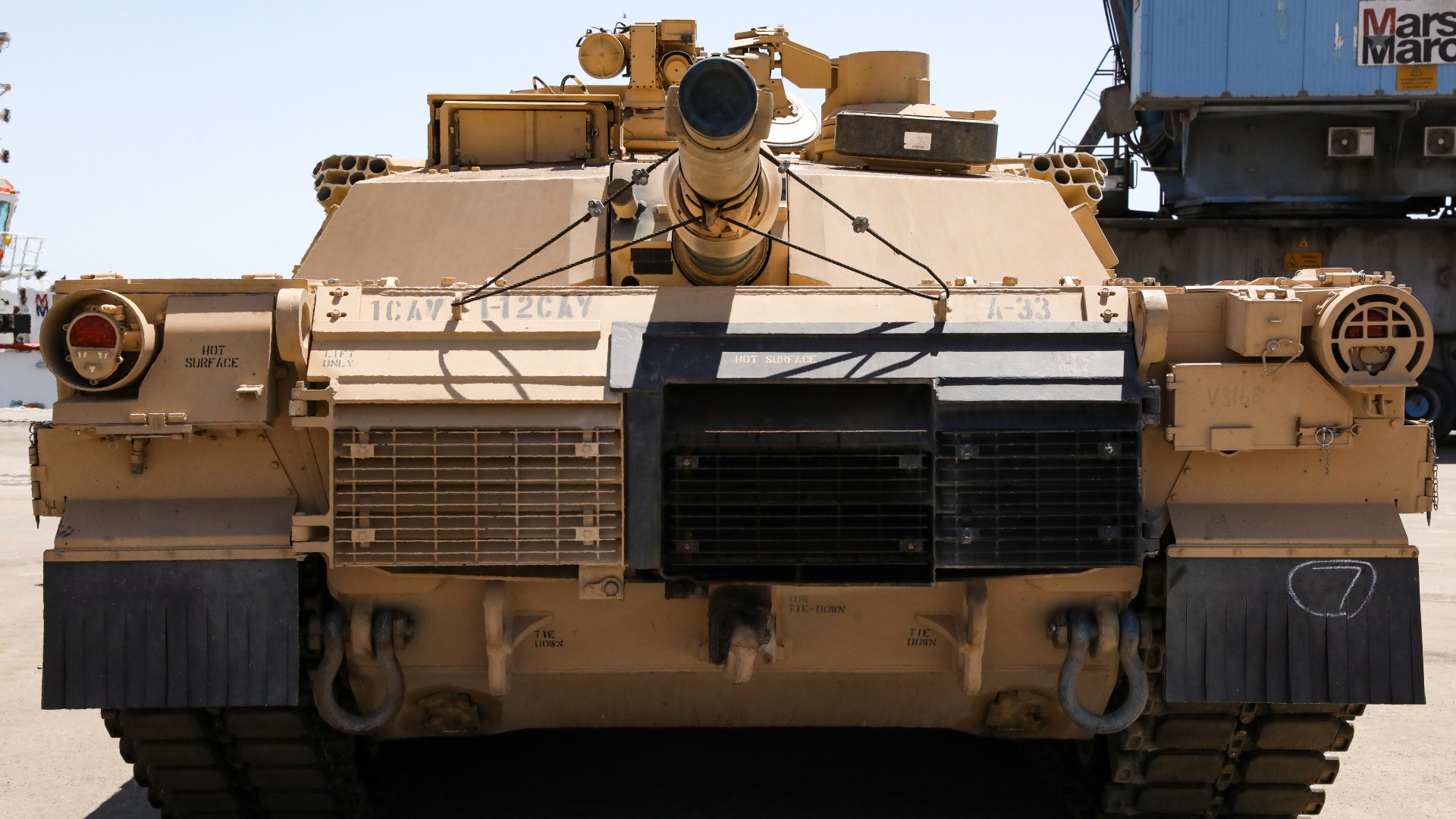
A U.S. Army M1A3 Abrams Tank from the 1-12 Cavalry Squadron, 1st Cavalry Division waiting to be guided onto a loading vehicle and secured for transport at the Port of Agadir, June 3, 2022, Agadir, Morocco. African Lion 2022 is U.S. Africa Command’s largest, premier, joint, annual exercise hosted by Morocco, Ghana, Senegal and Tunisia, June 6 – 30. More than 7,500 participants from 28 nations and NATO train together with a focus on enhancing readiness for U.S. and partner nation forces. AL22 is a joint all-domain, multi-component and multinational exercise, employing a full array of mission capabilities with the goal to strengthen interoperability among participants and set the theater for strategic access. (U.S. Army photo by PFC Donald Franklin)
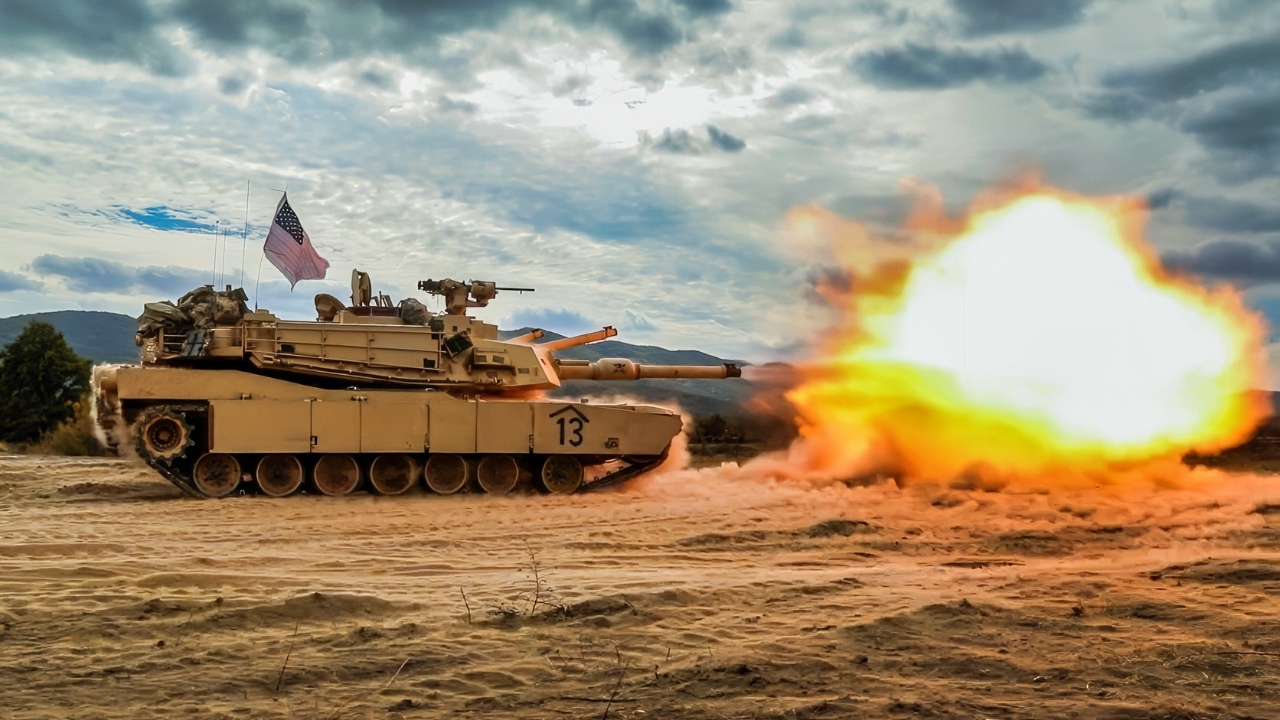
An M1A2 Abrams main battle tank with 1-16th Infantry, 1st Armored Brigade Combat Team, 1st Infantry Division, conducts a Live Fire Accuracy Screening Test Sept. 28, 2025, on Novo Selo Training Area, Bulgaria. The LFAST is used to assess and confirm the accuracy of its firing system before live fire gunnery, ensuring the tank is ready for combat and its firing control systems are functioning correctly. Abrams live fire exercises increase the lethality of crews on collective tables while generating warfighting readiness and combat credible forces along NATO’s Eastern Flank. (U.S. Army photo by Sgt. 1st Class Richard Perez)
The General Has It Right
I agree with Hertling. The Abrams is the best tank in the world. The Ukrainians were warned before the arms transfer that they would need ample training and a full combat training workup to be proficient on the Abrams. The home team would not be expert at running the Abrams in the early days.
This is a sophisticated piece of machinery, and even initial entry American tank crews receive more than four months of intense training before they are sent to a tank unit to begin their long apprenticeship on the Abrams.
All Tanks Are Vulnerable These Days
It is true that the M1A1 Abrams is susceptible to anti-tank guided missiles and drones. Like many tanks, there is a weakness at the top of the turret where projectiles and loitering munitions can strike. Cope cages were necessary. The Abrams, after all, is a decades-old platform and the Ukrainians were using only the most basic models.
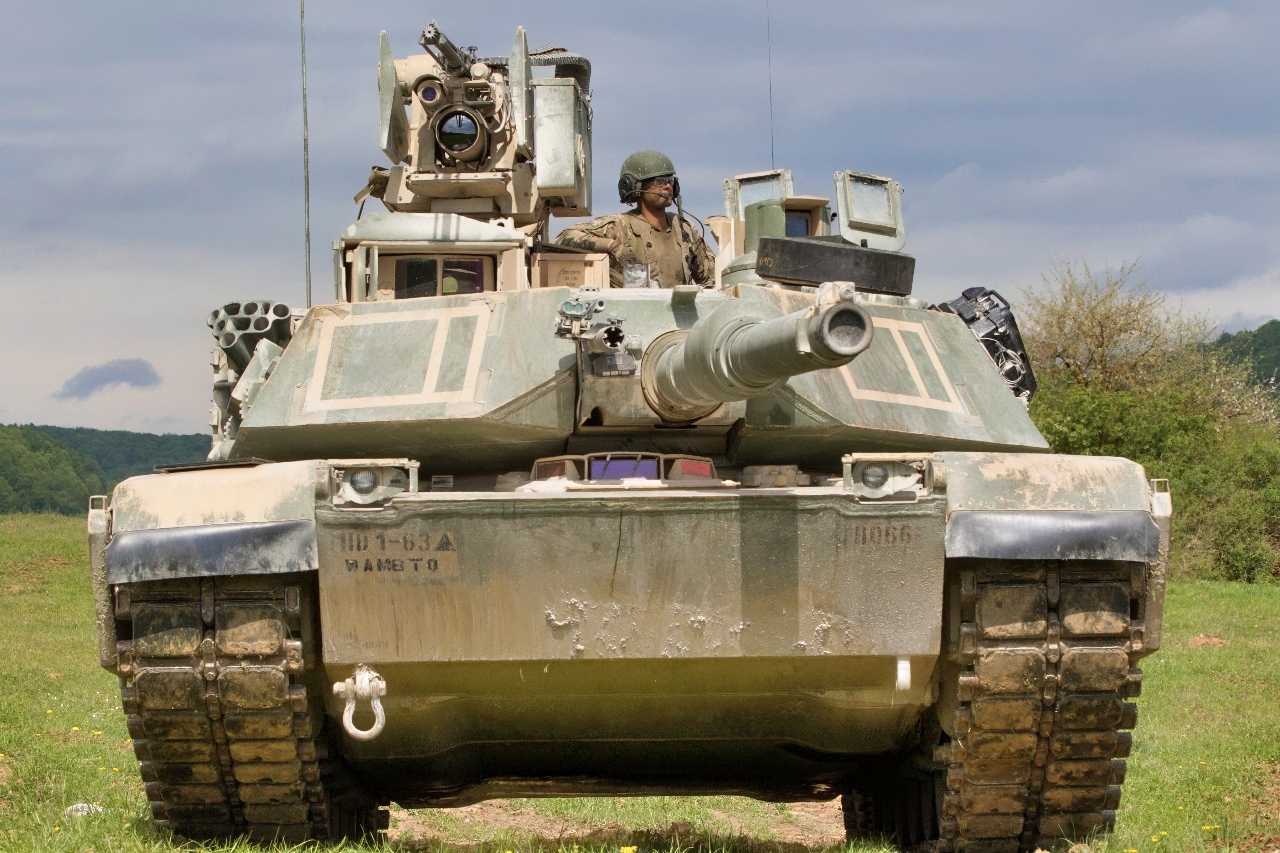
An M1A2 Abrams tank from 1st Battalion, 63rd Armor Regiment, “Dragons,” 1st Infantry Division, Fort Riley, Kansas, pulls during Combined Resolve X at the Hohenfels Training Area, Germany, May 1, 2018. Exercise Combined Resolve X is a U.S. Army Europe exercise series held twice a year in southeastern Germany. The goal of Combined Resolve is to prepare forces in Europe to work together to promote stability and security in the region. (U.S. Army photo by Spc. Andrew McNeil / 22nd Mobile Public Affairs)

A U.S. Army tank crew assigned to 2nd Battalion, 5th Cavalry Regiment, 1st Armored Brigade Combat Team, 1st Cavalry Division, maneuvers an M1A2 Abrams tank at a railhead in preparation to transport it to Hohenfels, Germany during a railhead operation, Corbu, Romania, October 24, 2018. The Battalion has deployed to Europe in support of Atlantic Resolve, an enduring training exercise between NATO and U.S. Forces. (U.S. Army National Guard photo by Sgt. Jamar Marcel Pugh, 382nd Public Affairs Detachment/ 1st ABCT, 1st CD/Released)

U.S. Soldiers assigned to the 2nd Armored Brigade Combat Team, 1st Cavalry Division supporting the 4th Infantry Division maneuver an M1A2 Abrams tank and M2 Bradley Fighting Vehicle past a simulated opposing force’s Leopard 2A6 tank during exercise Arrow 23 in Niinisalo, Finland, May 5, 2023. Exercise Arrow is an annual, multinational exercise involving armed forces from the U.S., U.K., Latvia, Lithuania and Estonia, who train with the Finnish Defense Forces in high-intensity, force-on-force engagements and live-fire exercises to increase military readiness and promote interoperability among partner nations. (U.S. Army National Guard photo by Sgt. John Schoebel)
Still, some Ukrainian tank operators have grumbled. “Its armor is not sufficient for this moment,” one crew member said to Newsweek. “It doesn’t protect the crew. For real, today this is the war of drones. So now, when the tank rolls out, they always try to hit them.”
Before the Abrams deployment in Ukraine, some U.S. defense officials tried to warn generals in Kyiv that the tank was going to have growing pains against the Russians.
Are You Sure You Want the M1A1 Abrams?
“The Abrams tank is a very complicated piece of equipment. It’s expensive, it’s hard to train on. … It is not the easiest system to maintain. It may or may not be the right system,” The Under Secretary of Defense for Policy, Colin Kahl, told reporters in 2023 at the Pentagon.
Baptism By Fire
Sometimes training must take place in the heat of battle. There would have been no way for the Ukrainians to be fully-trained up on a system that takes years to master. Ukraine needed advanced tanks quickly. They were warned about the difficulties and had to endure a baptism by fire.
The Abrams tank was designed specifically for battle against the Russians in Europe. This irony did not escape observers like Hertling.
The weather should not have affected instruments like the Ukrainians have claimed. Yes, the trusty tank had an initial run of bad luck, but the Ukrainians became more proficient on the battlefield, and the complaints stopped coming.
The early critics were simply bellyaching as all soldiers do. Yes, it would have been better if the M1A1 Abrams tanks had not taken that many early losses.
This was definitely a win for the Russian propaganda apparatus. The destruction was surprising, but it is not the fault of the tank itself.
Don’t Forget to Say Thanks
One of my biggest complaints about the war is that the Ukrainians, and this includes the top of the command structure up to President Volodymyr Zelensky, do not always seem appreciative of all the arms systems the United States and allies have provided for the country.
They have sung the praises of the Javelin anti-tank weapon and the HIMARS multiple-launch rocket system. But I would like them to be more thankful for all that the United States has done for the country.
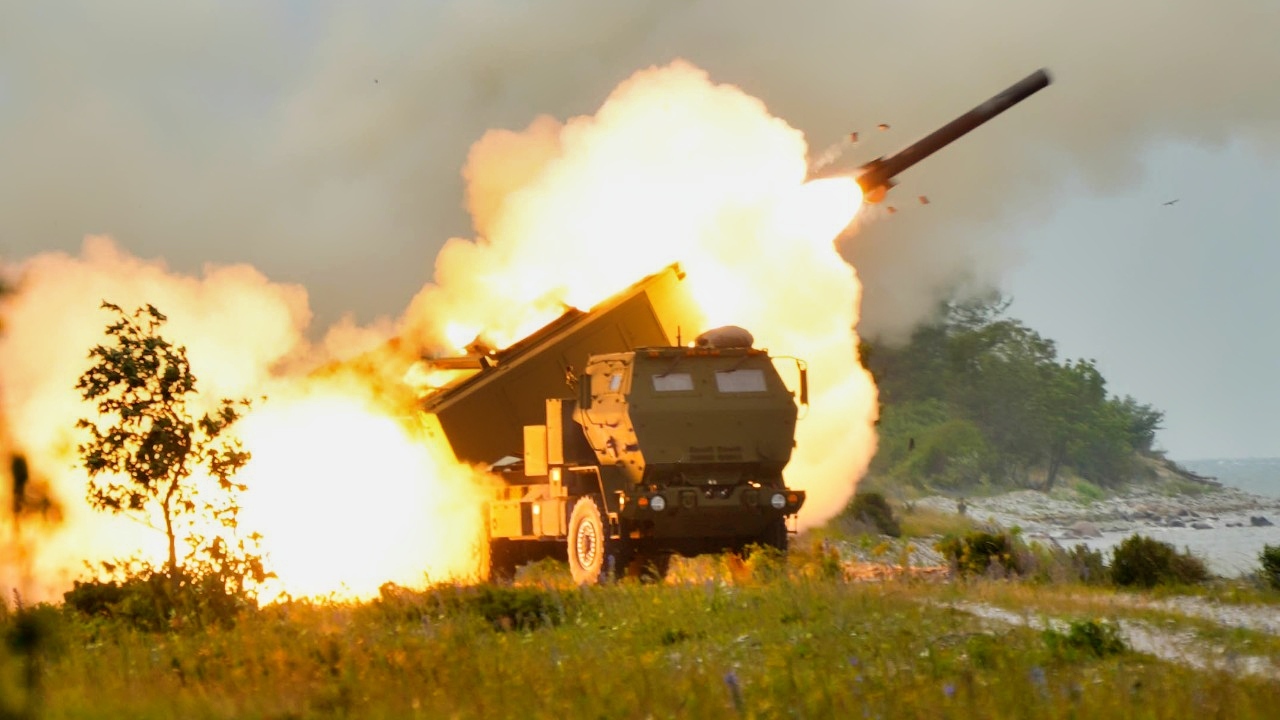
An Estonian Defense Forces M142 High Mobility Artillery Rocket System (HIMARS) fires a training rocket during a live-fire exercise in Undva, Estonia, July 11, 2025. U.S. Army elements from Bravo Battery, 1st Battalion, 14th Field Artillery Regiment, 75th Field Artillery Brigade, supporting Task Force Voit, assisted in the training process. The task force was originally formed in 2023 to support the Estonian Defense Forces in the creation of a HIMARS unit. Task Force Voit works closely with the Estonian Armed Forces, sharing critical defense strategies, training, and military readiness support. The presence of U.S. troops in the region serves as a cornerstone of NATO’s commitment to security in the Baltic region. The task force provides combat-credible forces to V Corps, America’s only forward-deployed corps in Europe. (U.S. Army photo by Staff Sgt. Rose Di Trolio)
The Abrams Donation Was No Mistake
Blaming the M1A1 Abrams platform for shortcomings instead of addressing issues of operator error and inexperience sticks in my craw. The Ukrainians were warned that operating the Abrams would not be easy and that there could be issues. Instead of focusing on improving tactics, techniques, and procedures, they blamed the tank.
It was not a mistake to send Abrams armored beasts to Ukraine. All tanks are having difficulty with drones, and the Russians were sure to target the Abrams to send a message that the Americans do not have all the answers. But complaining to the media is not the best way to fight a war.
This tank will eventually operate as intended. Most of the bellyaching has simmered down as the Ukrainians get more experience on the platform. Sending the M1A1 Abrams tanks to Ukraine was the right call, and Zelensky and his generals should send a reassuring message that they appreciate the generosity.
About the Author: Dr. Brent M. Eastwood
Author of now over 3,000 articles on defense issues, Brent M. Eastwood, PhD is the author of Don’t Turn Your Back On the World: a Conservative Foreign Policy and Humans, Machines, and Data: Future Trends in Warfare plus two other books. Brent was the founder and CEO of a tech firm that predicted world events using artificial intelligence. He served as a legislative fellow for US Senator Tim Scott and advised the senator on defense and foreign policy issues. He has taught at American University, George Washington University, and George Mason University. Brent is a former US Army Infantry officer. He can be followed on X @BMEastwood.


