


Summary and Key Points: National security journalist Stephen Silver examines the Cuban Missile Crisis of October 1962, the definitive Cold War nuclear standoff. Initiated by the discovery of Soviet MRBMs and IRBMs in Cuba via U-2 surveillance, President John F. Kennedy implemented a naval “quarantine” to force the removal of offensive weapons. The crisis reached DEFCON 2 before a secret deal—brokered between Robert Kennedy and Anatoly Dobrynin—swapped the removal of Soviet missiles for the withdrawal of American Jupiter missiles from Turkey. Veteran accounts from B-58 Hustler crews emphasize the psychological strain of “Go” code readiness during the 13-day stalemate.
-Bonus: National Security Journal visited a B-58 Hustler at the Museum of the U.S. Air Force in Ohio and has included some of our best photos in this article.
Inside the B-58 Hustler: A Navigator’s Terrifying Account of 1962 Alert Status
The Cuban Missile Crisis, in October of 1962, is well known as the moment in the Cold War that was likely the closest the world ever came to nuclear war. The 13-day crisis, however, was solved peacefully.

Close Up of the B-58 Hustler Bomber. Image Credit: Harry J. Kazianis/National Security Journal.

More B-58 Hustler Bomber. Image Credit: Harry J. Kazianis/National Security Journal.
The crisis began when the United States, under the leadership of President John F. Kennedy, discovered that Soviet missiles had been placed in Cuba.
According to the State Department’s history of the crisis, following the failed Bay of Pigs invasion in 1961, the Soviet Union had reached a secret agreement with Fidel Castro to place the missiles in Cuba, which were placed there in an attempt to deter another invasion.
“Construction of several missile sites began in the late summer, but U.S. intelligence discovered evidence of a general Soviet arms build-up in Cuba, including Soviet IL–28 bombers, during routine surveillance flights,” the State Department history says.
“On September 4, 1962, President Kennedy issued a public warning against the introduction of offensive weapons into Cuba. Despite the warning, on October 14, a U.S. U–2 aircraft took several pictures clearly showing sites for medium-range and intermediate-range ballistic nuclear missiles (MRBMs and IRBMs) under construction in Cuba.”
Decision Time
This left the president with a decision to make.
“Kennedy summoned his closest advisers to consider options and direct a course of action for the United States that would resolve the crisis. Some advisers—including all the Joint Chiefs of Staff—argued for an air strike to destroy the missiles, followed by a U.S. invasion of Cuba; others favored stern warnings to Cuba and the Soviet Union,” the State Department history says.
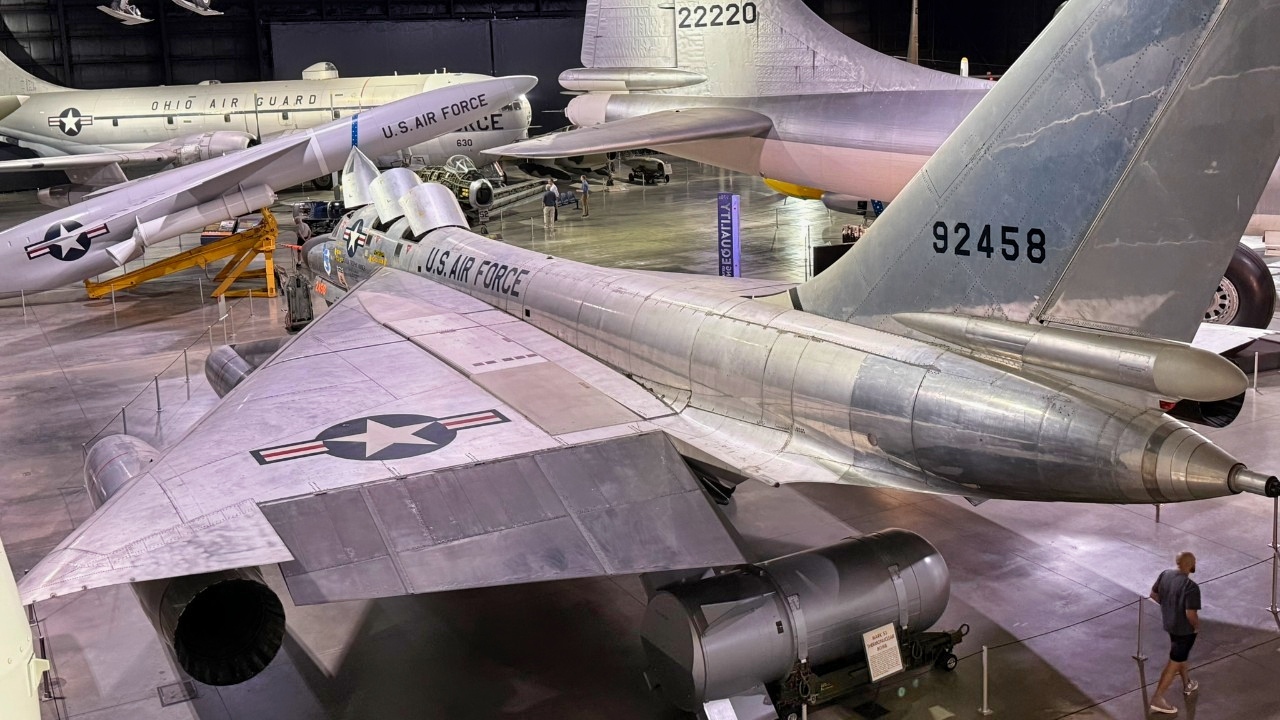
Top of B-58 Hustler Bomber. Image Credit: Harry J. Kazianis/National Security Journal.
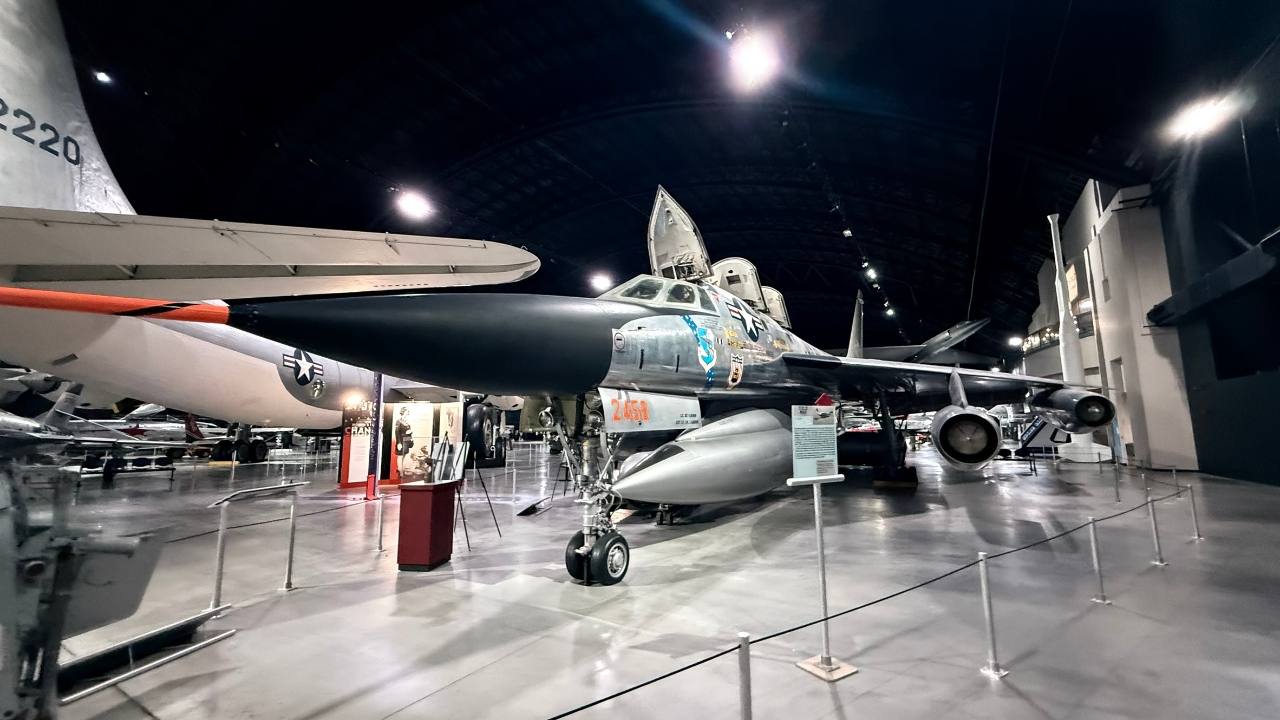
Side Angle of B-58 U.S. Air Force Museum. Image Credit: Harry J. Kazianis/National Security Journal.
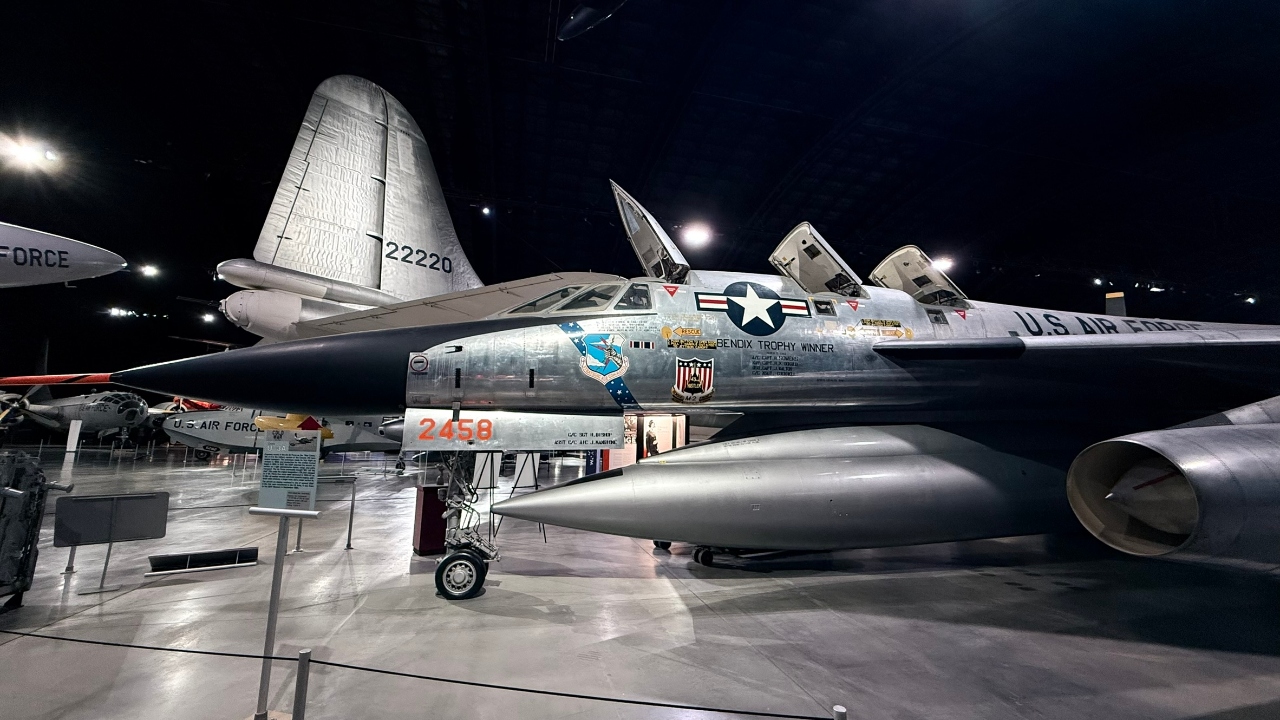
B-58 Hustler in the Air Force Museum. Image Credit: National Security Journal.
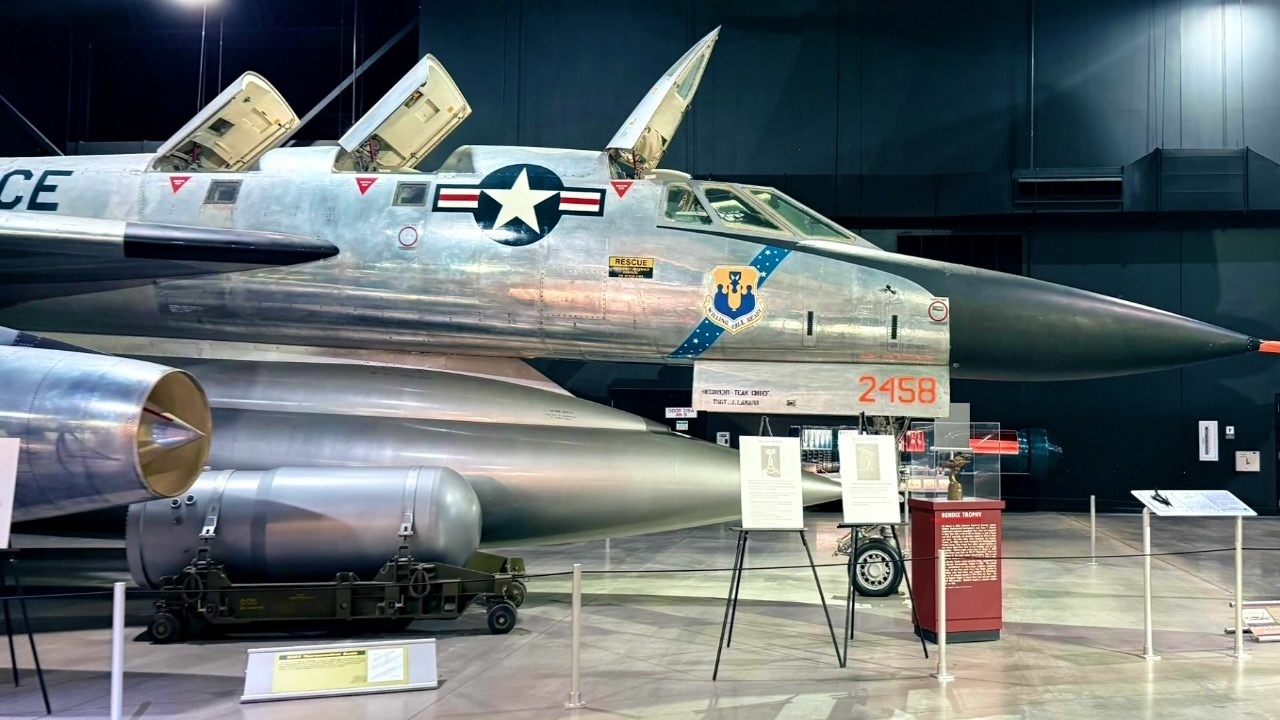
B-58 Hustler Bomber National Security Journal Photo All Rights Reserved.
“The President decided upon a middle course. On October 22, he ordered a naval ‘quarantine’ of Cuba. The use of ‘quarantine’ legally distinguished this action from a blockade, which assumed a state of war existed; the use of ‘quarantine’ instead of ‘blockade’ also enabled the United States to receive the support of the Organization of American States.”
The next step was Kennedy’s letter to Soviet Premier Nikita Khrushchev, demanding that the Soviet Union dismantle its military bases and return the weapons to the USSR.
Kennedy then went public, addressing the American people about developments in Cuba.
“It shall be the policy of this nation to regard any nuclear missile launched from Cuba against any nation in the Western Hemisphere as an attack by the Soviet Union on the United States, requiring a full retaliatory response upon the Soviet Union,” President Kennedy said in an address to the nation.
Khrushchev then responded by accusing Kennedy of an “act of aggression,” and ordered Soviet ships to proceed to Cuba.
“With no apparent end to the crisis in sight, U.S. forces were placed at DEFCON 2—meaning war involving the Strategic Air Command was imminent,” the State Department history said. “On October 26, Kennedy told his advisors it appeared that only a U.S. attack on Cuba would remove the missiles, but he insisted on giving the diplomatic channel a little more time. The crisis had reached a virtual stalemate.”
On October 26, Khrushchev sent Kennedy another letter, telling the U.S. president, “If there is no intention… to doom the world to the catastrophe of thermonuclear war, then let us not only relax the forces pulling on the ends of the rope, let us take measures to untie that knot. We are ready for this.” Khrushchev then sent another message, demanding that the U.S. remove its own missiles from Turkey.
Soon after, a U2 jet was shot down over Cuba.
Endgame
“It was determined that Kennedy would ignore the second Khrushchev message and respond to the first one. That night, Kennedy set forth in his message to the Soviet leader proposed steps for the removal of Soviet missiles from Cuba under supervision of the United Nations, and a guarantee that the United States would not attack Cuba,” the State Department history said.
An endgame was reached when Attorney General Robert Kennedy met with the Soviet Ambassador to the United States, Anatoly Dobrynin.
The president’s brother “indicated that the United States was planning to remove the Jupiter missiles from Turkey anyway, and that it would do so soon, but this could not be part of any public resolution of the missile crisis. The next morning, October 28, Khrushchev issued a public statement that Soviet missiles would be dismantled and removed from Cuba.” After two tense weeks, that meant the end of the crisis.
A recent online post examined what the Cuban Missile Crisis looked like from the perspective of a navigator.
View From the B-58 Hustler Bomber
Aviation Geek Club this week published an article by Linda Sheffield Miller, whose father is Richard “Butch” Sheffield, who was a navigator/bombardier who flew the B-47 and later the B-58.
The senior Sheffield is the author of an upcoming book called “Ohio to Supersonic: Flying the SR-71 Blackbird to the secret world of the Skunk Works.”
AGC published a short excerpt from the book, including Sheffield sharing his story from the Cuban Missile Crisis.
“During the Cuban Missile Crisis, the B-58 Wing did not have a group of aircraft on alert like other SAC Bomb Wings because we were still doing CATEGORY II & III tests on the new weapon system,” Sheffield writes in the book. “When the President ordered the military to get ready for war, the Wing Commander, B/G Brick Holstrom, ordered the Wing to get all our B-58s ready and load them with nukes.”
So what was that experience like for him?
“Soon, we had forty B-58s loaded and ready to go, but had no targets or tanker support. When SAC Headquarters found out, they gave us targets and tankers. Carswell had B-52s and tankers on alert, so there was no place for the B-58 alert crews to stay on base,” he wrote.
“We pre-flighted our aircraft, studied our target, and were sent home to await a call from the Command Post to report to the aircraft and launch. I was armed with my snub-nosed Cal. 38 handguns and wore the nuclear weapons ‘GO’ code around my neck. I felt odd being in the house like that with the kids around.
‘Soon, our Squadrons’ Operations Building had beds and guards, so we moved onto the base. We stayed on alert for a long time, about thirty days.”
But, of course, there was ultimately no attack.
“Our house was right near the flight line. I told (wife) Rosie, if you hear us taking off, put the kids in the car and drive west. She had already bought canned goods and water. It was a terrifying time for the Country and us.”
About the Author: Stephen Silver
Stephen Silver is an award-winning journalist, essayist, and film critic, and contributor to the Philadelphia Inquirer, the Jewish Telegraphic Agency, Broad Street Review, and Splice Today. The co-founder of the Philadelphia Film Critics Circle, Stephen lives in suburban Philadelphia with his wife and two sons. For over a decade, Stephen has authored thousands of articles that focus on politics, national security, technology, and the economy. Follow him on X (formerly Twitter) at @StephenSilver, and subscribe to his Substack newsletter.


