

Key Points and Summary – In 1997, the U.S. executed a highly effective “covert acquisition” by purchasing Moldova’s entire fleet of 21 MiG-29 fighter jets for $40 million.
-This non-proliferation move, made under the Cooperative Threat Reduction program, was designed to block Iran from buying the jets. U.S. intelligence was particularly concerned about the nuclear-capable MiG-29C variant in the Moldovan fleet.
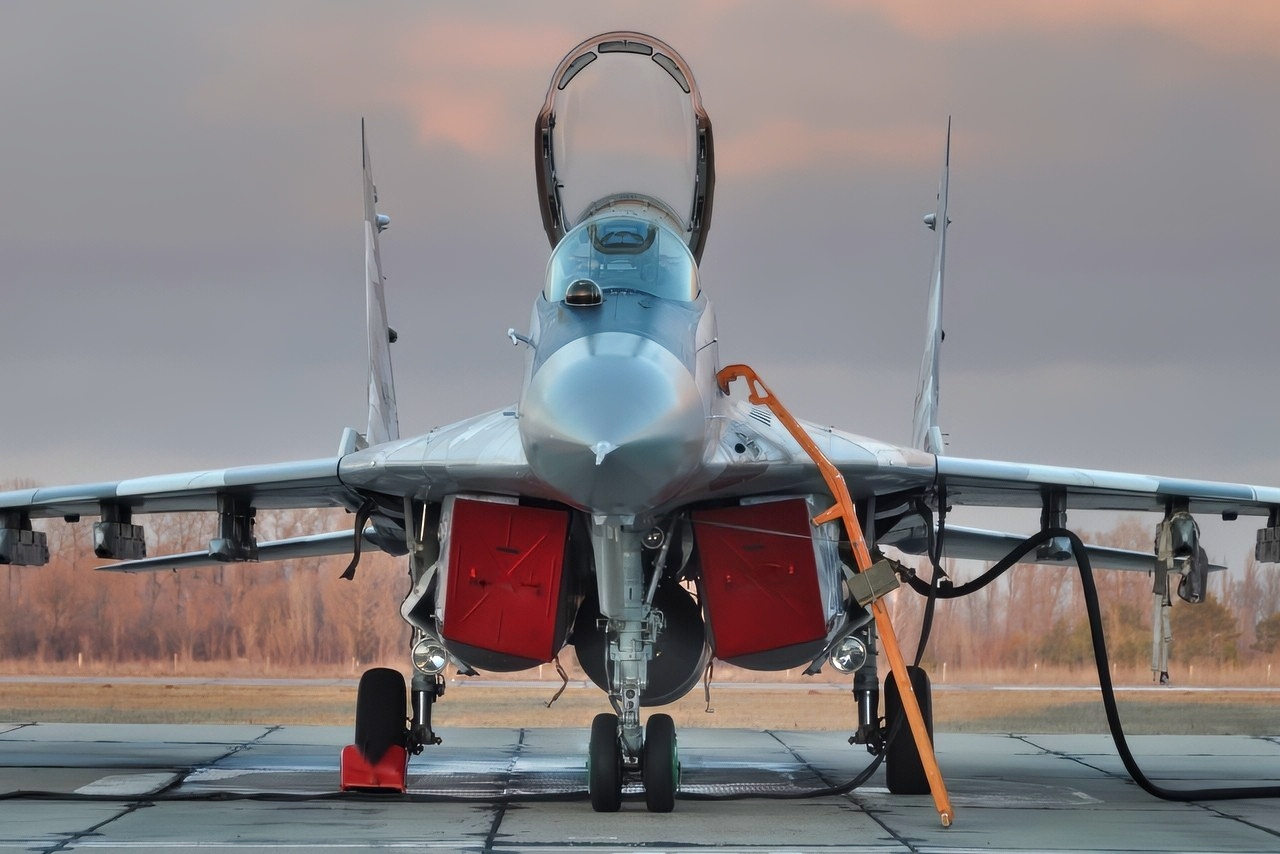
MiG-29 Fighter. Image Credit: Creative Commons.
-The deal had a “long-lasting impact,” denying Iran a modern air force while giving U.S. intelligence a “unique window” to analyze the formidable Soviet fighter at Wright-Patterson Air Force Base.
How the U.S. Stopped Iran Getting Advanced MiG-29 Fighters – And Changed History
Reports this year revealed how Iran had taken delivery of additional MiG-29-series fighters from Russia, raising concerns in Washington over Tehran’s expanding air force
That development – while not an indication of Iran’s imminent rise to near-peer adversary status – was significant. And, it’s a reminder of a story from two decades ago, when, in 1997, the United States Department of Defense executed a covert acquisition of 21 MiG-29s from Moldova. It wasn’t an attempt to harness Russian technology, but to ensure that Iran couldn’t acquire the platform instead.
Meet the MiG-29
The MiG-29 “Fulcrum” is a fourth-generation multirole fighter jet developed by the Soviet Union in the late 1970s to counter Western aircraft like the U.S. F-15 and F-16. It’s fast, highly maneuverable, and designed for both air-to-air combat and limited ground attack missions.
Powered by two engines, it can reach speeds over Mach 2 (around 1,500 mph) and operate at high altitudes or from rough, short runways, giving it a significant advantage during frontline operations.
Its radar allows pilots to track and engage multiple targets, while its short-range heat-seeking missiles make it lethal in close-range dogfights.
The aircraft also carries a 30 mm cannon and a variety of guided and unguided bombs and rockets.

MiG-29 Fighter. Image Credit: Creative Commons.
It’s clear, then, why Iran wanted it. It was a hugely capable machine then, and still is today – and the United States’ purchasing it just in time prevented Iran from getting hold of technology that could have fundamentally changed the course of history.
The Deal
Following the collapse of the Soviet Union in the early 1990s, many former Soviet republics inherited advanced military hardware that lacked the budget or infrastructure to sustain itself. In that context, Moldova found itself with a fleet of MiG-29 fighters and began offering them for sale. Rather than allowing the fighters to rot, Moldova would sell them for a profit.
At the same time, Iran was actively seeking to modernize its air force and had shown interest in acquiring the advanced platforms.
U.S. intelligence tracked Iranian inquiries into the Moldovan MiG-29s as early as late 1996, and U.S. officials quickly noted that some variants in the Moldovan inventory could have been particularly useful to Iran. Specifically, the “C” variant of the aircraft was wired for nuclear-weapons delivery – a risk that the United States simply couldn’t leave open. The only solution? The U.S. used the Cooperative Threat Reduction (CTR) program mechanism to negotiate with Moldova to purchase the aircraft and all the associated spares.
In October 1997, the U.S. finalized the agreement with Moldova to acquire all 29 of its fighters. There were 14 MiG-29Cs, six MiG-29As, and one MiG-29B trainer.
The package also included 500 air-to-air missiles and all diagnostic and spare parts from the Moldovan air base. The U.S. paid approximately $40 million USD, supplemented by humanitarian assistance and non-lethal defense articles to Moldova.
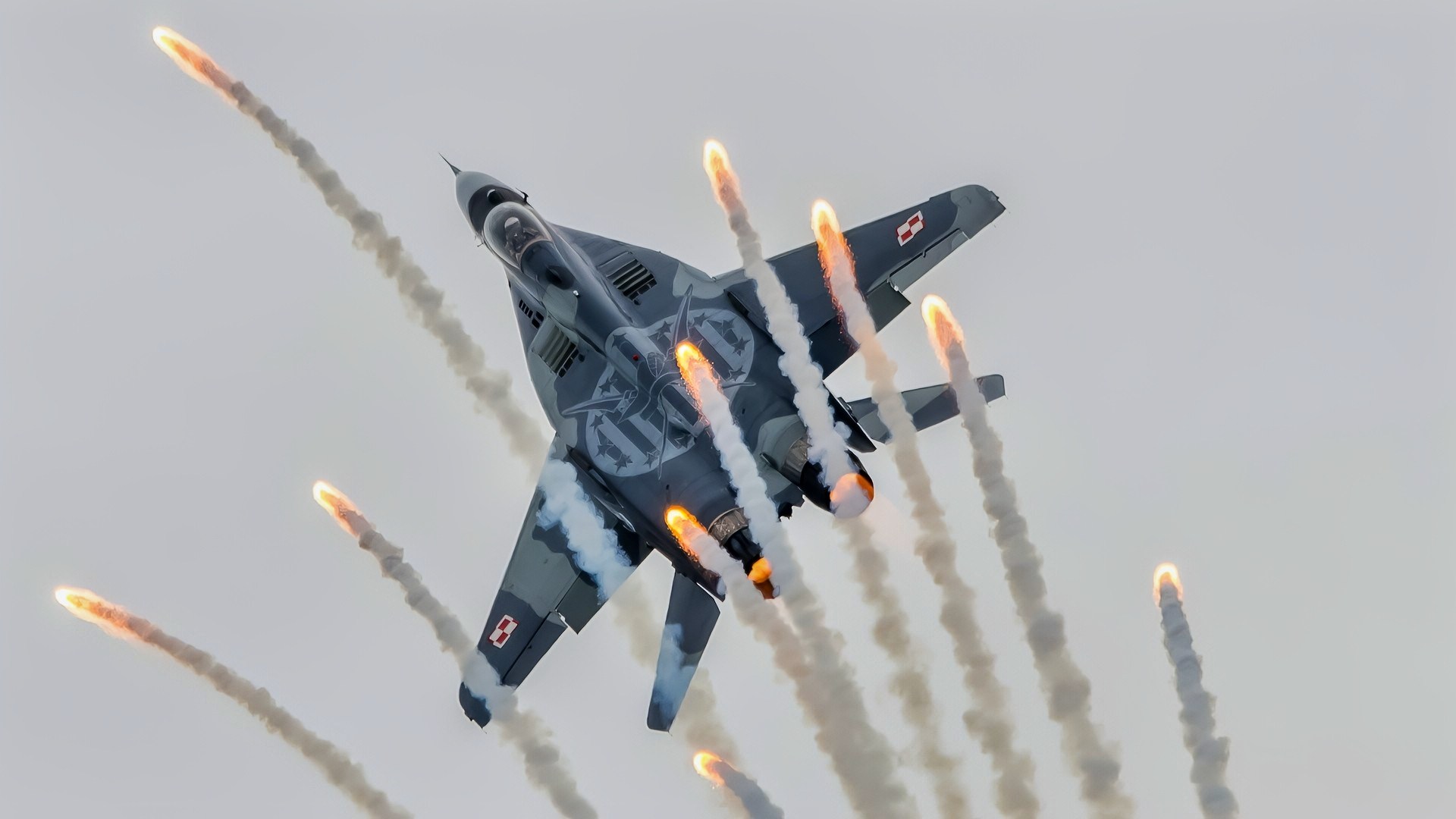
MiG-29 Flair Drop Creative Commons Image.
The aircraft were transported aboard C-17 Globemaster III transports to the National Air and Space Intelligence Center (NASIC) at Wright-Patterson Air Force Base, Ohio, where they were reassembled, flown, and analyzed. Then-Defense Secretary William S. Cohen was blunt about the situation, telling the public that they were very much on Iran’s shopping list, and that they were better off in American hands.
And he was right. Not only was Iran denied access to advanced aircraft, but the U.S. also gained a unique window into the platform’s performance.
They learned about its performance, avionics, weapons systems, and its maintenance demands. Analysts concluded that the fighter was indeed a formidable adversary, especially in close-range dogfights.
Strategically, though, the decision was a huge victory for America. It was a good, proactive, and non-aggressive approach to non-proliferation: the United States bought hardware to deny access to extremist foreign adversaries rather than relying on diplomatic or sanctions leverage, or taking the next step and taking direct military action.
And for Iran, the denial had a long-lasting impact. There was no opportunity to upgrade its air force inventory rapidly, and to this day, its air force remains weak and outdated. More so than ever, in fact.
Clearly, the MiG-29 deal remains one of the simplest and most effective examples of non-proliferation in recent history. The United States solved a serious problem—a threat to the entire West—by simply removing it and moving on. And that kind of decision-making is just as relevant today. Iran is again turning to Russia for fighter jets, and Moscow is once again using arms sales as a political tool.
About the Author:
Jack Buckby is a British author, counter-extremism researcher, and journalist based in New York. Reporting on the U.K., Europe, and the U.S., he works to analyze and understand left-wing and right-wing radicalization, and reports on Western governments’ approaches to the pressing issues of today. His books and research papers explore these themes and propose pragmatic solutions to our increasingly polarized society. His latest book is The Truth Teller: RFK Jr. and the Case for a Post-Partisan Presidency.
More Military
Russia’s Submarine Fleet Summed Up Simply in 4 Words
The Air Force Sent A-10 Warthogs to China’s Doorstep
The Air Force’s B-2 Bomber Nightmare Has Arrived
The Navy Tried for 4 Weeks to Sink Their Own Aircraft Carrier


DocHollywood
November 5, 2025 at 7:51 pm
Wonder if any of these fighters are used as OPFOR opponents for our pilots to train against in exercises using American Aircraft vs Russian/Soviet bloc equipment.