

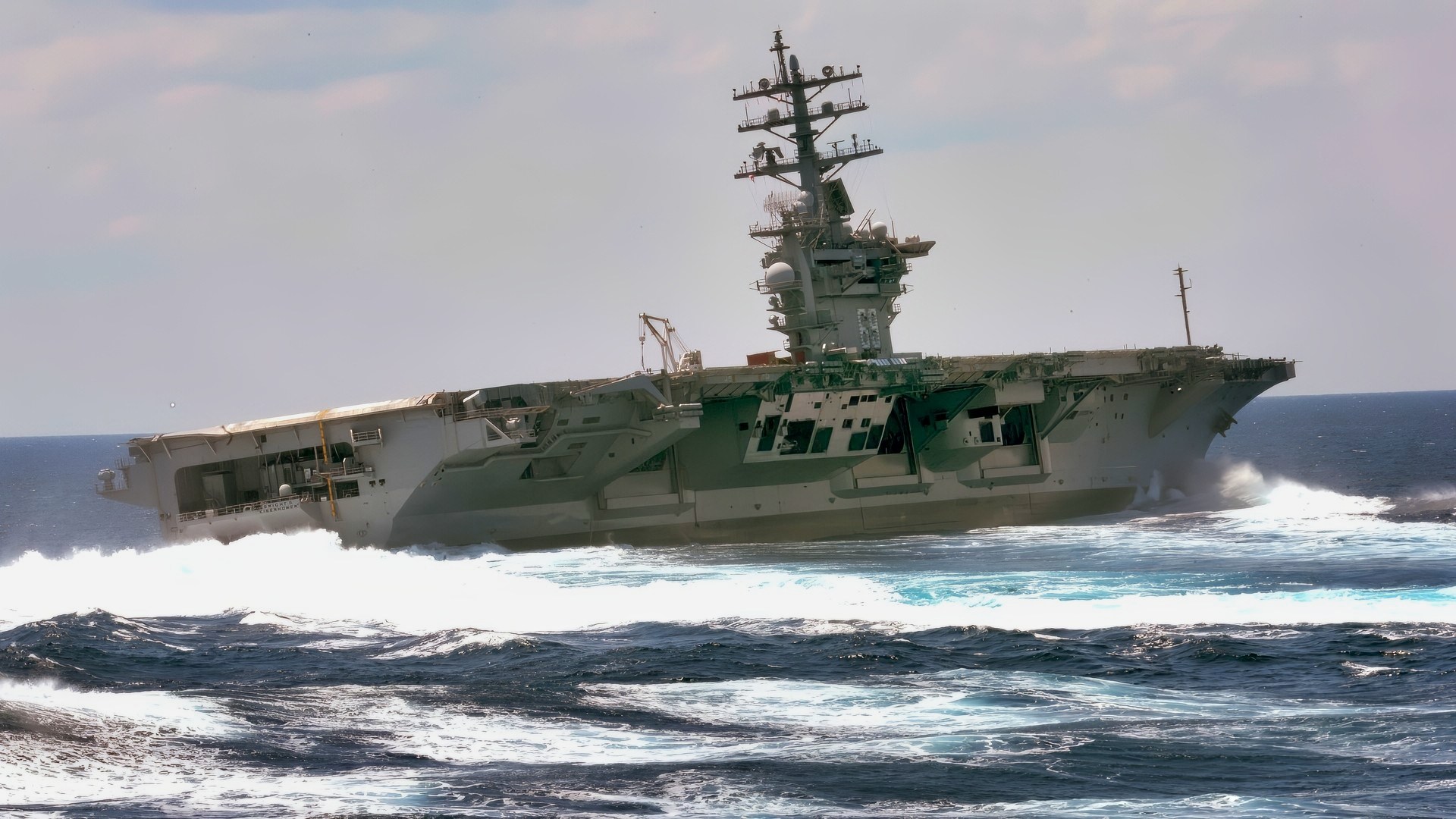
Key Points and Summary – The U.S. Navy’s aging Nimitz-class carriers, while historically successful, are plagued by significant design and operational flaws.
-A core design flaw causes a permanent “starboard list” (tilt). The class has also suffered from jet fuel contaminating the potable water system, sickening sailors.

U.S. Navy Aviation Boatswain’s Mate Aircraft Handling 2nd Class Kyle Darmanin, from Mooresville, North Carolina, assigned to air department’s flight deck crash and salvage division, signals an F/A-18E Super Hornet, attached to Strike Fighter Squadron (VFA) 27, on the flight deck of Nimitz-class aircraft carrier USS George Washington (CVN 73) while underway in the Timor Sea in support of Talisman Sabre 2025, July 14, 2025. Talisman Sabre is the largest bilateral military exercise between Australia and the United States advancing a free and open Indo-Pacific by strengthening relationships and interoperability among key allies and partners, while enhancing our collective capabilities to respond to a wide array of potential security concerns. (U.S. Navy photo by Mass Communication Specialist 2nd Class Tyler Crowley)
-Their advanced age is now causing “significant degradation” in steam turbines, leading to disastrous multi-year overhaul delays (like the 6-year George Washington refit) linked to crew suicides.
-Furthermore, their 1950s-era steam catapults are operationally limited, as they cannot launch modern drones.
What Are the Issues With the Nimitz-class Aircraft Carriers?
Nimitz-class carriers and their strike groups are the centerpiece of the U.S. Navy. They project immense power worldwide.
The Navy’s supercarriers have been among the most successful warships in history. They have an outstanding combat record.
But the Nimitz-class carriers are aging and in some circles are considered obsolete. They are expensive and time-consuming to maintain.
As great as the carriers have been, they have their flaws—and all nuclear-powered vessels eventually must be retired. The Navy announced several years ago that it would replace the iconic Nimitz-class with the new Ford-class carriers.

The world’s largest aircraft carrier, USS Gerald R. Ford (CVN 78) (front) and the Arleigh Burke-class guided-missile destroyer USS Bainbridge (DDG 96) participate in an integrated phase training event, March 23, 2025. The Gerald R. Ford Carrier Strike Group is underway in the Atlantic Ocean completing integrated naval warfighting training. Composite Training Unit Exercise (COMPTUEX) is the Joint Force’s most complex integrated training event and prepares naval task forces for sustained high-end Joint and combined combat. Integrated naval training provides America’s civilian leaders and commanders highly-capable forces that deter adversaries, underpin American security and economic prosperity, and reassure Allies and partners.(U.S. Navy photo by Mass Communication Specialist 2nd Class Maxwell Orlosky)
What are some of the more serious issues with the Nimitz-class?
Design Issues With The Nimitz-class Carriers
Common issues include a design flaw that causes a starboard list under heavy load, as well as contamination issues in the potable water system linked to improper procedures for managing ballast tanks containing fuel.
Additionally, the vessels’ age translates to extensive, delayed, and costly overhauls, with recent refits exceeding their scheduled time due to structural damage and parts shortages.
The Nimitz’s Starboard List
The Nimitz-class’ permanent starboard list under heavy combat loads results from a design flaw that the list-control system (LCS) cannot entirely correct.
The design flaw concerns the island—the structure on the right side of the ship—and is corrected by using ballast systems and managing fuel and stores distribution.

The aircraft carrier USS Nimitz (CVN 68) steams in the Pacific Ocean, Oct. 5, 2024. Nimitz is underway in 3rd Fleet conducting routine training operations. (U.S. Navy photo by Mass Communication Specialist Second Class Carson Croom)
The list makes it necessary to use fresh-water ballast in many inner bottom and damage-control voids to augment the LCS. Maintaining liquid ballast in damage-control voids is unacceptable, because it reduces the ship’s counter-flood capability and, consequently, its survivability.
Potable Water Contamination
The carrier’s potable water system has been contaminated by jet fuel on at least one occasion, due to a failure to follow correct procedures for separating ballast water (which can be used for drinking water) and fuel-storage tanks.
In late 2022, the USS Nimitz (CVN-68) reported its potable water was contaminated after jet fuel leaked into a potable water tank through a deteriorated gasket on an unused tank between June 2020 and March 2021.
When the tank was brought back online in September 2022, the fuel spread, leading to a fuel-like smell and taste in the drinking water. This resulted in at least 11 sailors becoming ill with symptoms such as headaches, skin rashes, and diarrhea—though they all recovered and were cleared to return to duty. The Navy ultimately flushed the system with a million gallons of clean water, and the ship underwent repairs and cleaning in port.
“Concerned there would be insufficient time to restore the remaining seven tanks to service, the Reactor Officer directed the Reactor Propulsion Division to develop plans to empty and restore the remaining tanks without the assistance of the shipyard,” reads the investigation. “Reactor Propulsion Division developed a sequencing document with procedures to empty the desired tanks by pumping the contents overboard via a hose connected to the potable water system, utilizing the ship’s installed potable water piping and pumps.”
Aging Systems
As these carriers age, recent issues with the Nimitz-class have included significant damage to steam turbine generators. These problems were uncovered during mid-life overhauls, and they have caused significant delays in maintenance schedules for ships such as the USS John C. Stennis (CVN-74) and USS George Washington (CVN-73).
These problems are slowing refits that are intended to last about four years. The Nimitz-class carriers have eight onboard steam-turbine generators, each producing 8 megawatts of power. These are where unexpected, significant degradation has been discovered.
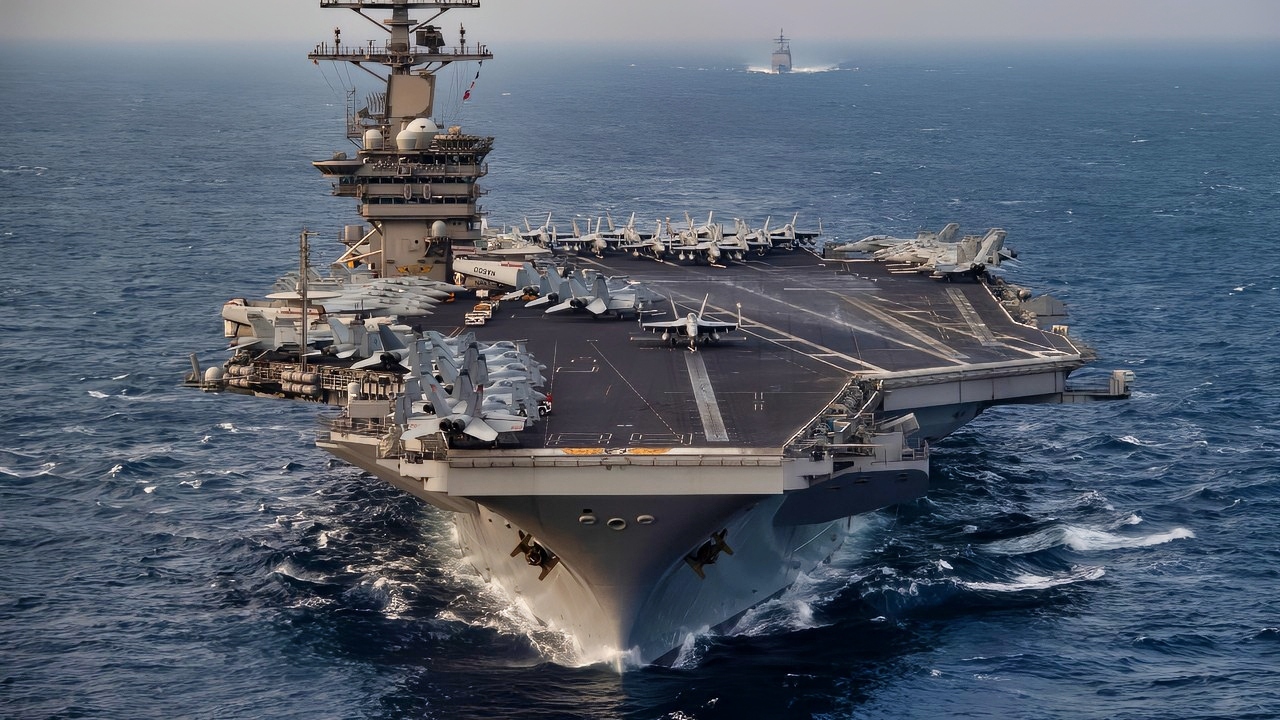
(Nov. 17, 2020) The aircraft carrier USS Nimitz (CVN 68) steams ahead of the guided-missile cruiser USS Princeton (CG 59) while participating in Malabar 2020 in the North Arabian Sea. Malabar 2020 is the latest in a continuing series of exercises that has grown in scope and complexity over the years to address the variety of shared threats to maritime security in the Indo-Asia Pacific where the U.S. Navy has patrolled for more than 70 years promoting regional peace and security. Nimitz Carrier Strike Group is currently deployed to the 7th Fleet area of operations in support of a free and open Indo-Pacific. (U.S. Navy photo by Mass Communication Specialist 3rd Class Elliot Schaudt/Released)
The ship’s electrical plant has sufficient capacity and redundancy to ensure the supercarrier’s radars, communications systems, and crew support systems keep running throughout a months-long mission overseas. (The carriers also have four diesel-powered generators for backup.)
The turbines are intended to last the life of the carrier, and they are not installed to be easily replaced, according to the U.S. Naval Institute. But during the most recent overhauls at Newport News, one turbine in each set was well out of specification.
“Inspections for both George Washington and John C. Stennis revealed one generator on each ship with significant damage that resulted in unplanned growth work, which contributed to schedule extensions on both ships,” Naval Sea Systems Command told USNI.
Morale and Quality of Life
Long, extended overhauls have led to poor living conditions and high stress for crews. During one overhaul, a series of suicides on the George Washington was linked to a morale collapse during the ship’s almost six-year-long maintenance period at HII’s Newport News Shipbuilding.
Reactor Power Is Complex, Maintenance Intensive
The Nimitz reactors have approximately double the number of valves, piping, primary pumps, condensers, and generators as the new reactors of the Ford-class.
This complexity complicates maintenance, creates the potential for reactor damage in the event of an accident, and raises the risk of contamination.
Maintenance challenges have been made worse by the ships’ age, leading to difficulties during refueling and complex overhauls. While the reactors are designed to withstand damage, a catastrophic breach could cause a meltdown.
However, the vast dilution of the ocean would prevent widespread environmental disaster.
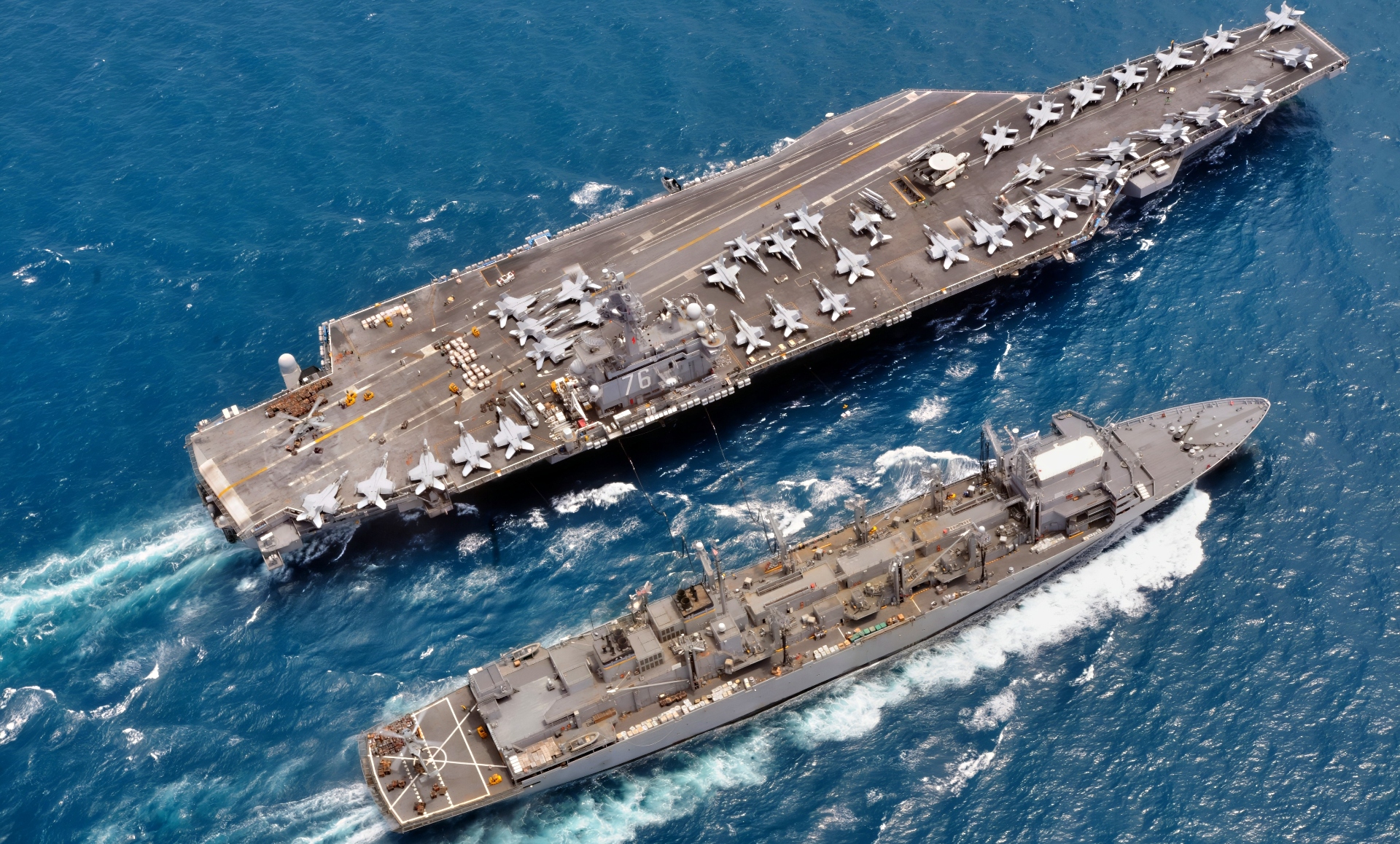
(August 15, 2008) With SH-60 helicopters moving pallets of supplies both USS Ronald Reagan (CVN 76) and USNS Bridge (T-AOE 10) work together during a replenishment at sea or RAS. With Reagan’s six galleys and approximately 4,100 Sailors it takes a lot of produce to feed that many folks and the Nimitz-class aircraft carrier got what it needed from USNS Bridge to do so.
The Ronald Reagan Carrier Strike Group is on a routine deployment in the 7th Fleet area of responsibility. Operating in the Western Pacific and Indian Ocean, the U.S. 7th Fleet is the largest of the forward-deployed U.S. fleets covering 52 million square miles, with approximately 50 ships, 120 aircraft and 20,000 Sailors and Marines assigned at any given time.
U.S. Navy photo by Senior Chief Mass Communication Specialist (SW/NAC) Spike Call
Steam Powered Aircraft Launch System
Nimitz-class aircraft carriers use steam-powered catapults to launch aircraft. This technology was developed in the 1950s and has proven to be exceptionally reliable. For more than 50 years, at least one of the four catapults has been able to launch an aircraft 99.5 percent of the time.
However, there are several drawbacks. Navy engineers have long been concerned about the wear catapults cause on airframes.
The steam system is massive, inefficient, and hard to control. These control problems mean that Nimitz-class steam-powered catapults can launch heavier aircraft, but not aircraft as light as many unmanned aerial vehicles, which is an unacceptable limit for a 21st-century platform. They are 1950s technology and need to be replaced.
The carrier holds up to 90 aircraft, including a mix of the F-35 Joint Strike Fighter, F/A-18E/F Super Hornet, E-2D Advanced Hawkeye, EA-18G Growler electronic attack aircraft, and MH-60R/S helicopters, as well as unmanned air and combat vehicles.
The Nimitz-class of supercarriers is still an incredible power projection platform. But the issues with prolonged maintenance and aging systems make readiness a constant issue for these carriers.
And with China building warships at a rate the United States cannot match, having all platforms combat-ready is a priority.
About the Author: Steve Balestrieri
Steve Balestrieri is a National Security Columnist. He served as a US Army Special Forces NCO and Warrant Officer. In addition to writing on defense, he covers the NFL for PatsFans.com and is a member of the Pro Football Writers of America (PFWA). His work was regularly featured in many military publications.
More Military
China’s H-20 Stealth Bomber Has a Message for the U.S. Air Force
China’s New J-35 Stealth Fighter Has a Message for the U.S. Air Force
China Is Studying the Ukraine War to Become a Drone Superpower
The Road to a China-America Nuclear War
China Could Fire Mach 6 Hypersonic Missiles from Bombers to Sink Navy Aircraft Carriers


