

Across the expanse of modern military history, from the insurgent mortar belts of the Euphrates River Valley to the heavily contested maritime corridors of the Middle East, one foundational principle of counter-network operations remains absolute. You cannot defend your way out of an asymmetric attrition fight. When an adversary possesses access to cheap, mass-produced offensive weaponry and is driven by an unyielding ideological commitment to disrupt regional stability, playing passive defense is a recipe for strategic exhaustion.
Yet across the waters surrounding the Arabian Peninsula, American and allied strategy remains trapped in precisely this reactive posture. While Western attention drifts between competing geopolitical flashpoints, the security environment in the southern Red Sea is deteriorating toward an acute strategic crisis. Along the coastal lowlands and rugged mountain terrain of western Yemen, Houthi forces are consolidating ground and maneuvering heavy assets toward the strategic port city of Mokha. Their operational objective is unmistakable: to establish a fortified anti-access and area-denial bubble capable of physically closing the Bab el-Mandeb Strait.
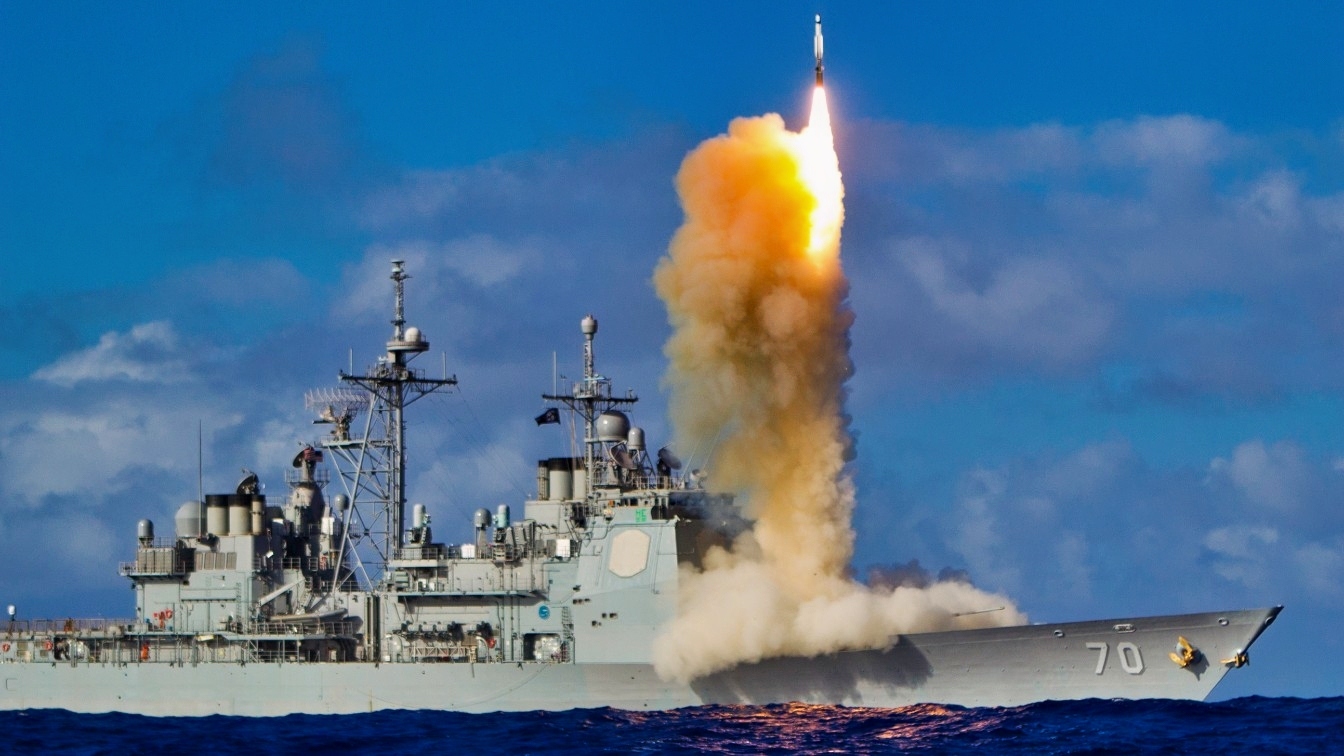
(Feb. 13, 2013) A Standard Missile-3 (SM-3) Block 1A interceptor is launched from the guided-missile cruiser USS Lake Erie (CG 70) during a Missile Defense Agency and U.S. Navy test in the Pacific Ocean. The SM-3 Block 1A successfully intercepted a target missile that had been launched from the Pacific Missile Range Facility, Barking Sands, Kauai, Hawaii. (U.S. Navy photo/Released)
This offensive is not an isolated tribal maneuver or a localized insurgency acting on independent ambition. It is the southern pincer of a coordinated, grand strategic campaign directed from Tehran. For decades, the Islamic Republic of Iran has sought the capability to hold global commerce hostage by threatening the Strait of Hormuz in the north. By arming, financing, and directing the Houthi movement in Yemen, Tehran has successfully established a second maritime pressure point in the south.
This dual-chokehold strategy provides the Iranian regime with an asymmetric cutoff valve over international sea lines of communication and hydrocarbon transit. Through its Yemeni proxy, Tehran can manufacture global economic shocks, test American resolve, and divert Western military focus away from its nuclear expansion and regional consolidation, all while maintaining plausible deniability and avoiding direct military retaliation against Iranian soil.
The operational complex supporting this southern chokehold has evolved far beyond rudimentary harassment. What began years ago as sporadic attacks with crude uncrewed aerial vehicles has matured into a sophisticated, multi-domain strike network. The Houthi arsenal now combines one-way loitering munitions, radar-guided anti-ship cruise missiles, explosive uncrewed surface vessels, and Iranian-designed anti-ship ballistic missiles. Recent strikes against commercial vessels and civilian port infrastructure underscore an aggressive intent to escalate hostilities and enforce a permanent maritime exclusion zone. If left unaddressed, this campaign threatens to sever commercial traffic through the Suez Canal, impose severe inflationary shocks on international markets, and fundamentally undermine global freedom of navigation.

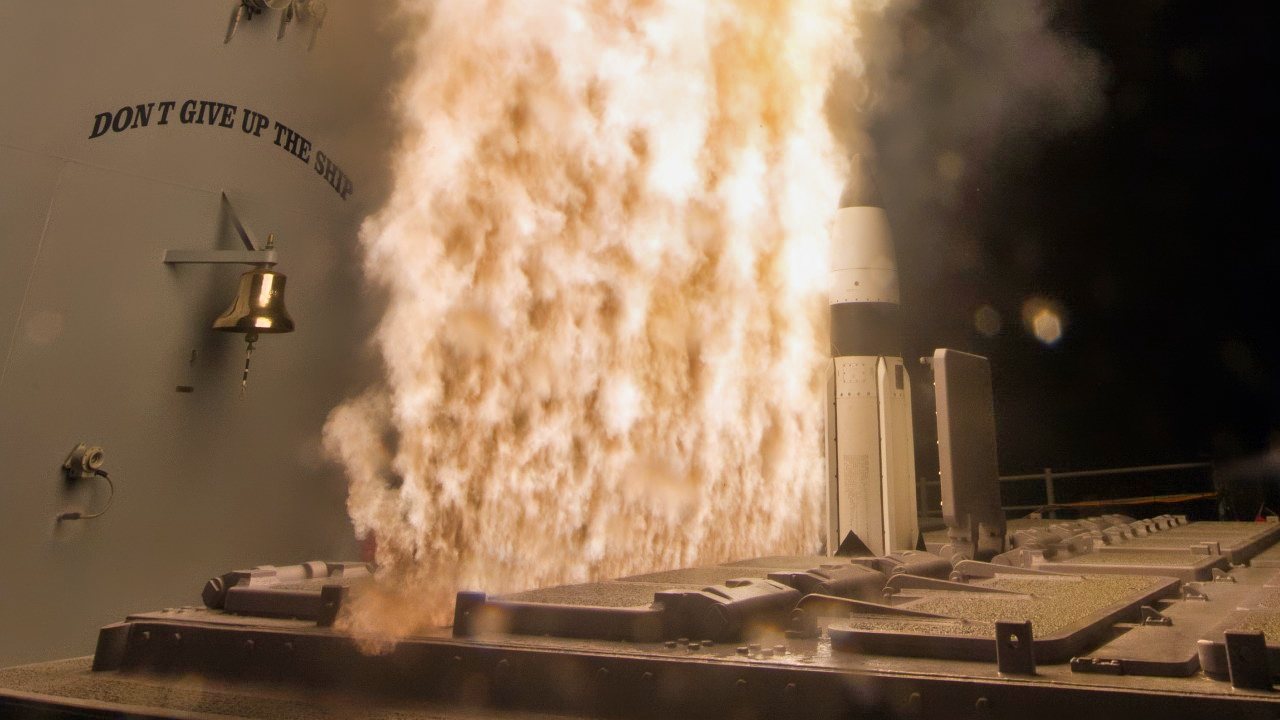
3rd Multi-Domain Task Force (3MDTF) conducts the first Mid-Range Capability live fire exercise outside of the continental United States successfully sinking a maritime target with a Standard Missile-6 Force during Exercise Talisman Sabre 25 on July 16, 2025. US Army photo
Faced with this escalating campaign, the Joint Force has relied almost exclusively on a defensive, platform-centric doctrine. American guided-missile destroyers and regional air defense batteries have performed with tactical brilliance, acting as high-tech goalkeepers by swatting inbound missiles and drones out of the sky. But tactical interception must not be confused with strategic victory. By focusing our operational energy on shooting down the incoming projectile rather than destroying the system that launched it, we are walking directly into a strategic trap engineered by Tehran.
The mathematics of modern air and missile defense are brutally asymmetric. Defending against a sustained salvo of low-cost proxy weapons requires the continuous expenditure of our most sophisticated, exquisite interceptors. Every time an inbound anti-ship ballistic missile or synchronized drone swarm is engaged, the Joint Force burns through irreplaceable Standard Missile variants, Patriot Advanced Capability interceptors, and Terminal High Altitude Area Defense (THAAD) munitions. When retaliatory strikes are authorized against inland targets, the military routinely expends multi-million-dollar Tomahawk Land Attack Missiles launched from surface combatants, or tasks high-end strike aircraft to deliver precision ordnance against rudimentary launch rails and storage sheds.
This consumption rate is unsustainable. The American defense industrial base is constrained by severe production bottlenecks, extended lead times for specialized solid rocket motors, and fragile supply chains for critical microelectronics. It takes years, not months, to manufacture and deliver a single batch of high-end air defense interceptors or long-range precision strike weapons. Meanwhile, the global threat environment demands that the United States maintain a robust, uncompromised strategic reserve of Patriot and THAAD interceptors, Tomahawks, Joint Air-to-Surface Standoff Missiles, and next-generation Precision Strike Missiles.
These high-end munitions represent the primary conventional deterrent against China in the Indo-Pacific and provide the essential theater shield required to deter direct Iranian aggression. Burning through these finite national stockpiles to counter twenty-thousand-dollar proxy weapons over the Red Sea trades away our strategic deterrence for tactical stalemates in a secondary theater. Tehran understands this dynamic completely. The regime is deliberately utilizing cheap proxy fires to drain the American arsenal, calculating that each interceptor expended over the Red Sea weakens our broader posture across the globe. We are expending our most valuable arrows while leaving the enemy archers entirely unmolested.
To break this cycle of attrition, the Joint Force must fundamentally overhaul its operational design and embrace the foundational doctrine of counter-network targeting: Find, Fix, Finish, Exploit, Analyze, and Disseminate. When an insurgent cell fires a mortar into a forward operating base, a competent commander does not spend months attempting to build a thicker roof. The commander leverages technical intelligence to locate the point of origin, maneuvers a responsive strike asset to eliminate the firing team, and executes follow-on actions to dismantle the logistics network that supplied the weapon.
The battle for the Bab el-Mandeb requires the exact same offensive posture. The primary operational objective must not be the interception of the drone or ballistic missile in flight. The primary objective must be the systematic, rapid destruction of the adversary’s launch crews, telemetry controllers, mobile transporter-erector-launchers, coastal radar nodes, and forward assembly facilities before the weapons can ever leave the ground.
The primary obstacle preventing the execution of this offensive strategy is not technological. The United States and its allies possess exceptional intelligence, surveillance, and reconnaissance architectures. Drone swarms, anti-ship cruise missiles, and ballistic missile systems are not invisible. They emit distinct radio frequency signatures, rely on active telemetry data links, produce detectable thermal blooms during pre-launch preparation, and require command-and-control emitters to direct their strikes. Modern signals intelligence platforms and space-based sensors can identify and geolocate these emissions in real time. The technical capability to pinpoint the archer the moment he powers up his equipment exists today.
The failure to close the kill chain resides almost entirely within our command-and-control bureaucracy. Under the standard Joint Targeting Cycle governed by conventional doctrine, prosecuting a dynamic, time-sensitive target deep in sovereign territory is an agonizingly slow administrative process. When a signals intelligence platform detects a Houthi missile launch team or a drone controller fifty miles inland, that perishable target data must climb through multiple echelons of command.
The data is packaged, routed to an air operations center, submitted for formal Collateral Damage Estimation modeling, reviewed by operational law attorneys to ensure compliance with the Law of Armed Conflict, and forwarded up to the theater combatant commander or higher authority for final release approval. In a static targeting environment, this deliberate review process is essential. But in dynamic counter-strike operations, where mobile adversary crews operate from civilian pickup trucks and concealed mountain revetments, this multi-hour bureaucratic latency guarantees failure. By the time the target packet is approved and a strike asset is tasked, the launch team has fired its volley, packed its gear, and vanished into the local population.
To eliminate this bottleneck, the Department of War must establish a dedicated Joint Interagency Task Force for Counterstrike (JIATF-CS), operating forward in the Red Sea theater. This task force must be built around the proven operational model pioneered by specialized joint special operations elements, where the intelligence apparatus, legal authority, and kinetic strike assets are collapsed onto a single, unified watch floor.
The key to delegating strike authority without sacrificing strategic oversight or violating international law is the integration of embedded safeguards. Theater commanders hesitate to delegate dynamic strike authorities because of the severe political and strategic risks associated with civilian casualties and collateral damage. The solution is not to bypass legal reviews or collateral damage standards, but to bring those exact analytical capabilities down to the tactical edge.
On the watch floor of this forward counter-strike task force, the Target Engagement Authority must sit shoulder-to-shoulder with certified Collateral Damage Estimation analysts, dedicated Judge Advocate General officers, and national intelligence agency liaisons. Utilizing advanced target-modeling software and live sensor feeds, this embedded team can evaluate positive identification, calculate weapon effects, and ensure strict Law of Armed Conflict compliance in minutes rather than hours. Operating within pre-approved, geographically bounded engagement zones, the task force commander can be granted pre-delegated strike authority to prosecute validated enemy launch sites and emitters the moment they become active.
Equally important is the selection of the kinetic tools used to finish the target. We cannot replace a defensive munitions trap with an offensive one by launching two-million-dollar standoff cruise missiles at every detected launch rail. The counter-strike task force must be equipped with low-cost and highly responsive precision strike systems that flip the cost-exchange ratio back in our favor.
The rapid maturation of modular, containerized strike munitions offers the ideal capability for this mission. Systems such as the Anduril Barracuda family of autonomous air vehicles and attritable cruise missiles provide an operationally viable solution. Built for modularity and high-rate commercial manufacturing, these systems deliver hundred-pound warheads across operational ranges exceeding several hundred miles at a fraction of the cost of legacy inventory.
Critically, these systems do not require the specialized vertical launch cells of our frontline destroyers. They can be deployed from modular, deck-mounted container launchers installed aboard Expeditionary Sea Bases, Littoral Combat Ships, or contracted auxiliary support vessels operating across the Red Sea. Paired with air-launched precision glide weapons such as the GBU-39 Small Diameter Bomb, these systems allow the task force to maintain a continuous, distributed strike posture capable of placing low-cost precision fires onto detected enemy launch nodes within seconds of identification.
This operational architecture completely reverses the strategic dynamic. Instead of forcing an Arleigh Burke destroyer to expend a multi-million-dollar interceptor to protect a commercial vessel from a twenty-thousand-dollar drone, the Joint Force leverages signals intelligence to identify the launch controller and delivers a low-cost, container-launched missile to eliminate the crew before the weapon is fired. By killing the archer, we preserve our high-end interceptors, safeguard our strategic munitions reserves, and deny the adversary the freedom of maneuver required to sustain a maritime blockade.
Most importantly, this approach directly undermines Tehran’s grand strategy. By neutralizing the Houthi strike complex quickly and economically, the United States dismantles the southern arm of Iran’s maritime pincer without firing a shot into sovereign Iranian territory or risking an uncontrollable regional escalation. It proves to the leadership in Tehran that their asymmetric proxy model will no longer bleed American readiness or grant them coercive economic leverage over the West.
The strategic stakes in the southern Red Sea extend far beyond the immediate waters of the Bab el-Mandeb. The conflict represents a fundamental test of whether the United States and its partners can defeat cheap, distributed, and highly lethal asymmetric networks without exhausting our own strategic readiness. If we continue to rely on passive defense and centralized command structures, our adversaries will continue to exploit our operational latency and bleed our stockpiles dry.
Deterrence is not restored by waiting for the enemy to fire and hoping our interceptors never miss. Deterrence is restored when the adversary realizes that the moment he powers up a launch rail, exposes a radar, or coordinates an attack, his signature will be detected, the decision to strike will be executed in minutes, and his position will be destroyed with unsparing precision. We must dismantle the bureaucratic barriers, deploy the counter-strike task force, and arm our commanders with the authorities and tools needed to take the fight to the enemy. We must kill the archers today, or we will find ourselves fighting a broader, far more dangerous war tomorrow with an empty magazine.
MORE – Putin Could Start a War with NATO
MORE – Trump Won’t Stop Thinking About Kharg Island
About the Author: Stephen D. Cook
Stephen D. Cook is a retired U.S. Army Special Forces Lieutenant Colonel with 25 years of service. A combat veteran decorated for both heroism and valor, he is the author of the field manuals When We’re Finished and Choose the Heavier Ruck, and the techno-thriller precision-strike trilogy leading with In the Shadows of the Sky. His work explores the intersection of elite military decision-making, intuition, and disruptive leadership. He is based in St. Augustine, Florida. This first appeared in RealClearDefense.


