
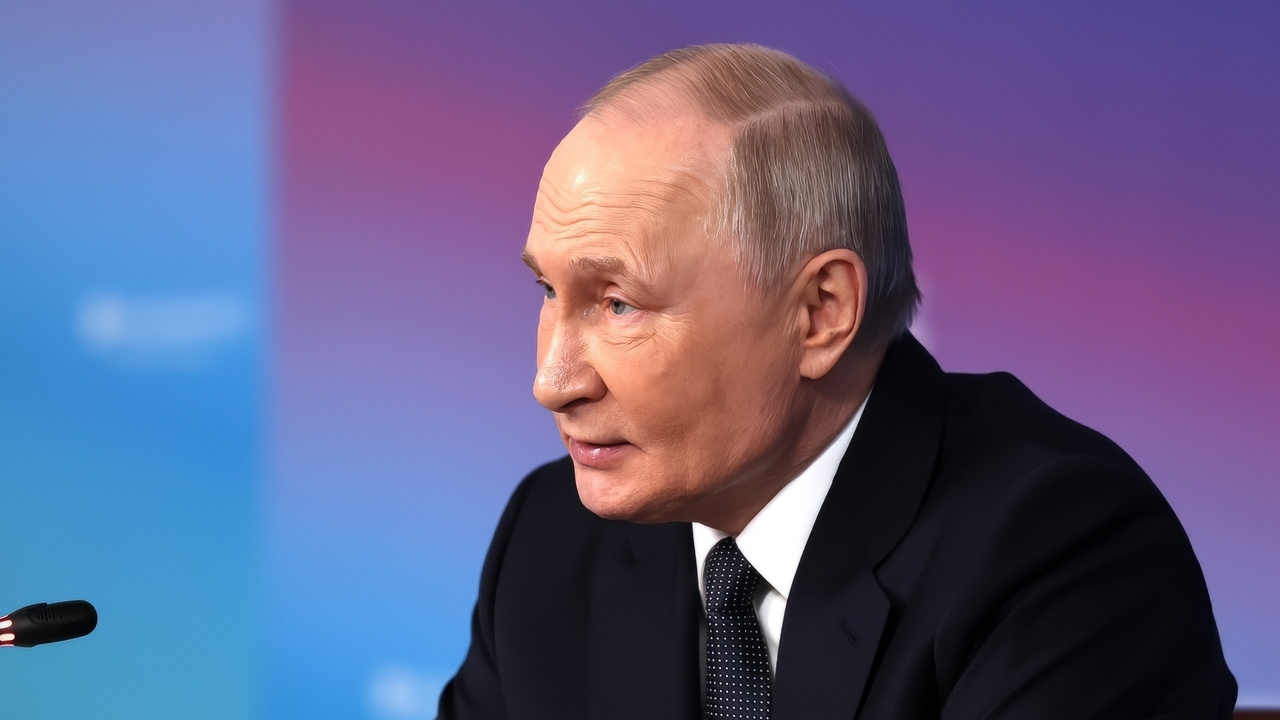
Ukraine’s long-range strike campaign against Russia grows ever more devastating for Moscow, with a Tu-95MS strategic bomber being hit in one of the worst overnight strikes beginning on Thursday night.
The strikes also targeted one of the country’s largest oil refineries, once again hitting Russia’s domestic fuel market and complicating ongoing efforts to stabilize domestic supplies.

Ukraine President Zelensky 2026 Creative Commons Photo
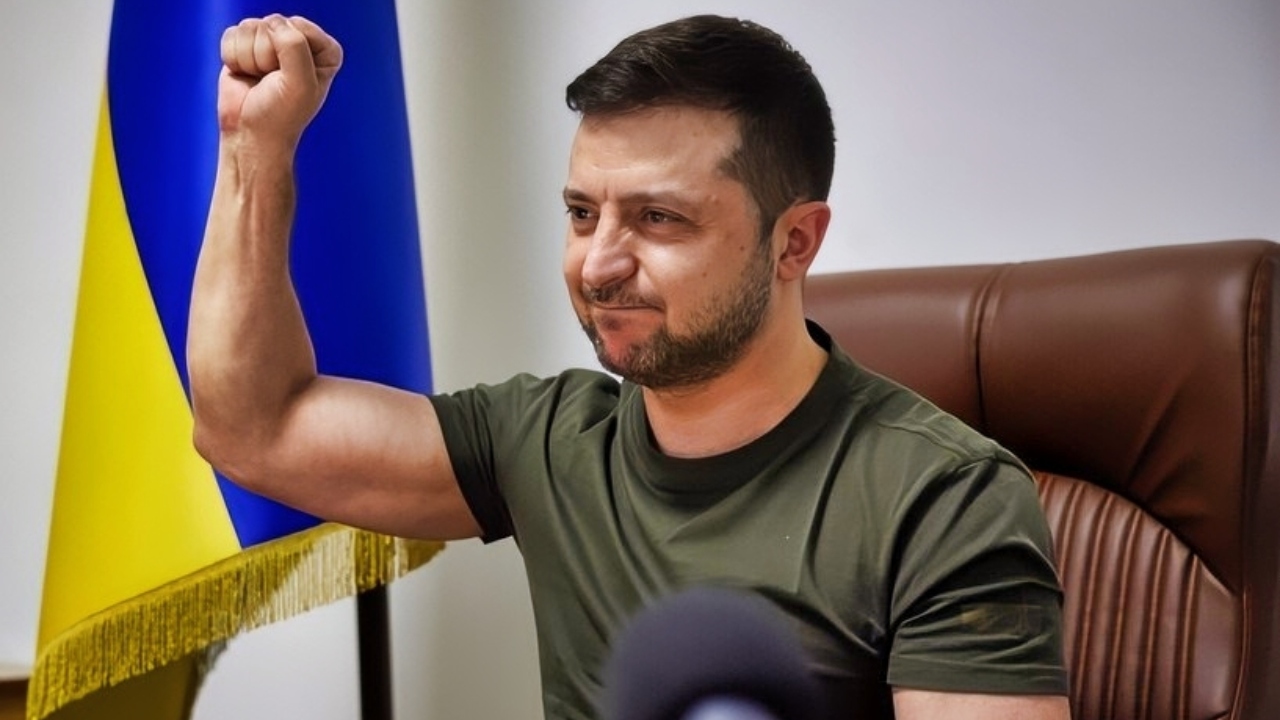
Zelensky Speaking in UK Ukraine Government Photo
Ukrainian President Volodymyr Zelenskyy said on Friday that the Security Service of Ukraine (SBU) struck the bomber at Engels Air Base in the Saratov region of Russia.
Ukraine’s military also confirmed a separate attack on the Slavneft-YANOS refinery in Yaroslavl.
The attacks come as new industry data shows the scale of the pressure now inflicted on Russia, with Ukraine’s repeated strikes causing problems for Russia’s energy sector.
Reports from Friday show that gasoline production in Russia has fallen to roughly 70% of domestic consumption following constant overnight strikes on Russian refineries, including the country’s top 10 most important facilities.
Ukraine Hits Tu-95 At Engels Air Base
President Zelenskyy confirmed the overnight strikes in a statement published on X, accompanied by video footage of the strikes.
“Over the past day, warriors of our Defense Forces of Ukraine struck an oil refinery in the Yaroslavl region. The distance is 1,000 kilometers from the front line.
There were also our just responses to Russia’s war in the Black Sea,” he said.
“In Russia’s Engels, warriors of the Security Service of Ukraine’s Alpha unit struck a Tu-95MS missile-carrying aircraft. These are the aircraft that are carrying out strikes against Ukraine. I thank all our warriors for their accuracy! All of this is a response to their strikes. Russians must feel what their war is like,” he continued.
Moscow has not confirmed the loss of the aircraft, and the extent of the damage the strike caused to Engels Air Base in particular was not immediately clear.
Engels Air Base is located hundreds of miles inside Russia and has been a frequent target for Ukraine. It hosts Tu-95MS and Tu-160 strategic bombers and has repeatedly been used to support long-range missile attacks on Ukraine.
The Tu-95MS can carry Kh-101 cruise missiles and has become one of the most recognizable platforms used during Russia’s large-scale attacks on Ukrainian cities and energy infrastructure.
The SBU’s Alpha unit was also involved in the famous Operation Spiderweb attack in June 2025, when Ukraine used drones launched from inside Russia to destroy aircraft at multiple air bases throughout the country.
Even before that strike, which was Ukraine’s first real proof it could cause major damage at great distance, Ukraine had repeatedly targeted Engels Air Base.
The strikes have forced Moscow to devote additional air defenses and other resources to protecting aircraft previously considered to be safely beyond Ukraine’s reach.
One of Russia’s Biggest Refineries On Fire
As Zelenskyy confirmed, Ukraine also struck the Slavneft-YANOS refinery in Yaroslavl.
The facility is roughly 250 kilometers northeast of Moscow and hundreds of miles away from the nearest Ukrainian-controlled territory.
Ukraine’s General Staff confirmed that the operation took place overnight and said that the extent of the damage is still being assessed.
Videos and images of the strikes quickly went viral on social media, however, showing a major fire at the facility.
It’s a huge blow to Russia, which is already facing a fuel crisis and taking measures to redistribute existing supplies to the country’s most populous regions.
The refinery can process around 15 million metric tons of crude oil annually and is one of the largest in the country, so the fire could knock out a significant portion of the remaining processing capacity.
The refinery produces gasoline, diesel, aviation fuel, and a number of other petroleum products.
This wasn’t the first attack on Yaroslavl, either.
The facility has been targeted several times this year, as Kyiv attempts to prevent Russia from simply repairing damaged infrastructure and restoring production between strikes.
According to regional Governor Mikhail Yevrayev, one person was killed in the strike and 27 were injured.
Ten people were reportedly injured when falling drone debris struck a nearby bus, and Yevrayev also claimed that 67 drones were intercepted over the region overnight.
Russia’s Ministry of Defense said that 512 Ukrainian drones were intercepted across the country and in Russian-occupied Crimea overnight, too.
Russia Looks Abroad for Fuel
The constant refinery attacks are forcing Moscow to look abroad for replacement supplies.
Russia has already increased gasoline imports from Belarus and arranged for Russian crude to be processed at refineries in neighboring Kazakhstan to prevent additional strikes disrupting the process. That fuel will then be shipped back across the border.
Reports also confirm that Russia has received seaborne gasoline shipments that originated in Turkey and India – a strange development for one of the largest oil producers in the world and a sign that Moscow is likely preparing to take urgent steps to prevent further strikes.
About the Author: Jack Buckby
Jack Buckby is a British researcher and analyst specializing in defense and national security, based in New York. His work focuses on military capability, procurement, and strategic competition, producing and editing analysis for policy and defense audiences. He brings extensive editorial experience, with a career output spanning over 1,000 articles at 19FortyFive and National Security Journal, and has previously authored books and papers on extremism and deradicalization.


