

As the Middle East braces for a renewed hot phase in the war against Iran, U.S. Ambassador to the United Nations Mike Waltz said recently that the war with Iran could last for another year, but expressed hope that a peace settlement could be reached before then.
Meanwhile, oil prices are rising to record highs as the oil industry expects renewed chaos in the region this November.
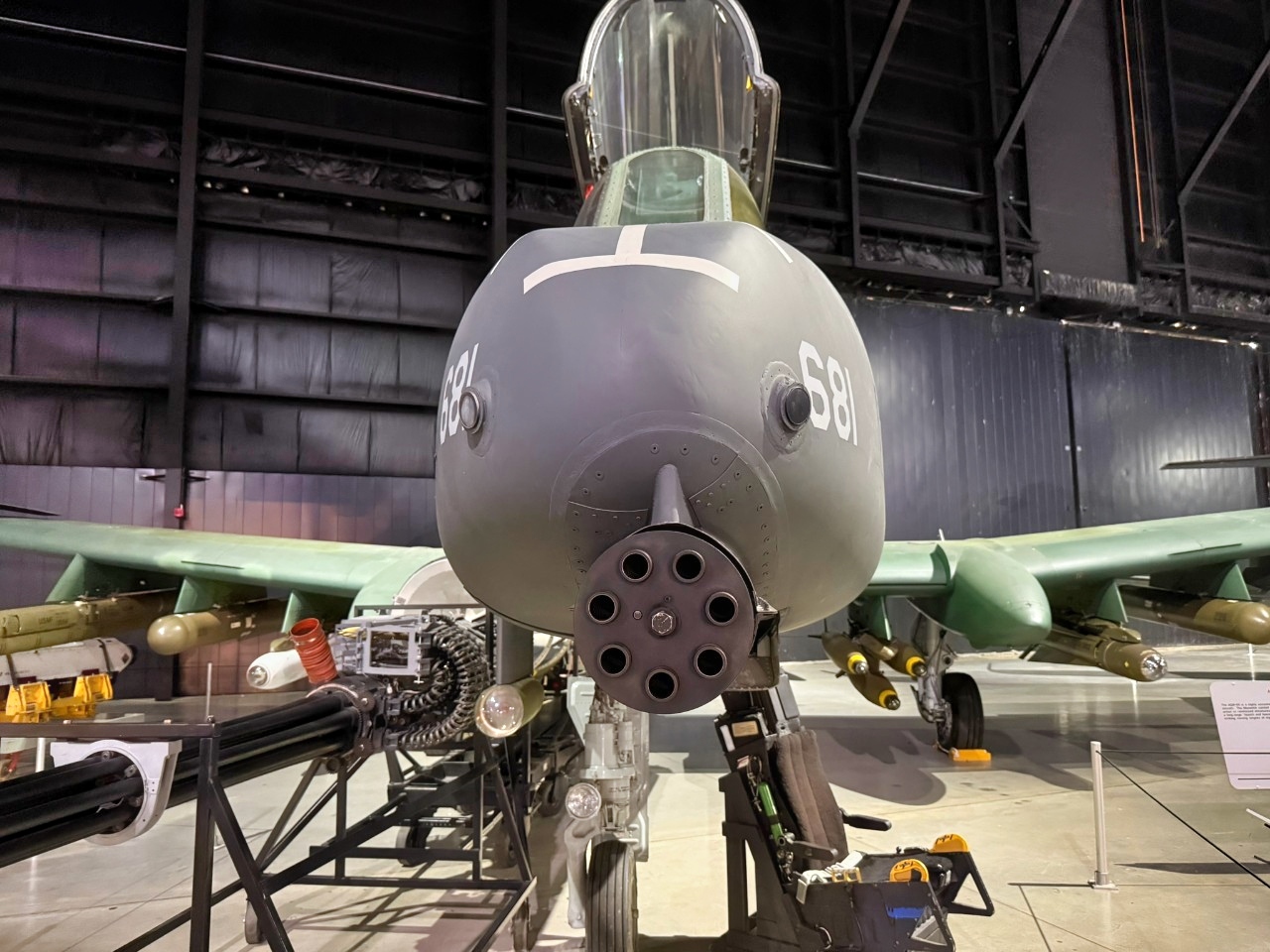
A-10 Warthog Cannon NSJ Photo. Taken at U.S. Air Force Museum on 7/19/2025.
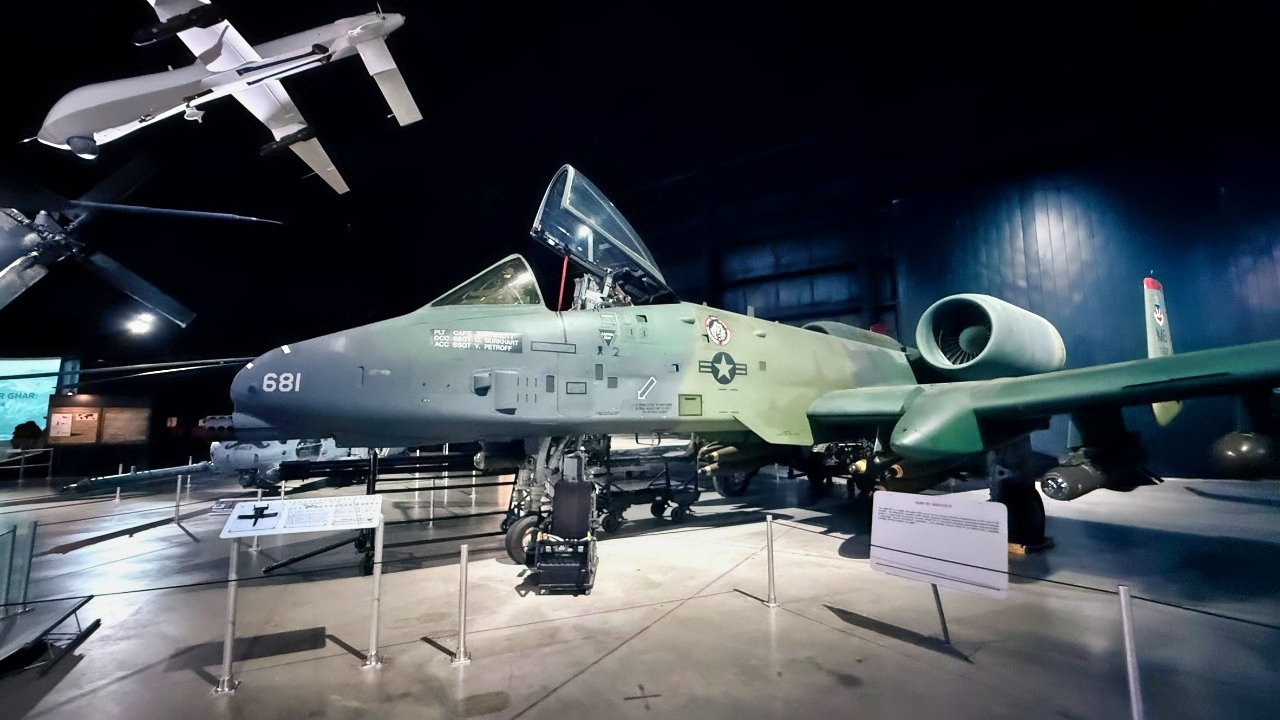
A-10 Warthog National Security Journal Photo.
After a series of Iranian attacks against tankers near the Strait of Hormuz and the aggressive rhetoric from Israel and Iran, market analysts expect prices to rise even further, with some suspecting that oil could rise to $130 per barrel in 2027.
The U.S. Won’t Back Down Until it Achieves its Goals
In an interview with the Financial Times, Mike Waltz said that the war against Iran could drag on for another year.
The war, which is reaching its eighth consecutive month, could drag on for another year until the U.S. achieves all of its strategic objectives.
According to the ambassador, the U.S. will remain in the region until Tehran disposes of its enriched Uranium and accepts a “meaningful agreement on its domestic enrichment.” Waltz continued, saying that it would be preferable to reach a diplomatic solution as quickly as possible. “I’m not going to put out hypotheticals. One would hope that they’ll come to the table in a meaningful way before that,” he said, referring to the possibility of another year of war.
In preparation for renewed fighting, the U.S. has been strengthening its position in the Middle East.
The aircraft carrier USS Theodore Roosevelt (CVN-71) departed from her home port in San Diego in September and is expected to reach the Middle East by the end of November.
The carrier is joined by the 13th Marine Expeditionary Unit, which is comprised of around 2,400 Marines.
According to an anonymous U.S. official, Trump is unlikely to renew strikes before November’s midterms, despite some rumors.
Still, the U.S. is waiting until all its assets are in the region.
“CENTCOM is putting all the pieces into place to renew major combat operations,” the official said. When asked about renewed attacks before Israel’s elections on the 27th, the official said it was unlikely, but conceded, “We did start Epic Fury without all our assets in place.”
Oil Prices Continue to Rise
The oil market has been in chaos recently amid reports that Iran had renewed its attacks against civilian tankers. Earlier this week, reports emerged indicating that oil flows through the Strait of Hormuz had returned to their pre-war levels.
In response, Iran has been hitting multiple civilian vessels in and around Hormuz throughout the month.
Yesterday, the IRGC claimed that it had struck seven oil tankers in the region.
Four were reportedly struck while they were transferring oil, while the other three apparently hit naval mines.
The UK Maritime Trade Operations (UKMTO) center could not verify all of these claims.
Still, since October 12, the company has reported 14 separate attacks on civilian ships in and around the Strait.
President Trump accused Iran of fabricating attacks to spook the market and drive up oil prices. While not all of the IRGC’s claims can be verified, attacks against oil tankers have increased in recent weeks.
The energy market also fears renewed attacks could damage more oil infrastructure across the Middle East.
Iranian officials have threatened that if its infrastructure were attacked, it would attack the Gulf regions again, particularly their oil facilities.
The energy market is further strained by attacks against Saudi Arabian oil infrastructure from the Houthis in Yemen. On October 21, Bloomberg reported a strike on an Aramco-owned oil field in Saudi Arabia.
The attack killed three people but, according to local authorities, the oil field was largely undamaged. Previously, the Houthis have also struck refineries and facilities connected to the East-West Pipeline, a major oil line that lets exporters bypass the Strait of Hormuz.
All Eyes on the Elections
Brent Crude is currently fluctuating around $116 to $117 per barrel, the highest they’ve been since March. As a result, stock prices are taking a slight hit.
The S&P 500 fell 0.2%, while the Dow Jones Industrial Average fell 550 points, or roughly 1%. In contrast, the Nasdaq Composite rose 0.2%, and gains in some major tech stocks helped cushion losses in other sectors.
Oil prices weighed heavily on the rest of the market, with three out of every four S&P 500 stocks falling. Some economists expect oil prices to rise further when the war finally resumes.
Some analysts say oil prices could reach $130 per barrel by 2027.
The world is waiting for the U.S. midterm elections in November, which will decide whether the Democratic Party will retake the House or the Senate. President Trump has promised not to resume strikes against Iran until after the elections.
So far, the President has kept his promise, but with the elections less than two weeks away, the war could reignite at any moment.
About the Author: Isaac Seitz
Isaac Seitz, a Defense Columnist, graduated from Patrick Henry College’s Strategic Intelligence and National Security program. He has also studied Russian at Middlebury Language Schools and has worked as an intelligence Analyst in the private sector.


