

WARSAW, POLAND – Ukraine President Volodymyr Zelenskiy has taken aim at the People’s Republic of China (PRC) for its role in providing technological assistance to Russia in the invasion of his country. Without providing any specifics, the Ukrainian leader has suggested that Beijing is granting Russia access to its SpaceSail low-Earth-orbit satellite-based internet system.
A Possible ‘Starlink’ for Russia VIA China
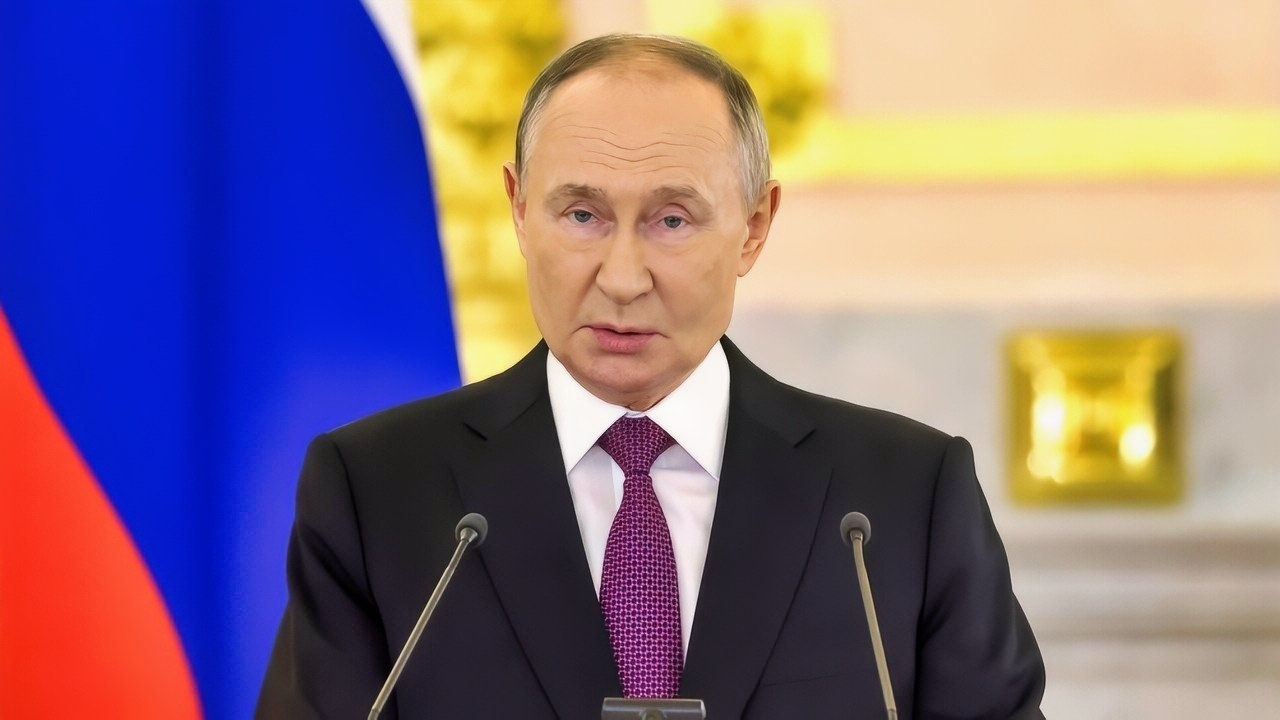
Kremlin Speech by Putin. Image Credit: Creative Commons.
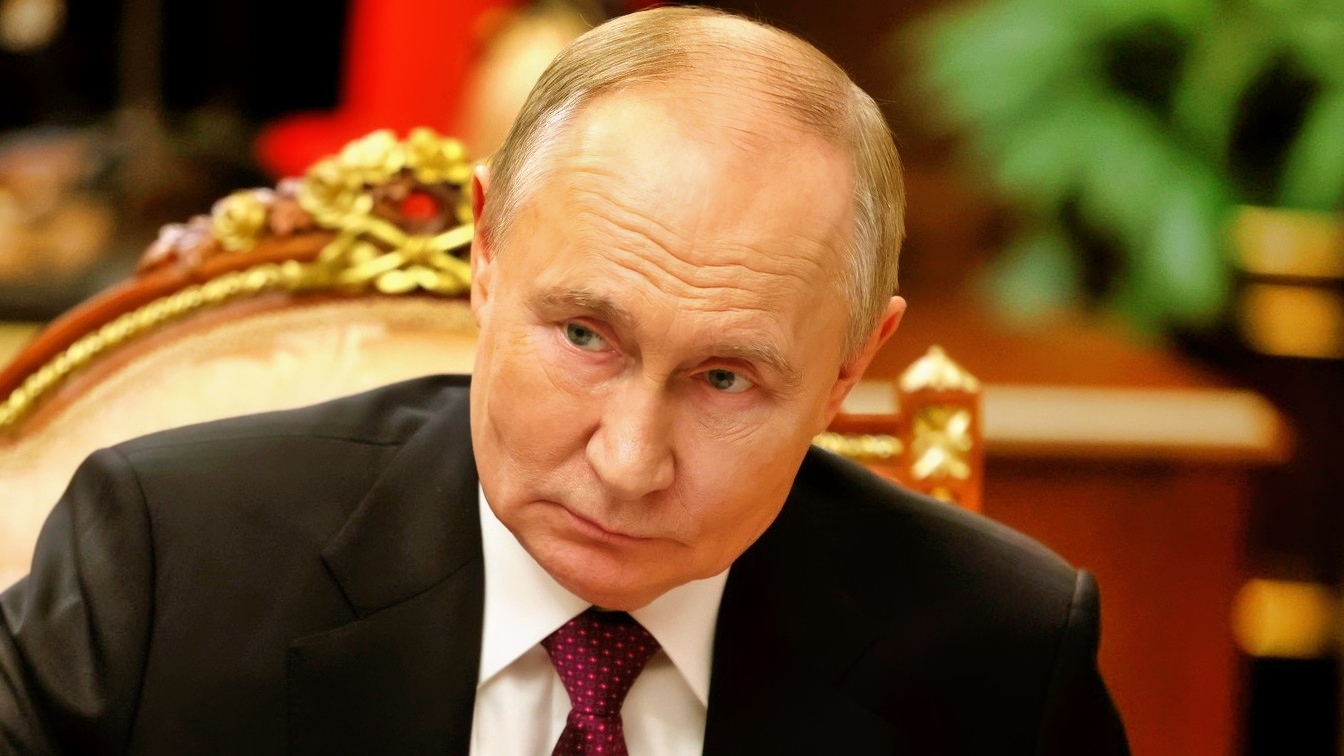
Putin in Meeting Creative Commons Photo
Speaking to the Rest of World news outlet this past June, Blaine Curcio, the founder of Hong Kong-based Orbital Gateway Consulting, stated that the PRC is “deliberately targeting” SpaceSail to nations where Elon Musk’s Starlink has faced “political or regulatory issues”. He drew a comparison between the satellite firm and the PRC electric-vehicle manufacturer BYD. Both companies are using billions in Chinese government subsidies — with BYD challenging Tesla (another Elon Musk company) in overall global market position.
Beyond China: Russia and North Korea Get Closer
Ukraine forces on the front line gained a distinct edge over the Russian military when Musk cut Moscow’s access to Starlink in February 2026 – a decision made at the request of then-Ukraine Defense Minister Mikhaylo Fedorov. Beijing now appears to have provided its Russian allies with a suitable substitute.
The other nation continuing to support Russia’s war aims – both on the frontlines and back in Russia on production lines – is the Democratic People’s Republic of Korea (DPRK). Both the PRC and its North Korean allies are also using their involvement in the Ukraine war to gain practical battlefield experience for their own armed forces.
So regarding this battlefield experience, “where will they use it?” Zelenskiy asked one of the most perceptive questions this week in New York, amid a sea of diplomats, spies and “consultants.”
Interlinkage and Military Conflict
Zelenskiy spoke at length with the Wall Street Journal while in New York this week during the opening of the United Nations General Assembly. One of the points he made, aside from the issue of Beijing and Pyongyang’s continued assistance to Russia, was that this war is demonstrating the interconnectedness of today’s world.
Technology, the Ukrainian president stated, needs to be shared between allies in times of conflict. “There is no distance in this war at all,” Zelensky told the US daily.
“The Ukrainian president’s message is twofold here,” said a former military intelligence officer from a NATO nation who spoke to National Security Journal (NSJ). “On one hand he is making an oblique reference to how closely Russia, the PRC and the DPRK are working together and benefiting from their linkages with one another.”
“This goes beyond just this one episode of Russia now enjoying access to a satellite-based system that it can use for targeting and communication services. Consider the reports that the DPRK has managed to increase by several thousandfold the accuracy of their short-range ballistic missiles – thanks to Russian missile designers’ assistance,” he continued.
“Then also consider the other accounts we have of the DPRK receiving from Russia working nuclear reactors for use in submarine propulsion systems,” he pointed out. “There is one example after another of how capably and effectively Russia and its allies are enhancing one another’s battlefield capabilities.”
Blueprints and Licensed Production
“The problem is,” he concluded, “is that the sharing of this kind of data between the proverbial ‘bad guys’ is turning out to be far more effective than we are at sharing with the Ukrainians.”
Since the July NATO summit in Ankara, Turkey, there has been a back-and-forth between Washington and Kyiv over whether Ukraine would be provided with the blueprints and other technical documentation necessary to produce its own missiles for the Patriot air and missile defense system.
In discussions at the September 2026 MSPO Polish International Defense Industry Exhibition, Ukrainian defense firms told NSJ that providing information for manufacturing the Patriot system would also not be a “one-way street,” said one Kyiv-based enterprise director.
His company has offered to provide some of their own locally produced components that could be used in a Ukraine-manufactured version of the Patriot. “These would be subsystems that are not copies of a US technology, but our own analogous designs that operate to equal or better parameters than the US original,” he said
“The difficulty as we see it,” he explained, “is that there seldom seems to be any progress [in these negotiations]. It is not the easiest journey in the world for us to travel out of Ukraine and attend international expos of any kind – it takes 15 hours or more of train travel and border crossings just to reach Warsaw. So, it is discouraging to take the trouble to have these interactions with US industry and have long discussions but to rarely see anything come out of them.”
About the Author: Reuben F. Johnson
Reuben F. Johnson has thirty-six years of experience analyzing and reporting on foreign weapons systems, defense technologies, and international arms export policy. Johnson is the Korea Fellow at the Casimir Pulaski Foundation. He is also a survivor of the Russian invasion of Ukraine in February 2022. He worked for years in the American defense industry as a foreign technology analyst and later as a consultant for the U.S. Department of Defense, the Departments of the Navy and Air Force, and the governments of the United Kingdom and Australia. In 2022-2023, he won two awards in a row for his defense reporting. He holds a bachelor’s degree from DePauw University and a master’s degree from Miami University in Ohio, specializing in Soviet and Russian studies. He lives in Warsaw.


