

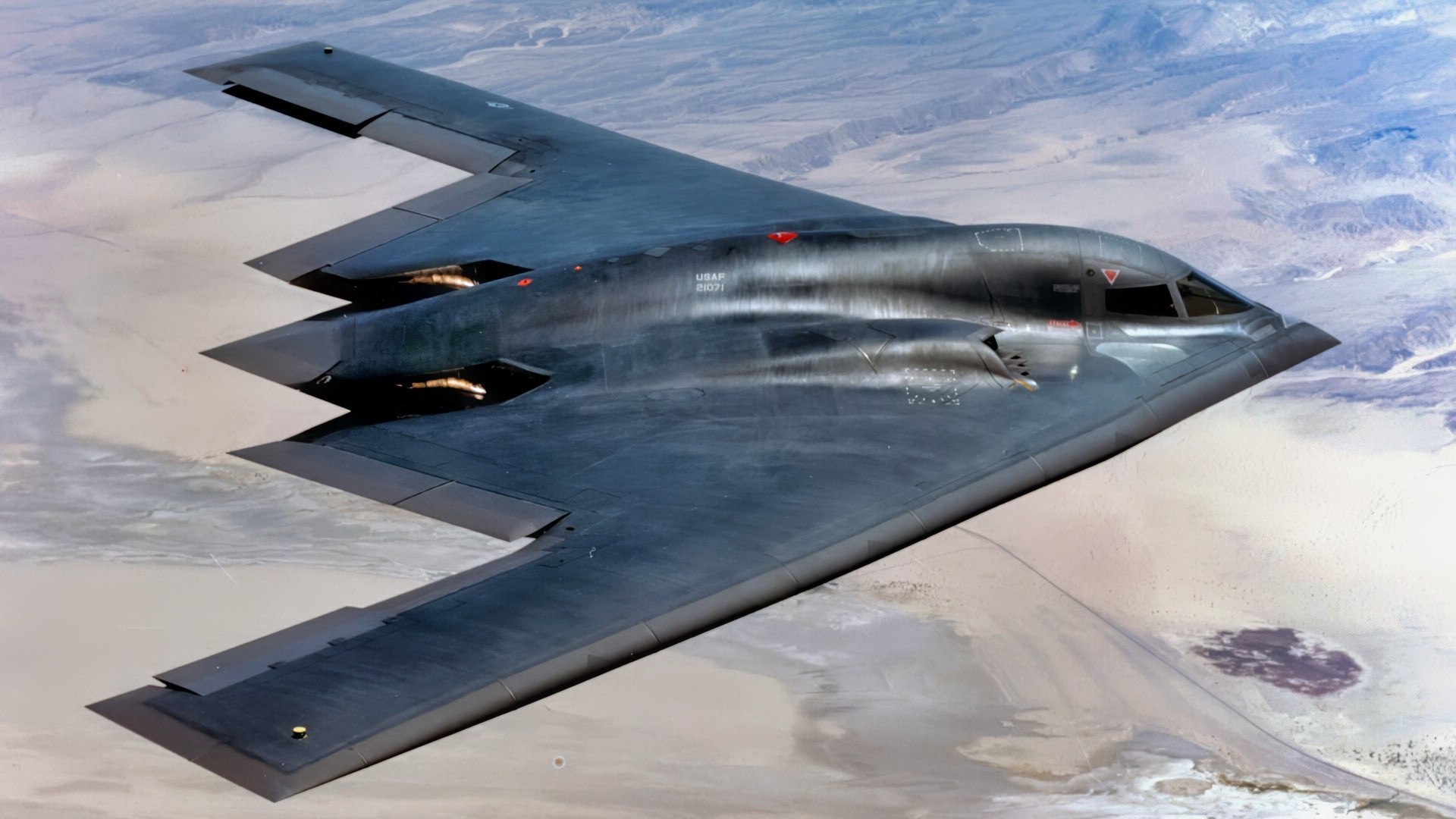
How Iran Strategized Around the U.S. Munitions Shortage – Reports in recent weeks have indicated that the U.S. is facing a munitions shortage after months of war in Iran. The Hill reported this week that this depleted weapons stockpile has begun to undermine U.S. leverage in the war and elsewhere.
“So, this is a dangerous moment for the United States to have these reduced stockpiles of key weapons at a time when these threats are all real,” Leon Panetta, a former congressman, defense secretary, and CIA director, told The Hill. Panetta went on to blame this state of affairs on “poor planning.”
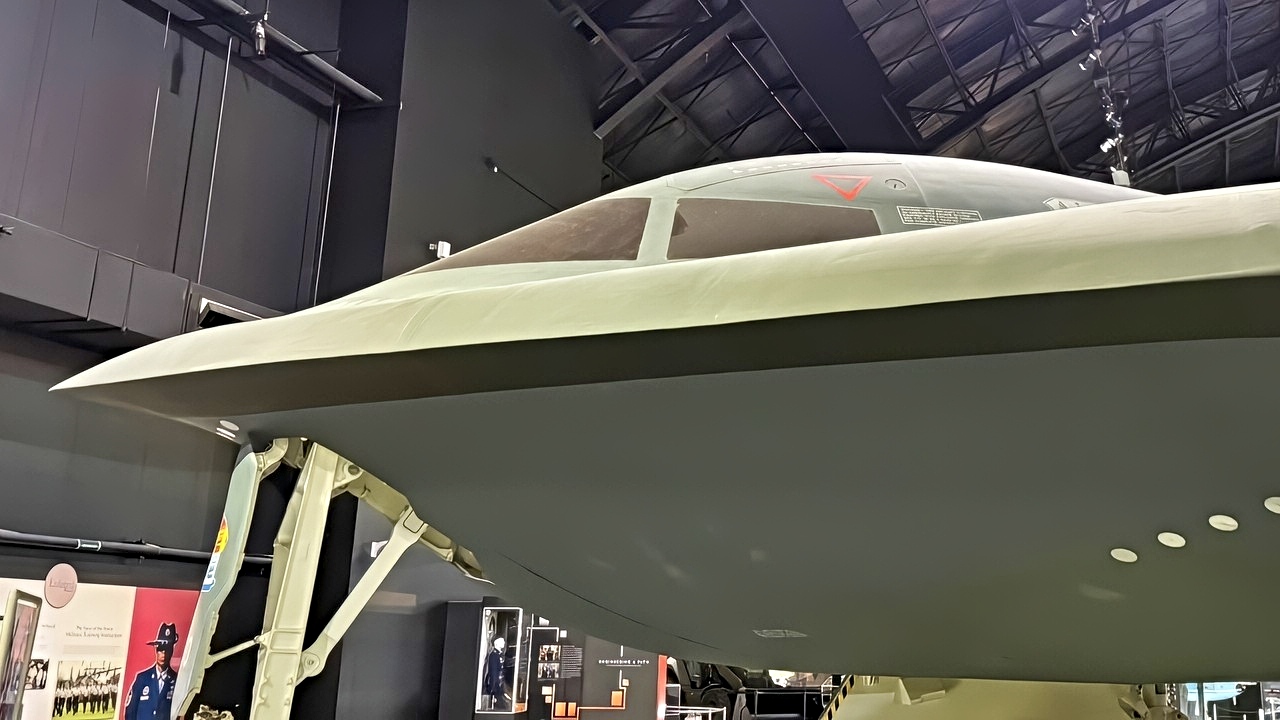
B-2 Bomber Sitting in Museum National Security Journal Photos. All Rights Reserved.

B-2 Stealth Bomber July 2025 National Security Journal Photo.
A separate Reuters report this week said the Army had used up “virtually all” of its surface-to-surface munitions and precision strike missiles.
The Trump Administration, meanwhile, has at various times denied the stockpile issue is a problem, while threatening to hunt down leakers who have revealed the status of the stockpiles, with Trump using the word “treasonous” to describe such leakers.
“Claims of U.S. munition shortages are false,” Pentagon spokesman Sean Parnell said last week. There was later a report in the Washington Post that Trump and Defense Secretary Pete Hegseth had “clashed” at Camp David over the state of the munitions stockpile, with Trump pressing Hegseth “why he had apparently been misled on extreme munitions shortages that now threaten to limit military options with Iran,” with Trump indicating that he’d been under the impression that the problem was “fixed.”
The Hill, however, reported that it’s been very clear for a while, even without the leaks, that the diminished munition stockpiles were becoming a problem.
Meanwhile, a new report details how Iran took steps to adapt to the United States’ diminishing stockpiles.
An Opportunistic Strategy
According to the New York Times, this was demonstrated in July, when Iran spent several days launching “waves of drones and missiles” at bases in Jordan where U.S. troops were stationed. This barrage, the Times said, led the U.S. to “burn through scarce supplies of Patriot interceptors.”
After five days, the Iranian weapons broke through, in an attack that killed three U.S. soldiers and wounded over 100.
The lessons from this episode, the Times reported, are two: Iran has become “a more skilled adversary” throughout the war, especially in evading U.S. air defenses. And that the interceptor supply is “quickly dwindling.”
It all shows, the Times added, that “a global superpower with a mighty military footprint can still be held at bay by a lesser adversary willing to wage asymmetric warfare to find any advantage it can.”
There was one day last month when Iran was firing at the base in Jordan, when the U.S. fired 50 interceptors, each of which cost about $4 million, the newspaper said.
The Times also reports that the Pentagon has used 1,500 Patriot interceptors in the war, and now has fewer than 1,700 left. And this is at the same time that Ukraine is asking for more interceptors of its own, as they seek to repel Russia’s missile barrages.
“The Iranians are making it more difficult on air defenses when you have a range of both missiles and drones coming in,” Seth G. Jones, the president of the defense and security department at the Center for Strategic and International Studies, told the Times.
“Functionally Destroyed”?
Hegseth had said in April, during the opening weeks of the war, that Iran’s missile program was “functionally destroyed” and “depleted and decimated and almost completely ineffective.”
But that declaration appeared to be, at best, premature.
Most of Iran’s missiles, the Times said, were kept in underground facilities, which the U.S. and Israel struck repeatedly in the war’s first weeks. However, “Iran dug out many of those sites and resumed firing, bringing shipping in the Strait of Hormuz to a near standstill and threatening American troops in the region.”
The newspaper also said that Iran had learned a lesson during the 12-day war in the summer of 2025: U.S. and Israeli forces had burned through ballistic missile interceptors, and would likely do so again during a longer war. Another factor? The U.S. likely believed that the war would be over quickly.
About the Author: Stephen Silver
Stephen Silver is an award-winning journalist, essayist, and film critic, and contributor to the Philadelphia Inquirer, the Jewish Telegraphic Agency, Broad Street Review, and Splice Today. The co-founder of the Philadelphia Film Critics Circle, Stephen lives in suburban Philadelphia with his wife and two sons. For over a decade, Stephen has authored thousands of articles that focus on politics, national security, technology, and the economy. Follow him on X (formerly Twitter) at @StephenSilver, and subscribe to his Substack newsletter.


