

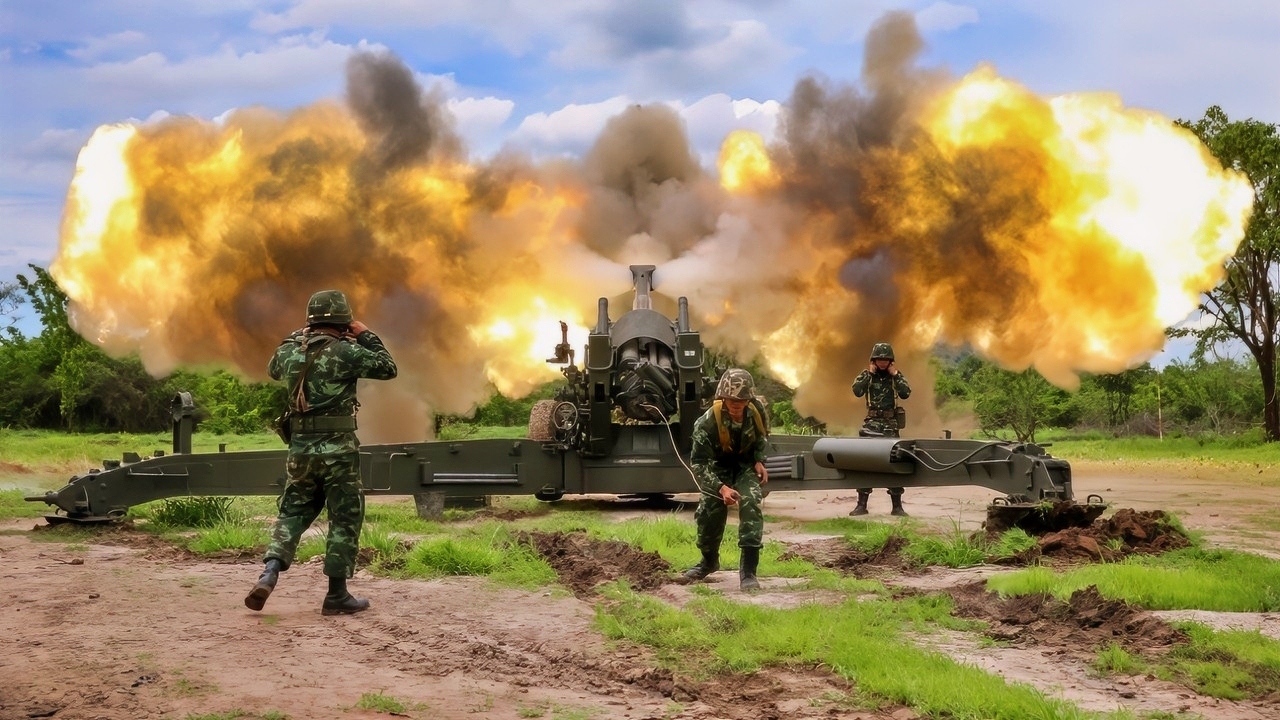
The United States has burned through most of its long-range precision munitions during the ongoing war with Iran, raising concerns about the Pentagon’s ability to respond to other crises around the globe, in particular a potential showdown with China in the Pacific or in Europe against Russia.
The information, which came to light thanks to a Reuters investigation, revealed that stocks of the United States Army’s Army Tactical Missile Systems, known by its abbreviation ATACMS, as well as the Precision Strike Missiles, or PrSM, have been nearly depleted, according to sources familiar with the Pentagon’s stockpile numbers.
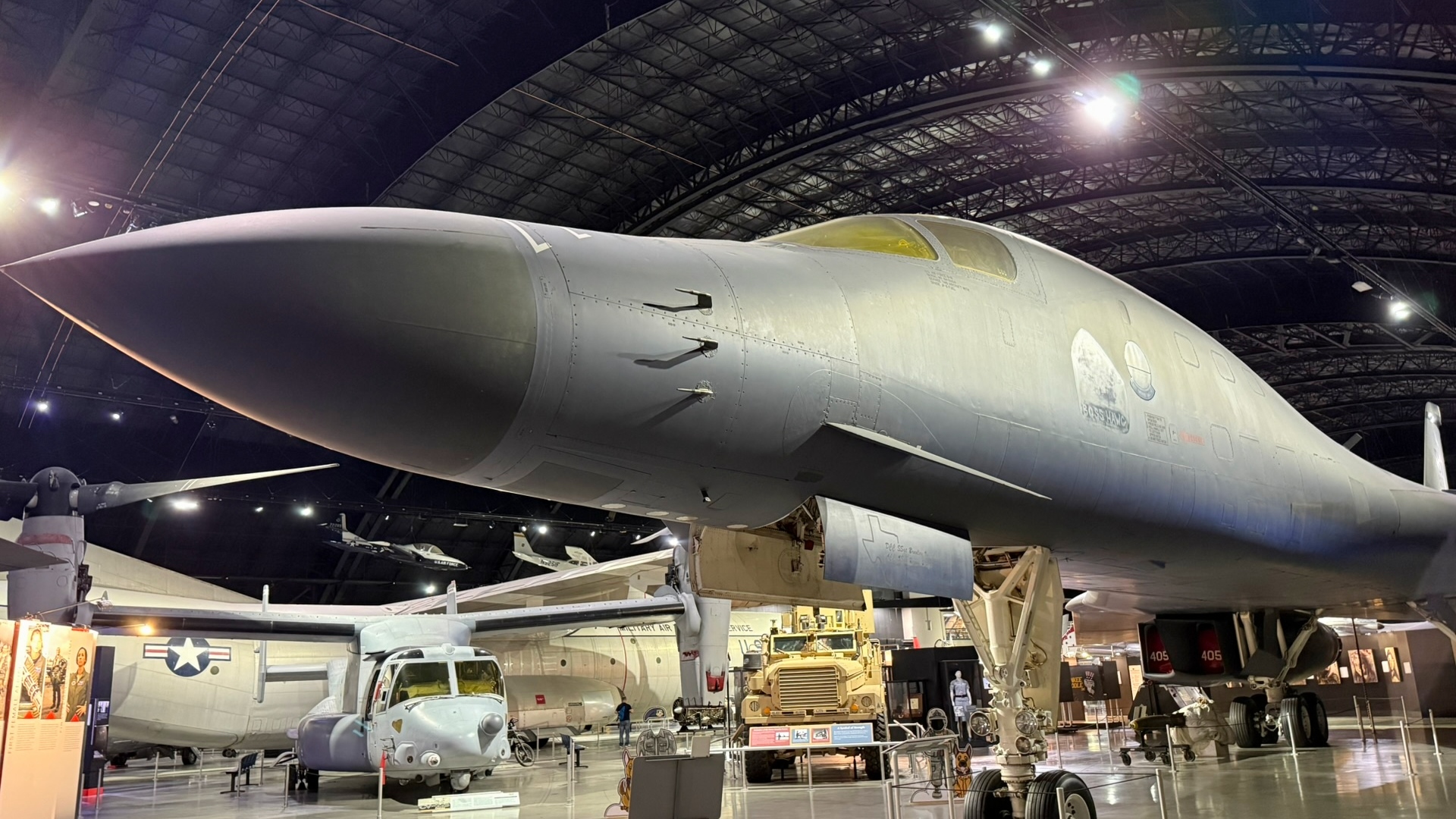
Sideview of B-1B Lancer Bomber. Image Credit: National Security Journal.
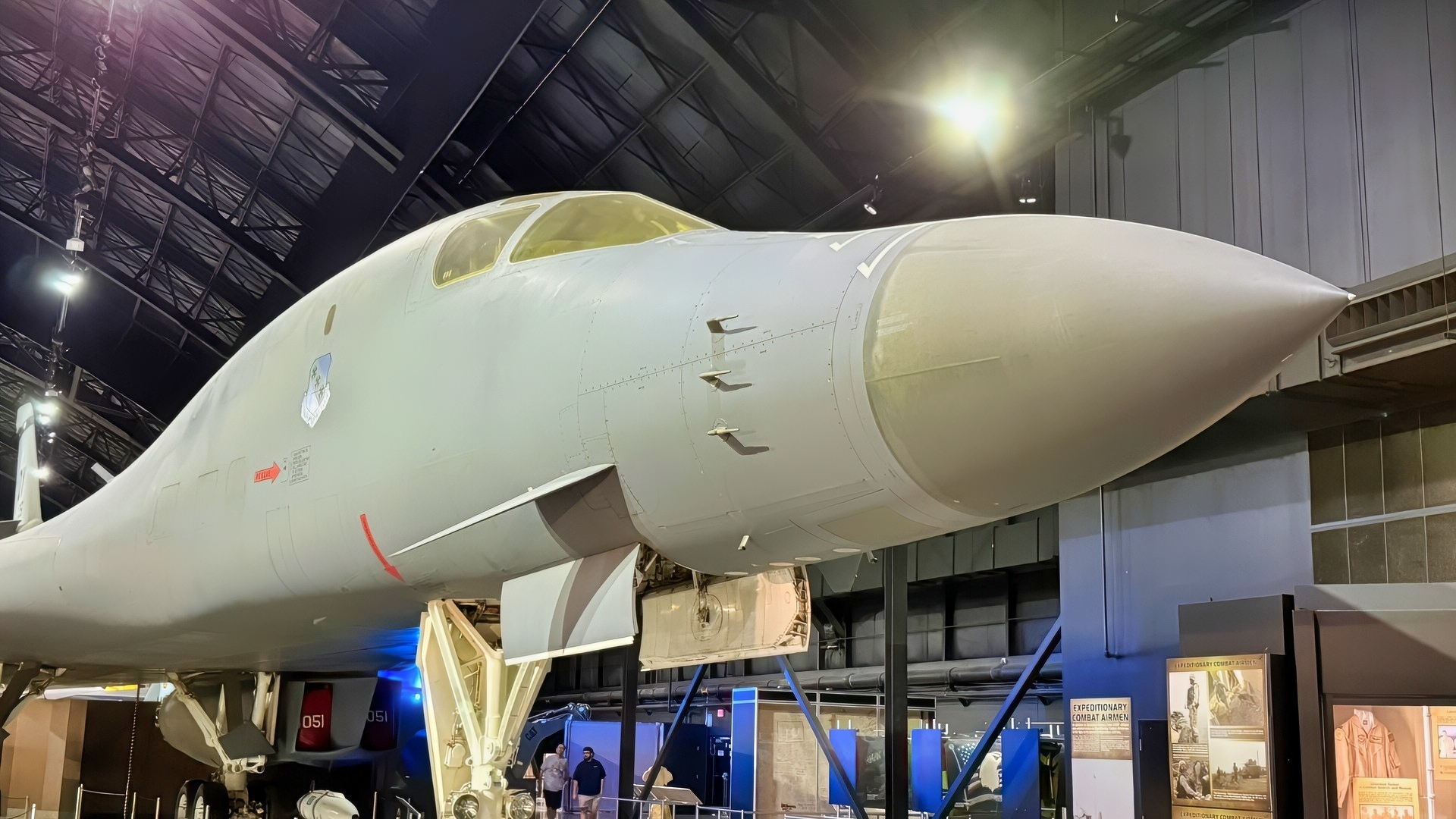
B-1B Lancer 2025 National Security Journal. Image Credit: Harry J. Kazianis/NSJ.
Precision Munitions
Both the Army Tactical Missile Systems and the Precision Strike Missile provide the ability to strike high-value targets well outside the range of conventional tube artillery.
Together, the munitions form the backbone of the U.S. Army’s long-range precision fires capability and allow commanders to disrupt enemy operations before an adversary can directly engage American forces.
Army Tactical Missile Systems
ATACMS entered service during the Cold War. Fired from the M270 Multiple Launch Rocket System, or MLRS, as well as the M142 High Mobility Artillery Rocket System, or HIMARS, its role was to target command posts, logistics hubs, air defense systems, troop concentrations, airfields, and other high-value targets at long ranges, up to about 300 kilometers, or around 185 miles, depending on the missile variant.
Unlike typical rocket artillery, which is used to blanket large areas, ATACMS is intended for precise strikes against individual targets.
Its operational use during Operation Iraqi Freedom and, more recently, by Kyiv’s forces in Ukraine has demonstrated how effective long-range precision strikes can be at disrupting supply lines, destroying ammunition depots, and forcing an adversary to relocate important assets farther back from the front line.
Precision Strike Missile
The Precision Strike Missile is the U.S. Army’s next-generation replacement for ATACMS and boasts greater range and better survivability as well as a more flexible strike capability.
Like ATACMS, PrSM is launched from HIMARS and MLRS. But the PrSM’s range — 500 kilometers, or about 310 miles — is expected to increase in the future.
The munition is also physically smaller than ATACMS, and a single launch pod can hold a pair of PrSM missiles, compared to just a single ATACMS, in essence doubling the number of precision munitions available to each launcher without altering the launch platform.
Operational Use
From an operational standpoint, both ATACMS and PrSM provide U.S. Army commanders with a ground-based option that serves as a viable alternative to air power.
Instead of relying on manned warplanes to attack high-value targets, ground-based launchers can deliver precision strikes quickly from dispersed locations, independent of large, conspicuous airfields.
While both ATACMS and PrSM are simultaneously in service with the U.S. Army, their roles are shifting.
ATACMS continues to provide a battle-tested long-range strike capability and is in service with the U.S. Army and some allied countries.
PrSM, however, was slated to replace ATACMS thanks to its range, flexibility, and survivability advantages.
A Dwindling Stockpile
Speaking on the condition of anonymity, one source familiar with the munitions’ numbers explained that United States Central Command, which is prosecuting the war in Iran, had very few ATAMCS or PrSM munitions at its disposal before the war began, but that the command has been able to replenish stockpiles by drawing on munitions stockpiled elsewhere around the globe.
The choice to rely heavily on precision munitions is indicative of a military strategy that tries to avoid putting piloted aircraft potentially into harm’s way in Iran.
In early April of this year, Iranian forces shot down an F-15E Strike Eagle, though the plane’s crew members were successfully rescued.
Stockpiles of Patriot and THAAD interceptor missiles, used to provide umbrella protection for forces on the ground, have also been significantly diminished.
A recent report from the Center for Strategic and International Studies, a think tank, shows that the use of interceptors during the conflict in Iran has significantly depleted stocks.
Though the munitions have performed well, their expenditure risks creating dangerous air defense gaps.
According to the CSIS report, inventories of Patriot and THAAD interceptors are below 1,000 and around 250, respectively.
Future Conflict Scenarios
Although the president has repeatedly threatened Iran’s leadership with additional massive strikes, that saber-rattling has, thus far, been postponed on several occasions — raising questions about the Pentagon’s ability to prosecute this war, should it drag on longer into the future.
During a conflict against an adversary with robust air defenses — Iran is believed to have little in the way of air defenses, and American warplanes overfly the country with near-impunity — long-range precision munitions like ATACMS and PrSM would play a vital role.
Both China and Russia are believed to have some of the most sophisticated, layered air defenses in the world.
About the Author: Caleb Larson
Caleb Larson is an American multiformat journalist based in Berlin, Germany. His work covers the intersection of conflict and society, focusing on American foreign policy and European security. He has reported from Germany, Russia, and the United States. Most recently, he covered the war in Ukraine, reporting extensively on the war’s shifting battle lines in the Donbas and writing on its civilian and humanitarian toll. Previously, he worked as a Defense Reporter for POLITICO Europe. You can follow his latest work on X.


