

Iran Says Hormuz Deal Isn’t Enough – Iran and Oman are reportedly close to an agreement on a new system for managing shipping through the Strait of Hormuz, but Tehran warned on Saturday, August 8, that the arrangement alone won’t be enough to open the waterway. The news further complicates U.S. expectations that normal commercial traffic could resume soon, as Washington also faces a missile shortage that makes continued military action unlikely.
Iranian Foreign Minister Abbas Aragchi said on Saturday that the two countries were “very close” to agreeing on a temporary shipping route and mechanism. He also again doubled down on Tehran’s insistence that the pre-war system of governing traffic was unacceptable, and said that a full reopening of the strait was dependent on the United States making concessions, including on compensation for Iran.
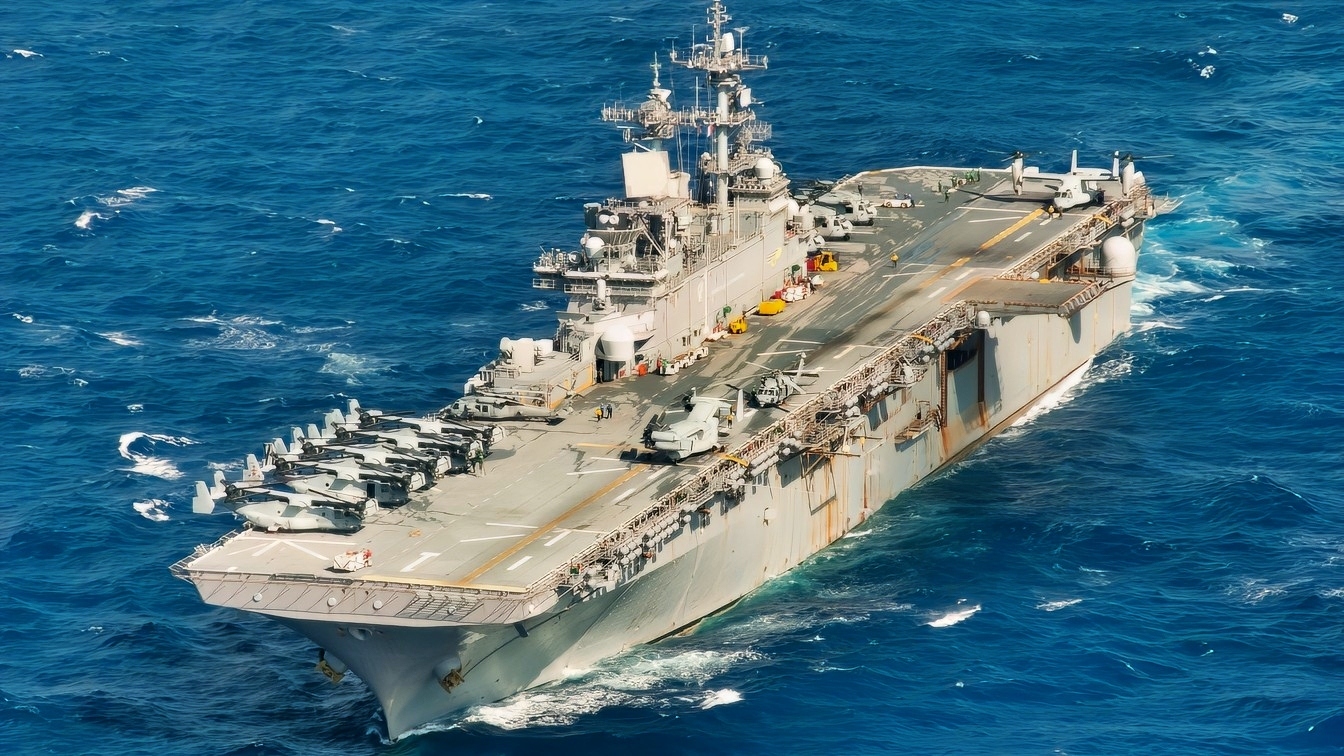
The amphibious assault ship USS Wasp (LHD 1) sails in the Philippine Sea Aug. 26, 2018 during a Passing Exercise (PASSEX) with the Japan Maritime Self Defense Force. PASSEX enabled the Wasp ARG and the JMSDF a chance to practice communications and maneuvering procedures. The Wasp Amphibious Ready Group is currently operating in the region to enhance interoperability with partners and serve as a ready-response force for any type of contingency. (U.S. Navy photo by Mass Communication Specialist 3rd Class Taylor King)
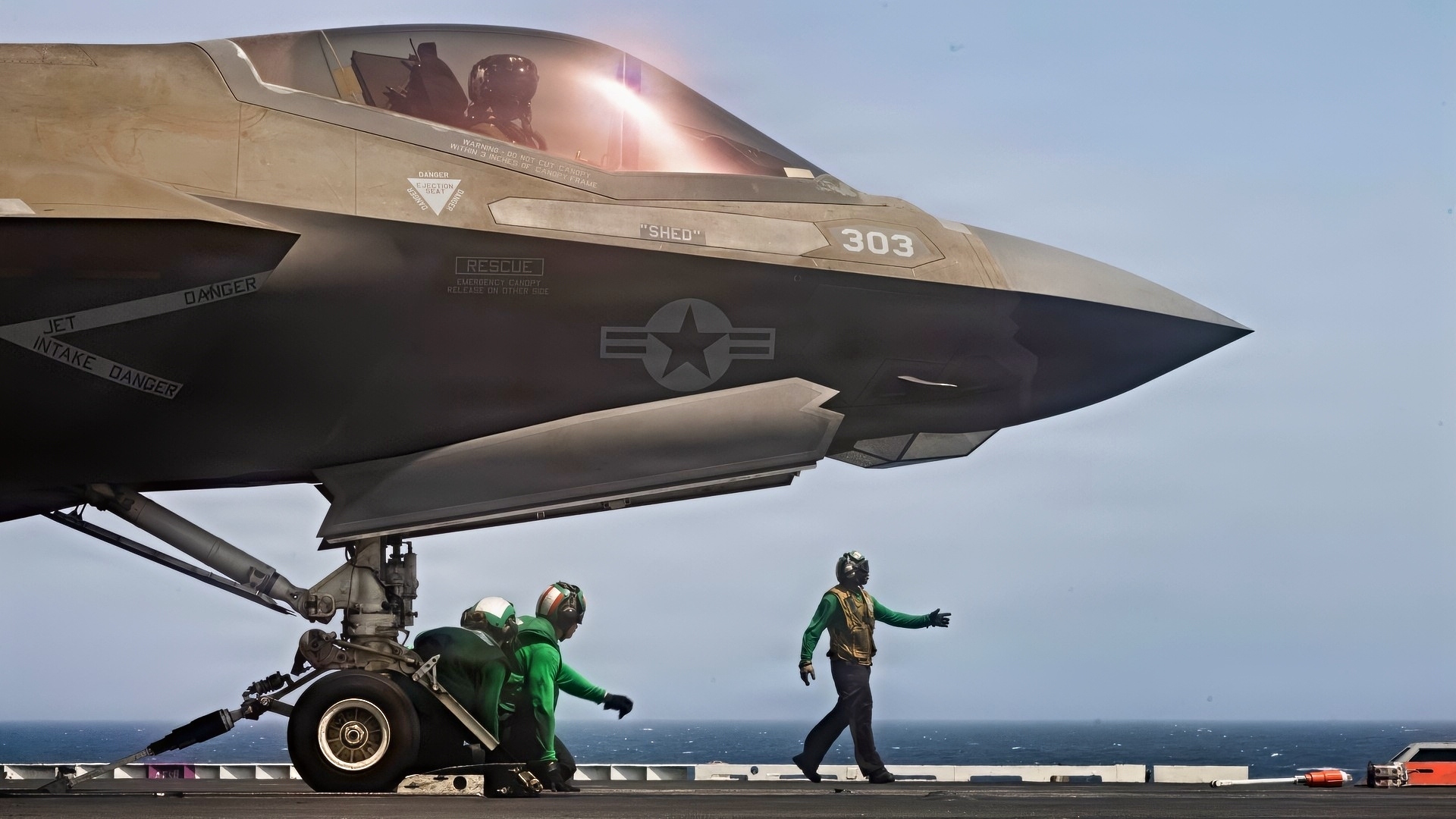
U.S. Sailors prepare an F-35C Lightning II, attached to Marine Fighter Attack Squadron (VMFA) 314, to launch from the flight deck of Nimitz-class aircraft carrier USS Abraham Lincoln (CVN 72), June 1, 2026. Abraham Lincoln is deployed to the U.S. 5th Fleet area of operations to support maritime security and stability in the Middle East. (U.S. Navy photo)
The comments came less than a day after a U.S. official told Reuters that Washington expected an agreement soon and would lift its blockade of Iranian ports to support it.
Washington Sees An Opening
Throughout the week, Trump administration officials have been teasing the prospect of a new deal to open traffic through the Strait of Hormuz, with Treasury Secretary Scott Bessent previously stating that a deal was likely to arrive on Tuesday or Wednesday.
On Tuesday, Secretary of State Marco Rubio said that progress had been made and a deal was expected “very shortly,” while President Donald Trump also said talks were moving in the right direction.
But the U.S. is now going one step further, stating that it will end the blockade on Iranian ports and allow the country to sell oil to global customers – a major concession that will restore a critical source of revenue for the Islamic regime.
“There is progress between Oman and Iran on the Strait, and we expect a deal soon,” the U.S. official told Reuters Friday. The same official said that Washington’s next actions would be dependent on Iran carrying out its own commitments.
Iran Wants An Entirely New System
Crucially, the deal being finalized between Iran and Oman will not end the conflict between the United States and Iran, nor may it contain as many measures as the failed June “memorandum of understanding.” The negotiations are squarely focused on who controls passage through the Strait of Hormuz – and it looks like Tehran has successfully leveraged its willingness to prevent normal traffic through Hormuz to effectively take control.
Before the war began on February 28, vessels followed an internationally recognized two-way traffic system through Iranian and Omani waters without paying transit fees. The strait handled roughly one-fifth of global oil and gas shipments.
Under proposals discussed this week, however, Iran could be set to gain authority over ships entering the Gulf, while Oman would play a role in outbound movements. Iranian Deputy Foreign Minister Kazem Gharibabadi has said both inbound and outbound commercial traffic would travel through Iranian territorial waters under the arrangement being negotiated.
Formalizing that authority has been a central goal for Iran since the war began, as it remains the country’s primary leverage over far greater powers.
Iran has repeatedly said it will not simply restore the system that existed before February, and Iranian analysts say control of Hormuz would give Tehran lasting leverage in future security and nuclear negotiations.
Tehran Says Oman Deal Isn’t Enough
In a statement on Saturday, Aragchi said that an agreement with Oman would establish only a temporary route while the two countries work out more technical and legal questions surrounding a permanent system. Reopening the strait will also depend on other conditions.
Islamic Revolutionary Guard Corps spokesman Hossein Mohebbi also said on Saturday that the waterway would only reopen when Washington accepts Iran’s conditions and ceases interfering with regional negotiations – a power play that could work now that the United States is running short on precision-guided, long-range missiles.
The news also comes as Iran continues to prove it is willing to launch missile and drone strikes on regional targets, with the United Arab Emirates saying that Iran had struck a carrier affiliated with the state-owned Abu Dhabi National Oil Co. The vessel was hit with a missile while transiting Hormuz.
The oil company also said on Friday that 15 of its vessels had been attacked since the war began, with the strikes killing one crew member and injuring 20.
Washington May Have Few Alternatives
Tehran’s confidence should be expected, as it comes at a time when Washington’s military options are narrowing.
Reports this week describe how Joint Chiefs Chairman Gen. Dan Caine has privately stressed the need for an “off-ramp” from the conflict, warning that further military action could produce diminishing returns while risking further escalation.
Meanwhile, U.S. inventories of critical precision weapons and interceptors have been heavily depleted, with replenishment expected to take years, giving Iran just enough power to demand concessions to which President Trump would not have otherwise agreed.
About the Author: Jack Buckby
Jack Buckby is a British researcher and analyst specializing in defense and national security, based in New York. His work focuses on military capability, procurement, and strategic competition, producing and editing analysis for policy and defense audiences. He brings extensive editorial experience, with a career output spanning over 1,000 articles at 19FortyFive and National Security Journal, and has previously authored books and papers on extremism and deradicalization.


