

A division is forming within the Trump administration over technology development. Specifically, it centers on artificial intelligence, which has become the foundation of the modern American economy in just a few short years.
That division pits the national security state against free traders in the tech sector.
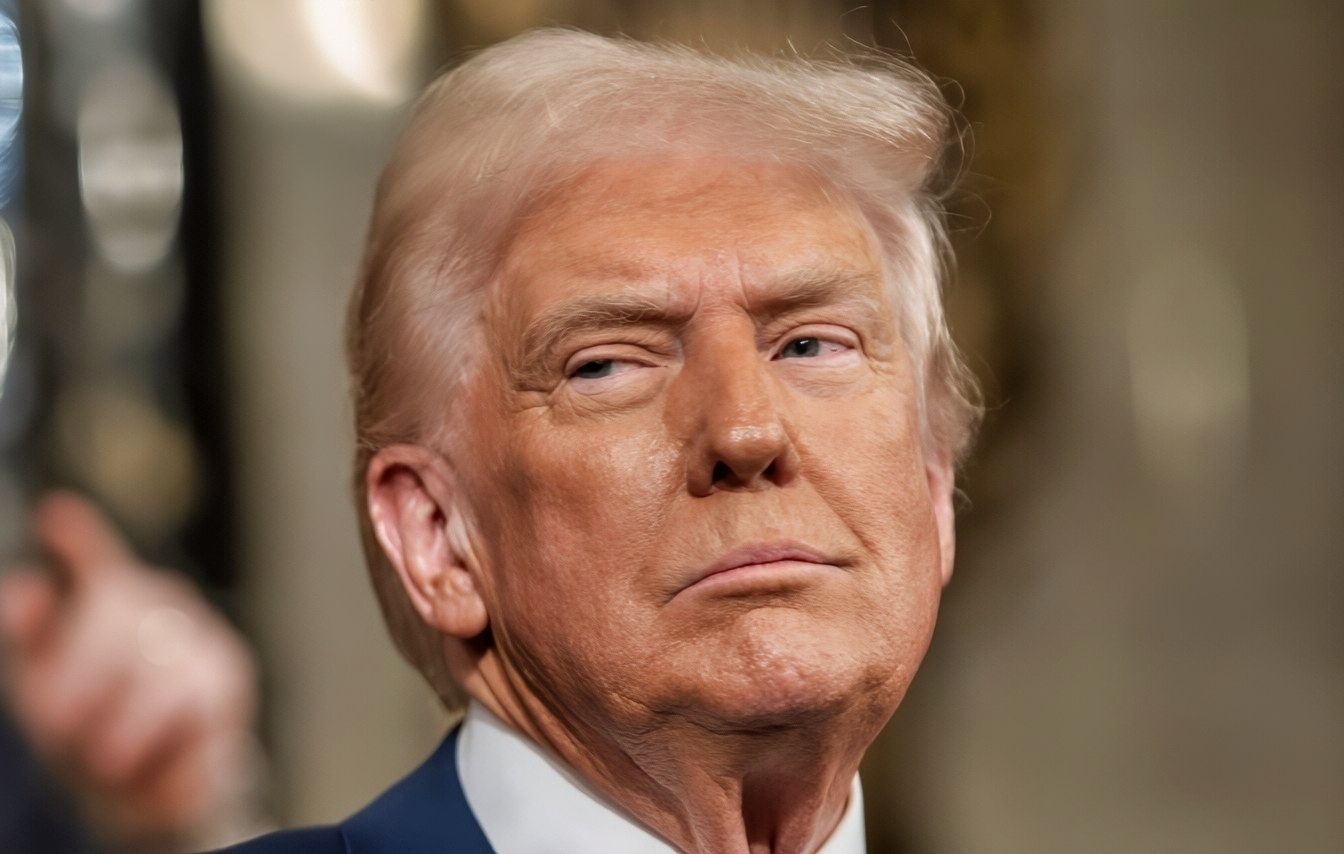
President Donald Trump delivers his Joint address to Congress, Tuesday, March 4, 2025, in the House Chamber of the U.S. Capitol in Washington, D.C. (Official White House Photo by Daniel Torok DJTFP24
President Donald Trump speaks with Vice President JD Vance and Defense Secretary Pete Hegseth before the Memorial Day ceremony at Arlington National Cemetery, Monday, May 26, 2025, in Arlington, Virginia. (Official White House Photo by Daniel Torok)
It is a battle between a forward-looking, open-source model of AI development and what can best be described as a moat approach that prioritizes national security even ahead of profit.
A Multilayered Fight
Enmeshed within this fight are the political ambitions of certain members of the Trump administration, notably Secretary of State and White House National Security Adviser Marco Rubio and Vice President JD Vance.
There are also concerns about the financial motivations of senior Trump administration officials regarding tech firms, notably NVIDIA, and why these leaders are focusing on Jensen Huang’s tenure at NVIDIA and whether he should run that essential firm or someone more palatable to Washington.
Thanks to President Trump’s personal intervention with the NVIDIA board, Jensen Huang has been restored as CEO of the semiconductor giant.
In fact, it was the result of intensive lobbying from top tech sector executives, as well as Vice President Vance, that convinced Trump to pressure NVIDIA’s board to reverse their decision to cut Jensen Huang out as NVIDIA CEO over allegations that he had an affair with a possible Chinese spy.
Huang’s supporters in Washington argued that his continued absence threatened both NVIDIA’s commercial prospects and the broader American economy.
Some evidence supports this: NVIDIA is a key pillar holding up the already squeezed American economy (because NVIDIA chips are primary components in data centers and the systems needed to support the massive national AI buildout).
Because NVIDIA has become the undisputed main supplier of advanced computing chips globally, and because Jensen Huang basically is the company, there were fears his absence would drag the company down–and with it the entire US economy.
Vance originally worked as a venture capitalist for Peter Thiel’s firm in Silicon Valley. He is the biggest supporter of restoring Huang as NVIDIA’s head.
Through him, numerous Silicon Valley supporters got their case for Huang’s restoration as NVIDIA CEO heard at the highest levels of government.
Bessent vs. Lutnick
Treasury Secretary Scott Bessent and Secretary of Commerce Howard Lutnick have been trading barbs and backbiting against one another pretty much since the start of Trump’s second non-consecutive term in office. Lately, their feuding has become impossible to ignore.
Reporting suggests that Lutnick and Trump himself were briefed a year ago about concerns that Huang had become potentially compromised, possibly by a Chinese spy.
Neither Trump nor Lutnick took significant security action to stop the interaction.
In fact, as Commerce Secretary, Lutnick doubled down on his support for reducing trade restrictions on NVIDIA sales to China (the source of the policy disagreement with Bessent).
Now that Trump has shifted in favor of Jensen Huang, Bessent’s previous hardline stance toward Lutnick has softened.
There are concerns that Trump himself may also be financially exposed to NVIDIA.
Incoming Democratic Party majorities in both the U.S. House of Representatives and the U.S. Senate intend to investigate that.
Huang’s reinstatement immediately lifted investor sentiment. NVIDIA shares closed Monday around 31.5 percent higher than on Friday.
The Technology-heavy NASDAQ gained more than six percent. NVIDIA recovered nearly $1 trillion in market capitalization.
Yet the semiconductor giant remained worth considerably less than before the controversy erupted.
Who Was Alice Huang?
But who was Alice Huang?
She was a Chinese businesswoman formerly associated with Megaspeed International, a major NVIDIA customer.
US authorities suspected her firm of facilitating unauthorized transfers of advanced US AI chips to China.
The New York Times reported that Alice Huang maintained contact with an officer of China’s Ministry of State Security (MSS) between Spring 2025 and Autumn 2026.
Despite these suspicions and the reports on her affiliations with Chinese intelligence, the US intelligence community has not established that Alice Huang was operating as a Chinese spy.
Her firm, Megaspeed, was placed on the Commerce Department’s trade blocklist.
No Clear Path Forward
What we know now is that the NVIDIA debacle has highlighted all the divisions within both the national security state and the Trump administration.
It has also highlighted divisions among Silicon Valley’s top tech leaders over whether the open-source model or the moat model of AI development is the best path forward.
Rivalries that will shape the next decade in Silicon Valley and Washington, D.C. have emerged, as all sides jockey for their preferred policy (and narrative).
I would argue the intelligence services clearly wanted Huang out as NVIDIA’s CEO.
The Silicon Valley leaders did not.
Because of President Trump and Vice President JD Vance’s unique relationships within the tech sector (and Trump’s investment in NVIDIA), Jensen Huang ultimately won the day.
But this issue isn’t going away anytime soon. In fact, the fight over the future of America’s tech development is just getting started.
About the Author: Brandon J. Weichert
Brandon J. Weichert is the Senior National Security Editor. He also manages The Weichert Brief on Substack. Weichert is the co-host of The Mario Nawfal Show on Twitter/X. He is the author of four bestselling national security books, most recently A Disaster of Our Own Making: How the West Lost Ukraine (Encounter Books). His next book, Fortress Americas: A New Monroe Doctrine (Tucker Carlson Books), is due out December 8. Follow him via Twitter/X @WeTheBrandon.


