

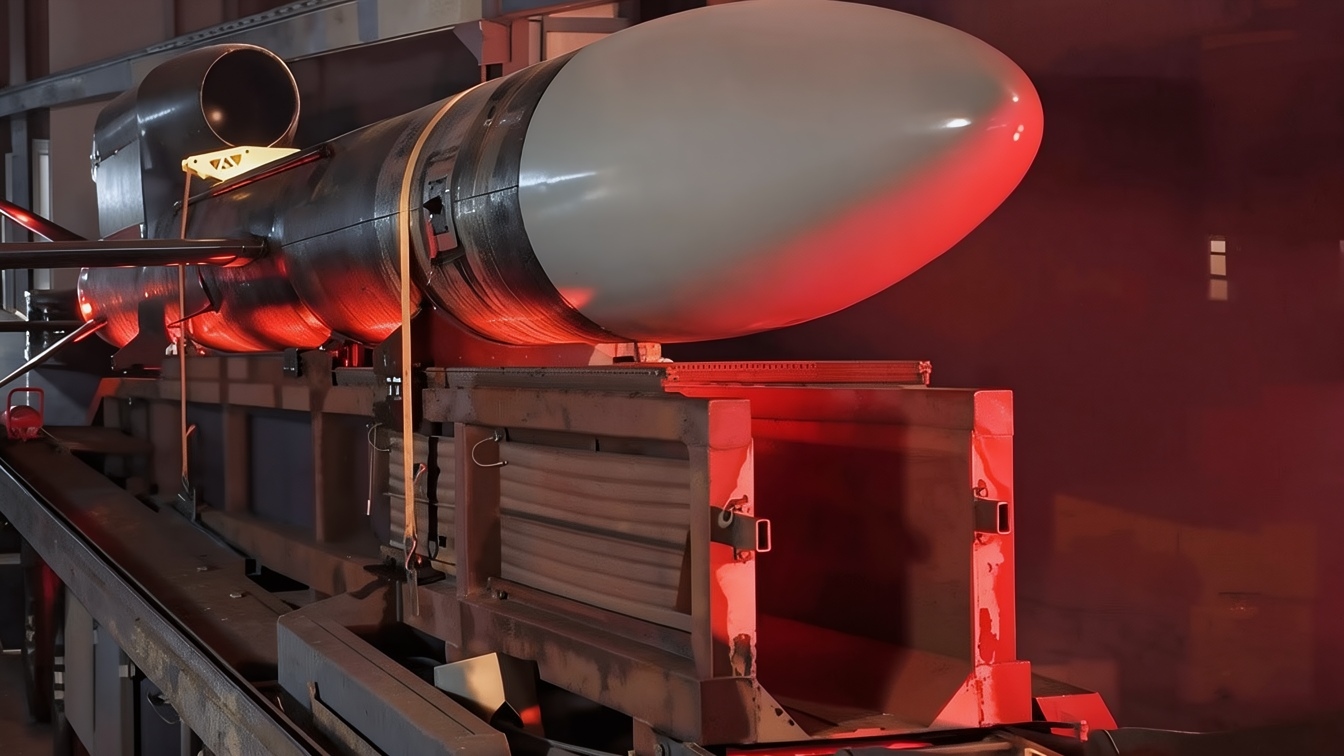
Another enormous Russian attack struck Kyiv, the Ukrainian capital, overnight on Tuesday, and saw drones and missiles rain down on the city.
The attack, which targeted Ukraine’s energy infrastructure, comes a week before peace talks headed by the United States are set to begin in Abu Dhabi.
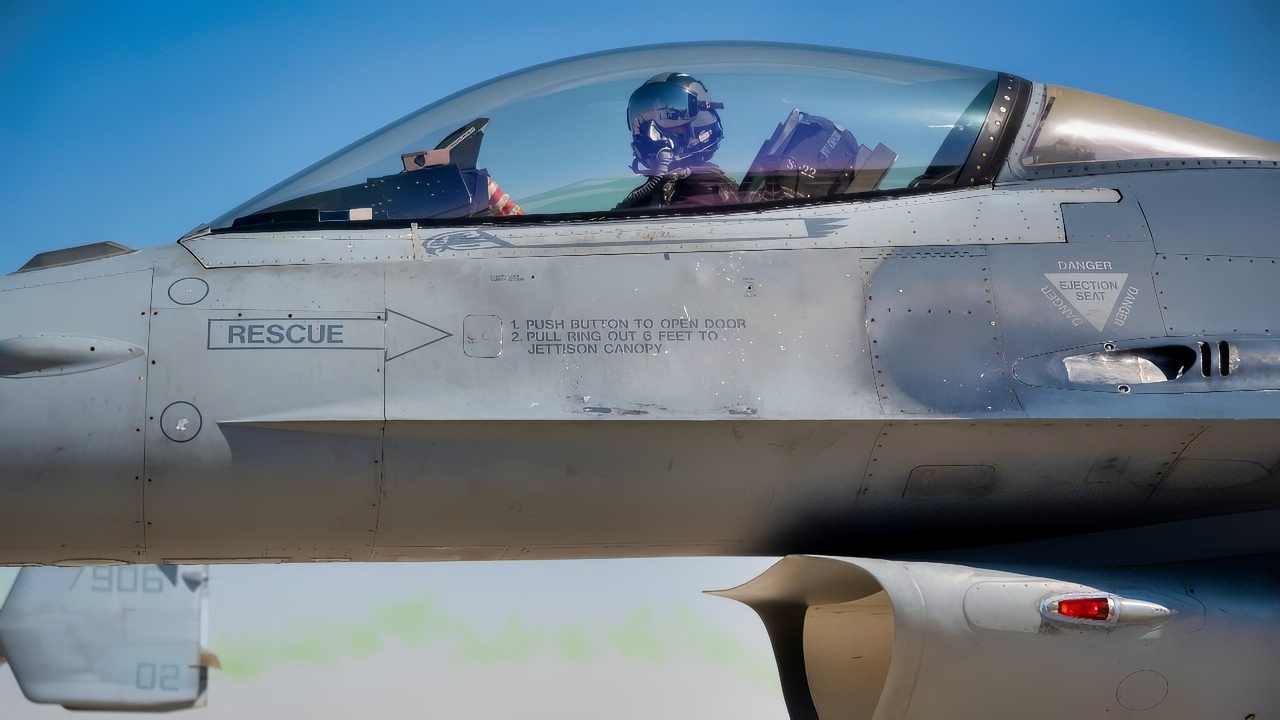
U.S. Air Force Maj. Josiah “Sirius” Gaffney, Pacific Air Forces Demonstration Team commander, prepares to fly a practice sortie before the Dubai Airshow in Dubai, United Arab Emirates, Nov. 11, 2021. In addition to the PACAF F-16 Demonstration Team routine, the air show will highlight a variety of U.S. Air Force, Navy and Marine Corps aircraft showcasing the range of U.S. military airpower capabilities. (U.S. Air Force photo by Staff Sgt. Matthew Kakaris)

Bohdan, a drone pilot from the Unmanned Systems Battalion of Ukraine’s 110th Separate Mechanized Brigade, pilots an FPV drone in Donetsk Oblast during active battle operations. Photo: David Kirichenko
According to reports, Russian munitions struck over a dozen energy facilities in nine of Ukraine’s regions. Out of the 17 ballistic missiles Russia fired at Ukraine, only three of the missiles were successfully intercepted.
The low interception rate reflects the difficult squeeze Ukrainian air defenses are currently under.
“The Russians carried out a complex, massive attack overnight, aimed primarily at our critical infrastructure. And the main target was energy – power generation facilities and substations,” Ukrainian President Volodymyr Zelensky wrote on X.
“In many cities and communities, emergency and unscheduled power outages are ongoing. In Kharkiv, the Russians directly struck a city clinical hospital. Seventy-three people were injured, and the cardiology department, where people were receiving treatment, was damaged.”
The Patriot Problem
Ukraine relies heavily on the Patriot system, an American-made air defense system considered one of, if not the world’s leading air defense batteries.
The United States manufactures a variety of interceptor missiles for Patriot batteries.
But production is painfully slow and can take anywhere from 24 to 30 months, from order placement to delivery.
The various components that go into the system are tested and validated at multiple points throughout manufacture, which helps ensure they can successfully intercept air threats but also prolongs production considerably.
But with another war underway in the Middle East, Iran’s adversaries in the region are scrambling to defend their skies from that regime’s missile and drone attacks.
Some of these allies of the United States also use Patriot interceptors to defend against Iranian attacks, creating even more demand on the world’s constrained supply of interceptors.
More Advanced Russian Munitions
Dovetailing with the global dearth of Patriot air defense interceptors is the newest generation of Russian drones.
Jet-powered and significantly faster than the initial copy of Iran’s Shahed drones, Russia’s newest Geran drones often outpace Ukraine’s own home-grown interceptor munitions. But they are not only faster — they’re networked as well.
As one analysis from the Center for Strategic and International Studies, a defense and security think tank, explains, many of today’s Geran drones are networked together and tethered to a ground controller via radio, enabling individual drones to relay targeting and air defense information to the drone operator in real time.
Ukraine Peace Talks
The peace talks scheduled for November 10th and 11th in Abu Dhabi would, if they happen, see Russian and Ukrainian delegations meet with the United States to talk about ending the war. “Discussions will focus on post-war security arrangements, de-escalation, humanitarian efforts, and next steps toward peace,” American envoy Steve Witkoff wrote on X.
But despite intense pressure from Washington, Moscow and Kyiv’s positions seem far apart, and the likelihood of securing an agreement seems minimal.
War in Ukraine Drags on
Meanwhile, cognizant of the difficulty Ukraine is experiencing in sourcing Patriot interceptors, the Kremlin is intent on depleting the country’s limited supply of air defenses.
As one Ukraine correspondent notes, shipments of PAC-2 and PAC-3 Patriot interceptors arrive in Ukraine in small numbers, sometimes shipments as small as five interceptors.
Given the relatively small amount of interceptors sent to Ukraine, initial Russian air attacks often deplete Ukraine’s rather limited Patriot supply “by around mid-month.”

T-90 Tank from Ukraine War. Image Credit: Creative Commons.
Facing setbacks on the battlefield, Russia is intent on exacting a harsh toll on Ukraine’s civilian population in retaliation.
And while the strategy stands little chance of turning the tide of the war in Russia’s favor, Moscow seems hopeful it could push Ukraine to sue for peace.
“It is very telling that all of this is happening on the day of the U.S. congressional elections.
The Russians believe that America will not notice this signal from them.
But such terror must be noticed and stopped,” the Ukrainian president also wrote.
“Ukraine must be helped to defend its skies, otherwise Russia will never stop its missile strikes. It is essential to help build peace honestly and reliably, and America can do that.”
About the Author: Caleb Larson
Caleb Larson is an American multiformat journalist based in Berlin, Germany. His work covers the intersection of conflict and society, with a focus on American foreign policy and European security. He has reported from Germany, Russia, and the United States. Most recently, he covered the war in Ukraine, reporting extensively on the war’s shifting battle lines in Donbas and writing on the war’s civilian and humanitarian toll. Previously, he worked as a Defense Reporter for POLITICO Europe. You can follow his latest work on X.


