


By early 2026, Ukraine received 80 M1A1 Abrams tanks in its fight against the Russian invasion that began in February 2022. The US initially sent 31 M1A1s to Ukraine in 2023 from prepositioned stockpiles in Germany.
These tanks were kept in Germany as part of the Army Prepositioned Stock (APS) program. These tanks are stored to equip U.S. forces rapidly during training exercises or military contingencies.
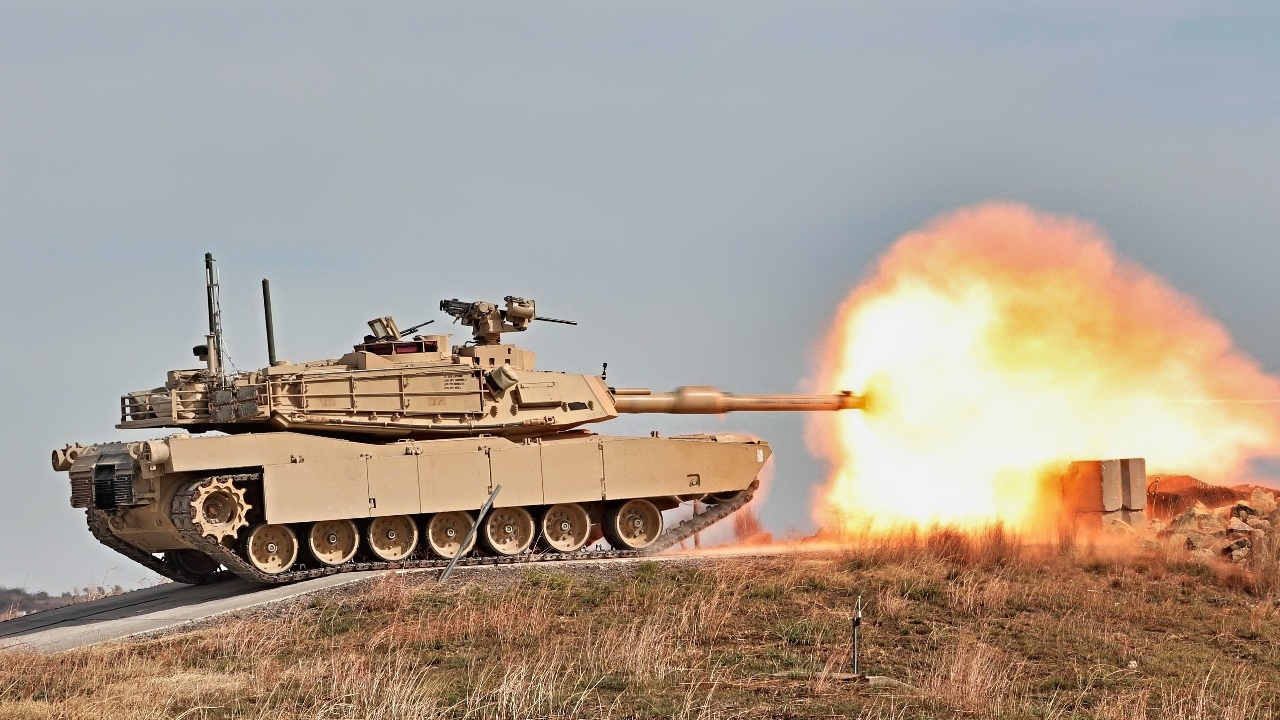
An M1A1 Abrams tank operated by Soldiers with the 2nd Battalion, 70th Armored Regiment, 2nd Armored Brigade Combat Team, 1st Infantry Division, fires over a barricade at the Douthit Gunnery Complex on Fort Riley, Kansas, Oct. 20, 2022. The tank crew was conducting gunnery qualification. (U.S. Army photo by Sgt. Jared Simmons)
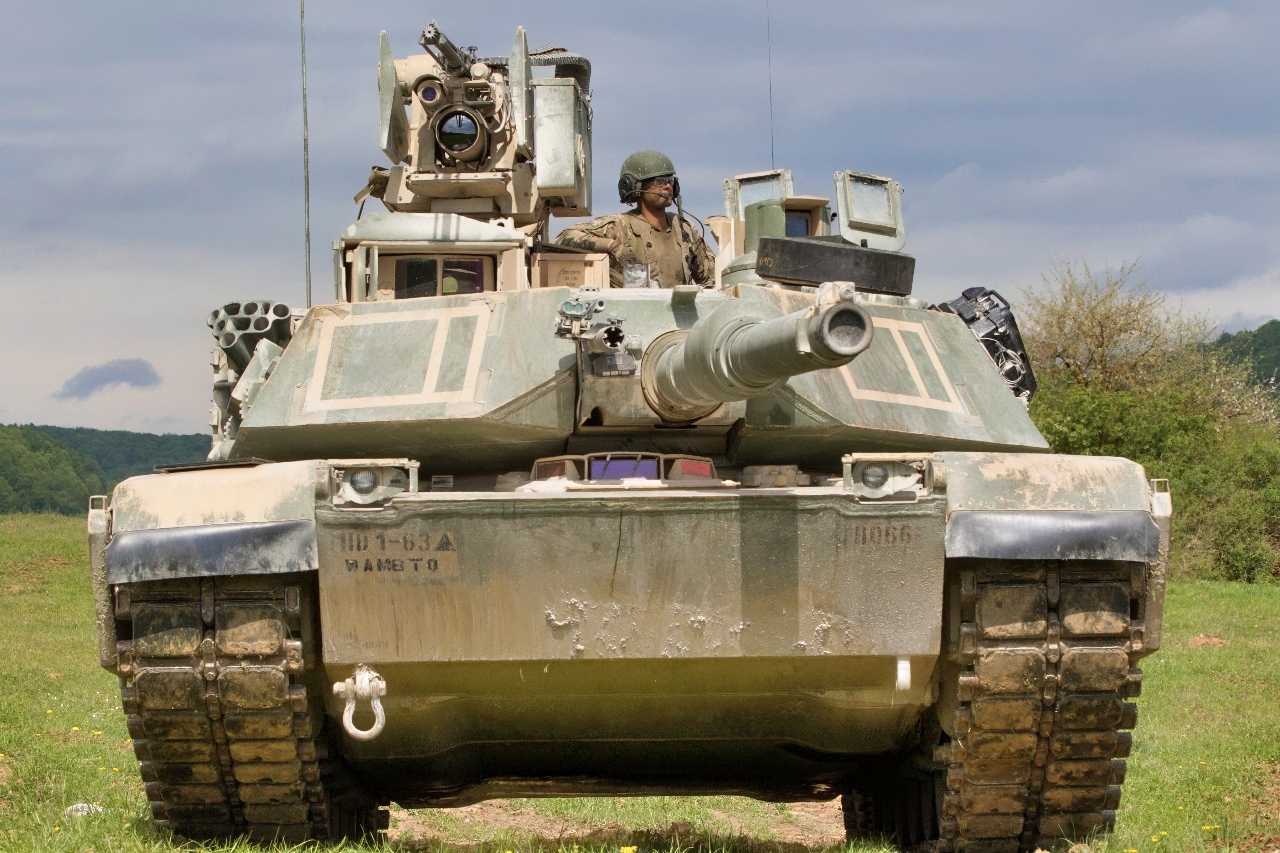
An M1A2 Abrams tank from 1st Battalion, 63rd Armor Regiment, “Dragons,” 1st Infantry Division, Fort Riley, Kansas, pulls during Combined Resolve X at the Hohenfels Training Area, Germany, May 1, 2018. Exercise Combined Resolve X is a U.S. Army Europe exercise series held twice a year in southeastern Germany. The goal of Combined Resolve is to prepare forces in Europe to work together to promote stability and security in the region. (U.S. Army photo by Spc. Andrew McNeil / 22nd Mobile Public Affairs)
Then Australia has sent Ukraine 49 U.S.-built M1A1 Abrams tanks that it had promised to Kyiv for its fight against the Russian invasion, according to the Australian Defense Ministry in Canberra. The delivery was part of a broader $1.5 billion assistance package Australia has committed to Ukraine since the Russian invasion began in 2022.
“The M1A1 Abrams tanks will make a significant contribution to Ukraine’s ongoing fight against Russia’s illegal and immoral invasion,” said Deputy Prime Minister Richard Marles. “Australia remains steadfast in our support for Ukraine and in seeing a just and lasting peace.”
The M1 Abrams is widely considered the best tank in the world, but it suffered heavy early losses due to several factors. And, in fact, there has been much digial ink spilled that the U.S. military was against these tanks going to Ukraine for fear of losses and the clear reputational damage this legendary tank could suffer.
So, how did the Ukrainian armed forces adapt the M1 Abrams to perform better against the Russians?
Anti-Drone Armor (“Cope Cages”) And Reactive Armor (ERA) Inserts
Ukrainian forces have fitted steel mesh or “cage” armor, often referred to as “cope cages,” over the turret and engine compartment. This is designed to trigger the detonation of FPV (first-person view) drones before they hit the armor.
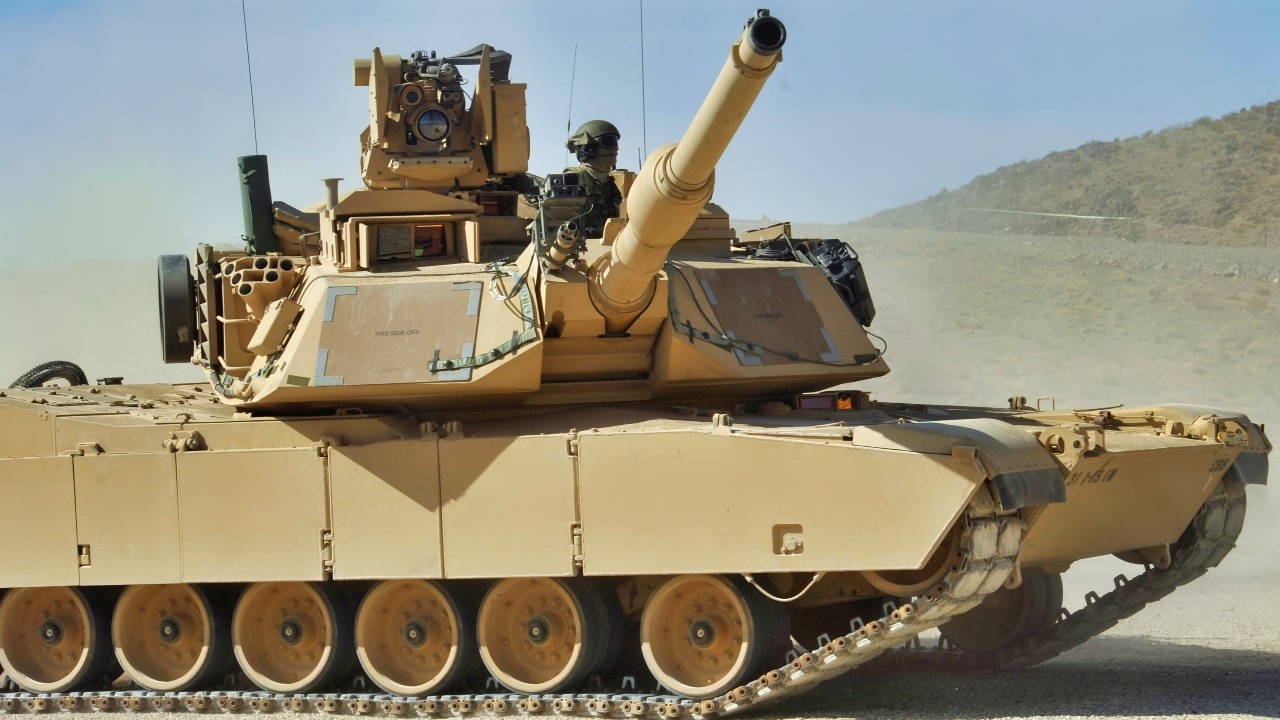
Australia is sending 49 of its retired M1A1 Abrams tanks to Ukraine, a move that bolsters Kyiv’s armored firepower but raises significant questions about survivability on the modern battlefield. While the donation is a welcome gesture, US officials have reportedly expressed private frustration, warning that Ukraine struggles to sustain the complex tanks and highlighting their vulnerability to cheap, top-attack FPV drones. The war in Ukraine has become a “drone war,” where even advanced main battle tanks are at constant risk. The effectiveness of these donated Abrams will ultimately depend on Ukraine’s ability to counter this pervasive threat.

A U.S. M1A1 Abrams tank needed for training the Armed Forces of Ukraine awaits offloading at Grafenwoehr, Germany, May 14, 2023. The M1A1 training is expected to last several weeks and will include live fire, crew qualification, maneuver, and maintainer training. Armed Forces of Ukraine training is conducted by 7th Army Training Command at Grafenwoehr and Hohenfels training areas in Germany on behalf of U.S. Army Europe and Africa. (U.S. Army photo by Spc. Christian Carrillo)
Reactive Armor (ERA) tiles. Kits of Soviet-era Kontakt-1 reactive armor are frequently added to the Abrams’ side skirts and front to disrupt shaped-charge warheads.
Engine And Fuel Upgrades
The 49 M1A1 Abrams provided by Australia feature diesel engines rather than the standard US turbine engines, simplifying maintenance and supply chains for Ukrainian forces.
Unlike most countries’ tanks and armored vehicles, which run on diesel fuel, the American Abrams uses a jet turbine engine that guzzles JP-8 jet fuel, which is more expensive and harder to maintain.
They also require massive infrastructure, including M88 recovery vehicles to repair broken parts on the battlefield.
“The M1 is a complex weapon system that is challenging to maintain, as we’ve talked about,” Pentagon spokesperson Brig. Gen. Pat Ryder said at the time. “That was true yesterday; it’s true today; it will be true in the future.”
Australia Sent M1A1 AIM SA Tanks
The tanks are M1A1 AIM SA models, which are retired and have been replaced by newer M1A2s in Australia. They have been upgraded with features like thermal sights and a reconfigured diesel engine to simplify logistics.
The aid package also includes spare parts and support equipment. The tanks’ diesel-engine modification simplifies logistics for Ukraine, as its armored fleet already runs on diesel.

U.S. Marine Corps M1A1 Abrams tank provides suppressive fire against simulated insurgents during day 18 of the Integrated Training Exercise 13-1 at Twentynine Palms Marine Corps Base, Calif., Jan 22, 2013. The ITX is the training exercise that Marines come to prior to deploying. (U.S. Air Force photo by Staff Sgt. Stephany Richards)
But the transfer of Abrams tanks to Ukraine hasn’t been smooth.
Initial Poor Showing In Combat For The Abrams Tanks In Ukraine
The Abrams made its combat debut in 2024 during the defense of Avdiivka. Shortly after its first appearance, the Russians knocked out the first one, which Moscow propaganda crowed about.
Then the losses began piling up, culminating in Ukraine’s decision to temporarily pull the tank off the battlefield entirely after losing 20 of the 31 tanks sent by the US.
The Russians captured a fully intact Abrams, which was then transported back to Moscow for study. This marked the first time a U.S. adversary had obtained and studied one of these tanks.
How did the Abrams, the best tank in the world, fail so badly?
Non-Combined Arms Tactics Responsible For Early Failures
The loss of so many M1A1s was not because of any shortcomings of the tank; it was due to tactics. The Ukrainians didn’t really understand how the Americans fight or use their armor.
The Abrams was designed to work within U.S. combined-arms doctrine, which dictates close cooperation among mechanized forces, infantry, artillery, and air power. Because Ukraine didn’t operate that way, Russian anti-tank missiles and drones took an unnecessary toll.

Soldiers from 2nd Battalion, 70th Armor Regiment, 2nd Armored Brigade Combat Team, 1st Infantry Division, fire at a target while conducting the defensive position live fire portion of the Strong Europe Tank Challenge at the Grafenwoehr Training Area, Germany, on June 5.The Strong Europe Tank Challenge is an annual training event designed to give participating nations a dynamic, productive and fun environment in which to foster military partnerships, form Soldier-level relationships, and share tactics, techniques and procedures. The participating nations this year are Austria, France, Germany, Poland, Sweden, Ukraine, United Kingdom and the United States.
Due to manpower and equipment shortages, Ukrainian Abrams tanks often entered combat alone, without infantry or other armor support. Abrams tanks or any other ones are easy pickings for Russian anti-tank crews in these disadvantageous conditions.
Ukrainian tank crewmen complained that the tank was an easy target on the battlefield for Russian drone operators who easily spot and identify the massive tank. Russians were also quick to adopt the use of First Person View (FPV) kamikaze drones with explosives strapped to them.
FPV drones remain a major problem for both Russian and Ukrainian armored vehicles.
Russian anti-tank equipment is also more sophisticated than many people give credit for. Reports indicate that several Abrams tanks were knocked out by Anti-Tank Guided Missiles (ATGMs), most notably the Kornet laser-guided missile, which has been responsible for many M1 Abrams kills.
The Ukrainians also noted that the Abrams they received had numerous technical issues, particularly with the engine and electronics.
Modified M1A1 Tanks, And Improved Tactics
Australia’s donated M1A1 Abrams tanks are providing crucial, high-firepower, and durable armored support in Ukraine, particularly in key sectors like Pokrovsk.
While they offer superior protection and firepower compared to Soviet-era tanks, they still face significant threats from pervasive Russian drones and landmines, requiring extensive field modifications, including reactive armor and anti-drone cages.
Rather than using them for direct, unsupported charges, Ukrainian armor units use the Abrams in specialized, planned operations, such as infantry support, using their 120mm smoothbore cannon to destroy enemy positions from a distance.
They are used in high-intensity areas, such as providing cover for infantry and taking out enemy positions. They are performing much more effectively, as shown by recent fighting in Pokrovsk.
Ukraine is also using enhanced Electronic Warfare (EW). Some units have been fitted with electronic warfare equipment to jam drone signals.
The tanks are maintained in a specialized facility in Poland.
While the tanks have proven to be vulnerable to modern, intense drone warfare, they remain highly effective. Ukrainian crews are actively adapting them to survive and fight in the ongoing, high-attrition conflict.
Ukraine Has Adapted The Abrams For Drone War Combat
Western nations that have supplied Ukraine with armored vehicles are closely monitoring how combat is unfolding there.
Ukrainian forces have the most up-to-date battlefield experience with advanced main battle tanks in modern combat. The evaluation of the ad hoc improvements being made to donated armored vehicles is definitely worth studying.
Viktor Kevliuk, a Ukrainian retired military officer and analyst with the Center for Defense Strategies, said, “These add 2-3 tons but don’t overload the chassis, and they’ve proven effective — one crew endured 4-6 direct FPV hits (including fiber-optic guided ones immune to jamming) with no casualties, thanks to the Abrams’ compartmentalized design.”
These field modifications, developed to counter the high prevalence of FPV drones, aim to protect the most vulnerable parts of the tank, particularly the engine and turret. Despite these additions adding significant weight, they are deemed crucial for enhancing crew survivability.
About the Author: Steve Balestrieri
Steve Balestrieri is a National Security Columnist. He served as a US Army Special Forces NCO and Warrant Officer. In addition to writing on defense, he covers the NFL for PatsFans.com and is a member of the Pro Football Writers of America (PFWA). His work was regularly featured in many military publications.


