
After Washington denied claims that it deliberately restricted Ukrainian access to the Starlink satellite communications network, a new Wall Street Journal investigation claims that Elon Musk himself ordered a slowdown of a military-grade version of the technology on October 14.
The decision triggered confusion inside the White House and allegations from Ukraine that President Donald Trump was deliberately interfering with Ukraine’s defenses.
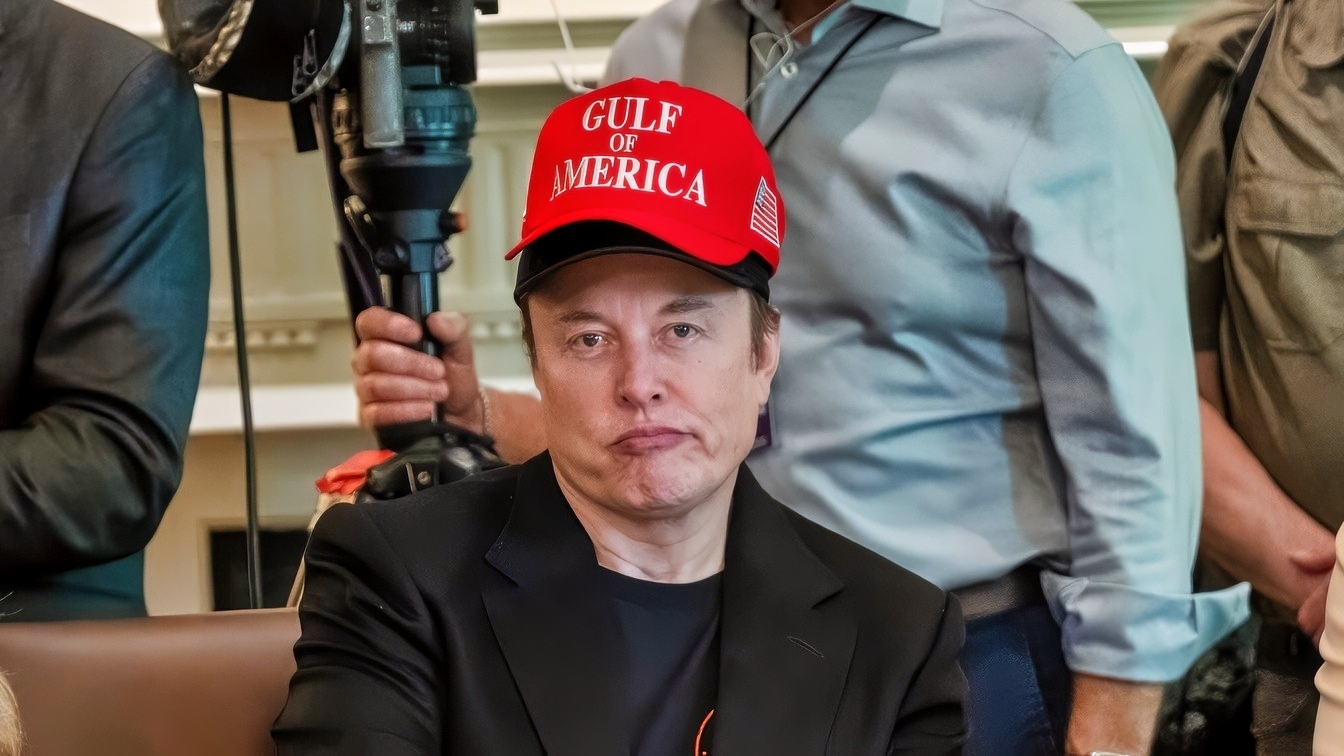
Elon Musk White House Photo
The findings follow days of confusion over who caused the disruption, with Secretary of State Marco Rubio telling Zelenskyy during a 45-minute phone call this week that the United States did not order the slowdown and that its position on Ukraine remains unchanged.
A separate CBS News investigation also confirmed that Musk made the decision, claiming the billionaire discussed the matter with Trump administration officials beforehand.
The stories suggest the Trump administration may have allowed Musk to take the action but did not instruct him.
Musk Ordered the Slowdown Himself
According to The Wall Street Journal, which cited U.S. officials and others familiar with the decision, Elon Musk authorized new limits on the satellite service Ukrainian forces use to operate attack drones and defensive interceptor missiles.
The investigation described how President Trump and Musk discussed the decision shortly after Ukrainian officials discovered the restrictions were in place.
Su-57 Felon Back in 2011. Image Credit: Creative Commons.
However, some American officials claim Musk acted independently and that the White House did not specifically instruct him to interfere with Ukrainian military operations.
CBS News reports that Musk consulted multiple people within the Trump administration before deciding, apparently to understand the president’s position on the idea.
Competing accounts of what happened, however, all suggest Musk was responsible for authorizing the restrictions, one way or another.
What remains unclear is whether President Donald Trump approved them beforehand or after the fact, or at all.
The Wall Street Journal also revealed that SpaceX representatives later contacted White House officials to craft a narrative about how the decision was coordinated and how to explain it to the public and the press.
What Happened to Ukraine’s Starlink Service?
Ukrainian military personnel suddenly faced restrictions that affected their satellite-connected drones on October 14, and the news quickly went international.
The Associated Press described how the restrictions affected Starshield, a military-oriented satellite communications service SpaceX developed using Starlink-connected technology.
Terminals began losing connectivity when traveling faster than about 160 kilometers per hour (100 miles per hour).
That was a problem for Ukraine because its forces rely on high-speed interceptor drones to stop Russian jet-powered Shahed drones that travel at speeds exceeding 400 kilometers per hour.
The restrictions also affected Ukrainian offensive operations and made it difficult to coordinate the delivery of essential supplies to troops operating on the front lines.
President Volodymyr Zelenskyy’s defense technology adviser, Serhii Beskrestnov, told the Associated Press on October 16 that Kyiv was negotiating with the Pentagon and SpaceX to lift the restrictions.
Soon after, they resolved some initial connectivity problems, but the speed restrictions remained.
Zelenskyy Accuses the White House
President Zelenskyy raised concerns publicly on October 16 about the restrictions and said Ukrainian forces had been unable to intercept some Russian drones because their satellite-connected interceptors could not operate normally.
The following day, Zelenskyy said Ukrainian officials had tested whether the restrictions were geographically targeted.
He said Ukrainian specialists found that vehicles fitted with satellite terminals could maintain connections while traveling faster than 180 kilometers per hour in European Union countries.
However, that equipment operating inside Ukraine was still subject to restrictions.
Zelenskyy said the findings showed a planned operation to restrict Ukrainian access, not the product of a technical failure.
The comments came as Ukraine also accused Washington of failing to provide the necessary intelligence about incoming Russian ballistic missile attacks.
On October 18, Zelenskyy publicly thanked Washington for restoring its intelligence cooperation, but American officials insisted they had not suspended it.
Trump, Rubio, and Hegseth Deny Responsibility
On October 16, President Trump denied ordering the restrictions, telling reporters that it wasn’t him and he didn’t believe it was Musk.
On October 19, the president was again asked who interfered with Ukraine’s satellite service, to which he said, “I don’t know who it was, but I’d like to find out.”
Secretary of State Marco Rubio denied American involvement, insisting on October 17 that nobody in the United States government had ordered the slowdown, and again repeating that claim in a phone call to Zelenskyy this week.
But the administration’s explanation appeared to change following the latest investigation, when Rubio acknowledged on Wednesday, October 21, that SpaceX could independently determine the conditions under which its commercial technology operates.
Speaking in Mumbai, India, Rubio acknowledged that reality but said that there was no “foreknowledge.”
About the Author: Jack Buckby
Jack Buckby is a British researcher and analyst specializing in defense and national security, based in New York. His work focuses on military capability, procurement, and strategic competition, and he produces and edits analysis for policy and defense audiences. He brings extensive editorial experience, with a career output spanning over 1,000 articles at 19FortyFive and National Security Journal, and has previously authored books and papers on extremism and deradicalization.


