
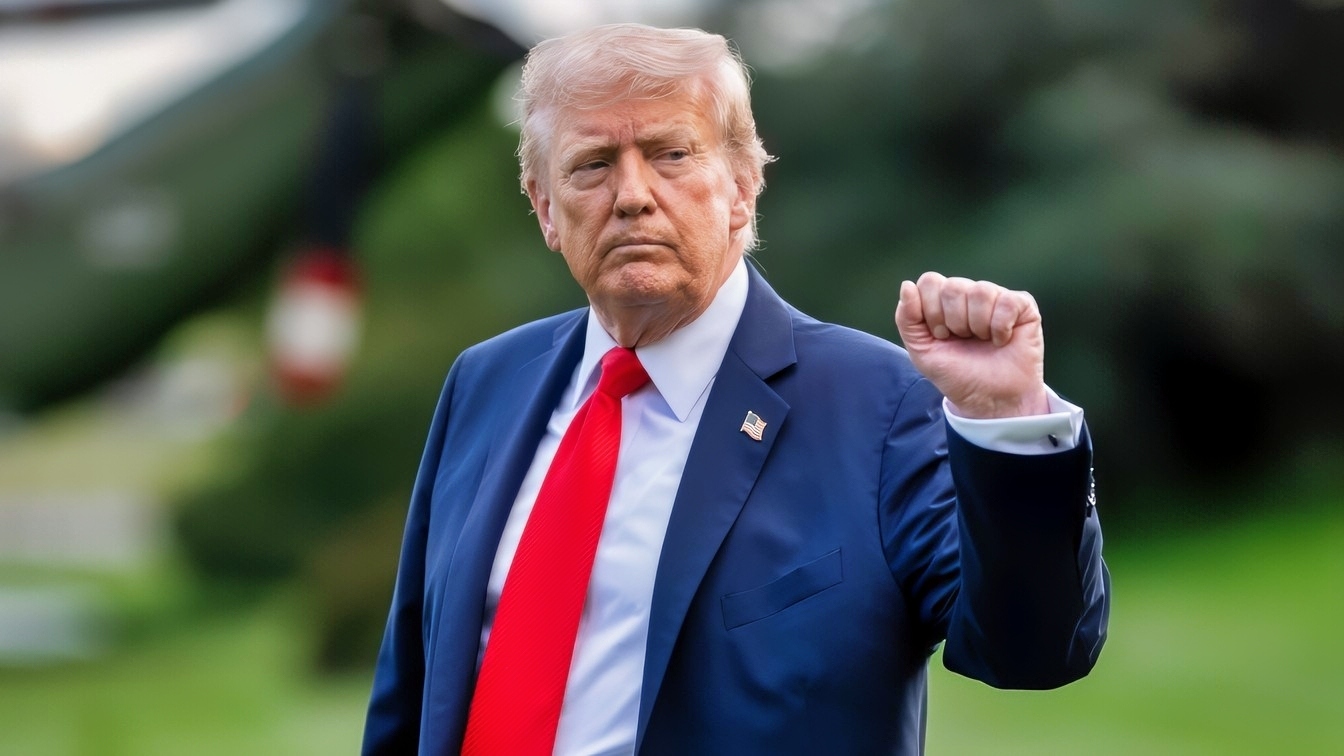
Voters widely see President Donald Trump’s tariffs as being a driver of higher costs, rather than delivering the manufacturing revival the president promised.
Nearly two-thirds of voters said Trump’s signature trade policy damaged the economy, according to network exit polls cited by The Washington Post.
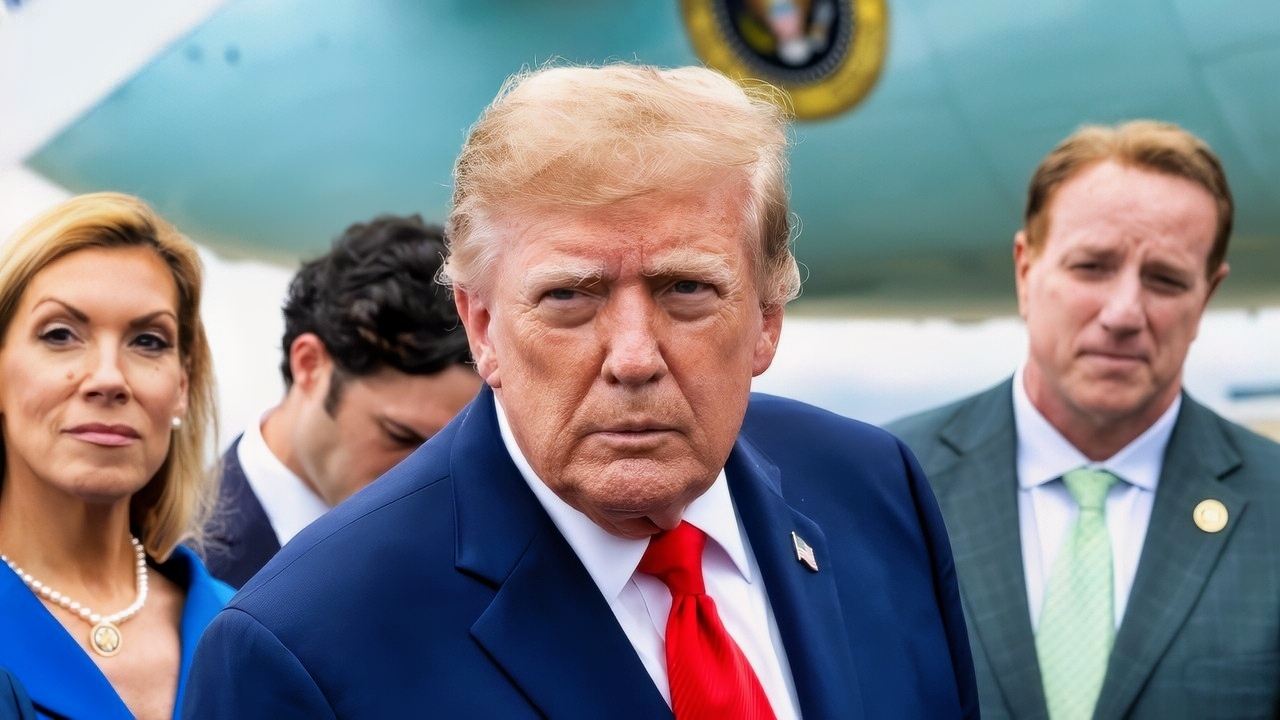
Donald Trump At Air Force One Creative Commons Image
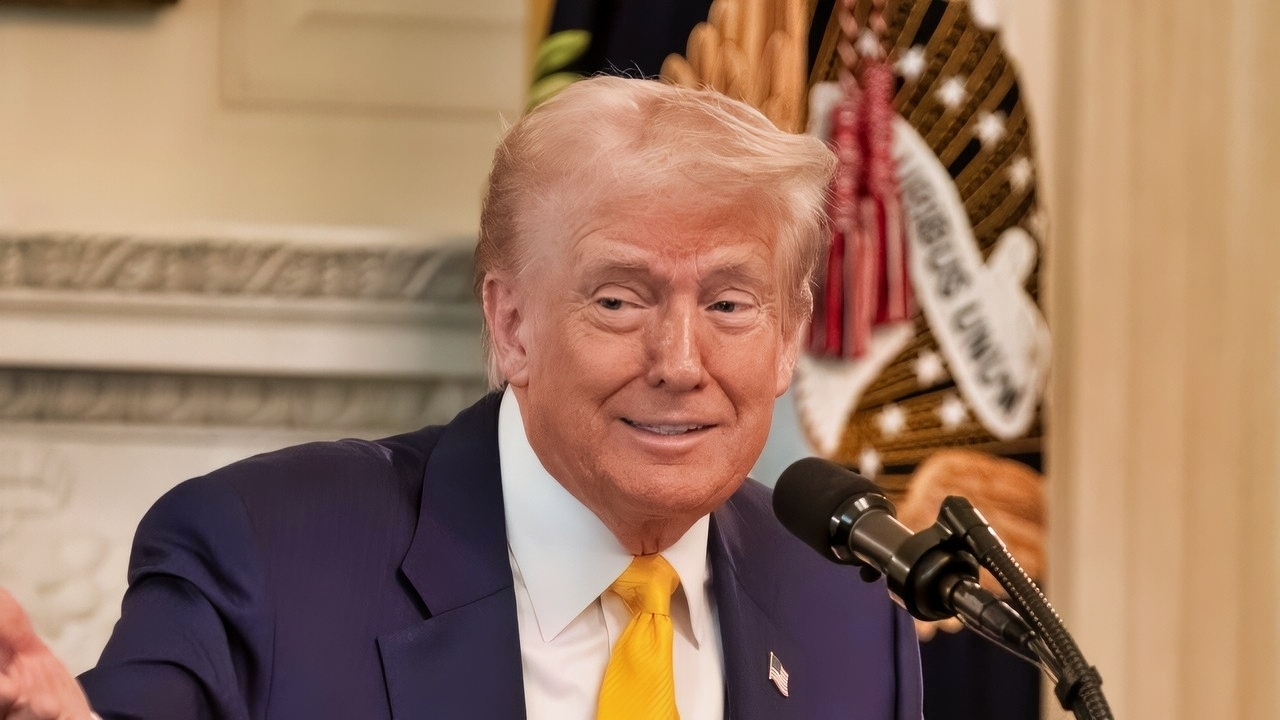
President Donald Trump delivers remarks at a business session with the nation’s governors, Friday, February 21, 2025, in the State Dining Room of the White House. (Official White House Photo by Harrison Koeppel)
Republican Senate defeats in agricultural states also exposed frustration with trade disputes that disrupted farmers’ export markets.
Voters Turn Against Tariffs
The warning signs for the Trump administration appeared well before Tuesday’s elections.
An AP-NORC poll conducted September 24–28 found that 64% of adults believed Trump’s new tariffs had gone too far, while 65% blamed his policies for higher-than-usual prices.
It marks a difficult shift for the president, who pledged to protect American workers from foreign competition in the lead-up to his electoral win two years ago.
In 2024, the Chicago Council on Global Affairs found that 66% of Americans supported import restrictions to protect jobs.
That support coexisted with broadly favorable views of international trade.
By July 2025, the council found that 46% preferred trade without restrictions to maximize consumer choice and lower prices, up from 31% in 2024.
American Businesses Foot the Bill
Trump has repeatedly argued that foreign countries bear the cost of tariffs.
In an interview with ABC News in April 2025, the president said China will “eat” the 145% tariffs the White House had placed on Beijing.
However, research by New York Federal Reserve economists and a Columbia University economist published in February 2026 found that nearly 90% of the economic burden of the 2025 tariffs fell on American firms and consumers.
Importers pay duties, and foreign suppliers have generally failed to reduce their prices enough to offset them.
A separate analysis by the New York Federal Reserve revealed that tariffs also lift domestic prices by making imported components more expensive and reducing competitive pressure on American producers.
Those indirect effects can take six to twelve months to develop.
Business payment records show the pressure persisted.
The JPMorganChase Institute reported in September that midsize firms’ tariff payments remained more than twice their pre-2025 levels, despite retreating from their peak.
Economic Arguments Rejected
The wider economic outlook is a sign of hope for the Trump administration.
Real gross domestic product grew at a 3.4% annualized rate in the third quarter, according to the Bureau of Economic Analysis’s preliminary estimate.
Figures from the Bureau of Labor Statistics showed unemployment in September stood at 4.2%, while manufacturing employment had risen by 72,000 from its December 2025 low.
But growth and recovering factory payrolls do not establish that tariffs produced those gains. Nor do national figures show that households have escaped the pressure of higher prices.
The distinction matters politically.
In the AP-NORC survey, 69% said Trump’s handling of living costs had been worse than expected, including 52% of Republicans.
Manufacturing employment, according to the Post, remained more than 250,000 below its Biden-era peak.
It also described analysts attributing the recent rebound primarily to artificial intelligence investment rather than import protection.
Tariffs Remain
House Democratic Leader Hakeem Jeffries promised during the campaign to end Trump’s tariffs.
Still, despite the Democratic Party controlling both chambers of Congress since January, the presidential veto remains in Trump’s hands.
A congressional majority in both the Senate and the House does not automatically overcome that power.
Overriding a presidential veto requires a two-thirds vote in each chamber, with a quorum present.
Even with an excellent midterm election for the Democrats, the party still falls short of the required two-thirds majority to override a veto.
A narrower agreement may prove more attainable.
Some Democrats support targeted protection for strategic industries, and Ohio Senate winner Sherrod Brown has long favored tariffs.
“The direction of travel, I think, is clear,” said Michael Froman, president of the Council on Foreign Relations and President Barack Obama’s chief U.S. trade negotiator, to the Post. “We’re likely to live in a more tariffed world rather than the less tariffed world that existed before Trump. That doesn’t necessarily mean that we have to have the same level of tariffs on all of these countries, whether they’re friends or competitors, or [have them] on all sectors.”
While voters may have rejected tariffs, it’s difficult to see their disappearance before Trump leaves the White House in 2029.
About the Author: Shay Bottomley
Shay Bottomley is a British journalist. He has written for the Western Standard, Business Insider, Maidenhead Advertiser, Slough Express, Windsor Express, Berkshire Live and Southend Echo.